RSS

Category Archives: Fiction Characters

Dialogue or narrative – that is the dilemma

Cover of Sharon A. Crawford's mystery short story collection

Cover of Sharon A. Crawford’s mystery short story collection

We care what happens to people only in proportion as we know what people are.

–           Henry James

My publisher wants me to make my prequel mystery novel a bit shorter. Part of the problem is my two main characters, fraternal twins Dana and Bast, get too chatty in some places, especially when they are bringing each other up to speed on their separate investigations.

When do you use dialogue and when do you use short narrative to summarize what characters tell each other so that your novel or short story flows and doesn’t bore your reader? You want to make your reader care about your characters, not have your characters put your reader to sleep. Here are a few (but not only or all) guidelines to consider:

  1. Do you need to show anything with their actual dialogue and any accompanying actions? For example, if one character is giving the other some bad news and their reaction includes what they say and how they say it, you might want to go the dialogue route.
  2. Don’t drag out the dialogue exchange between characters. It can turn into the equivalent of repeatedly driving your point home to your reader. For example, I have Bast and Dana often repeating the same setup ad nauseum when they are comparing notes – each are reacting the same way and sometimes their dialogue covers what is told elsewhere in the novel. Summarizing that Dana brought Bast up to speed on whatever situation would suffice.
  3. A caveat to the above two points: there is a fine line from using dialogue to bring out the character’s reactions to something when necessary and when the dialogue shows as repetition. Ask yourself: is the dialogue best to show foreshadowing and move the plot along? You might be better to use dialogue then. Also dialogue and/or action might work better if the character is changing – perhaps trying to be stronger than wimpy or holding in his or her anger.
  4. With mystery fiction where the police detective or private investigator is interviewing a number of “persons of interest,” summarize in narrative the ones who have little or no information to contribute and use dialogue where something of importance to your plot shows up in the interrogation.
  5. Be careful you don’t overdo the narrative just to contain your dialogue. You don’t want to overdo the telling and bore your reader this way. However, with narrative you can include the character’s inner thoughts and actions.
  6. Sometimes you can combine narrative with summary. Here’s how I did it in the short story Digging Up the Dirt, with the fraternal twins. Instead of Dana repeating to Bast her “interrogation” by the constable and what led up to it, I wrote:

And you actually let that constable order you around,” my fraternal twin, Bast, said later.

“Well, I had to listen to Fielding’s interrogation, especially of Aunt Doris.” I smiled.

(copyright 2012 Sharon A. Crawford. Excerpted from Beyond the Tripping Point, published by Blue Denim Press, 2012)

If you want to show how characters relate to each other under various circumstances and bring out their distinctive traits, dialogue with action might work best. If it gets too long, you can intersperse it with narrative. I do this in another story in Beyond the Tripping Point. Below is the link of my reading the opening scene in “Body in the Trunk,” clipped from my interview with Hugh Reilly on Liquid Lunch from thatchannel. The reading and the short preview before is three minutes long.

Sharon A. Crawford  Reading from Beyond the Tripping Point on Liquid Lunch http://www.youtube.com/watch?v=pgOKYgBfAwY&feature=youtu.be

Now I need to get back to my own novel and follow my advice.

Cheers.

Sharon A. Crawford


Tags: , , , , , , , ,

What motivates your characters?

Click on the book cover to go to amazon.com

Click on the book cover to go to amazon.com

A novelist is a person who lives in other people’s skins.

–           EL Doctorow

Why do your fiction characters do what they do? Are they acting/reacting in character or way out of character? How do you “make” your characters behave?

First of all, you only have some control over your characters. As you are writing, often a character will “take over” and “decide” just what they are going to do. Fine, but you still need to make sure they aren’t acting outside of who they are. Or that you, as the author, aren’t manipulating what they are doing, especially having them do something just to move your story along or worse, just to write something.

Let me give an example.

Take Dana, the PI In “Gone Missing” and “Saving Grace,” two of the four linked short stories in my short story collection, Beyond the Tripping Point. Dana is also the mother of a seven-year old boy. So her dual role must factor in what her character thinks and does. Add to that the fact that her son is psychologically mute because of something that happened to him in the prequel novel (more on that shortly) and my work was cut out for me. In a critique of “Gone Missing” a few years back, I was chastised for not making Dana more professional. But with her problems with David, she wouldn’t be operating as a PI only – all professionalism –unless she is a “bad” mother – finds her son an impediment to her life, etc. Dana is not that and is always torn between her two roles, something readers can identify with in real life. So I have her wrestling with David and helping him as well as trying to solve the missing persons’ cases in those two stories. In “Saving Grace” she has a bit of a meltdown at one point chastising herself for being a bad mother. And to add insult to injury, another character Great Aunt Doris, who is a traditionalist where mothers are concerned, calls her a bad mother.

What is a mother/PI to do? Be human. Act in character.

In the prequel novel which I am rewriting for my publisher to look at, the actual occurrence which causes David’s muteness and all its implications has Dana roller-coasting a lot more than in the short stories. She does some stupid things, briefly goes into a catatonic state and sometimes gets more aggressive than usual. But – and it’s a large “but” all this change, all these actions and reactions come from her basic character and who she is. I don’t pull them out of the air. She is acting in character and characters have to deal with hurdles and change. So do people in real life and maybe that is a bottom line.

Make your characters real. What motivates them? Are they acting in character even when they don’t seem to be?

And go to my publisher’s page for a link to my interview with Hugh Reilly on thatchannel.com where I talk about some of these characters and where they and the plots originated. Eventually I’ll get that video up in the main part of this blog.. For now go to http://www.bluedenimpress.com/sharon-crawford.php and click on the link at the bottom of my bio.

Cheers.

Sharon A. Crawford
 

Tags: , , , , , , , ,

How do fiction characters act in a snowstorm?

Amazon.com link to Sharon A. Crawford's book

Amazon.com link to Sharon A. Crawford’s book

As soon go kindle fire with snow, as seek to quench the fire of love with words.

–          William Shakespeare

Toronto and other parts of Ontario as well as Quebec and the Maritimes got blasted with the first big snowfall of the season overnight. So I thought it might be interesting to dump some of our fiction characters into a snowstorm and see how they could behave.

My obvious choice of characters are the two friends, Millie and Jessica, from my short story “No Breaks” in my short story collection Beyond the Tripping Point. The story is set on a hot and humid August day but what would happen if the duo were driving up Ontario’s Highway 11 to the Muskoka cottage during a snow storm? This area gets lots of snow on the highway and with the brakes in Millie’s car failing, would Millie’s work-around that even be feasible in a snow storm? Perhaps the storm itself stalls traffic. So setting is changed but the reason for their trip up to Jessica’s family cottage wouldn’t be summer and beach related. Perhaps they are headed up there for Christmas. If you take all the other factors in the story (and I’m not telling all; you have to read the book to find out – book available on Amazon.com and Amazon.ca – link to the former on the book above and to the latter on the book at the end of this post), things will change.

Think about it. The two friends will be stuck in the car on a continuous basis. Millie is already fed up with the way her life isn’t going and Jessica, a non-driver, is scared they won’t get out of their situation. Millie is a control freak and Jessica hangs onto her Blackberry like it’s her lifeline – even when there is no reception. In the actual story, the relationship between the two friends changes as Millie learns some hard facts which hurl her over her personal tripping point. This could intensify and Millie’s actions could happen much faster and maybe being stuck in the snow with Jessica might bring out new terrifying traits and changes in the two women.

In your fiction – short story or novel – put your main characters, preferably the antagonist and protagonist, stuck in a snowstorm – if not in a car, maybe at a pub, a hotel, a meeting, a resort. How would they react? Would their conflict get worse or would it give them time to pause and do something about it? And remember, these are two idnividual characters here, so one may want to sort out their differences and the other one might not. One might get nastier; one might have a fear of being trapped and how would that affect his or her character? The possibilities are endless.

Put your characters in a snowstorm – even if only as a writing exercise. It will show you different sides of your characters and perhaps give you some insights into their development that you can use in your story – snowstorm or not, for example, how do your characters deal with unexpected adversity, especially of the severe weather kind?

Now, I better psyche myself out to shovel all that snow. I don’t dream of a White Christmas season. I dream of summer and my garden. Meantime, I have a guest blog post appearing on another Crime Writers of Canada member’s blog, December 28, 2012. Check it out at http://sweatercursed.blogspot.ca/

Cheers.

Sharon A. Crawford
Link to amazon.ca for Sharon A. Crawford's book

Link to amazon.ca for Sharon A. Crawford’s book


Tags: , , , , , , , , ,

Christmas with your fiction characters

Link to Sharon A.'s book on amazon.com

Link to Sharon A.’s book on amazon.com

I do like Christmas on the whole…. In its clumsy way, it does approach Peace and Goodwill. But it is clumsier every year.

– E.M. Forster

How do the characters in your novel and short stories spend Christmas? Or do they even celebrate Christmas or any of the other cultural traditions for this time of year? (I’m using “Christmas” generically here.) Maybe you don’t actually set your stories at Christmastime, but it doesn’t hurt to imagine how your fictional characters do Christmas – even write it down – because Christmas can bring out the best and the worst of everyone in real life. And so it should in fiction.

None of my short stories in Beyond the Tripping Point are set at Christmas time, so I’m not sure what that says about me. However, if the fraternal twins, Dana Bowman and Bast Overture (“Gone Missing,” “Saving Grace,” “Digging Up the Dirt,” and “Road Raging”) were to celebrate Christmas, they probably would go to Christmas Mass for the first time in years (and you’ll have to buy the book and read the stories to see why). Great Aunt Doris would make one of her crash-unexpected visits and that would put a damper in the celebrations for Dana, Bast but maybe not Dana’s son David. The Great One, as she is called, is at loggerheads with Dana and Bast but gets along with David. I envision her coming with them to Christmas Mass and surprising Dana with her singing voice when singing the hymns, albeit singing in her gravelly voice. She’ll interfere with Bast and his Christmas cooking and the present unwrapping might turn into a free-for-all. It might end up with no one speaking or all learning something from the shared experience. And my forte being mystery fiction, there would be a murder, a robbery (maybe someone stealing the Christmas church collection) or some crime that the twins, with David’s help, and Great Aunt Doris’ meddling, would solve.

So you can see how imagining your fictional characters’ Christmas can help develop your characters. And maybe just create another story or chapter in your novel.

At this time, I want to wish you all a good holiday season (Christmas or whatever you celebrate). Take some time for family and friends, and for yourself and your writing.

Meantime, click on the book graphic above to link to my book (print or Kindle) at amazon.com

Cheers.

Sharon A. Crawford


Tags: , , , , , , , ,

When your fiction characters take over your mind

Beyond the Tripping Point Cover 72dpiA novelist is a person who lives in other people’s skins.

–       –    EL Doctorow

I’m rewriting the prequel novel to four linked stories in my short story collection Beyond the Tripping Point (Blue Denim Press, 2012). The main characters are the fraternal twin PIs Dana Bowman and Bast Overture, Detective Sergeant Donald Fielding, Great Aunt Doris, and Dana’s son, David. They appear in some or all of those linked stories and also in the novel I’m rewriting.

Trouble is one of the suspects in the novel has climbed inside my head and demands to be heard – loud and clear. I can see clearly what he looks like and does and I’ve already written him into some chapters, even given him his own Point of View, but he is still not satisfied. It is his story as much as it is the other characters’ story..

So I made some notes to go with the “old novel version chapters” and Friday afternoon I sat down at my computer and started a full-blown character sketch of this fellow. The sketch, when completed, will contain everything from what he eats (or doesn’t eat) for breakfast, to his sordid past, to his feelings and actions for the novel’s time. Not all, but some of this will be incorporated into the novel, bit by bit (without revealing his name until the police and PIs get up to speed about him). He will also get more novel time. After all, I don’t want him coming after me.

So, what do you do if one of your fiction characters seems to be taking over your mind to the point where you do your version of the absent-minded professor? Besides your mind swirling around like it’s going through space, not paying attention to the present/to what is happening can be dangerous. You don’t want to cross the street right in front of an oncoming car or burn dinner to the point where it sets your house on fire.

To give your demanding character his or her due, you need to do the following:

  • Acknowledge the character and his or her right to be in your short story, novella or novel
  • Do an in-depth character sketch – preferably on computer or on paper. You know the old saying about writing it down – doing so not only shows its relevance, but it gets all those swirling thoughts and ideas out of your head and into a more permanent record – at least one easier to access and review. Your head will thank you.
  • What is in a detailed character sketch? You character’s name, background (family, education, current job if he or she has one), physical characteristics, likes, dislikes, traits, What makes him or her angry, sad, happy, etc. What is his driving force in life? In other words all the stuff that he is and what makes him tick?
  • It helps to give this character a tag, i.e., something (or a few somethings) he does when nervous (become irritable, jingle change or keys in pocket, etc.), and something he does or says across the board. For example, he may always use the f-word or have a particular way of handling phone calls (talk to the point and hang up abruptly). Perhaps the character may have multiple allergies and constantly sneezes. The “tag” or “tags” should be something that becomes part of your story.
  • Caveat One: You can get carried away doing character sketches (or the reverse). The former is better because you won’t use it all in your story, and may use very little in your short story. But having full insight into your character and on paper, helps when you sit down in front of your computer to write your story. You feel as if your character is an old friend or old enemy.
  • Caveat Two: As you write your novel or short story, you may be inspired to add more to your character sketch or change something. Do so if it would work better. A character is constantly changing – just like real characters in real life.

Do any of you who are writing fiction have characters taking over your life? How do you deal with these demanding individuals?

Cheers.

Sharon A. Crawford


Tags: , , , , , , , ,

Point of View – Part 4 – The “God” POV

Cover of Sharon A. Crawford’s mystery short story collection

Easy reading is damn hard writing.

–          Nathaniel Hawthorne

The omniscient point of view is sometimes called the “God point of view” because it is the point of view that is see all, hear all and know all. Here, besides various characters’ POV you get the narrator jumping in. The narrator or “God” can do things like give background of a setting or other information that none of the characters would know. The omniscient POV also lets the author step back a little from getting too close to his or her characters, although the latter isn’t obligatory. The author may get close to his protagonist and antagonist.

Just to muddy the omniscient waters more, the rule of one character’s POV per scene (or per chapter if chapters aren’t divided into scenes) still applies, although some proponents of the omniscient POV disagree and say you can be in all characters’ heads at once.  “God” maybe is able to be everywhere at once, but your reader can’t with one exception – that narrator or “God” can work in those setting details – you know the type where one character drives into a town he has never visited and more than just what he can see and know is narrated (town’s history, for example).

When to Use Omniscient POV

You can best get your message across and further your plot by revealing many characters’ thoughts, and feelings.

When your story can’t be told from one person’s point of view because of actions occurring in the plot.

When your story needs information that none of the characters would have knowledge of.

In novels that cover several time periods and that have several characters.

In a nutshell, the author knows all/sees all understands all of what each character thinks, imagines, knows, feels.

It’s complicated.

What Isn’t Omniscient POV

First let’s cover what isn’t omniscient POV, but uses a technique not too common – mixing up first person and third person. Mystery writer Bill Pronzini does this in his “Nameless” detective novels. His earlier novels were told from the first person only and Nameless was just that. In later novels, Pronzini has three POV characters – Nameless (who has a first name now) and two other private investigators in the agency. Nameless is told from the first POV and the other two are in the third person. He sticks to the one character’s POV per chapter and puts the name of the third person POV at the beginning of the chapter. Nameless chapters don’t get this subheading because readers should be able to tell from the first person usage who the character is. Pronzini does this very well.

Omniscient POV in Short Stories

Omniscient, per se, isn’t usually used in short stories, although a variation of it can be used. You can have your narrator come in at the beginning with information about the story, the characters, the setting, etc. but at some point you have to focus on one character’s point of view. Because short stories are supposed to be well, short, you probably shouldn’t use more than two points of view, but no jumping heads – one character’s POV per scene. Otherwise you have the inside of the reader’s head jerking back and forth and getting confused. You do not want your reader to be confused – confused readers give up reading a story (or a novel).

Omniscient POV in Novels.

I use a variation of omniscient POV in my prequel mystery novel which I am writing now. I say “variation” because I put one character, Dana Bowman, in the first person and other main characters’ POV in the third person. I name the POV character at the beginning of the chapter or scene, but unlike Bill Pronzini I do put “Dana” for the first person POV character. However, for obvious reasons, I put nothing at the beginning of chapters with the POV of a maybe suspect.

Dana is put in the first person because she is the character I want the reader to get closest to. She always wears her emotions on her sleeve. Her fraternal twin Bast Overture is in third person for two reasons. He is not so forthcoming in his feelings, even in his own mind, and I want to show the reader this. The other main characters I get close to in varying degrees, but none as close as Dana.

As for the narrator jumping in to do the scene descriptions, etc. I’m still working on that or if I want it strictly from specific characters point of view. I’m leaning towards the latter and there is a technique in that which I’ll cover in a future post.

Meantime, read the beginning of my short story “No Breaks,” and see if you can figure out the Point of View and why? Is it third person limited or is it omniscient?

It’s a scummy Saturday morning and Highway 11 resembles fast food parking hell. If you’re making your last ditch scramble for your reserved spot in the Muskokas, try an alternate route.”

“Yeah, what alternate? Highway 400 is worse.” Millie Browne yells back at the radio announcer. She clicks off the radio.

Most of these Saturday drivers probably have air-conditioned cars. Millie isn’t blessed with air-conditioning. She isn’t blessed. She can’t even remember whether she was baptized as an infant, but today she’s going to remedy that.

Today, on this heat-infested highway, Millie desires only one thing: an even break in life. To obtain this end she plans to jump in the lake. She’s not sure which Muskoka lake but she doesn’t care. It won’t be Baptism by fire, but Millie figures the cold water will clear her head and bring some control back into her life.

Control is Millie’s keyword. She’s organized her life every day from senior year in high school. Her diaries (the truth) speak in contrast to her calendar (the plan).

Not so Jessica Myers, age 30, sitting beside Millie and thumbing on her BlackBerry… (excerpted from Beyond the Tripping Point, copyright 2012 Sharon A. Crawford, published by Blue Denim Press)

Cheers.

Sharon A. Crawford


Tags: , , , , , , , , , , , ,

POV Part 2 – Getting inside other characters

cover of Sharon A.’s short story collection. Click on it to get to amazon.com

Action, reaction, motivation, emotion, all have to come from the characters. Writing a love scene requires the same elements from the writer as any other.

–          Nora Roberts

Back in October we learned the cardinal rule of Point of View in fiction – do not switch character POV mid-scene or mid chapter if the chapter has only one scene. So, how do you get the POV of other characters out there without “jumping heads?”

In the previous post we discussed how, when and why to actually change the POV. But what if you want to let your reader know how Sam feels and thinks without getting inside his head?

You know the old axiom about good writing – show, not tell.

That’s how you do it.

In “The Couch,” the first story in my mystery short story collect Beyond the Tripping Point, the Point of View is that of the main character, the young private investigator, C.U. Fly. Fly has a big thing for the secretary, Annie Everglades, but the story never gets inside Annie’s head. Here’s a brief excerpt from near the story’s beginning:

“Give it up, C.U.,” she said when she found me staring at her long legs. She pushed back her wire-framed glasses and gave me an icy grey glare. “C.U. Fly, you may be a private investigator, but I am not your client.” Then she turned to her laptop and her fingers began to zip over the keys. “Your talent is listening, not looking. Go bug a client.”(Excerpted from Beyond the Tripping Point, copyright 2012 Sharon A. Crawford).

Annie’s reaction to C.U.’s unwanted advances is obvious. This is shown by her dialogue – she gives C.U some boundaries and explains the PI’s functions. There is also a bit about what C.U. is doing at the time. For the latter, notice the use of the word “me.” We also get Annie’s actions – pushing back her glasses and giving C.U. a cold stare. Then she dismisses Fly and gets back to her job.

So dialogue and actions show the reader how Annie feels towards C.U. and we didn’t get inside her head.

Here’s another excerpt from the same story.

“C.U., get your paws off my back,” she said as the three of us occupied space on the couch. At her voice, Brutus leaped over me and settled in Annie’s lap.

“Fine,” I said. “You’re in charge of dog sitting services.”

She gave me one of her frosty stares. I smiled and pretended my heart stayed at normal medical settings. I had no control over my legs and arms, so staggered up, shook myself into my denim jacket and padded down the stairs..”(Excerpted from Beyond the Tripping Point, copyright 2012 Sharon A. Crawford).

Here we have a combination of dialogue between the two characters, action, but also how the POV character, C.U. Fly feels (pretending the heart stays normal) and how Fly reacts (smiles, staggers up off the couch, puts on a denim jacket and leaves). Fly’s reactions show the reader the relationship between the two characters – they are operating from different perspectives but we also learn how Fly sees Annie and feels about her.

In summary, you can reveal what is going on with other characters in your story by:

  1. Dialogue between the POV character and the other character.
  2. Action – between the POV character and the other character or just the other character.
  3. And tying in with the above – reaction of the POV character to the other character.
  4. POV character’s feelings and beliefs about the other character.

We’ll cover using third person POV and multiples in future postings.

For now, here is my current upcoming event with my book Beyond the Tripping Point:

Tonight, November 15, 2012 from 7 p.m. to 9 p.m. I am on a panel with other recently published Canadian Authors Association Toronto Branch members, Chris Canniff and Bianca Lakoseljac. The three of us will share the ups and downs of getting from first draft to published book. Location is the Northern District branch of the Toronto Public Library in Toronto, Ontario, Canada. More details at http://www.canauthorstoronto.org/events.html Those in the Toronto area, please stop by.

And to purchase a copy of my book – now in e-book form as well as print,  for Kindle (and also a link to the print copy. just click on the book cover at the top of this post. For Kobo, click on the book cover below.

Cheers.

Sharon A. Crawford

Beyond the Tripping Point link to Kobo


Tags: , , , , , , ,

Point of View: whose story is it anyway?

Cover of Sharon’s short story collection Beyond the Tripping Point. Book Launch Nov. 4, 2012 at The Rivoli, Toronto, Ontario,Canada

What is written without effort is in general read without pleasure

– Samuel Johnson

We writers often get into a kerfuffle about the point(s) of view in our story – short or novel. Maybe it’s because we get so caught up in the plot and characters we do a version of not seeing the forest for the trees. So in one paragraph Suzie and Bert may be talking but Suzie’s thoughts are incorporated with her dialogue and in the next Bert’s thoughts are included with his dialogue. Oops. That’s two points of view in one scene. I call it “jumping heads” (but it’s not nasty like lice).

The reader can definitely get confused with this setup (Picture the reader jumping back and forth from Suzie to Bert; hence the term “jumping heads”).

Often this problem has its roots in the author not being clear just whose story it is?

Let’s look at a brief excerpt from my short story “Gone Missing” from my mystery collection Beyond the Tripping Point. This story features the fraternal twin private investigators, Dana Bowman and Bast Overture. In the beginning, they are in their office talking to a new client.

“The police can’t find her, Ms Bowman,” Robin Morgrave says to me.

Rosemary Morgrave’s gone missing and I’m putting on the brave smile for her twin brother. Robin sits on the other side of the desk in the third floor office of The Attic Agency. Only my twin brother, Bast, nodding, stops me from losing it. Ever since David my seven-year-old son was abducted last August I’ve been living in Panicville. Sure, we got David back, but how much of him returned? He follows Bast around like an investigator-in-training. His brown eyes stare right through my soul. I wish he’d just say how he feels. But since his return, David hasn’t opened his mouth except to swallow liquids and food. He doesn’t even cry. (Copyright 2012 Sharon A. Crawford.Excerpted from “Gone Missing” from Beyond the Tripping Point 2012 Blue Denim Press)

This sets the point of view for this story. Although it might appear to be Robin Morgrave’s story from the beginning dialogue, the second paragraph clearly lets us know that it is Dana’s story – because behind dealing with Robin’s case, Dana is still dealing with the fallout from her own son’s kidnapping and how that affects finding Rosemary. That will be following throughout the story. So, the Point of View is with Dana. You can also see that you don’t necessarily have to start the story with something said about, some narrative about, or something said by the POV character. You can weave it in – as long as it stays in that character’s POV and comes across as such.

So, how do you decide whose point of view to tell your story from? You ask yourself “whose story is it?” which can help… somewhat. There are exceptions, such as Scott Fitzgerald’s The Great Gatsby, which is not told from The Great Gatsby’s point of view but from his friend. However, the story is basically about Gatsby. It can get tricky.

There is a way to get around this “whose story is it” when the novel is really more than one character’s story or the story is about something such as catching a serial killer. The latter may involve a couple of police officers, the victim or victims, and even the serial killer. Here you are allowed to use multiple points of view. But there are guidelines. The rule of thumb is each chapter or each scene (if you have more than one scene in a chapter) must be from the point of view of one character only. When you start another chapter you can change the point of view. You just leave a double space to show scene changes.

Short stories are usually told from one point of view, but again there are exceptions. However, it is best to keep it to two points of view maximum as a short story has limited space in which to tell your story. Again, you can use the scene change set-up to go from one character’s point of view to another character’s. You can also segue from one character to another – once – in a scene, not a constant flipping back and forth. This latter is more difficult to do.

My short stories in Beyond the Tripping Point keep to one character’s point of view – sometimes in first person and sometimes in third person. We’ll cover that aspect in a future post. Now, in the rewrite of a prequel novel (to “Gone Missing,” “Saving Grace” and the other two linked stories in Beyond the Tripping Point) I use multiple points of view. You can probably guess from the beginning of “Gone Missing” above what the novel is about. But because it’s a novel with police officers, two private investigators, a little boy and others, I’m focusing on the bigger picture of the story line and how it affects not only Dana, but other key players. My technique here is to put the character’s name at the top of the scene/chapter for point of view – mainly because I put Dana in the first person and everyone else in third person. And yes, I use the scene change technique.

In another post we will also look at some tricks to “get inside” the non POV characters without jumping heads and staying with the POV character.

What is my story now? I’m busy doing pre-book launch PR for Beyond the Tripping Point. That includes an interview appearance on a podcast TV show. It’s been awhile since I’ve been in front of a video camera (or behind one) so we’ll see how it goes. I’ll report in the next blog.

For information on my book launch (it’s November 4, 2012) go to http://www.bluedenimpress.com and click on “Toronto.”

Cheers.

Sharon A. Crawford


Tags: , , , , , , ,

Workshop your writing – join a writing critique group

Parts of Sharon’s short stories were originally critiqued by members of her East End Writers’ Group

Half my life is an act of revision.

                -John Irving

I run the East End Writers’ Group a writing critique group in east Toronto (http://www.samcraw.com/Articles/EastEndWriters.html). I’ve brought pieces of my stories from my collection Beyond the Tripping Point when they were in rough shape and received excellent suggestions on how and what to fix. In turn I have given some advice to other EEWG members on possible ways to make their manuscript sparkle. (My writing/editing/writing instruction business motto is “We make words sparkle.”)

The fact is we writers view our own writing very subjectively. A phrase or sentence or plot sequence may appear brilliant in our eyes but read out loud (with plenty of light) around the writing circle, the flaws start to show up. As we learned in last week’s post, reading out loud does this, but so much more when there are other ears besides your own hearing it.

I’m not trying to be negative here. One of the goals of writing critique groups needs to be pointing out the strengths and weaknesses in a positive, helpful and friendly manner. Giving suggestions for how you can improve your story is even better. Sometimes the group members agree on what needs fixing; sometimes they don’t. What you are receiving is a number of options to consider. I find that if many people agree on one point, a change is probably necessary. And with other eyes and ears on your manuscript, the feedback is objective. No tunnel vision.

For fiction, some of the areas we look at are:

In General – Is the beginning a reader hook? Is the lead at the beginning or later in the story? Does the story flow? Is there a point or theme to the story? What is the story’s biggest strength?

Plot – Besides grabbing the reader in paragraph one, does the plot contain suspense? Foreshadowing? Have a mixture of narration, dialogue, action and inner thoughts appropriate to the story? Is the story credible? Have some resolution at the end?

Characters – Are characters distinct? Three-dimensional? Believable? Interesting? Do they have character tags? (for example, jiggling keys in a pocket when nervous), Is there a protagonist? Antagonist? How do they interact? Dialogue appropriate to the characters? Further develop the plot and characters?

Point of View (more coming in a later post; I promise) – Too many points of view? Is POV used the best POV for the story? Whose story is it?

Writer’s Style – What is the style? Laid-back? Moody? Simple (as in simply told, not stupid)? Lyrical? Literary? Fast-paced? Light and humorous? ). Are word choices and phrases unique?

Mechanics – spelling, grammar, punctuation (including my two favourites – verb tense mix-up and incorrect dialogue setup).

Now that you have some idea what writing critique groups do (or should do), how do you find a suitable writing group? Consider if you want a group exclusive to fiction or whatever you write or to cover all writing areas. (EEWG is the latter). Consider if you want in-person or online. If the former, consider the geographic distance. Is it free or is there a charge? (EEWG is free but participants bring a gluten-free snack for our networking-snack break. We like to talk and eat.) What type of critique setup do you want? Some groups require pre-submission of manuscripts; some only critique one manuscript per session; some groups have page and time limits for reading. Some meet weekly, bi-weekly, monthly. (EEWG meets one evening monthly except July, August and December. We have a 10-minute reading limit, so length is up to six-pages double-spaced, copies for others and no pre-submissions.)  Check out local library branch websites – many library branches run writing groups or know who does. Check local writing organizations. When you find a group, try it out a few times and if it doesn’t work for you, move on to another group. Can’t find a suitable group? Start one yourself. I did 12 years ago.

If your schedule is tight already you might want to go the online critique route. For example, in Canada, the Canadian Authors Association (http://www.canauthors.org) has a Virtual branch for its members. Google “writing critique groups” and see what you get. The beauty here is you can pick one not in your geographic area. But remember, most online groups require give and take – for every critique you get you have to do one (sometimes more) critique of another person’s writing. That’s how we learn – from each other and each other’s writing.

Happy writing and happy critiquing.

Cheers.

Sharon A. Crawford


Tags: , , , , , , , , ,

Fiction-writing lessons from my students and more

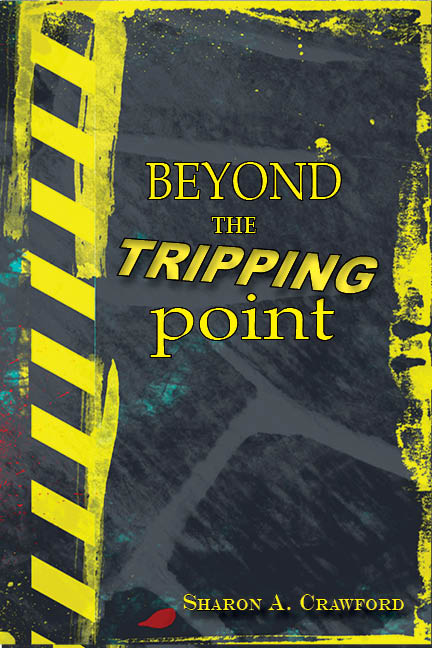
Cover of my short story collection Beyond the Tripping Point

"The role of a writer is not to say what we all can say, but what we are unable to say."
                                    ~ Anaïs Nin

Tuesday evening I taught a workshop on Developing Character and Dialogue in Fiction at the Runnymede Public library branch in Toronto. We covered what I’ve been blogging about the past few weeks and a bit more. I used excerpts from my mystery short story collection, Beyond the Tripping Point, to illustrate some points – which I’ve been doing here. There was one big difference – I had the proof copy of my book in my hands. This is very exciting and I’m putting the book cover up at the top of this post. You can find out more about Beyond the Tripping Point at my publisher’s website www.bluedenimpress.com.

Okay, back to the workshop.

One thing I really like about these workshops is the sharing and the learning. I always learn something. A student amazed me with his beginning of a story about a teenager starting the first day at high school. The student was a girl and that means he wrote it from a female perspective and did so very well. We will be covering this aspect and others for Point of View in writing fiction in future posts.

This story was one of three scenarios suggested to write the beginning of a story (novel or short story) focusing on bringing out the characters. The first time round they wrote using everything but dialogue, i.e., character actions, thoughts and working in what they see going on around them. After we talked about dialogue, they went back to their story and added some dialogue. It was interesting to see that most of them chose the student starting high school scenario.

Here are the three suggested scenarios:

a)      A teenage girl’s first day attending high school.

b)      A former bully returns to her high school reunion. She is 40ish and a psychiatrist.

c)      A man sits in court waiting for the verdict to a criminal charge for a crime he did not commit.

All of them conjure up various ideas. For a) the participants in this workshop had somewhat shy students. I don’t want to reveal their plots because they may want to develop them into their own stories. However, some ways to show the character as shy would be to have her hang back from the others, maybe get sick to her stomach before she leaves home, get lost trying to find her first class. And what would be really different is if the student was a guy. Usually guys would be more brash but what about making the fellow shy. How would he react? Would he get bullied? What story lines can you come up with?

For b) you would be taking the other side of the fence – the bully returning to her alma mater, especially when she (or it could be a he) is now a psychiatrist. How would the ex-bully feel about even going to the reunion? Would he or she go alone or insist a spouse or best friend come along for moral support? Maybe the ex-bully hasn’t told friends or spouse about his or her checkered background. How does being a psychiatrist influence? What happens as the ex-bully walks in the school front door, the auditorium? Especially when he or she spots one or more former classmates that were bullied? The scenarios are endless here.

For c), which a couple of students tackled, you might go inside the accused’s head as he waits for the jury to return? How does the accused feel? Remember this accused did not commit the crime. How are the others in the courtroom behaving – his lawyer, the prosecutor, etc.? What is the courtroom like in relation to how it makes the accused feel? Has the accused locked his thoughts onto one juror and watches Juror No. whatever to see what this juror’s face shows. And when the jury returns and the foreperson is delivering the verdict, how does the accused feel as the foreperson speaks? And after? If found guilty? If found not guilty? Again, the scenarios are endless.

Try writing the beginning of a short story for all suggested scenarios and see what you come up with. Pay attention to developing your character and use dialogue. You never know; you might have the beginning of a good story.

Cheers.

Sharon A. Crawford


Tags: , , , , , , ,