RSS

Category Archives: Plot and Characters

Christmas with your fiction characters

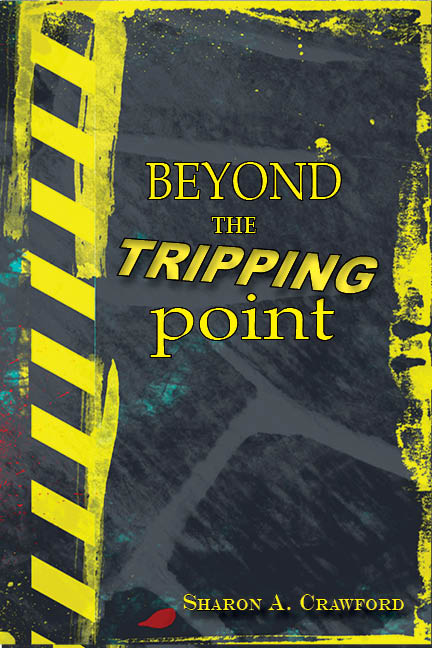
Link to Sharon A.'s book on amazon.com

Link to Sharon A.’s book on amazon.com

I do like Christmas on the whole…. In its clumsy way, it does approach Peace and Goodwill. But it is clumsier every year.

– E.M. Forster

How do the characters in your novel and short stories spend Christmas? Or do they even celebrate Christmas or any of the other cultural traditions for this time of year? (I’m using “Christmas” generically here.) Maybe you don’t actually set your stories at Christmastime, but it doesn’t hurt to imagine how your fictional characters do Christmas – even write it down – because Christmas can bring out the best and the worst of everyone in real life. And so it should in fiction.

None of my short stories in Beyond the Tripping Point are set at Christmas time, so I’m not sure what that says about me. However, if the fraternal twins, Dana Bowman and Bast Overture (“Gone Missing,” “Saving Grace,” “Digging Up the Dirt,” and “Road Raging”) were to celebrate Christmas, they probably would go to Christmas Mass for the first time in years (and you’ll have to buy the book and read the stories to see why). Great Aunt Doris would make one of her crash-unexpected visits and that would put a damper in the celebrations for Dana, Bast but maybe not Dana’s son David. The Great One, as she is called, is at loggerheads with Dana and Bast but gets along with David. I envision her coming with them to Christmas Mass and surprising Dana with her singing voice when singing the hymns, albeit singing in her gravelly voice. She’ll interfere with Bast and his Christmas cooking and the present unwrapping might turn into a free-for-all. It might end up with no one speaking or all learning something from the shared experience. And my forte being mystery fiction, there would be a murder, a robbery (maybe someone stealing the Christmas church collection) or some crime that the twins, with David’s help, and Great Aunt Doris’ meddling, would solve.

So you can see how imagining your fictional characters’ Christmas can help develop your characters. And maybe just create another story or chapter in your novel.

At this time, I want to wish you all a good holiday season (Christmas or whatever you celebrate). Take some time for family and friends, and for yourself and your writing.

Meantime, click on the book graphic above to link to my book (print or Kindle) at amazon.com

Cheers.

Sharon A. Crawford


Tags: , , , , , , , ,

When your fiction characters take over your mind

Beyond the Tripping Point Cover 72dpiA novelist is a person who lives in other people’s skins.

–       –    EL Doctorow

I’m rewriting the prequel novel to four linked stories in my short story collection Beyond the Tripping Point (Blue Denim Press, 2012). The main characters are the fraternal twin PIs Dana Bowman and Bast Overture, Detective Sergeant Donald Fielding, Great Aunt Doris, and Dana’s son, David. They appear in some or all of those linked stories and also in the novel I’m rewriting.

Trouble is one of the suspects in the novel has climbed inside my head and demands to be heard – loud and clear. I can see clearly what he looks like and does and I’ve already written him into some chapters, even given him his own Point of View, but he is still not satisfied. It is his story as much as it is the other characters’ story..

So I made some notes to go with the “old novel version chapters” and Friday afternoon I sat down at my computer and started a full-blown character sketch of this fellow. The sketch, when completed, will contain everything from what he eats (or doesn’t eat) for breakfast, to his sordid past, to his feelings and actions for the novel’s time. Not all, but some of this will be incorporated into the novel, bit by bit (without revealing his name until the police and PIs get up to speed about him). He will also get more novel time. After all, I don’t want him coming after me.

So, what do you do if one of your fiction characters seems to be taking over your mind to the point where you do your version of the absent-minded professor? Besides your mind swirling around like it’s going through space, not paying attention to the present/to what is happening can be dangerous. You don’t want to cross the street right in front of an oncoming car or burn dinner to the point where it sets your house on fire.

To give your demanding character his or her due, you need to do the following:

  • Acknowledge the character and his or her right to be in your short story, novella or novel
  • Do an in-depth character sketch – preferably on computer or on paper. You know the old saying about writing it down – doing so not only shows its relevance, but it gets all those swirling thoughts and ideas out of your head and into a more permanent record – at least one easier to access and review. Your head will thank you.
  • What is in a detailed character sketch? You character’s name, background (family, education, current job if he or she has one), physical characteristics, likes, dislikes, traits, What makes him or her angry, sad, happy, etc. What is his driving force in life? In other words all the stuff that he is and what makes him tick?
  • It helps to give this character a tag, i.e., something (or a few somethings) he does when nervous (become irritable, jingle change or keys in pocket, etc.), and something he does or says across the board. For example, he may always use the f-word or have a particular way of handling phone calls (talk to the point and hang up abruptly). Perhaps the character may have multiple allergies and constantly sneezes. The “tag” or “tags” should be something that becomes part of your story.
  • Caveat One: You can get carried away doing character sketches (or the reverse). The former is better because you won’t use it all in your story, and may use very little in your short story. But having full insight into your character and on paper, helps when you sit down in front of your computer to write your story. You feel as if your character is an old friend or old enemy.
  • Caveat Two: As you write your novel or short story, you may be inspired to add more to your character sketch or change something. Do so if it would work better. A character is constantly changing – just like real characters in real life.

Do any of you who are writing fiction have characters taking over your life? How do you deal with these demanding individuals?

Cheers.

Sharon A. Crawford


Tags: , , , , , , , ,

Point of View – Part 4 – The “God” POV

Cover of Sharon A. Crawford’s mystery short story collection

Easy reading is damn hard writing.

–          Nathaniel Hawthorne

The omniscient point of view is sometimes called the “God point of view” because it is the point of view that is see all, hear all and know all. Here, besides various characters’ POV you get the narrator jumping in. The narrator or “God” can do things like give background of a setting or other information that none of the characters would know. The omniscient POV also lets the author step back a little from getting too close to his or her characters, although the latter isn’t obligatory. The author may get close to his protagonist and antagonist.

Just to muddy the omniscient waters more, the rule of one character’s POV per scene (or per chapter if chapters aren’t divided into scenes) still applies, although some proponents of the omniscient POV disagree and say you can be in all characters’ heads at once.  “God” maybe is able to be everywhere at once, but your reader can’t with one exception – that narrator or “God” can work in those setting details – you know the type where one character drives into a town he has never visited and more than just what he can see and know is narrated (town’s history, for example).

When to Use Omniscient POV

You can best get your message across and further your plot by revealing many characters’ thoughts, and feelings.

When your story can’t be told from one person’s point of view because of actions occurring in the plot.

When your story needs information that none of the characters would have knowledge of.

In novels that cover several time periods and that have several characters.

In a nutshell, the author knows all/sees all understands all of what each character thinks, imagines, knows, feels.

It’s complicated.

What Isn’t Omniscient POV

First let’s cover what isn’t omniscient POV, but uses a technique not too common – mixing up first person and third person. Mystery writer Bill Pronzini does this in his “Nameless” detective novels. His earlier novels were told from the first person only and Nameless was just that. In later novels, Pronzini has three POV characters – Nameless (who has a first name now) and two other private investigators in the agency. Nameless is told from the first POV and the other two are in the third person. He sticks to the one character’s POV per chapter and puts the name of the third person POV at the beginning of the chapter. Nameless chapters don’t get this subheading because readers should be able to tell from the first person usage who the character is. Pronzini does this very well.

Omniscient POV in Short Stories

Omniscient, per se, isn’t usually used in short stories, although a variation of it can be used. You can have your narrator come in at the beginning with information about the story, the characters, the setting, etc. but at some point you have to focus on one character’s point of view. Because short stories are supposed to be well, short, you probably shouldn’t use more than two points of view, but no jumping heads – one character’s POV per scene. Otherwise you have the inside of the reader’s head jerking back and forth and getting confused. You do not want your reader to be confused – confused readers give up reading a story (or a novel).

Omniscient POV in Novels.

I use a variation of omniscient POV in my prequel mystery novel which I am writing now. I say “variation” because I put one character, Dana Bowman, in the first person and other main characters’ POV in the third person. I name the POV character at the beginning of the chapter or scene, but unlike Bill Pronzini I do put “Dana” for the first person POV character. However, for obvious reasons, I put nothing at the beginning of chapters with the POV of a maybe suspect.

Dana is put in the first person because she is the character I want the reader to get closest to. She always wears her emotions on her sleeve. Her fraternal twin Bast Overture is in third person for two reasons. He is not so forthcoming in his feelings, even in his own mind, and I want to show the reader this. The other main characters I get close to in varying degrees, but none as close as Dana.

As for the narrator jumping in to do the scene descriptions, etc. I’m still working on that or if I want it strictly from specific characters point of view. I’m leaning towards the latter and there is a technique in that which I’ll cover in a future post.

Meantime, read the beginning of my short story “No Breaks,” and see if you can figure out the Point of View and why? Is it third person limited or is it omniscient?

It’s a scummy Saturday morning and Highway 11 resembles fast food parking hell. If you’re making your last ditch scramble for your reserved spot in the Muskokas, try an alternate route.”

“Yeah, what alternate? Highway 400 is worse.” Millie Browne yells back at the radio announcer. She clicks off the radio.

Most of these Saturday drivers probably have air-conditioned cars. Millie isn’t blessed with air-conditioning. She isn’t blessed. She can’t even remember whether she was baptized as an infant, but today she’s going to remedy that.

Today, on this heat-infested highway, Millie desires only one thing: an even break in life. To obtain this end she plans to jump in the lake. She’s not sure which Muskoka lake but she doesn’t care. It won’t be Baptism by fire, but Millie figures the cold water will clear her head and bring some control back into her life.

Control is Millie’s keyword. She’s organized her life every day from senior year in high school. Her diaries (the truth) speak in contrast to her calendar (the plan).

Not so Jessica Myers, age 30, sitting beside Millie and thumbing on her BlackBerry… (excerpted from Beyond the Tripping Point, copyright 2012 Sharon A. Crawford, published by Blue Denim Press)

Cheers.

Sharon A. Crawford


Tags: , , , , , , , , , , , ,

POV – First person or third person – Part 3

Cover of Sharon’s book Beyond the Tripping Point

My task, which I am trying to achieve is, by the power of the written word, to make you hear, to make you feel–it is, before all, to make you see.

– Joseph Conrad, Lord Jim

So you want to get inside one person’s head (or at least one person at a time) in your story. Should you go for first person singular or third person singular?

Let’s look at how these can work.

First Person Point of View – the story is told from one character’s point of view, using “I,” “me,” “my” and “our.” The character could be a major player who is active in the novel, or the observer, as in F. Scott’s Fitzgerald’s The Great Gatsby.  Or an observer/major player, such as Archie in the Nero Wolfe mystery novels.

Anything that happens in the story must be what the character can see, hear, touch, feel, think, imagine or read. He or she can say what he sees about other characters but can reveal only his own feelings. He could imagine what the other character feels, but this must be clear. You can get around some of what sounds like restrictions by using emails, Facebook pages, Twitter – as long as it is either what the  I POV character is doing or reading. To help keep on track, picture a video camera inside this first person narrator’s head.

My short story “16 Dorsey St.” from Beyond the Tripping Point is told using emails between two sisters, Elsa and Sylvia .with newspaper clips thrown in. The POV remains with Elsa even with Sylvia’s replies. Elsa is reading them from her computer. Here’s a short example.

E-mail from Elsa to Sylvia

3/3/1997 9.07 P.M.

Subject: Newspaper story

Sylvia, something disturbing happened. The “someone” at the door was today’s newspaper and I don’t get the paper delivered. An article on the front page of section two was circled in red. I’ve scanned it and am attaching it so you can read it.

Love,

Elsa

Attachment to e-mail:

CRIME FLASHBACK—MURDER ANNIVERSARY TODAY

Today is the anniversary of one of Toronto’s most baffling murder cases. Fifty years ago, a 23-year-old woman was strangled. Lois Harkner was a honey blonde beauty, a lady who would never hurt anyone. Yet someone wanted her dead.

Harkner was found lying beside her dressing table…

(Excerpted from Beyond the Tripping Point, copyright 2012 Sharon A. Crawford, published by Blue Denim Press 2012)

When to use First Person POV

To move the plot forward, your readers need to know the main character’s inner thoughts.

You can reveal your main character best by telling the story from main character’s POV.

Revealing the conflict works best by showing the readers only the main character’s thoughts.

You want your readers to get up close and personal with your main character.

Third Person Point of View – the story is told from the narrator as “he/she” – you can use people’s names. Here the narrator is further from the story than the first person POV. In Third Person the story is told from that one character’s POV with only what he can observe, hear, etc.

Here’s the beginning of my short story “No Breaks” I combine what Millie hears on the radio with Millie’s inner thoughts.

“It’s a scummy Saturday morning and Highway 11 resembles fast food parking hell. If you’re making your last ditch scramble for your reserved spot in the Muskokas, try an alternate route.”

“Yeah, what alternate? Highway 400 is worse.” Millie Browne yells back at the radio announcer. She clicks off the radio.

Most of these Saturday drivers probably have air-conditioned cars. Millie isn’t blessed with air-conditioning. She isn’t blessed. She can’t even remember whether she was baptized as an infant, but today she’s going to remedy that.

(Excerpted from Beyond the Tripping Point, copyright 2012 Sharon A. Crawford, published by Blue Denim Press, 2012)

When to Use Third Person POV

First person POV won’t work because you need to have your narrator more distanced to report your main character’s thoughts and actions. Also use third person if first person gets in the way of showing your main character’s weaknesses. This latter is not always necessary, as some characters seem to be able to get around their egos to show and comment on their weaknesses. For example self-effacing humour, inner thoughts where they present their view as correct but they word it so you can read their weakness between the lines.

Narrator’s objectivity strengthens the main character or the story’s message.

In next week’s post we’ll go into using the omniscient Point of View as that can be complex and confusing.

Meantime, check out my short story collection and maybe purchase a copy. It is now available as an e-book. Click on the book cover above.

Cheers.

Sharon A. Crawford


Tags: , , , , , , , ,

Lessons learned from a Book Promo Frenzy

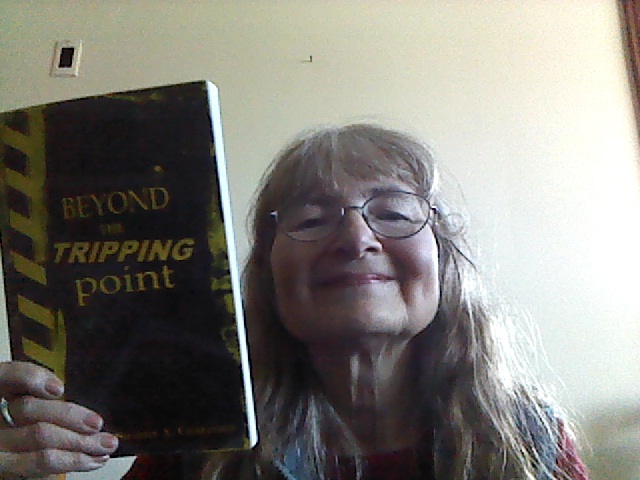
Sharon A. Crawford holding up copy of Beyond the Tripping Point

If the writing is honest it cannot be separated from the man who wrote it.

Tennessee Williams

With the windy and rainy remnants of Hurricane Sandy hitting Toronto, I wasn’t sure I would even make it to the TV taping. Didn’t get enough sleep the night before. But Sandy’s winds died down Tuesday morning and I showed up for the Internet TV interview about my short story collection Beyond the Tripping Point.

And if you are thinking, “I’m just writing my book so why would I be interested in doing interviews?”  Besides thinking ahead for the PR aspect (self-publishing or traditional publishing, you have to do PR), interviews (in front of a camera or not) can provide a good experience for you to focus on what your book is about, how you came to write it and who your characters are. I’ll cover just the highlights of my interview because once the interview is edited it should be online.

The studio is on the fourth floor of an old five-story building in downtown Toronto. The elevator didn’t look too promising so I took the stairs, went around a corner and opened the door to the studio. Everything is one room and the atmosphere is a combination of professional, friendly and helpful. I signed in, met the host and co-host, handed them a copy of my book and after their beginning preamble, I was introduced.

I wasn’t really nervous, probably because I do public speaking, readings, teach writing workshops and run a writing critique group. And I had prepared – just a brief list of what to expect from the channel’s previous podcasts, but mostly I had done practice runs in my head and verbally (Confession: I sometimes talk to myself). In the back of my mind was the editor at Blue Denim Press’s warning to try to stay on topic as the host sometimes wanders off topic.

In the 20 minutes we covered a lot of territory, including my background as a journalist, book editor and fiction writer, as well as some of the quirky characters in the story. I talked about the fraternal twin private investigators, Dana Bowman and Bast Overture in the four linked stories and the control freak protagonist in “No Breaks.” For the latter I delved into how that story came into existence – based on a true experience when a friend and I were driving up Highway 11 and her brakes failed. She was driving and knew enough to use her parking brake; we also went in and out of gas stations trying to find a bay so the brakes could be fixed. That’s where the true story ends. In “No Breaks” (the word has a double-meaning, hence the spelling), the story is told from the point-of-view (had to get POV in here somewhere) of the protagonist, Millie, who is not attractive, lost her job a few months previously, and has decided when they get up to the cottage owned by her friend, Jessica’s grandmother, she is going to jump in the lake. Things don’t go as planned and Millie, for once, goes over her tripping point and spontaneously commits a crime.

The co-host seemed to connect with my book’s characters. And the host had fun playing with some of the items I had brought along – items appearing in or used by some of the characters in Beyond the Tripping Point – an oversized magnifying glass (Great Aunt Doris in “Digging Up the Dirt”), a toy-size steam engine that sometimes starts “whoo-whoing” (“Porcelain Doll”),and a toy ambulance (“Missing in Action”). I even had a chance to read about a page and a half of one story, “The Body in the Trunk” and I could see to read from my book. In answer to a question about upcoming readings, etc. I plugged my book launch this Sunday, Nov. 4 from 2 p.m. to 5 p.m. (Eastern Standard time) at The Rivoli in downtown Toronto.

How the interview actually turned out will be seen once the edited version is up on the station’s website. It is live-streamed when being taped but the recorded version isn’t up yet, so I’m feeling a bit apprehensive. Did I curse the taping? My editor says it takes a few days for it to get edited and up.

So, back to an author with a book in-the-works being interviewed. You can do like I did years ago (back in the grey ages) in the writing courses I took. The instructor had us pair up and interview each other. For your practice interview, get someone (but not a close friend or family member – they know you too well) to interview you. If the person is in the interview biz, all the better – they can come up with pertinent questions about you and your book. You can do some prep beforehand like I did with the brief list and head/talk-to-myself practices. But the best bet is to know your book – plot and characters – and why you wrote/are writing it. You’ve been living with your book so it should be in your head. You may feel nervous but take a deep breath and go with the flow. You might even want to video record it (and perhaps put it on You Tube and connect it to your website or blog).

At any rate, the interview experience can bring you closer to your book’s characters and plot – and maybe even help you sort out any inconsistencies in plot and character. Consider it a learning experience for the real deal when you publish your book.

Meantime, check http://www.thatchannel.com later on for my interview on The Liquid Lunch. Hopefully it will be up there soon.

If you are in the Toronto area, come to my book launch at The Rivoli Nov. 4. More details at http://www.bluedenimpress.com  – click on “Toronto. Or go to http://www.amazon.com for copies of my book. O better still, click on the book cover image below.

Now please excuse me while I send out some book launch reminders and drop off a copy of Beyond the Tripping Point for review at a Toronto newspaper office.

Cheers.

Sharon A. Crawford

Sharon’s book Beyond the Tripping Point up close


Tags: , , , , , , , ,

Workshop your writing – join a writing critique group

Parts of Sharon’s short stories were originally critiqued by members of her East End Writers’ Group

Half my life is an act of revision.

                -John Irving

I run the East End Writers’ Group a writing critique group in east Toronto (http://www.samcraw.com/Articles/EastEndWriters.html). I’ve brought pieces of my stories from my collection Beyond the Tripping Point when they were in rough shape and received excellent suggestions on how and what to fix. In turn I have given some advice to other EEWG members on possible ways to make their manuscript sparkle. (My writing/editing/writing instruction business motto is “We make words sparkle.”)

The fact is we writers view our own writing very subjectively. A phrase or sentence or plot sequence may appear brilliant in our eyes but read out loud (with plenty of light) around the writing circle, the flaws start to show up. As we learned in last week’s post, reading out loud does this, but so much more when there are other ears besides your own hearing it.

I’m not trying to be negative here. One of the goals of writing critique groups needs to be pointing out the strengths and weaknesses in a positive, helpful and friendly manner. Giving suggestions for how you can improve your story is even better. Sometimes the group members agree on what needs fixing; sometimes they don’t. What you are receiving is a number of options to consider. I find that if many people agree on one point, a change is probably necessary. And with other eyes and ears on your manuscript, the feedback is objective. No tunnel vision.

For fiction, some of the areas we look at are:

In General – Is the beginning a reader hook? Is the lead at the beginning or later in the story? Does the story flow? Is there a point or theme to the story? What is the story’s biggest strength?

Plot – Besides grabbing the reader in paragraph one, does the plot contain suspense? Foreshadowing? Have a mixture of narration, dialogue, action and inner thoughts appropriate to the story? Is the story credible? Have some resolution at the end?

Characters – Are characters distinct? Three-dimensional? Believable? Interesting? Do they have character tags? (for example, jiggling keys in a pocket when nervous), Is there a protagonist? Antagonist? How do they interact? Dialogue appropriate to the characters? Further develop the plot and characters?

Point of View (more coming in a later post; I promise) – Too many points of view? Is POV used the best POV for the story? Whose story is it?

Writer’s Style – What is the style? Laid-back? Moody? Simple (as in simply told, not stupid)? Lyrical? Literary? Fast-paced? Light and humorous? ). Are word choices and phrases unique?

Mechanics – spelling, grammar, punctuation (including my two favourites – verb tense mix-up and incorrect dialogue setup).

Now that you have some idea what writing critique groups do (or should do), how do you find a suitable writing group? Consider if you want a group exclusive to fiction or whatever you write or to cover all writing areas. (EEWG is the latter). Consider if you want in-person or online. If the former, consider the geographic distance. Is it free or is there a charge? (EEWG is free but participants bring a gluten-free snack for our networking-snack break. We like to talk and eat.) What type of critique setup do you want? Some groups require pre-submission of manuscripts; some only critique one manuscript per session; some groups have page and time limits for reading. Some meet weekly, bi-weekly, monthly. (EEWG meets one evening monthly except July, August and December. We have a 10-minute reading limit, so length is up to six-pages double-spaced, copies for others and no pre-submissions.)  Check out local library branch websites – many library branches run writing groups or know who does. Check local writing organizations. When you find a group, try it out a few times and if it doesn’t work for you, move on to another group. Can’t find a suitable group? Start one yourself. I did 12 years ago.

If your schedule is tight already you might want to go the online critique route. For example, in Canada, the Canadian Authors Association (http://www.canauthors.org) has a Virtual branch for its members. Google “writing critique groups” and see what you get. The beauty here is you can pick one not in your geographic area. But remember, most online groups require give and take – for every critique you get you have to do one (sometimes more) critique of another person’s writing. That’s how we learn – from each other and each other’s writing.

Happy writing and happy critiquing.

Cheers.

Sharon A. Crawford


Tags: , , , , , , , , ,

Reading your writing out loud

Sharon A. Crawford almost reached her tripping point reading from Beyond the Tripping Point

Always read something that will make you look good if you die in the middle of it.                                                                                            ~P.J. O’Rourke

The stage was set for the public reading. The host introduced me and I grabbed the author copy of my book Beyond the Tripping Point. I walked up to the lectern, took the mic, opened the book, prepared to read…

And could barely see the words.

No, folks I wasn’t going blind. And my glasses were (and are) just fine.

The culprit was not enough light. Only dim ceiling lights. The restaurant had supplied the lectern and mic but did they forget we would need to see to read? I wasn’t the only one who had problems seeing. Usually I enjoying reading in public and am told I do it very well. Not last Thursday evening’s session in the patio room at a Toronto restaurant. I was reading as part of the Toronto branch of the Canadian Authors Association season launch, which outside of the restaurant’s gaff with the lack of light, went very well and brought in record numbers for the branch. I was proud to be reading as part of the CAA program. And yes I did manage to stumble through the short passage I read (and was actually heard as others told me afterward). However, I was so disconcerted by the lighting situation that I forgot to mention the date of my book launch (November 4, 2012). My publisher did, when he went up to the lectern.

My publisher since told me to print out my reading excerpt from my Word copy double-spaced in 14 point. Another author told me to use sans serif font and print all caps. Not sure whether my eyes could deal with the latter, but the large print sans serif sounds good. I might also bring a flashlight or a clip-on book light – if I can find new batteries for my book light and figure out how to insert them. Never again will I complain about bright lights shining in my eyes as I do a public reading.

Fortunately, this reading was a dry run (as my publisher put it) for the book launch.

This reading experience made me think how much reading out loud can help the manuscript in-the-works. Sometimes hearing what you have written puts your story in a different perspective. And your setup for reading-out-loud can bring out different experiences. If you read out loud, record it and play it back, you can hear your words as if coming from another person. If you merely read out loud, you hear the sound from inside your head.

Both methods can give you excellent feedback. You might discover:

Something in the plot sounds jarring and doesn’t work.

One character’s dialogue doesn’t sound right for the character or for the scene.

The point of view you have used may not work. For example if you wrote it from the third person omniscient – see all and hear all – like looking down from a cloud – it might sound cold and distant for what is intended to be an intimate story. (We will be covering the ins and outs of point of view in an upcoming blog. Soon).

You will hear your word errors – words that don’t fit exactly for what you mean, words left out or repeated.

Reading out loud can be an enlightening experience (pun on word intended). You can hear your characters live, breath, and speak. Reading out loud is an excellent tool to help you improve your writing. Playing back what you read works even better.

And if you are going to read in public, be prepared. Bring a large printout of your reading material and a book light or small flashlight. And practice beforehand. That latter (and my experience reading in public) was my saving grace last Thursday evening. Otherwise, I might have been tempted to walk away without reading.

Cheers.

Sharon A. Crawford

Author of Beyond the Tripping Point

http://www.bluedenimpress.com


Tags: , , , , , , , , , ,

Fiction-writing lessons from my students and more

Cover of my short story collection Beyond the Tripping Point

"The role of a writer is not to say what we all can say, but what we are unable to say."
                                    ~ Anaïs Nin

Tuesday evening I taught a workshop on Developing Character and Dialogue in Fiction at the Runnymede Public library branch in Toronto. We covered what I’ve been blogging about the past few weeks and a bit more. I used excerpts from my mystery short story collection, Beyond the Tripping Point, to illustrate some points – which I’ve been doing here. There was one big difference – I had the proof copy of my book in my hands. This is very exciting and I’m putting the book cover up at the top of this post. You can find out more about Beyond the Tripping Point at my publisher’s website www.bluedenimpress.com.

Okay, back to the workshop.

One thing I really like about these workshops is the sharing and the learning. I always learn something. A student amazed me with his beginning of a story about a teenager starting the first day at high school. The student was a girl and that means he wrote it from a female perspective and did so very well. We will be covering this aspect and others for Point of View in writing fiction in future posts.

This story was one of three scenarios suggested to write the beginning of a story (novel or short story) focusing on bringing out the characters. The first time round they wrote using everything but dialogue, i.e., character actions, thoughts and working in what they see going on around them. After we talked about dialogue, they went back to their story and added some dialogue. It was interesting to see that most of them chose the student starting high school scenario.

Here are the three suggested scenarios:

a)      A teenage girl’s first day attending high school.

b)      A former bully returns to her high school reunion. She is 40ish and a psychiatrist.

c)      A man sits in court waiting for the verdict to a criminal charge for a crime he did not commit.

All of them conjure up various ideas. For a) the participants in this workshop had somewhat shy students. I don’t want to reveal their plots because they may want to develop them into their own stories. However, some ways to show the character as shy would be to have her hang back from the others, maybe get sick to her stomach before she leaves home, get lost trying to find her first class. And what would be really different is if the student was a guy. Usually guys would be more brash but what about making the fellow shy. How would he react? Would he get bullied? What story lines can you come up with?

For b) you would be taking the other side of the fence – the bully returning to her alma mater, especially when she (or it could be a he) is now a psychiatrist. How would the ex-bully feel about even going to the reunion? Would he or she go alone or insist a spouse or best friend come along for moral support? Maybe the ex-bully hasn’t told friends or spouse about his or her checkered background. How does being a psychiatrist influence? What happens as the ex-bully walks in the school front door, the auditorium? Especially when he or she spots one or more former classmates that were bullied? The scenarios are endless here.

For c), which a couple of students tackled, you might go inside the accused’s head as he waits for the jury to return? How does the accused feel? Remember this accused did not commit the crime. How are the others in the courtroom behaving – his lawyer, the prosecutor, etc.? What is the courtroom like in relation to how it makes the accused feel? Has the accused locked his thoughts onto one juror and watches Juror No. whatever to see what this juror’s face shows. And when the jury returns and the foreperson is delivering the verdict, how does the accused feel as the foreperson speaks? And after? If found guilty? If found not guilty? Again, the scenarios are endless.

Try writing the beginning of a short story for all suggested scenarios and see what you come up with. Pay attention to developing your character and use dialogue. You never know; you might have the beginning of a good story.

Cheers.

Sharon A. Crawford


Tags: , , , , , , ,

Start your story with a bang

“If in the first chapter a hurricane is going to blow down an oak tree which falls through the kitchen roof, there’s no need to first describe the kitchen.”

— James Thayer, Author Magazine

We’ve all read short stories and novels that begin with a long description of a scene or a lot of telling about one of the major characters which may or may not include the character’s back story.

None of those is bad in itself. It is when these story beginnings are presented as a dull almost-exposition that leaves the reader yawning. I don’t know about you, but I always read the first page of a novel before deciding whether to buy the book or borrow it from the library. If I start flipping through the pages for something to grab my interest, I usually put the book back in the shelf.

Thayer says it so succinctly above. Why would you describe the kitchen first?

Some authors might figure they are building up the suspense slowly. News flash: This is the story or novel’s beginning. Sure, you want to create suspense but you want to jump right in with any suspense, not draw it out – leave the latter to later in your plot.

Let’s look at one of my earlier beginnings for my short story “Porcelain Doll.”

Sarah Holden eyeballed the porcelain doll in the window.  It sat among old tea sets and silver candleholders in Hanover’s newly opened antique shop. The doll’s eyes hypnotized Sarah back to 1965.  She saw another porcelain doll, her father dealing cards, and her last train ride.*

Although this isn’t the worst of beginnings, it is far from the best. It tries to grab the reader’s attention by trying to insinuate that something happened in 1965 but it doesn’t really excite the reader.

The first sentence in the second paragraph doesn’t help much either.

Sarah shuddered.  Her thoughts fastened on to that train ride.*

Maybe a little enticement with the “shuddered.” But the third paragraph nullifies any reader-grabbing potential.

That 1965 train trip started much the same as any other summer’s trip.  Sarah’s father worked for the railway which guaranteed the Holden family free train rides.*

*(All excerpts above Copyright 2002 Sharon A. Crawford)

You could get away with the above if you had a dynamite beginning. But with a weak beginning, the reader doesn’t care.

Flash forward to many, many versions later and to the final being published…

I can’t stop staring at the porcelain doll in the window. It sits among old tea sets and silver candleholders in Hanover’s newest antique shop. I keep trying to look away, but I can’t, despite my heart dancing inside my chest and my breath trying to keep time with it.

I have no business coming back to this area. I should have left the past with Mama when she died last fall from a tumble down the cellar stairs. But when I sorted through her clothes, a newspaper clipping fell from a dress pocket. Of course I had to read it. (Excerpted from Beyond the Tripping Point, copyright 2012 Sharon A. Crawford. Book available fall 2012 from Blue Denim Press)

The biggest difference is changing the Point of View from third person to first person (and we will cover POV in future posts.) That draws in the reader. We also still have Sarah staring in the window. But we also get her emotions as she does so. The reader wonders why and wants to read on.

The next paragraph goes into the past – but not back to 1965 yet. Here we get more teasers and realize there is more to this story than Sarah just looking at a doll in the window of an antique store.

So how can you start a story to grab the reader”

  • Create suspense as in “Porcelain Doll” above.
  • Start with dialogue but make it interesting. Don’t talk about the kitchen décor but get right into it. For example, my story “Gone Missing” begins with

The police can’t find her, Ms Bowman,” Robin Morgrave says. (Excerpted from Beyond the Tripping Point, copyright 2012 Sharon A. Crawford. Book available fall 2012 from Blue Denim Press)

You can also use a newspaper, radio or TV news excerpt (real or made up for your story), e-mail or text message to start. Just make sure it ties in with your story. For example a news story about a hurricane in Florida beginning a story about finding a missing child in Toronto won’t work – unless the search takes the main character to Florida or the hurricane spreads to Toronto and figures in the climax.

  • Blend in the setting with the story as I do in “Unfinished Business.” This also is an example of a longer lead.

Lilly Clark sat cross-legged on the park bench. She leaned forward, resting elbows on tanned knees. The background hum of cars on the nearby expressway competed with her daughter’s singing Sarah McLachlan’s I Will Remember You while flying high on the swing.

Trish, at 12, was perched on the edge of womanhood.

Lilly, at 12, had lost her childhood and fought the urge to revisit it. She’d only faltered once, but even then hadn’t given in completely.

      Until today. (Excerpted from Beyond the Tripping Point, copyright 2012 Sharon A. Crawford. Book available fall 2012 from Blue Denim Press)

  • Create a mood consistent with your story. The cliché is a character hearing footsteps in the fog. Come up with an original mood – this works in mystery and suspense stories. Just make sure you put the character in the scene and show the character’s feelings and actions. I start “My Brother’s Keeper” with

Dear Danny:

It’s a bleak hide-inside winter’s day. Did the wind shudder that day you went to your studio for the last time? Did you have to push through deep snow from the house to the end of the driveway? Why the studio? Were you making an artistic statement setting the scene among the clay sculptures and paintings that, since Ellen’s death, were all you had left? (Excerpted from Beyond the Tripping Point, copyright 2012 Sharon A. Crawford. Book available fall 2012 from Blue Denim Press)

Cheers.

Sharon A. Crawford

Author of Beyond the Tripping Point

See http://www.bluedenimpress.com


Tags: , , , , , , , ,

Making your characters speak – Part 2

Often I’ll find clues to where the story might go by figuring out where the characters would rather not go.

– Doug Lawson

In my short story, “No Breaks,” Millie and her friend Jessica are driving up to a cottage when the main brakes fail. The following excerpt shows Millie going where she would rather not go but her only other choice is a possible collision.

This calls for controlled action, Millie decides. She steers the car over to the shoulder of the road, hits the parking brake, and when the vehicle slides into a stop, switches on the car’s double blinkers. The shakiness sweeps through her body. Her fingers smash against her open purse, knocking out most of its contents.

“Shit,” she says.

“Millie,” Jessica replies. But it is only a half-hearted reprimand. Jessica is bent almost into a ball ready to roll onto the floor. But she’s still hanging onto The Berry. Mille can see it peeking out from her right hand.

“You okay, pal?” Millie asks. “Hey, come on, we’re going to make it…”

(Excerpted from Beyond the Tripping Point, copyright 2012 Sharon A. Crawford. Book available fall 2012 from Blue Denim Press).

As you can see from the above passage, readers find out about your characters from what they say, what they do, what they think and what other characters say about them. What they do ties in with Doug Lawson’s quote above. And it is better to show what your characters are doing instead of telling the reader. That can be incorporated with the other three criteria.

Let’s look at what characters say and how their dialogue shows them to the reader. In the above conversation between Jessica and Millie, we can see that Millie is irreverent, speaks first and thinks later, has a short fuse, is probably scared and is definitely not pleased at the situation she finds them in. When Millie really looks at her friend, she realizes how scared she is and tries to reassure her.

We can also see from Jessica’s actions that she is scared. She is bent over double but she’s still hanging onto her BlackBerry (nicknamed The Berry by Millie, which also shows something about Millie – that comes earlier in the story – Millie is not a fan of current technology).

Both women are scared, but they each react differently.

Let’s look at another excerpt from further along in the same story. Millie and Jessica have finally found a gas station with a bay. While waiting their turn to get the brakes fixed, they go for a sundae at the attached fast food place.

“Want a sundae, pal?”she asks Jessica.

“All right. But no whipped cream.”

Jessica develops stubbornness to a fine art when the pasty-faced counter girl oozes whipped cream on top of her vanilla sundae.

“Remove the whipped cream,” Jessica says.

“But it comes with the order,” the girl replies.

“Then take it off.”

“I can’t. It’s already on.”

“Oh, here,” Millie says. “Give me that sundae, and the other one you make you just hold the whipped cream. Get it?”

“But you wanted chocolate.”

“So? Here, let me.” Millie grabs the spoon, removes the whipped cream, places it on a napkin and pushes the sundae towards the girl. “Okay, now you can bring the chocolate. And I want the whipped cream.” (Excerpted from Beyond the Tripping Point, copyright 2012 Sharon A. Crawford. Book available fall 2012 from Blue Denim Press).

Here we have a problem with a food order where the server messes up. Instead of telling the reader what happens, the dialogue and the characters’ actions show the reader. We learn that Jessica isn’t just the scaredy-cat we might have thought and we also see that she is particular about her food. It is also her way of gaining some control in the bad situation of the main plot. The server is shown as someone who won’t accept responsibility for her mistakes. Millie again shows she is impatient and has to take some action so she butts in. We can visualize this scenario and relate to it because we’ve all had bad restaurant service at some time and maybe we didn’t have the nerve to do more about it than complain to our dinner companion. So, here we are connecting to the reader emotionally as well in an “aha” way.

The other points to remember about creating dialogue (besides showing the reader the characters) are:

  1. Dialogue must be relevant to the story, not just the characters, and move the plot along. The first dialogue excerpt above does this.
  2. Dialogue must be relevant to the characters. We’ve looked at what the characters are like from their dialogue but you wouldn’t have characters speak out of well, character. For example, an uneducated young man would probably say “ain’t” but wouldn’t speak like a university professor or vice-versa. However, remember, characters can change as the story progresses and they have to learn how to deal with their situation. That won’t make the uneducated young man suddenly talk posh – unless he goes through a Professor Henry Higging remake as in the play and movie, My Fair Lady.
  3. You can also work a character’s looks into dialogue. In “No Breaks,” at one point Jessica says that Millie has a nice heart-shaped face.
  4. Incorporate the character’s emotions into what she says rather than telling the reader. In the second excerpt above, it is clear that Millie is riled by their brake situation and so uses the sundae episode to try to take control…of something.
  5. Remember, the reader should be able to hear your characters speak.

Show not tell

Cheers.

Sharon A. Crawford


Tags: , , , , , , , ,