RSS

Category Archives: Sharon A. Crawford

Fiction-writing lessons from my students and more

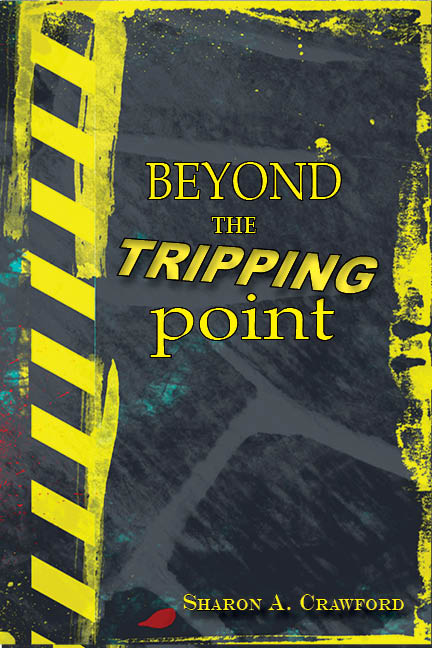
Cover of my short story collection Beyond the Tripping Point

"The role of a writer is not to say what we all can say, but what we are unable to say."
                                    ~ Anaïs Nin

Tuesday evening I taught a workshop on Developing Character and Dialogue in Fiction at the Runnymede Public library branch in Toronto. We covered what I’ve been blogging about the past few weeks and a bit more. I used excerpts from my mystery short story collection, Beyond the Tripping Point, to illustrate some points – which I’ve been doing here. There was one big difference – I had the proof copy of my book in my hands. This is very exciting and I’m putting the book cover up at the top of this post. You can find out more about Beyond the Tripping Point at my publisher’s website www.bluedenimpress.com.

Okay, back to the workshop.

One thing I really like about these workshops is the sharing and the learning. I always learn something. A student amazed me with his beginning of a story about a teenager starting the first day at high school. The student was a girl and that means he wrote it from a female perspective and did so very well. We will be covering this aspect and others for Point of View in writing fiction in future posts.

This story was one of three scenarios suggested to write the beginning of a story (novel or short story) focusing on bringing out the characters. The first time round they wrote using everything but dialogue, i.e., character actions, thoughts and working in what they see going on around them. After we talked about dialogue, they went back to their story and added some dialogue. It was interesting to see that most of them chose the student starting high school scenario.

Here are the three suggested scenarios:

a)      A teenage girl’s first day attending high school.

b)      A former bully returns to her high school reunion. She is 40ish and a psychiatrist.

c)      A man sits in court waiting for the verdict to a criminal charge for a crime he did not commit.

All of them conjure up various ideas. For a) the participants in this workshop had somewhat shy students. I don’t want to reveal their plots because they may want to develop them into their own stories. However, some ways to show the character as shy would be to have her hang back from the others, maybe get sick to her stomach before she leaves home, get lost trying to find her first class. And what would be really different is if the student was a guy. Usually guys would be more brash but what about making the fellow shy. How would he react? Would he get bullied? What story lines can you come up with?

For b) you would be taking the other side of the fence – the bully returning to her alma mater, especially when she (or it could be a he) is now a psychiatrist. How would the ex-bully feel about even going to the reunion? Would he or she go alone or insist a spouse or best friend come along for moral support? Maybe the ex-bully hasn’t told friends or spouse about his or her checkered background. How does being a psychiatrist influence? What happens as the ex-bully walks in the school front door, the auditorium? Especially when he or she spots one or more former classmates that were bullied? The scenarios are endless here.

For c), which a couple of students tackled, you might go inside the accused’s head as he waits for the jury to return? How does the accused feel? Remember this accused did not commit the crime. How are the others in the courtroom behaving – his lawyer, the prosecutor, etc.? What is the courtroom like in relation to how it makes the accused feel? Has the accused locked his thoughts onto one juror and watches Juror No. whatever to see what this juror’s face shows. And when the jury returns and the foreperson is delivering the verdict, how does the accused feel as the foreperson speaks? And after? If found guilty? If found not guilty? Again, the scenarios are endless.

Try writing the beginning of a short story for all suggested scenarios and see what you come up with. Pay attention to developing your character and use dialogue. You never know; you might have the beginning of a good story.

Cheers.

Sharon A. Crawford

 

Tags: , , , , , , ,

Start your story with a bang

“If in the first chapter a hurricane is going to blow down an oak tree which falls through the kitchen roof, there’s no need to first describe the kitchen.”

— James Thayer, Author Magazine

We’ve all read short stories and novels that begin with a long description of a scene or a lot of telling about one of the major characters which may or may not include the character’s back story.

None of those is bad in itself. It is when these story beginnings are presented as a dull almost-exposition that leaves the reader yawning. I don’t know about you, but I always read the first page of a novel before deciding whether to buy the book or borrow it from the library. If I start flipping through the pages for something to grab my interest, I usually put the book back in the shelf.

Thayer says it so succinctly above. Why would you describe the kitchen first?

Some authors might figure they are building up the suspense slowly. News flash: This is the story or novel’s beginning. Sure, you want to create suspense but you want to jump right in with any suspense, not draw it out – leave the latter to later in your plot.

Let’s look at one of my earlier beginnings for my short story “Porcelain Doll.”

Sarah Holden eyeballed the porcelain doll in the window.  It sat among old tea sets and silver candleholders in Hanover’s newly opened antique shop. The doll’s eyes hypnotized Sarah back to 1965.  She saw another porcelain doll, her father dealing cards, and her last train ride.*

Although this isn’t the worst of beginnings, it is far from the best. It tries to grab the reader’s attention by trying to insinuate that something happened in 1965 but it doesn’t really excite the reader.

The first sentence in the second paragraph doesn’t help much either.

Sarah shuddered.  Her thoughts fastened on to that train ride.*

Maybe a little enticement with the “shuddered.” But the third paragraph nullifies any reader-grabbing potential.

That 1965 train trip started much the same as any other summer’s trip.  Sarah’s father worked for the railway which guaranteed the Holden family free train rides.*

*(All excerpts above Copyright 2002 Sharon A. Crawford)

You could get away with the above if you had a dynamite beginning. But with a weak beginning, the reader doesn’t care.

Flash forward to many, many versions later and to the final being published…

I can’t stop staring at the porcelain doll in the window. It sits among old tea sets and silver candleholders in Hanover’s newest antique shop. I keep trying to look away, but I can’t, despite my heart dancing inside my chest and my breath trying to keep time with it.

I have no business coming back to this area. I should have left the past with Mama when she died last fall from a tumble down the cellar stairs. But when I sorted through her clothes, a newspaper clipping fell from a dress pocket. Of course I had to read it. (Excerpted from Beyond the Tripping Point, copyright 2012 Sharon A. Crawford. Book available fall 2012 from Blue Denim Press)

The biggest difference is changing the Point of View from third person to first person (and we will cover POV in future posts.) That draws in the reader. We also still have Sarah staring in the window. But we also get her emotions as she does so. The reader wonders why and wants to read on.

The next paragraph goes into the past – but not back to 1965 yet. Here we get more teasers and realize there is more to this story than Sarah just looking at a doll in the window of an antique store.

So how can you start a story to grab the reader”

  • Create suspense as in “Porcelain Doll” above.
  • Start with dialogue but make it interesting. Don’t talk about the kitchen décor but get right into it. For example, my story “Gone Missing” begins with

The police can’t find her, Ms Bowman,” Robin Morgrave says. (Excerpted from Beyond the Tripping Point, copyright 2012 Sharon A. Crawford. Book available fall 2012 from Blue Denim Press)

You can also use a newspaper, radio or TV news excerpt (real or made up for your story), e-mail or text message to start. Just make sure it ties in with your story. For example a news story about a hurricane in Florida beginning a story about finding a missing child in Toronto won’t work – unless the search takes the main character to Florida or the hurricane spreads to Toronto and figures in the climax.

  • Blend in the setting with the story as I do in “Unfinished Business.” This also is an example of a longer lead.

Lilly Clark sat cross-legged on the park bench. She leaned forward, resting elbows on tanned knees. The background hum of cars on the nearby expressway competed with her daughter’s singing Sarah McLachlan’s I Will Remember You while flying high on the swing.

Trish, at 12, was perched on the edge of womanhood.

Lilly, at 12, had lost her childhood and fought the urge to revisit it. She’d only faltered once, but even then hadn’t given in completely.

      Until today. (Excerpted from Beyond the Tripping Point, copyright 2012 Sharon A. Crawford. Book available fall 2012 from Blue Denim Press)

  • Create a mood consistent with your story. The cliché is a character hearing footsteps in the fog. Come up with an original mood – this works in mystery and suspense stories. Just make sure you put the character in the scene and show the character’s feelings and actions. I start “My Brother’s Keeper” with

Dear Danny:

It’s a bleak hide-inside winter’s day. Did the wind shudder that day you went to your studio for the last time? Did you have to push through deep snow from the house to the end of the driveway? Why the studio? Were you making an artistic statement setting the scene among the clay sculptures and paintings that, since Ellen’s death, were all you had left? (Excerpted from Beyond the Tripping Point, copyright 2012 Sharon A. Crawford. Book available fall 2012 from Blue Denim Press)

Cheers.

Sharon A. Crawford

Author of Beyond the Tripping Point

See http://www.bluedenimpress.com


Tags: , , , , , , , ,

Making your characters speak: part 1

“An editor is one who separates the wheat from the chaff and prints the chaff.”

– Adlai Stevenson

I’ve posted a lot about finding and creating characters. But they need to speak. There is an art to creating dialogue and some writers seem to have the gift for getting the dialogue rolling. Others need a little nudge and practice.

However, before we get into creating dialogue, I’m going to put on my editor’s hat and talk about setting up the dialogue. When I edit books, dialogue setup is one of the three top ways authors mess up. And no wonder. If you check out published books, the authors and editors seem to be all over the map with dialogue setup. I admit that some of the traditional rules have loosened up. But some still stand. So, here goes with the rules of thumb for setting up dialogue.

  1. Generally, you start a new paragraph with the dialogue and start a new paragraph when you go back into narrative. EXCEPTIONS: You can insert some action by the character speaking as they speak or as they finish speaking.
  2. The setup for dialogue is: “Dialogue,” Michael said. OR less common: Michael said, “Dialogue.” OR “Dialogue.” Michael smiled and stepped back. (In the latter Michael is doing something as he speaks, so it’s not necessary to put “Michael said.”
  3. Notice where the punctuation and quotation marks go. NO to “Dialogue”, he said. Instead, it is “Dialogue,” he said. And it is double quotation marks for Canadian and US style, with single quotation marks for British style. For US and Canadian style, if the speaker is quoting someone else, the quote uses single quotation marks as in “Shelly said, ‘Don’t you dare,’ which startled me,” Mark said. British style is reversed.
  4. Don’t be creative with speaker attributes. NO to “Get out of my way,” he barked. Dogs, not people, bark. I’ve had my knuckles wrapped (figuratively) for being creative with my speaker attributes. Stick to the standard he/she said/replied/asked.
  5. Keep the …ly adverbs out of the speaker attributes. NO to “Get out of my way,” he said sharply. Instead show the reader the speaker’s emotions in either what he says or what he is doing when speaking. We’ll cover this more in next’s week’s post.
  6. When you have two, even three speakers yakking for some time, you don’t need to have a broken record of he/she saids. Use each character’s name the first time he or she speaks and after that just use their dialogue. If the dialogue goes on for awhile, have your characters do something (and you can use their name here) to differentiate. For example, in my story “Saving Grace” from Beyond the Tripping Point (Blue Denim Press, fall 2012), when Detective Sergeant Fielding is speaking to Dana Bowman, it is obvious when he speaks, because he stutters. Again, we’ll get into these intricacies of dialogue next week.
  7. If one character speaks a lot at once, for example if recounting a story, don’t shove it all into one paragraph. You can divide it up into paragraphs. But the quotation marks setup changes – here you put opening quotation marks at the beginning of each paragraph, but no closing quotation marks until the character shuts up.
  8. Just for fun (and confusion) – when you are reading a book (e-book or print), see how the dialogue setup is handled. You’ll be surprised at the variation – some of which actually confuses the reader.

Or is that the editor in me speaking here?

Cheers.

Sharon A. Crawford


Tags: , , , , , ,

Creating eccentric characters

I might write pages and pages of conversation between characters that don’t necessarily end up in the book, or in the story I’m working on, because they’re simply my way of getting to know the characters.

–          Norton Juster

Quirky characters appear in many novels and TV series. Think the main character in
Dexter
, all of the characters in NCIS and NCIS Los Angeles and the Agatha Christie character, Hercule Poirot, who has crossed from books into movies and TV. Not surprising as life is filled with eccentric characters. Look around you as you go about your day. It could be that old lady wearing sandals, a winter coat and straw hat standing on the corner and yelling. It might be your dad who insists on having one white vegetable, one yellow vegetable and one green vegetable at dinner; then meticulously cuts them all into tiny pieces before spooning them into his mouth.

Or maybe it’s you.

How do you create an eccentric character for your short story or novel and what can you “borrow” from life or can you?

Most of my short stories in Beyond the Tripping Point have at least one eccentric character, although most, if not all, the characters contain a certain amount of quirkiness. My favourite is Great Aunt Doris who appears in two of the four linked stories featuring the fraternal twin PIs, Dana and Bast.

Where did Doris come from?

I did have an eccentric aunt who at one time when she was alive was the same age (70s) as Great Aunt Doris. Like Doris, my aunt was short and had a mouth on her. There any resemblance ends. My aunt was deep into Catholicism and anti-fluoridation and spoke her mind on both in a somewhat whiny voice, punctuated by a grin showing all her yellow teeth. Great Aunt Doris isn’t particularly religious, but she is conservative and has set ideas on what mothers should do and be. And she hates gays. As Dana is a mother and a PI with a son and Bast is gay, you get an idea where that could go. Doris is also the great aunt of Dana’s ex-husband, but that doesn’t stop her from showing up uninvited on Dana’s and Bast’s doorsteps. And meddling in their lives.

  1.  You can base your eccentric characters on someone you know or met but remember “base” is a four-letter word. Pick one or two traits you like about your real-life eccentric and build your character from there using your imagination.
  2. Envision how your character looks and sounds: Great Aunt Doris has an ugly face – her aging wrinkles and puffy, yet sagging cheeks, plus that ruby-red lipstick make her resemble a gargoyle, especially when she opens her mouth. And she does, in a gravelly voice, to criticize Dana’s parenting skills and insult Bast as well as poke herself into the Attic Agency’s current case. Her usual garb is a flowered housedress and flat shoes or pumps but when she’s on a case, she does a female version of Sherlock Holmes – minus the pipe. I did say she was conservative.
  3. Don’t create an eccentric character just for the sake of having one. He or she must fit into your story and interact realistically with the other characters. In other words, he or she must do the impossible – blend in as well as stand out as a distinct character. Here’s a dialogue excerpt from my short story “Saving Grace.” Dana is in the middle of tracking down a suspect when her cell rings. It is Great Aunt Doris.

“Yes, Doris,” I say.

“David…David,” deep breath, “David…is throwing a tantrum,” Aunt Doris says. “He’s…hey, little fellow, take it…gulp…easy. Dana, you’d better be a good mother and get back to the hotel…now.”

“Aunt Doris, calm down. I’ll be—”

A vehicle’s coming down the road, slowing down.

“Just a minute, Aunt Doris.” Without disconnecting the cell, I jump off the veranda and scurry behind a nearby bush.

“What is the matter with you, Dana? Your little boy is having a fit and you run off….”

“Shh, Aunt Doris.”

“Don’t you shush me young lady. Your son—”

(Excerpted from “Saving Grace,” from Beyond the Tripping Point, Copyright 2012 Sharon A. Crawford, Blue Denim Press, due out fall 2012).

There is also Detective Sergeant Fielding who gets migraines and sometimes stutters. But that’s another story…or is it? He appears in many of the Dana and Bast stories and shares one trait with Great Aunt Doris. He doesn’t like Bast, but not because Bast is gay. So your eccentric doesn’t have to be a pariah. Remember the eccentric must fit into your story.

When you get an idea for an eccentric character, do a detailed character sketch. Don’t forget the feelings, including how you feel about him or her. What is the character’s purpose in the story? And make sure the eccentric isn’t someone from your real life. This is fiction, not memoir.

Cheers.

Sharon A. Crawford


Tags: , , , , , , , , ,

Turning incidents into stories

I have written a great many stories and I still don’t know how to go about it except to write it and take my chances.”

– John Steinbeck

In last week’s post I listed an incident that is not a story under baddies for fiction plotting. Today I’m going to give some tips on turning an incident into a short story using the beginning of  “Saving Grace,” from my short story collection Beyond the Tripping Point.

Grace Milhop, age eight, disappeared just after two this afternoon from the backyard of her east end Toronto home. Her mother, Terry Milhop, went into the house to answer the phone and when she came back out 10 minutes later, her daughter was gone…. Milhop is estranged from her husband—

I drop the laundry basket and charge into the living room.

…police are asking anyone with any information to call—

It’s not the picture of a child with short red curls and freckles staring at me from the TV screen that stops me cold. Neither does the photo of a 35-ish man with thick black hair and matching moustache. My concern is the seven-year-old boy standing at the end of the coffee table, remote in his hand, staring at the TV.

“No, David.” I scramble over to him. “You don’t need to see this. Give me the remote.” I hold out my hand.

My son jumps back and shakes his head. When I lean forward and try to grab his hand, he butts his head into my stomach.

“No, David.”

Foot stomping.

“David.”

He stiffens; the remote clatters to the floor and he begins to whimper.

(Excerpted from “Saving Grace,” from Beyond the Tripping Point, Copyright 2012 Sharon A. Crawford, Blue Denim Press, due out fall 2012).

This could very well be an incident about a boy having a temper tantrum over whether he should be watching something on TV. As far as that goes, my late journalist teacher, Paul Nowak would say “So what?”

But more is going on here and I make it so. How?

1.Think beyond the incident itself – go for the big picture. Is this TV on/off battle only one in a long line of temper tantrums the mother is trying to deal with? Is the son acting out in other ways, maybe even bullying others at school or being bullied himself?

2. Figure out what the conflict could be in your story. Continuing with the above, does the mother constantly fight with her son? Maybe this is something new and she wants to find out why and fix it.

3. Build your incident and conflict into a plotline. For example, maybe the mother is a single mom trying to juggle a demanding job; maybe her daycare is threatening to quit, maybe she’s getting notes from the school about her son’s behaviour and she is dreading the appointment she has with the school principal. You can add in a few bad behaviours on her son’s part (use your imagination). Use dialogue and action to show the reader the escalating conflict. Build it up to a climax and then some sort of resolution – not necessarily the son becomes a good boy again.

My story doesn’t exactly follow those lines. “Saving Grace” is the second in four linked stories in this Beyond the Tripping Point story collection. For one thing, Dana and her fraternal twin, Bast, run a private investigative agency. The previous year David himself was kidnapped and it traumatized him so much that he couldn’t speak. Dana and David attend therapy consisting of talk and art therapy. As part of the process David harbours a lot of anger, and because he’s not speaking and he’s still scared, he reverts to the terrible twos and throws temper tantrums, including a lot of foot stomping. The plot itself has David trying to sort through his difficulty by honing in on other children being kidnapped. So, when Dana, David and eccentric Great Aunt Doris take a holiday to Goderich, Ontario, and they see a little girl who resembles the missing Grace, David literally tries to shove his mother into finding Grace. Dana is torn between doing so and leaving it to the police. It doesn’t help that Great Aunt Doris (who locks horns with Dana on a regular basis) tries to stop both Dana and David from becoming involved. She even calls Dana a “bad mother.”  The story continues…but I’m not going to reveal the climax but you can get the idea. I use plenty of action, dialogue and feelings.

So, if you have only an incident, don’t trash it. See if you can develop it into a real story.

Cheers.

Sharon A. Crawford


Tags: , , , , ,

Plotting your way through your story

We have to continually be jumping off cliffs and developing our wings on the way down.

— Kurt Vonnegut Jr., science fiction writer

Vonnegut describes the fiction writer perched at the computer. The writer is ready to roll with the plot. Sometimes he soars, but sometimes his wings get clipped.

In my short story, “For the Love of Wills,” two of my main characters are literally “up there.” The story begins:

“Clara, I’m going to fall.”

“Pipe down, Mother. Do you want them to hear us?”

“I can’t move. I’m stuck. See.” She tried tapping her toes against the stone rock wall, but to no avail.

“Well, whose idea was this anyway?” I whispered.

“Yours.”

“Mine?  Now, listen here…”

“Shush. Do you want Will and that blonde Bimbo to hear us?”

That blonde Bimbo is what got Heidi Anastasia Clarke started. Bad enough that on her 62nd birthday, her husband of 40 years, William Everett Clarke, decided to toss her out of their old-money mansion in Toronto’s Rosedale. All this for a post-mid-life crisis which brought his oh-so-much younger secretary in and sent my mother packing. (Excerpted from Beyond the Tripping Point, copyright 2012 Sharon A. Crawford. Book available fall 2012).

These two characters, Clara and Heidi, are definitely “ready to roll with the plot,” if they don’t fall first.

Now, let’s look at some baddies in fiction plotting.

A literary magazine editor once scrawled on one of my short stories, “This is not a short story. This is an incident.”

A novel that I evaluated contained quirky characters. However, they solved everything too easily and their relationships, including the love relationship, had no problems.

In another novel, the author had created a certain atmosphere from the setting and characters. Unfortunately, the plot resembled those 500-piece jigsaw puzzles that you finally toss out in a garage sale.

Kurt Vonnegut  Jr. describes plot as:

I don’t praise plots as accurate representations of life, but as ways to keep readers reading. When I used to teach creative writing, I would tell the students to make their characters want something right away — even if it’s only a glass of water. … When you exclude plot, when you exclude anyone’s wanting anything, you exclude the reader, which is a mean-spirited thing to do. You can also exclude the reader by not telling him immediately where the story is taking place, and who the people are. … And you can put him to sleep by never having characters confront each other.

The characteristics of a good plot are:

  1. A protagonist or main character with a conflict to resolve. The characters drive the plot. Let them struggle to get there. Life may be a bowl of cherries, but the characters need to experience the pits.
  2. The plot moves forward, usually chronologically, although some flashbacks can work. If you get lost, use Doug Lawson’s rule, i.e., figuring out where the characters would rather not go.
  3. Events must be connected, not random and they must link from one event to another with some purpose.
  4. The plot must be believable, whether commercial or literary fiction. Your story line may seem unbelievable, but you make it believable by suspending the reader’s disbelief. Think “Once Upon a Time.”
  5. Their must be a climax, whether it’s a moral one in the protagonist’s mind or the opposite extreme, such as a sword fight.
  6. The plot must have some resolution in the end.

Cheers.

Sharon A. Crawford


Tags: , , , , , , ,

What comes first? Character or Plot?

When your short story or novel idea first comes to light in your mind, what started it? A character? Plot? Or a combination of the two? Or something else?

I’ve had all four occur. The origin of my four linked stories in Beyond the Tripping Point – “Gone Missing,” “Saving Grace,” “Digging Up the Dirt” and “Road Raging” was definitely the female private investigator Dana Bowman. Her initial name was “Sheila” but I soon changed that because it was close to my first name, “Sharon.” Dana popped into my head before all these short stories, for a novel (now in a rewrite; it’s a prequel to these short stories). When that happens you have to find your plot. I like to take something that is going on in the world and use that as part of the plot. These stories occur in 1999 (the novel is set in 1998) so it has to be something pertinent to then. For example, there were no Blackberrys, iPhones, or Facebook, but there was the Internet (albeit mostly dial-up) and cell phones. The idea is to connect the “world situation” to the character and develop your plot. And bring in more characters.

If the plot idea occurs first, like it did in my story “No Breaks,” you need to develop the right characters to work your plot. The situation here is what would happen if you are driving along the highway and your brakes fail? And no “breaks” in the title isn’t a misnomer – it has to do with the main character I developed.

As you can see, plot and character are closely connected – the character and his or her traits drive the plot, but the plot also drives the character. What if the character and plot surface at the same time? Then you are truly blessed. However, if you are busy doing something else then, make sure you write the idea down (pen and paper, iPad, etc.) so the plot and character don’t disappear into the nether areas of your mind.

The “something else” is an extension of plot and character coming at you simultaneously. The difference here is you are actually sitting down to write – on paper or at your computer. It is called freefall writing where you start with a word, a phrase, a sentence, a vision, an emotion, a situation (or the start of one) and just sit and write whatever flows from your brain to your hands. You do not stop writing to make changes. This always happens to me when I attend a Brian Henry writing workshop (see http://quick-brown-fox-canada.blogspot.ca/). Brian gives us a few words, a situation, and gets us writing – then and in our lunch hour. In the afternoon we critique each other’s work. From there we take our story home, finish writing it and revise it. Some of my stories in Beyond the Tripping Point – “For the Love of Wills,” “The Body in the Trunk,” and “Missing in Action” started this way, although I suspect something to do with each was hidden in my brain somewhere. Try it; you might be surprised at the results.

Cheers.

Sharon A. Crawford


Tags: , , , , , , , , , , ,

Making your fiction characters credible

I’m reading through the proofs of my short story collection Beyond the Tripping Point before Blue Denim Press sends it to print. This time I’m only looking for typos – spelling errors, spacing problems, punctuation snafus, and the like. I’ve done several rewrites at the publisher’s request. Hopefully the characters and their plots in life are consistent and make sense – bearing in mind that these characters often do the unthinkable –murder, sexual assault, cause explosions, perform an indignity to a dead body, even fall in love. But like all characters in fiction or real life, what they do has some meaning and motivation – even if only clear in their minds.

So, how can you make your characters credible?  In a nutshell:

Make your characters three dimensional. There is more to a character than his or her looks and dialogue. A character has feelings, likes, dislikes, idiosyncrasies, flaws, strengths, baggage, etc. Your reader must connect to your characters – not necessarily like them. Superficial characters won’t come across as credible people. In my story, “Saving Grace,” (Beyond the Tripping Point, Blue Denim Press, due out fall 2012), the main character Dana Bowman is a private investigator. But she is also divorced and the mother of a seven-year-old son, David who was kidnapped the previous year. Dana has to deal with the repercussions of the kidnapping, including a David who won’t talk but throws tantrums, her own guilt about the kidnapping and not “saving David” from the aftermath. She is also stubborn and can get sarcastic. All this she brings to any missing person she has to find – in this case the eight-year old Grace. So she won’t “do everything right.”

Your characters’ dialogue and actions must be believable within the story’s context and genre. For example, in science fiction or fantasy, what the characters say and do will be based on the story line (think space trips for science fiction or dragons for fantasy).

Their dialogue and actions must be believable based on who they are – what their traits are. For example, a shy character isn’t going to suddenly speak up unless he or she has to change for a reason. A shy mother finally works up the courage to speak up for her child who is autistic and isn’t receiving the necessary support at school. There has to be a trigger point – some event – that forces the mother to overcome her shyness and speak up because she loves her child. Love of her child plus the event will motivate the mother to speak up.

You need to make what could be seen as unbelievable, credible. That means good character development and plot development.

I’ll be covering those in future postings.

Cheers.

Sharon A. Crawford


Tags: , , , , , ,