RSS

Category Archives: Uncategorized

Setting Writing Goals for 2013

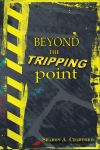
amazon.com link to Sharon A. Crawford's book

amazon.com link to Sharon A. Crawford’s book

The best time for planning a book is while you’re doing the dishes.

–          Agatha Christie

I’m not sure what the characters in my mystery short story collection Beyond the Tripping Point would plan to do in the new year. Some of the stories take place way before 2013 – for example 1965, 1997 and 1998. Be that as it may, that is no excuse why I and any other writer can’t set writing goals. It’s a new year and that brings new chances to write. If you’ve been procrastinating about finishing or even starting that novel or short story, here are a few outside the box (and a few inside the writing box) ideas how to get yourself from wishful thinking to actually writing.

1.    Do something else, like the late Agatha Christie’s suggestion above and I don’t think she meant using a dishwasher unless the dishwasher is you. Also try gardening (outdoors in season or indoor gardening in winter), walking, vacuuming and dusting, even sleeping. The idea is something mechanical and boring (washing dishes) and something that frees your mind to think creativity (walking, gardening) can kick-start an idea in your mind.
2.    Keep a notepad – electronic or hard copy – and write these ideas down as they hit your brain – you don’t want to operate like a gnat. That means keep something to do so near your bed at night.
3.    Take this latter a step further and start writing down your dreams no matter how silly they seem – analyze them or not, but the content alone may inspire a story.
4.    Learn from other writers – aspiring, established or in-between. Read blogs, attend writing workshops and courses (online or in person), join writing organizations and groups (preferably some that you have to go to in person as the personal connection with writers is good for your writing soul).
5.    Read novels and stories like you want to write – in print or e-book, whichever works for you. Reading others’ writing inspires you, not just with ideas, but with the writer’s style and grace.
6.    Blog excerpts of your writing – but make sure you state that it is copyrighted by you and don’t post the whole story because it could be considered a first publication and may interfere with other publication (unless you self-publish; then you can do what you want). On the other hand blog posts can often turn into seeds for books – trade or self-published. For an example, see posts by Alex Leybourne at http://alexlaybourne.com/
7.    Blog about your writing journey. We can learn from each other. For an example, see blog posts at http://bottledworder.wordpress.com/
8.    Try to write every day, even if just for an hour. For inspiration on this check out Julia Cameron’s The Writer’s Way at http://juliacameronlive.com/
9.    And perhaps most important – set writing goals for the year. Check http://bottledworder.wordpress.com/2012/12/31/new-years-resolutions-2013-guide-for-writers/ and Alex Laybourne’s blog post for Jan. 2 at http://alexlaybourne.com/2013/01/01/new-beginnings-a-guide-to-2013/

Happy and prolific writing for 2013.

If you read my book (see book cover at the top), please review it. Thanks.

Cheers.

Sharon A. Crawford
 

Tags: , , , , , , , , , , , , , ,

Lessons learned from a Book Promo Frenzy

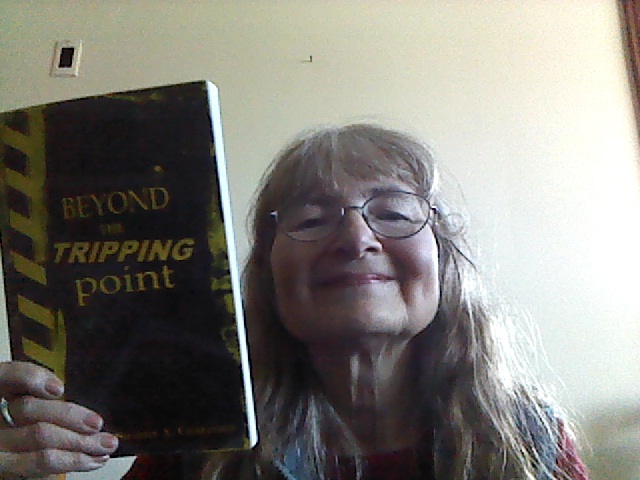
Sharon A. Crawford holding up copy of Beyond the Tripping Point

If the writing is honest it cannot be separated from the man who wrote it.

Tennessee Williams

With the windy and rainy remnants of Hurricane Sandy hitting Toronto, I wasn’t sure I would even make it to the TV taping. Didn’t get enough sleep the night before. But Sandy’s winds died down Tuesday morning and I showed up for the Internet TV interview about my short story collection Beyond the Tripping Point.

And if you are thinking, “I’m just writing my book so why would I be interested in doing interviews?”  Besides thinking ahead for the PR aspect (self-publishing or traditional publishing, you have to do PR), interviews (in front of a camera or not) can provide a good experience for you to focus on what your book is about, how you came to write it and who your characters are. I’ll cover just the highlights of my interview because once the interview is edited it should be online.

The studio is on the fourth floor of an old five-story building in downtown Toronto. The elevator didn’t look too promising so I took the stairs, went around a corner and opened the door to the studio. Everything is one room and the atmosphere is a combination of professional, friendly and helpful. I signed in, met the host and co-host, handed them a copy of my book and after their beginning preamble, I was introduced.

I wasn’t really nervous, probably because I do public speaking, readings, teach writing workshops and run a writing critique group. And I had prepared – just a brief list of what to expect from the channel’s previous podcasts, but mostly I had done practice runs in my head and verbally (Confession: I sometimes talk to myself). In the back of my mind was the editor at Blue Denim Press’s warning to try to stay on topic as the host sometimes wanders off topic.

In the 20 minutes we covered a lot of territory, including my background as a journalist, book editor and fiction writer, as well as some of the quirky characters in the story. I talked about the fraternal twin private investigators, Dana Bowman and Bast Overture in the four linked stories and the control freak protagonist in “No Breaks.” For the latter I delved into how that story came into existence – based on a true experience when a friend and I were driving up Highway 11 and her brakes failed. She was driving and knew enough to use her parking brake; we also went in and out of gas stations trying to find a bay so the brakes could be fixed. That’s where the true story ends. In “No Breaks” (the word has a double-meaning, hence the spelling), the story is told from the point-of-view (had to get POV in here somewhere) of the protagonist, Millie, who is not attractive, lost her job a few months previously, and has decided when they get up to the cottage owned by her friend, Jessica’s grandmother, she is going to jump in the lake. Things don’t go as planned and Millie, for once, goes over her tripping point and spontaneously commits a crime.

The co-host seemed to connect with my book’s characters. And the host had fun playing with some of the items I had brought along – items appearing in or used by some of the characters in Beyond the Tripping Point – an oversized magnifying glass (Great Aunt Doris in “Digging Up the Dirt”), a toy-size steam engine that sometimes starts “whoo-whoing” (“Porcelain Doll”),and a toy ambulance (“Missing in Action”). I even had a chance to read about a page and a half of one story, “The Body in the Trunk” and I could see to read from my book. In answer to a question about upcoming readings, etc. I plugged my book launch this Sunday, Nov. 4 from 2 p.m. to 5 p.m. (Eastern Standard time) at The Rivoli in downtown Toronto.

How the interview actually turned out will be seen once the edited version is up on the station’s website. It is live-streamed when being taped but the recorded version isn’t up yet, so I’m feeling a bit apprehensive. Did I curse the taping? My editor says it takes a few days for it to get edited and up.

So, back to an author with a book in-the-works being interviewed. You can do like I did years ago (back in the grey ages) in the writing courses I took. The instructor had us pair up and interview each other. For your practice interview, get someone (but not a close friend or family member – they know you too well) to interview you. If the person is in the interview biz, all the better – they can come up with pertinent questions about you and your book. You can do some prep beforehand like I did with the brief list and head/talk-to-myself practices. But the best bet is to know your book – plot and characters – and why you wrote/are writing it. You’ve been living with your book so it should be in your head. You may feel nervous but take a deep breath and go with the flow. You might even want to video record it (and perhaps put it on You Tube and connect it to your website or blog).

At any rate, the interview experience can bring you closer to your book’s characters and plot – and maybe even help you sort out any inconsistencies in plot and character. Consider it a learning experience for the real deal when you publish your book.

Meantime, check http://www.thatchannel.com later on for my interview on The Liquid Lunch. Hopefully it will be up there soon.

If you are in the Toronto area, come to my book launch at The Rivoli Nov. 4. More details at http://www.bluedenimpress.com  – click on “Toronto. Or go to http://www.amazon.com for copies of my book. O better still, click on the book cover image below.

Now please excuse me while I send out some book launch reminders and drop off a copy of Beyond the Tripping Point for review at a Toronto newspaper office.

Cheers.

Sharon A. Crawford

Sharon’s book Beyond the Tripping Point up close


Tags: , , , , , , , ,

Point of View: whose story is it anyway?

Cover of Sharon’s short story collection Beyond the Tripping Point. Book Launch Nov. 4, 2012 at The Rivoli, Toronto, Ontario,Canada

What is written without effort is in general read without pleasure

– Samuel Johnson

We writers often get into a kerfuffle about the point(s) of view in our story – short or novel. Maybe it’s because we get so caught up in the plot and characters we do a version of not seeing the forest for the trees. So in one paragraph Suzie and Bert may be talking but Suzie’s thoughts are incorporated with her dialogue and in the next Bert’s thoughts are included with his dialogue. Oops. That’s two points of view in one scene. I call it “jumping heads” (but it’s not nasty like lice).

The reader can definitely get confused with this setup (Picture the reader jumping back and forth from Suzie to Bert; hence the term “jumping heads”).

Often this problem has its roots in the author not being clear just whose story it is?

Let’s look at a brief excerpt from my short story “Gone Missing” from my mystery collection Beyond the Tripping Point. This story features the fraternal twin private investigators, Dana Bowman and Bast Overture. In the beginning, they are in their office talking to a new client.

“The police can’t find her, Ms Bowman,” Robin Morgrave says to me.

Rosemary Morgrave’s gone missing and I’m putting on the brave smile for her twin brother. Robin sits on the other side of the desk in the third floor office of The Attic Agency. Only my twin brother, Bast, nodding, stops me from losing it. Ever since David my seven-year-old son was abducted last August I’ve been living in Panicville. Sure, we got David back, but how much of him returned? He follows Bast around like an investigator-in-training. His brown eyes stare right through my soul. I wish he’d just say how he feels. But since his return, David hasn’t opened his mouth except to swallow liquids and food. He doesn’t even cry. (Copyright 2012 Sharon A. Crawford.Excerpted from “Gone Missing” from Beyond the Tripping Point 2012 Blue Denim Press)

This sets the point of view for this story. Although it might appear to be Robin Morgrave’s story from the beginning dialogue, the second paragraph clearly lets us know that it is Dana’s story – because behind dealing with Robin’s case, Dana is still dealing with the fallout from her own son’s kidnapping and how that affects finding Rosemary. That will be following throughout the story. So, the Point of View is with Dana. You can also see that you don’t necessarily have to start the story with something said about, some narrative about, or something said by the POV character. You can weave it in – as long as it stays in that character’s POV and comes across as such.

So, how do you decide whose point of view to tell your story from? You ask yourself “whose story is it?” which can help… somewhat. There are exceptions, such as Scott Fitzgerald’s The Great Gatsby, which is not told from The Great Gatsby’s point of view but from his friend. However, the story is basically about Gatsby. It can get tricky.

There is a way to get around this “whose story is it” when the novel is really more than one character’s story or the story is about something such as catching a serial killer. The latter may involve a couple of police officers, the victim or victims, and even the serial killer. Here you are allowed to use multiple points of view. But there are guidelines. The rule of thumb is each chapter or each scene (if you have more than one scene in a chapter) must be from the point of view of one character only. When you start another chapter you can change the point of view. You just leave a double space to show scene changes.

Short stories are usually told from one point of view, but again there are exceptions. However, it is best to keep it to two points of view maximum as a short story has limited space in which to tell your story. Again, you can use the scene change set-up to go from one character’s point of view to another character’s. You can also segue from one character to another – once – in a scene, not a constant flipping back and forth. This latter is more difficult to do.

My short stories in Beyond the Tripping Point keep to one character’s point of view – sometimes in first person and sometimes in third person. We’ll cover that aspect in a future post. Now, in the rewrite of a prequel novel (to “Gone Missing,” “Saving Grace” and the other two linked stories in Beyond the Tripping Point) I use multiple points of view. You can probably guess from the beginning of “Gone Missing” above what the novel is about. But because it’s a novel with police officers, two private investigators, a little boy and others, I’m focusing on the bigger picture of the story line and how it affects not only Dana, but other key players. My technique here is to put the character’s name at the top of the scene/chapter for point of view – mainly because I put Dana in the first person and everyone else in third person. And yes, I use the scene change technique.

In another post we will also look at some tricks to “get inside” the non POV characters without jumping heads and staying with the POV character.

What is my story now? I’m busy doing pre-book launch PR for Beyond the Tripping Point. That includes an interview appearance on a podcast TV show. It’s been awhile since I’ve been in front of a video camera (or behind one) so we’ll see how it goes. I’ll report in the next blog.

For information on my book launch (it’s November 4, 2012) go to http://www.bluedenimpress.com and click on “Toronto.”

Cheers.

Sharon A. Crawford


Tags: , , , , , , ,

Making your characters speak – Part 2

Often I’ll find clues to where the story might go by figuring out where the characters would rather not go.

– Doug Lawson

In my short story, “No Breaks,” Millie and her friend Jessica are driving up to a cottage when the main brakes fail. The following excerpt shows Millie going where she would rather not go but her only other choice is a possible collision.

This calls for controlled action, Millie decides. She steers the car over to the shoulder of the road, hits the parking brake, and when the vehicle slides into a stop, switches on the car’s double blinkers. The shakiness sweeps through her body. Her fingers smash against her open purse, knocking out most of its contents.

“Shit,” she says.

“Millie,” Jessica replies. But it is only a half-hearted reprimand. Jessica is bent almost into a ball ready to roll onto the floor. But she’s still hanging onto The Berry. Mille can see it peeking out from her right hand.

“You okay, pal?” Millie asks. “Hey, come on, we’re going to make it…”

(Excerpted from Beyond the Tripping Point, copyright 2012 Sharon A. Crawford. Book available fall 2012 from Blue Denim Press).

As you can see from the above passage, readers find out about your characters from what they say, what they do, what they think and what other characters say about them. What they do ties in with Doug Lawson’s quote above. And it is better to show what your characters are doing instead of telling the reader. That can be incorporated with the other three criteria.

Let’s look at what characters say and how their dialogue shows them to the reader. In the above conversation between Jessica and Millie, we can see that Millie is irreverent, speaks first and thinks later, has a short fuse, is probably scared and is definitely not pleased at the situation she finds them in. When Millie really looks at her friend, she realizes how scared she is and tries to reassure her.

We can also see from Jessica’s actions that she is scared. She is bent over double but she’s still hanging onto her BlackBerry (nicknamed The Berry by Millie, which also shows something about Millie – that comes earlier in the story – Millie is not a fan of current technology).

Both women are scared, but they each react differently.

Let’s look at another excerpt from further along in the same story. Millie and Jessica have finally found a gas station with a bay. While waiting their turn to get the brakes fixed, they go for a sundae at the attached fast food place.

“Want a sundae, pal?”she asks Jessica.

“All right. But no whipped cream.”

Jessica develops stubbornness to a fine art when the pasty-faced counter girl oozes whipped cream on top of her vanilla sundae.

“Remove the whipped cream,” Jessica says.

“But it comes with the order,” the girl replies.

“Then take it off.”

“I can’t. It’s already on.”

“Oh, here,” Millie says. “Give me that sundae, and the other one you make you just hold the whipped cream. Get it?”

“But you wanted chocolate.”

“So? Here, let me.” Millie grabs the spoon, removes the whipped cream, places it on a napkin and pushes the sundae towards the girl. “Okay, now you can bring the chocolate. And I want the whipped cream.” (Excerpted from Beyond the Tripping Point, copyright 2012 Sharon A. Crawford. Book available fall 2012 from Blue Denim Press).

Here we have a problem with a food order where the server messes up. Instead of telling the reader what happens, the dialogue and the characters’ actions show the reader. We learn that Jessica isn’t just the scaredy-cat we might have thought and we also see that she is particular about her food. It is also her way of gaining some control in the bad situation of the main plot. The server is shown as someone who won’t accept responsibility for her mistakes. Millie again shows she is impatient and has to take some action so she butts in. We can visualize this scenario and relate to it because we’ve all had bad restaurant service at some time and maybe we didn’t have the nerve to do more about it than complain to our dinner companion. So, here we are connecting to the reader emotionally as well in an “aha” way.

The other points to remember about creating dialogue (besides showing the reader the characters) are:

  1. Dialogue must be relevant to the story, not just the characters, and move the plot along. The first dialogue excerpt above does this.
  2. Dialogue must be relevant to the characters. We’ve looked at what the characters are like from their dialogue but you wouldn’t have characters speak out of well, character. For example, an uneducated young man would probably say “ain’t” but wouldn’t speak like a university professor or vice-versa. However, remember, characters can change as the story progresses and they have to learn how to deal with their situation. That won’t make the uneducated young man suddenly talk posh – unless he goes through a Professor Henry Higging remake as in the play and movie, My Fair Lady.
  3. You can also work a character’s looks into dialogue. In “No Breaks,” at one point Jessica says that Millie has a nice heart-shaped face.
  4. Incorporate the character’s emotions into what she says rather than telling the reader. In the second excerpt above, it is clear that Millie is riled by their brake situation and so uses the sundae episode to try to take control…of something.
  5. Remember, the reader should be able to hear your characters speak.

Show not tell

Cheers.

Sharon A. Crawford


Tags: , , , , , , , ,