RSS

Tag Archives: Creating eccentric fiction characters

Interview of Fictional Character by Fiction Character – Part 8

Cover of Sharon A. Crawford's mystery short story collection

Cover of Sharon A. Crawford’s mystery short story collection

The things that you know more about than you want to know are very useful.

          Robert Stone

Bast Overture stays in 2013 and will have his hands full with the next few interviews as he will be talking to members of the wacky Clarke family who appear in “For the Love of Wills” in my short story collection Beyond the Tripping Point (Blue Denim Press, 2012). When a body turns up in their Rosedale home (ritzy area of Toronto, Canada) each member tries not to get arrested for the crime. Bast will start with the main character, Clara Clarke.

Bast: Clara, it’s not every day that a body is found in the family home. How did you react when you and your mother found the body in the attic den?

Clara: Sounds like an old Agathie Christie mystery when you put it that way.

Bast: But it’s not. It’s present day.

Clara: Right. Well, I did wonder if Dad was involved somehow. I mean he did find the body.

Bast: But didn’t you feel a little bit glad? The main reason your mother was kicked out of the family home was now dead?

Clara: I don’t think so because like I said, I was worried about Dad.

Bast: What about your mother? She had the most to gain from the murder?

Clara: No way. Mother was with me.

Bast: When the body was found, but before?

Clara: You forget that Dad changed the locks so Mother’s house key didn’t work.

Bast: Aw, come on, she could have knocked on the door earlier and your dad could have let her in.

Clara: No way. Mother didn’t want to even confront Dad.

Bast: Very well. Now you and your mother made a rather unconventional entrance. Was this your idea?

Clara. No. Mother’s. Even though I did rock climbing at the gym, Mother, whose only previous climbing experience was stairs, suggested we climb the walls of the house to the balcony and then sneak in.

Bast:  In this story by Sharon A. Crawford, your mother and you discuss why the two of you have to get into the house.

We’ve got to see his will.” [Mother said]

“His will? What the hell for?”[Clara said]

“I need to see that he’s still leaving me everything and hasn’t changed it to the Bimbo.”

“Wouldn’t it be simpler to just ask William, Jr.? He is the family lawyer?”

She’d smirked and muttered something about keeping her ideas close to her mind. (Excerpted from Beyond the Tripping Point, copyright 2012 Sharon A. Crawford)

So, Clara, why didn’t you persuade your mother to talk to William Jr.?

Clara: Well, because she is Mother. Once she makes her mind up about something, nobody can change it.

(Heidi Anastasia Clarke – Mother –  stomps into the room): And I had my reasons. It had to be done this way and only this way.

Bast: Mrs. Clarke, please, this is Clara’s interview. Your turn will be next week.

Heidi (waggling a finger at Bast): Now, listen here young man, it was my husband who cheated on me, who kicked me out of our home after 40 years of marriage. I think I…”

Clara: Mother, shut up.

Heidi: Now, listen, Clara…

The two continue arguing. Bast throws up his hands in disgust, covers his ears with his hands and walks out of the room.

You can read more about the Clarke family in my mystery short story collection Beyond the Tripping Point, (Blue Denim Press, 2012). Click on the book at the top and it takes you to my profile – including book reviews – at www.amazon.com. The book is available there in print and Kindle. For Kobo e-book  go to http://www.chapters.indigo.ca/books/search/?keywords=Beyond%20the%20Tripping%20Point or go to any bricks and mortar store and order in a print copy.

The video link to my thatchannel.com interview and reading from Beyond the Tripping Point on You Tube can now be accessed via the new page “Video” at the top of this blog.

Cheers.

Sharon A. Crawford


Tags: , , , , , , , ,

Interview of Fictional Characters by Fictional Character – Part 4

Be obscure clearly. – E.B. White

Cover of Sharon A. Crawford's mystery short story collection

Cover of Sharon A. Crawford’s mystery short story collection

 Bast interviews his fraternal twin, Dana Bowman. The twins were close when growing up but in their twenties drifted apart partly because Bast didn’t like Ron Bowman, Dana’s husband at the time. They reconnected a few years before the four linked stories in Beyond the Tripping Point, after Dana’s divorce when Bast helped Dana buy out her ex for the “family” home and moved in to help his sister raise David and meet expenses. Their backgrounds, personalities and looks are different (Fraternal twins don’t necessarily look alike) so all is not always smooth sailing.

Bast: Dana, you have a somewhat unusual approach when we are doing an investigation. Care to elaborate?

Dana: Well, little brother, (From her 4’11” height she looks up at Bast, standing tall at 6’ 3”) I suppose you mean my sketches?

Bast: Yes, in particular your caricatures of the people we interview.

Dana: I’ve always liked to sketch, particularly people and I like to get at what I see as the heart of the person, what makes them tick. And everybody has something they don’t tell the world. So, I look into their face, their body language and see what they aren’t saying. Often that helps with our investigation.

Bast: Yes, but sometimes it startles the person, like Anne Belcher in “Road Raging.”

Dana: Yes, but Anne was pretty upset already when she banged on our door. I guess if someone close to you, like your husband, had been seriously injured in a car collision, you’d be upset…unless it was all an act…and that’s what I am trying to find out when I sketch a person.

Bast: And was Anne all an act?

Dana: Now, Bast, I’m not telling. That would spoil it for our readers.

Bast: Okay. Let’s go to “Digging Up the Dirt” where you were actually doing caricatures of seniors and other guests at Mavis Crandock’s 100th anniversary celebration. Did any of them help solve the double murder here?

Dana: Thanks for not giving it all away. I think probably subconsciously although we did solve this one using other means.

Bast: I presume you mean Great Aunt Doris. She…

Dana: Don’t mention that woman and I’m surprised you do considering what she thinks of you…

Bast: And of you. The two of  you really got into it in “Saving Grace” with her criticising your parenting…

Dana: Don’t you start. You know we were having difficult times because of David being psychologically mute. Aunt Doris didn’t have to live with us day-by-day, thank God (Dana makes a mock sign of the cross).

Bast: Fair enough. But she did help you a lot in “Saving Grace?”

Dana: I suppose so. Without her intervention things might have been quite different for all of us.

Bast: Back to “Digging up the Dirt” which was a few months after “Saving Grace” – Aunt Doris did help you…

Dana: Inserted herself in the investigation was more like it. Bast you should have seen her get-up when we went out to interview people. I wish I had sketched that one although I suppose I could from memory. (She sits down, picks up her sketch pad and charcoal and starts sketching).

Bast: You are also not that fond of computers; how do you get around that?

Dana: Well, at first I wouldn’t touch the damn machines, but then I started a bit with the email.

Bast: Ah, the email will do it every time. (Note to readers: The Dana-Bast stories take place in the late 1990s before Facebook and Twitter and high speed Internet connection was just coming into use in late 1999 in Canada).

Dana (shaking her charcoal at Bast).Yeah, but I’m not glued to it like you are little brother.

Bast: Will you stop calling me that. Just because you are a few minutes older than me. (Clears his throat). Okay, Dana will you tell us what you actually use the computer for?

Dana: Okay, given that you taught me what I know. Besides email, I use that Word program occasionally to type up reports although I prefer to leave that to you. And I do some research on the Internet. But I still prefer my sketches and face-to-face contact. I mean if something goes wrong with the computer when I’m using it, well, I’m out of here. And speaking of that, I have to go pick up David from school. Here… (She stands up, walks over to Bast and hands him her sketch).

Bast: Hm. You’ve captured a good likeness of me, but two things. Why do I have a smirk on my face and why did you draw me with a beard? I shaved that off a few months ago. (He touches his chin).

Dana: Because little brother, that beard gives you some authority and dignity. And if you repeat that to anyone I’ll deny it.

Bast: Fair enough.

You can read more about David, Dana, Bast, Great Aunt Doris, Detective Sergeant Donald Fielding and the others in the four linked stories which are part of my mystery short story collection Beyond the Tripping Point, (Blue Denim Press, 2012. Click on the book at the top and it takes you to my profile – including books reviews – at www.amazon.com. The book is available there in print and Kindle. For Kobo e-book  go to http://www.chapters.indigo.ca/books/search/?keywords=Beyond%20the%20Tripping%20Point or go to any bricks and mortar store and order in a print copy.

The video link to my thatchannel.com interview and reading from Beyond the Tripping Point on You Tube can now be accessed via the new page “Video” at the top of this blog.

Cheers.

Sharon A. Crawford
 

Tags: , , , , , , , , ,

Interview with Great Aunt Doris from Beyond the Tripping Point

Cover of Sharon A. Crawford's mystery short story collection

Cover of Sharon A. Crawford’s mystery short story collection

We care what happens to people only in proportion as we know what people are.

— Henry James

A couple of weeks ago, my guest blogger Rosemary McCracken interviewed her novels’ main character, Pat Tierney.  In today’s post, Great Aunt Doris, the eccentric old family busybody from two of the linked stories – “Saving Grace” and “Digging Up the Dirt” in my short story collection Beyond the Tripping Point is interviewed by crime reporter turned private investigator, Bast Overture – one of the fraternal twins in the linked stories. A word of note – Great Aunt Doris doesn’t like Bast so she is totally unpredictable.

Bast: Now Aunt Doris, you have been a sort of patriarch of the Bowman family and so have a –

Aunt Doris: I am not your aunt. I’m not even your sister Dana’s aunt. Her husband, Ron Bowman whom she had the stupidity to divorce, is my family and so is his son, David.

Bast: Yes, well, it is your family and its roots I want to talk to you about, especially in relation to this house. How did the Bowman family obtain this house?

Aunt Doris: You got that right. My late father, bless his soul (she crosses herself) bought this house when I was only five and my older  brother George and I lived in it even after Dad died. George got it in his will and he and his wife Ellen lived in it and so did their son, Ronald Bowman who got the house when my brother died. So this house is really his, not yours and Dana’s. Ron should be living here with David, not you and Dana. It…

Bast: Yes, thank you Aunt Doris for this background. I’d like to talk a little bit about your involvement in two of our stories in Beyond the Tripping Point. First, “Digging up the Dirt” where I understand you helped with the investigation. Could you tell us why, especially when you are so against Dana being a PI?

Aunt Doris: Well Dana is the mother of David –

Bast: So you are acknowledging Dana Bowman as the mother of your nephew’s son.

Aunt Doris: Don’t interrupt me young man. Yes, Dana is David’s mother but she sure doesn’t act like one, chasing all over for criminals. But it should be Ron living here to help raise David and keep Dana in line not somebody like you, a queer.

Bast: Ah yes, well I am gay but lots of gay men raise children.

Aunt Doris: But David is not your son.

Bast: True. Now back to my original question – why did you help with the investigation in Digging Up the Dirt?”

Aunt Doris: Because a childhood friend, Douglas Crandock and his mother were murdered during his mother’s 100th birthday celebration and I had to do something. So, I donned my PI gear (Note: slacks, sweater, cap, large magnifying glass and even bigger mouth) and went out and asked questions.

Bast: But my sis…Dana was with you and…?

Aunt Doris: I let her come along but I took a lot of control of the interviews.

Bast: Why is that?

Aunt Doris: Someone had to be blunt and ask the important questions, not skirt around it as Dana does.

Bast: But it was both of you who figured out who and why?

Aunt Doris: Hm…I suppose. But it was my knowledge of my childhood and early adult life and friends that was crucial.

Bast: Very well. Now let’s switch to “Saving Grace” where you, Dana and David went on a holiday to Goderich, Ontario. You also became involved in…

Aunt Doris: It would have been a good holiday if Dana hadn’t meddled in finding that missing girl, Grace what’s her name.

Bast: Milhop, Grace Milhop. But wasn’t it David who drew Dana into looking for Grace?

Aunt Doris: Young man, don’t you point the finger at David – he’s family, blood family.

Bast: True. But David’s situation (Note: mute from the trauma of his own kidnapping the previous year – in the prequel novel) was instrumental in getting him involved and therefore Dana and you, of course. Would you say you were instrumental in getting this case solved well, safely – for Dana and David?

Aunt Doris:  I guess so. I suppose if I hadn’t been there things could have gone much differently. But that doesn’t make it right that Dana is always meddling in these cases, as you call them. She’s a mother first and she should be acting like one. What is David going to grow up as with his mother and you (She glares) raising him?

Bast: Perhaps a private investigator.

Aunt Doris: Not as long as I’m around. I may be 71 but I plan to be around for another 20 years at least.

End of interview:

You can read more about Great Aunt Doris, Bast, Dana, David and the others in the four linked stories which are part of my mystery short story collection Beyond the Tripping Point. Click on the book at the top and it takes you to my profile – including books reviews – at www.amazon.com

Next week: Bast interviews Detective Sergeant Donald Fielding.

Cheers.

Sharon A. Crawford


Tags: , , , , , , , , , , ,

Creating the actual story from real life ideas

Cover of Sharon A. Crawford's mystery short story collection

Cover of Sharon A. Crawford’s mystery short story collection

In last week’s post I discussed how much of yourself goes into your fiction and listed overall guidelines, especially when the idea isn’t taken from your life. Today, I’m going to show how I gelled a plot idea with the main characters to write a story.

“The Couch,” the first story in my mystery story collection Beyond the Tripping Point, originated with something I kept reading in mystery novels that annoyed me. This was 11 years ago – “The Couch” was previously published in an anthology – but the idea is still relevant today. Too many fictional private investigators seemed to have a hard time making ends meet. I decided to turn that issue around – my PI, named C.U. Fly, called “C.U.”, would be raking in the money from too many clients and was burnt out. C.U. first tried conventional means to downsize and when that didn’t work, C.U. turned to an unusual take on crime. I also used the axiom of “crime doesn’t pay” as my underlying theme. C.U. was 25, so the good fortune wasn’t from many years of work. I threw in one more main “character” an old horsehair couch – that idea came from a horsehair couch that sat in the living room of my late grandfather’s farmhouse. Of course, Grandpa’s couch didn’t have adventures like the fictional old horsehair.

Here’s the beginning of “The Couch.”

I blamed the whole business on that old blue couch. An heirloom on my mother’s side, it was stuffed with horsehair. She’d given it to me when I opened this office. “Old Horsehair” settled in permanently until the bitter crackling end.

How else could I explain my actions? I had no choice. Some days I spent 20 hours in the office. No partner took the load off my shoulders. Only that damn three-seater couch, which sucked in my clients like a magnet. I had repeat clients related to repeat clients.

Or was Ms Everglades to blame?

The story’s theme is set up with the first sentence. The main character’s name and profession aren’t revealed until a few paragraphs down and are done in two ways: first, the PI’s name and a reference to the profession in Ms Everglades’ dialogue.; second, the profession is revealed in a short backstory in Fly’s mind to show how the situation started. How the state-of-affairs progresses is shown in a parade of clients – via dialogue, action and C.U’s inner thoughts. The point of view stays with Fly.

Here’s another excerpt with one of these quirky clients.

Take Guido “Ratty” Rattali, a self-professed blackmailer. Ratty hired me to dig up dirt on well-heeled people. Then he threatened them with their dirt, collected the payoff and limped into my office. He heaved his Blue Jays cap onto the floor, shoved his greasy locks behind his ears and pushed his grimy beige trench coat off his shoulders and down over his ass. Then he dived face-down onto the couch. His sobs alternated with sneezes as his nose rubbed into Old Horsehair.

“I’m only the poor son of a poor greengrocer, achoo, excuse-a-me,” he said.

When his sinuses were completely blocked, he jumped up, tripping on his trench coat, and handed me a wad of cash for my fee—less his take, no doubt. (both excerpts copyright 2012 Sharon A. Crawford,  from Beyond the Tripping Point, Blue Denim Press, 2012)


 You can also see how Old Horsehair fits in. And Ratty is an example of the type of clientele, although he is more bent than some of the others. I also add a dog who chews into Old Horsehair and a furnace repair man who comes in to check the furnace downstairs – all necessary developments that foreshadow and lead to the credibility of what Fly eventually decides to do.

Does it work? You’ll have to read the story to find out.

From the above, we can learn the following:

  1. Use a combination of what annoys, scares, or concerns you with perhaps one other item from your life (I used the complaining poor PI’s from fiction and the horsehair couch from my past.)
  2. Use your imagination for your characters – you don’t want a replica or yourself or someone you know – but you can “steal” a few characteristics here (I used imagination only).
  3. Devise a plot for your characters that is not run-of-the mill. (I turned the situation around, using the “what if?” approach.
  4. Lighten it up with humour – it can balance some of the nastiness in the story (It helped with the presentation of a quirky story with quirky characters).
  5. Make sure your story follows its theme (mine was “crime doesn’t pay) but do it in an original way (sorry, not telling here).
  6. Use “show the reader” features – dialogue, action, inner thoughts but some narrative is okay.
  7. Let your readers be surprised by the unexpected – but make it credible.

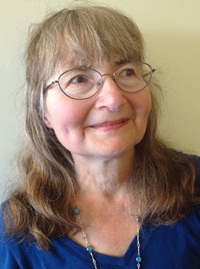
The first part of No. 7 occurred in a well, unexpected way. Tuesday evening I did a reading presentation from Beyond the Tripping Point entitled “Where do characters come from?” at the Runnymede Branch of the Toronto Public Library. When introducing me, the head librarian mentioned that her husband had been reading the stories and then looked at my photo on the back cover and said, “I can’t believe that sweet-faced woman wrote those stories.”

It’s the same photo of me as at the top of this blog page. The stories in BTTP contain murder, sexual assault, missing persons, kidnapping, revenge, suicide, vehicular mishaps, etc. You be the judge.

Cheers.

Sharon. A. Crawford


Tags: , , , , , , , , ,

When your fiction characters take over your mind

Beyond the Tripping Point Cover 72dpiA novelist is a person who lives in other people’s skins.

–       –    EL Doctorow

I’m rewriting the prequel novel to four linked stories in my short story collection Beyond the Tripping Point (Blue Denim Press, 2012). The main characters are the fraternal twin PIs Dana Bowman and Bast Overture, Detective Sergeant Donald Fielding, Great Aunt Doris, and Dana’s son, David. They appear in some or all of those linked stories and also in the novel I’m rewriting.

Trouble is one of the suspects in the novel has climbed inside my head and demands to be heard – loud and clear. I can see clearly what he looks like and does and I’ve already written him into some chapters, even given him his own Point of View, but he is still not satisfied. It is his story as much as it is the other characters’ story..

So I made some notes to go with the “old novel version chapters” and Friday afternoon I sat down at my computer and started a full-blown character sketch of this fellow. The sketch, when completed, will contain everything from what he eats (or doesn’t eat) for breakfast, to his sordid past, to his feelings and actions for the novel’s time. Not all, but some of this will be incorporated into the novel, bit by bit (without revealing his name until the police and PIs get up to speed about him). He will also get more novel time. After all, I don’t want him coming after me.

So, what do you do if one of your fiction characters seems to be taking over your mind to the point where you do your version of the absent-minded professor? Besides your mind swirling around like it’s going through space, not paying attention to the present/to what is happening can be dangerous. You don’t want to cross the street right in front of an oncoming car or burn dinner to the point where it sets your house on fire.

To give your demanding character his or her due, you need to do the following:

  • Acknowledge the character and his or her right to be in your short story, novella or novel
  • Do an in-depth character sketch – preferably on computer or on paper. You know the old saying about writing it down – doing so not only shows its relevance, but it gets all those swirling thoughts and ideas out of your head and into a more permanent record – at least one easier to access and review. Your head will thank you.
  • What is in a detailed character sketch? You character’s name, background (family, education, current job if he or she has one), physical characteristics, likes, dislikes, traits, What makes him or her angry, sad, happy, etc. What is his driving force in life? In other words all the stuff that he is and what makes him tick?
  • It helps to give this character a tag, i.e., something (or a few somethings) he does when nervous (become irritable, jingle change or keys in pocket, etc.), and something he does or says across the board. For example, he may always use the f-word or have a particular way of handling phone calls (talk to the point and hang up abruptly). Perhaps the character may have multiple allergies and constantly sneezes. The “tag” or “tags” should be something that becomes part of your story.
  • Caveat One: You can get carried away doing character sketches (or the reverse). The former is better because you won’t use it all in your story, and may use very little in your short story. But having full insight into your character and on paper, helps when you sit down in front of your computer to write your story. You feel as if your character is an old friend or old enemy.
  • Caveat Two: As you write your novel or short story, you may be inspired to add more to your character sketch or change something. Do so if it would work better. A character is constantly changing – just like real characters in real life.

Do any of you who are writing fiction have characters taking over your life? How do you deal with these demanding individuals?

Cheers.

Sharon A. Crawford


Tags: , , , , , , , ,

Creating eccentric characters

I might write pages and pages of conversation between characters that don’t necessarily end up in the book, or in the story I’m working on, because they’re simply my way of getting to know the characters.

–          Norton Juster

Quirky characters appear in many novels and TV series. Think the main character in
Dexter
, all of the characters in NCIS and NCIS Los Angeles and the Agatha Christie character, Hercule Poirot, who has crossed from books into movies and TV. Not surprising as life is filled with eccentric characters. Look around you as you go about your day. It could be that old lady wearing sandals, a winter coat and straw hat standing on the corner and yelling. It might be your dad who insists on having one white vegetable, one yellow vegetable and one green vegetable at dinner; then meticulously cuts them all into tiny pieces before spooning them into his mouth.

Or maybe it’s you.

How do you create an eccentric character for your short story or novel and what can you “borrow” from life or can you?

Most of my short stories in Beyond the Tripping Point have at least one eccentric character, although most, if not all, the characters contain a certain amount of quirkiness. My favourite is Great Aunt Doris who appears in two of the four linked stories featuring the fraternal twin PIs, Dana and Bast.

Where did Doris come from?

I did have an eccentric aunt who at one time when she was alive was the same age (70s) as Great Aunt Doris. Like Doris, my aunt was short and had a mouth on her. There any resemblance ends. My aunt was deep into Catholicism and anti-fluoridation and spoke her mind on both in a somewhat whiny voice, punctuated by a grin showing all her yellow teeth. Great Aunt Doris isn’t particularly religious, but she is conservative and has set ideas on what mothers should do and be. And she hates gays. As Dana is a mother and a PI with a son and Bast is gay, you get an idea where that could go. Doris is also the great aunt of Dana’s ex-husband, but that doesn’t stop her from showing up uninvited on Dana’s and Bast’s doorsteps. And meddling in their lives.

  1.  You can base your eccentric characters on someone you know or met but remember “base” is a four-letter word. Pick one or two traits you like about your real-life eccentric and build your character from there using your imagination.
  2. Envision how your character looks and sounds: Great Aunt Doris has an ugly face – her aging wrinkles and puffy, yet sagging cheeks, plus that ruby-red lipstick make her resemble a gargoyle, especially when she opens her mouth. And she does, in a gravelly voice, to criticize Dana’s parenting skills and insult Bast as well as poke herself into the Attic Agency’s current case. Her usual garb is a flowered housedress and flat shoes or pumps but when she’s on a case, she does a female version of Sherlock Holmes – minus the pipe. I did say she was conservative.
  3. Don’t create an eccentric character just for the sake of having one. He or she must fit into your story and interact realistically with the other characters. In other words, he or she must do the impossible – blend in as well as stand out as a distinct character. Here’s a dialogue excerpt from my short story “Saving Grace.” Dana is in the middle of tracking down a suspect when her cell rings. It is Great Aunt Doris.

“Yes, Doris,” I say.

“David…David,” deep breath, “David…is throwing a tantrum,” Aunt Doris says. “He’s…hey, little fellow, take it…gulp…easy. Dana, you’d better be a good mother and get back to the hotel…now.”

“Aunt Doris, calm down. I’ll be—”

A vehicle’s coming down the road, slowing down.

“Just a minute, Aunt Doris.” Without disconnecting the cell, I jump off the veranda and scurry behind a nearby bush.

“What is the matter with you, Dana? Your little boy is having a fit and you run off….”

“Shh, Aunt Doris.”

“Don’t you shush me young lady. Your son—”

(Excerpted from “Saving Grace,” from Beyond the Tripping Point, Copyright 2012 Sharon A. Crawford, Blue Denim Press, due out fall 2012).

There is also Detective Sergeant Fielding who gets migraines and sometimes stutters. But that’s another story…or is it? He appears in many of the Dana and Bast stories and shares one trait with Great Aunt Doris. He doesn’t like Bast, but not because Bast is gay. So your eccentric doesn’t have to be a pariah. Remember the eccentric must fit into your story.

When you get an idea for an eccentric character, do a detailed character sketch. Don’t forget the feelings, including how you feel about him or her. What is the character’s purpose in the story? And make sure the eccentric isn’t someone from your real life. This is fiction, not memoir.

Cheers.

Sharon A. Crawford


Tags: , , , , , , , , ,