RSS

Category Archives: Credible Fiction Characters

Guest blogger interviews her protagonist

Rosemary McCracken author of Safe Harbor and Black Water mystery novels

Rosemary McCracken author of Safe Harbor and Black Water mystery novels

Rosemary McCracken has written two mystery novels (so far) – Safe Harbor and Black Water – featuring financial advisor Pat Tierney. Please welcome guest blogger Rosemary McCracken as she interviews this financial expert whose life is anything but usually dull.

Pat, how do you feel about being the main character of a book?

When you decided to make me the central character of Safe Harbor, the first book in her mystery series, I was puzzled. I’m just an ordinary, forty something woman. Widow, mother of two girls, business woman.Nothing special. But you thought people would be interested in me and my adventures.

And, to my amazement, they were. “I can’t wait for the next Pat Tierney installment,” one reader posted on Amazon. “I look forward to seeing what trouble Pat Tierney gets herself into next,” another reader said.

So I’m back—this time in Black Water.


Why did you become a financial advisor?

My late husband, Michael, was a financial advisor with a large investment firm, and his enthusiasm for his work was contagious. I took courses, got my accreditation and then joined Michael at the branch he ran.

I love helping my clients get their financial houses in order. It’s important work and I take it very seriously.


How did you get yourself involved in a murder investigation—again?

When it comes to my family, I’m a big softie. When Black Water opened, my relationship with my eldest child, Tracy, was stretched to the limits. I had to set it right. So when she asked me to help locate her sweetheart, Jamie, I had no choice in the matter. I headed out to cottage country north of Toronto where an elderly man had been killed in a suspicious fire. And Jamie was the prime suspect.


Did the events ofBlack Watermake youa better person?


Definitely. I’ve learned to get to know people before I judge them. I wasn’t at all happy when Tracy introduced me to Jamie—because Jamie is a woman. You see, I had no inkling of my daughter’s sexual orientation. I’d always considered myself a champion of diversity—racial, religious and sexual. But it’s easy to be open-minded until your own kid comes out.

In short, I botched it big time. After I met Jamie, I threw myself into my work, hoping Tracy would get over her infatuation. I made no effort to get to know Jamie.

But when Tracy asked me to help when Jamie went missing, I realized how important Jamie was to her. She wasn’t just friend. Jamie was the special person in my daughter’s life. Her partner.

I also realized that Tracy had been keeping things from me for a long time. I love my daughters and I don’t want them to keep secrets from me. I decided that I’d get to know Jamie, and if she was the one for Tracy, I’d stand by her choice.

The more I learned about Jamie, the more I liked her. She’s an exceptional young lawyer who secured a landmark judgment on behalf of an elderly woman who lost her savings when a financial advisor put them into high-risk investments. Jamie has talent, energy and integrity. And best of all, she’s devoted to Tracy.


What was the most challenging situation you found yourself in in Black Water?

That’s a difficult question to answer. I met up with some truly dreadful people in this book, and a couple of times I really thought it was game over for me. But I’d have to say the biggest challenge was driving a huge snowmobile named Molly across a series of frozen lakes in cottage country. I’d never operated a snowmobile before, and the lakes weren’t as frozen as they should have been. At one point, I had to resort to snowmobile skipping. Have you ever heard of snowmobile skipping? It’s driving a snowmobile across a stretch of open water by approaching it at a very high speed. It’s pretty scary. If you don’t make it over that icy water, you sink like a stone.


What’s your greatest failing?

I’m a worrier. I worry about everything, which makes bad situations twice as bad. I worry about them beforehand, and then I have to live through them.


Can we look forward to reading about you again?

I know that you have  two more books mapped out for me. Looks like I’ll be getting into trouble for some time to come.

Book cover for Black Water

Book cover for Black Water

BLACK WATER: synopsis 

When Pat Tierney’s daughter, Tracy, asks her to help find Tracy’s partner, Jamie Collins, their mother-daughter relationship is stretched to the limits. Pat heads out to cottage country where an elderly man, who killed Jamie’s sister in an impaired driving accident years ago, has perished in a suspicious fire. Unfortunately, Jamie is the prime suspect.

Pat takes charge at the new branch her investment firm has opened in the seemingly idyllic community where Jamie grew up, and her search for Tracy’s missing sweetheart takes her through a maze of fraud, drugs, bikers and murder.

Once again, Pat proves that her family can always count on her.

 Rosemary McCracken has worked on newspapers across Canada as a reporter, arts reviewer, editorial writer and editor. She is now a Toronto-based fiction writer and freelance journalist. Her first mystery novel, Safe Harbor, was shortlisted for Britain’s Crime Writers’ Association’s Debut Dagger in 2010 and published by Imajin Books in 2012. You can buy it here.

Black Water, the second book in the Pat Tierney series, has just been released at the special introductory price of .99! You can buy it here.

Visit Rosemary’s website at http://www.rosemarymccracken.com/.

Follow Rosemary on http://rosemarymccracken.wordpress.com/. And on Twitter at https://twitter.com/RCMcCracken and on Facebook at https://www.facebook.com/rosemarymccracken?ref=tn_tnmn


Tags: , , , , , , , , , ,

Getting inside your nasty fiction characters

Click on the book cover to go to amazon.com

Click on the book cover to go to amazon.com

If you write fiction you are, in a sense, corrupted. There’s a tremendous corruptibility for the fiction writer because you’re dealing mainly with sex and violence. These remain the basic themes, they’re the basic themes of Shakespeare whether you like it or not.

– Anthony Burgess

We’ve talked about character development in previous posts and how you have to get inside your characters’ heads to see what makes them tick. That can be a pleasure if the character is basically a good person with some flaws. But what if one of your major fiction characters – such as a serial killer – is a nasty piece of goods and so unlikeable you cringe.

If you just skim the surface of Mr. Nastiness, that is all your readers will see. Worse, they may think he and his actions are superfluous, perhaps somewhat unbelievable, and maybe he comes across as merely thrown into the plot as a solution for a crime.

You need to get under Mr. (or Ms.) Nastiness’s skin – even if they don’t appear in many scenes but are pivotal to your plot and to the reaction of your major characters.

Or the nasty character can be the main character.

In my short story “Missing in Action,” the main character, Chrissie, has a middle-aged uncle who left his family and ran away with his secretary and the secretary’s son, 15 years ago. Unlike most of these scenarios, this secretary was not a sexpot half the uncle’s age. Instead, as this news report states:

One is led to wonder why Roger Stuart ran off with Anita Perez. The name sounds exotic but Perez was not a Mexican beauty. She was on the heavy side, about six inches taller than Stuart’s five foot eight inch slim build. She had been previously married and had a son, Anthony. She was also two years older than Stuart. Stuart’s wife, Sheila, 47, on the other hand, is a petite blonde, slim, with a heart-shaped face. (Copyright 2012 Sharon A. Crawford. Excerpted from Beyond the Tripping Point, Blue Denim Press, 2012).

From this description you can tell that there is something “off” about Ms. Perez. She is taller than her lover and on the heavy side. That could convey that she might have control over Roger Stuart, perhaps even abuse him. Add in she is older, not younger than Stuart’s wife and the reader may wonder what the attraction is…and if it has something to do with Stuart almost emptying his bank account (that’s in the same news story Chrissie finds archived online) and running off with her. Ugly people fall in love, too.

Of course, Ms. Perez appears later in the story and when she does and has a violent confrontation with Chrissie with her son Anthony present, the reader finds out she is a controlling bitch. There are other instances in the story that show Ms. Perez as being Ms. Nastiness. But no more story details. You’ll have to read the book to find out.

If I hadn’t gotten inside Ms. Perez’s head and “dissected” her, she might have come across as a “so what?” character, i.e., what is her relevance?

Then there are the serial killers. I have one in my pre-quel novel (still in rewriting stages) and I had to get inside his head. How do you do this without turning violent yourself?

Here are a few tips for getting inside the head of your nasty characters.

1.      Read about other nasty characters for information and yes, to help get you in the mood.

2.      Pull in any nastiness from what has happened in your life, and the lives of your family, friends and colleagues. But don’t create a character just like them.

3.      For serial killers it does help to watch Criminal Minds if only to see a variety of backgrounds and motivations for serial killers. But don’t copy.

4.      Get inside your nasty character’s head and feel their emotions – rage, anger, unhappiness, resentment, etc. Get a sense of what they look like and speak like.

5.      To help with 4. create a full character outline of Mr. or Ms. Nastiness – their background (for example were they bullied as a child, where they went to school and were they a good student, how they interacted with their parents, siblings, friends, where they work now; are they married or not, gay, heterosexual). Also their physical appearance, traits, likes and dislikes, etc.

6.      Then take a break from Mr. or Ms. Nastiness.

7.      When you write your short story or novel, the nasty character may change from your character outline. Go with that flow. Mr. or Ms. Nastiness is evolving.

8.      When not writing about your nasty character, try not to constantly think about him or her. He or she is not you…or is he? Maybe you are basing your nasty person on you.

For my upcoming events with Beyond the Tripping Point, go to my BTTP page on my websitehttp://www.samcraw.com/Articles/BeyondtheTrippingPoint.html I continually update it. In particular:

This evening, Thursday, April 18, 2013, 7 p.m.

Crime Writers of Canada Arthur Ellis Awards Short List Party Toronto http://crimewriterscanada.com/awards/annual-awards-events/shortlist-events

I’m reading a short suspenseful excerpt from Beyond the Tripping Point. Eleven other CWC readers are reading excerpts from their books as we anxiously await the names of who made the short list. Our books are for sale, too.

Location: Indigo Chapters in the Manulife Centre, Bay St. at Bloor St. W., Toronto, Ontario, Canada.

Cheers.

Sharon A. Crawford


Tags: , , , , , , , , ,

Making your fiction funny

Click on the book cover to go to amazon.com

Sharon A. Crawford’s book. Click on the cover to go to amazon.com

The funniest things are the forbidden … The humorous story is told gravely; the teller does his best to conceal the fact that he even dimly suspects that there is anything funny about it.

— Mark Twain


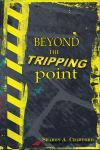
I use humour in many of the short stories in my mystery collection Beyond the Tripping Point. My goal is not necessarily to be funny but the characters and their situations need humour, often the black comedy type. My characters are a little off from normal and get themselves in spots where they well, go beyond the tripping point in life and then have to sort it all out. Throw in crime and some of these characters need to go on the light side of life.

One of these stories “The Body in the Trunk” focuses on two close friends, Kelsie and Sally. Kelsie wants to dump her cheating husband but the normal divorce route doesn’t sit well on her shoulders. As she tells Sally,

“Divorce?” cried Kelsie when I’d said as much. “I’d have to split the house, the cottage, the golf set, the home entertainment centre, the BMW and,” she glared at me, “the dog. How do you split a dog? If Harry gets prison for life, he gets nothing and I get everything. And I really want that BMW.” (Excerpted from Beyond the Tripping Point, copyright Sharon A. Crawford, 2012).

\So Kelsie drags Sally into her plan so that Harry will… You didn’t really think I was going to tell you the story, did you? You’ll have to get the book.

Basically I created an original situation which is humorous and had my characters act in offbeat ways that are funny. For example, in a few scenes in the story Kelsie wears a clothespin on her nose. But it ties in with the plot and Kelsie’s character.

So, if you want to create humour in your fiction, your characters must be funny in character. None of this having a character tell jokes unless the character is a stand-up comedian. Otherwise it is forced humour and will fall flat on your reader’s eyes and mind.

Your whole plot can be something offbeat and lend itself to humour (as does “The Body in the Trunk”). And you don’t necessarily want all characters to be funny. Kelsie is, but she is balanced by Sally who while thrust into the ridiculous situation, is not a funny person. The formula for humorous skits applies here – the funny person needs a straight (and I’m not referring to sexual orientation here) person to play against. Of course, there are some humorous skits where both characters are funny. Some of you may remember the skits on the old Carol Burnette TV show. Of course Carol Burnette just has to appear on stage and she gets laughs, but until your characters get well-known in the reading world, it is better to play the funny one against a straight character. The Janet Evanovich series featuring bounty hunter Stephanie Plum is a good example. Stephanie is always getting herself into situations and the humour bounces off the pages.

Which bring me to Point of View – tell the story from the funny character’s POV or another character’s? That depends on who the funny character is – a main character or minor character, protagonist or antagonist, or in the case of mystery-crime stories – one of the suspects. With novels you can have multiple points of view (one POV per scene), so there is some choice. You can get into the funny person’s head and/or the straight person’s head   – with the latter you can get their take on the humorous character. If it is short story you are writing, you need to tell the story from one point of view but either the funny person’s or the straight person’s could work. Unsure which? Try writing your story twice – once from each character’s POV. Then read each out loud and see what seems to work best.

Whatever way you use humour in your novel or short story, make sure it isn’t forced. Readers will pick up on it.

One good thing with humour in book fiction – print, e-book or audio book – readers don’t have to suffer from that awful canned laughter on TV sit-coms…not yet anyway.

And I’m going to relent a little; you can hear me read the beginning of “The Body in the Trunk” from my reading on Liquid Lunch http://www.youtube.com/watch?v=pgOKYgBfAwY&feature=youtu.be

For Sharon A. Crawford’s upcoming events with Beyond the Tripping Point, go to the Beyond the Tripping Point page– http://www.samcraw.com/Articles/BeyondtheTrippingPoint.html I continually update it.

Cheers.

Sharon A. Crawford


Tags: , , , , , , , , , , , ,

Putting your social causes into your fiction

Cover of Sharon A. Crawford's mystery short story collection

Cover of Sharon A. Crawford’s mystery short story collection

We care what happens to people only in proportion as we know what people are. — Henry James

Many of the short stories in my collection Beyond the Tripping Point deal with children who get the short end of the stick – missing children, abused children – and trying to save them as well as punishing the perpetrators. For example, in “Unfinished Business,” the protagonist has run away from something terrible that happened to her as a child. When the same evil threatens her daughter, she is forced to do something. Two of the linked stories (“Gone Missing,” “Saving Grace”), featuring fraternal twins Dana Bowman and Bast Overture, and Dana’s seven-year-old son David also focus on finding and saving children. These two stories have an extra kicker as David has been left psychologically mute because of his own bad experience in the prequel novel which I am now working on.

My cause is the safety of children. When I started writing my short stories and the novel I didn’t set out to include this cause. I didn’t realize it was my cause. Many authors have a social cause and they want to get their point across in a short story or novel. The trick is to do so without lecturing or preaching. You don’t want your story bogged down by a character going on ad nauseam about capital punishment, global warming, etc.

How do you get around this?

Make your cause a part of your character and plot. For example, if you are against capital punishment, your protagonist could be a defence lawyer who tries to get the death sentence off the table, or better still, prove the client is innocent. And I don’t mean copying Perry Mason. Or if your cause is justice isn’t there or doesn’t work in the legal system, your protagonist could be a private investigator who goes beyond the law when catching guilty perpetrators. For global warming, your protagonist could be a meteorologist or a geoscientist who has a passion for global warming – for or against.

That’s the characters. Now you have to work them into a plot. The global warming could be a “what if “story, even science fiction (although these days what is happening with weather may kill the science fiction angle – unless you take it to extremes, the world freezing over into snow (already been done in a movie starring Dennis Quaid. Use your imagination. Your protagonist can be the one predicting something like this will happen. Or he or she could be called in by the government to help solve the problem. Or for a twist – he or she could be doing something to escalate or cause the problem (there’s an idea for science fiction).

What runs through stories involving a cause is timeliness. If you set it in the present, your “cause” needs to be something that is going on in the world now. If the cause is something that was dominant in the past, you need to set your stories then. This is something I do with the fraternal twins’ stories and novel. In the novel, part of the plot has to do with something that was big news in the late 1990s, I’m not telling you what, but I will say that it does have to do with children in danger and I also work in other aspects of children in danger, such as kidnappings – something that is unfortunately, always timely.

Another angle for your protagonist and plot is to build in some foreseeing of the future with your protagonist and plot. In the popular Murdock Mysteries TV series, set at the turn of the century (that’s going from the 19th to the 20th century) in Toronto, Ontario, Canada, the protagonist Detective William Murdock, has great respect for the murdered victim (he is a staunch Catholic who makes the sign of the cross when he first sees the dead body). So he is motivated to find the killer and bring him or her to justice. However, Detective Murdock is a far-seeing investigator who uses pioneering methods (some of which he devises, some already just coming into investigating procedures elsewhere) such as fingerprints to help solve the crime

I suggest you read books by authors who do some of the above and watch some TV series, although with the latter, especially, you need to be careful the writers did their research and got it right. But that is a subject for a future post.

Meantime, check out the three parts of an interview I did last fall (links below), just as my short story collection Beyond the Tripping Point (Blue Denim Press, 2012) came out. I talk about my characters, plots and yes, Murdock Mysteries, one of my favourite TV series. Read some of the books by its creator, Maureen Jennings – she has other series’ mysteries published as well and co-developed a story concept which became the Bomb Girls TV series. Check out Maureen Jennings at http://www.maureenjennings.com/

And check out my online TV interview on thatchannel.com posted in three parts on You Tube at:

Sharon A Crawford Beyond the Tripping Interview No. 1 on Liquid Lunch on thatchannel.com.http://www.youtube.com/watch?v=ScuE2g4cWtc&feature=youtu.be

Sharon Reading from Beyond the Tripping Point on Liquid Lunch http://www.youtube.com/watch?v=pgOKYgBfAwY&feature=youtu.be

Sharon A Crawford Beyond the Tripping Interview No. 2 on Liquid Lunch on thatchannel.com http://www.youtube.com/watch?v=5xMhcTRANMY&feature=youtu.be

And don’t forget: clicking on the book cover at the top of this post, links you to Beyond the Tripping Point on www.amazon.com.

Cheers.

Sharon A. Crawford


Tags: , , , , , , , , , ,

Creating the actual story from real life ideas

Cover of Sharon A. Crawford's mystery short story collection

Cover of Sharon A. Crawford’s mystery short story collection

In last week’s post I discussed how much of yourself goes into your fiction and listed overall guidelines, especially when the idea isn’t taken from your life. Today, I’m going to show how I gelled a plot idea with the main characters to write a story.

“The Couch,” the first story in my mystery story collection Beyond the Tripping Point, originated with something I kept reading in mystery novels that annoyed me. This was 11 years ago – “The Couch” was previously published in an anthology – but the idea is still relevant today. Too many fictional private investigators seemed to have a hard time making ends meet. I decided to turn that issue around – my PI, named C.U. Fly, called “C.U.”, would be raking in the money from too many clients and was burnt out. C.U. first tried conventional means to downsize and when that didn’t work, C.U. turned to an unusual take on crime. I also used the axiom of “crime doesn’t pay” as my underlying theme. C.U. was 25, so the good fortune wasn’t from many years of work. I threw in one more main “character” an old horsehair couch – that idea came from a horsehair couch that sat in the living room of my late grandfather’s farmhouse. Of course, Grandpa’s couch didn’t have adventures like the fictional old horsehair.

Here’s the beginning of “The Couch.”

I blamed the whole business on that old blue couch. An heirloom on my mother’s side, it was stuffed with horsehair. She’d given it to me when I opened this office. “Old Horsehair” settled in permanently until the bitter crackling end.

How else could I explain my actions? I had no choice. Some days I spent 20 hours in the office. No partner took the load off my shoulders. Only that damn three-seater couch, which sucked in my clients like a magnet. I had repeat clients related to repeat clients.

Or was Ms Everglades to blame?

The story’s theme is set up with the first sentence. The main character’s name and profession aren’t revealed until a few paragraphs down and are done in two ways: first, the PI’s name and a reference to the profession in Ms Everglades’ dialogue.; second, the profession is revealed in a short backstory in Fly’s mind to show how the situation started. How the state-of-affairs progresses is shown in a parade of clients – via dialogue, action and C.U’s inner thoughts. The point of view stays with Fly.

Here’s another excerpt with one of these quirky clients.

Take Guido “Ratty” Rattali, a self-professed blackmailer. Ratty hired me to dig up dirt on well-heeled people. Then he threatened them with their dirt, collected the payoff and limped into my office. He heaved his Blue Jays cap onto the floor, shoved his greasy locks behind his ears and pushed his grimy beige trench coat off his shoulders and down over his ass. Then he dived face-down onto the couch. His sobs alternated with sneezes as his nose rubbed into Old Horsehair.

“I’m only the poor son of a poor greengrocer, achoo, excuse-a-me,” he said.

When his sinuses were completely blocked, he jumped up, tripping on his trench coat, and handed me a wad of cash for my fee—less his take, no doubt. (both excerpts copyright 2012 Sharon A. Crawford,  from Beyond the Tripping Point, Blue Denim Press, 2012)


 You can also see how Old Horsehair fits in. And Ratty is an example of the type of clientele, although he is more bent than some of the others. I also add a dog who chews into Old Horsehair and a furnace repair man who comes in to check the furnace downstairs – all necessary developments that foreshadow and lead to the credibility of what Fly eventually decides to do.

Does it work? You’ll have to read the story to find out.

From the above, we can learn the following:

  1. Use a combination of what annoys, scares, or concerns you with perhaps one other item from your life (I used the complaining poor PI’s from fiction and the horsehair couch from my past.)
  2. Use your imagination for your characters – you don’t want a replica or yourself or someone you know – but you can “steal” a few characteristics here (I used imagination only).
  3. Devise a plot for your characters that is not run-of-the mill. (I turned the situation around, using the “what if?” approach.
  4. Lighten it up with humour – it can balance some of the nastiness in the story (It helped with the presentation of a quirky story with quirky characters).
  5. Make sure your story follows its theme (mine was “crime doesn’t pay) but do it in an original way (sorry, not telling here).
  6. Use “show the reader” features – dialogue, action, inner thoughts but some narrative is okay.
  7. Let your readers be surprised by the unexpected – but make it credible.

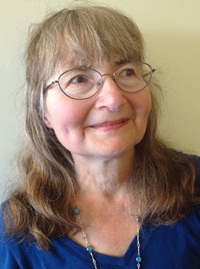
The first part of No. 7 occurred in a well, unexpected way. Tuesday evening I did a reading presentation from Beyond the Tripping Point entitled “Where do characters come from?” at the Runnymede Branch of the Toronto Public Library. When introducing me, the head librarian mentioned that her husband had been reading the stories and then looked at my photo on the back cover and said, “I can’t believe that sweet-faced woman wrote those stories.”

It’s the same photo of me as at the top of this blog page. The stories in BTTP contain murder, sexual assault, missing persons, kidnapping, revenge, suicide, vehicular mishaps, etc. You be the judge.

Cheers.

Sharon. A. Crawford


Tags: , , , , , , , , ,

Putting yourself into your fiction

Cover of Sharon A. Crawford's mystery short story collection

Cover of Sharon A. Crawford’s mystery short story collection

The most beautiful things are those that madness prompts and reason writes.

–          André Gide

If you write horror stories does that mean you have to run around with a chain saw chopping up people? If you write mysteries with serial killers does that mean you have to be a serial killer? What about romance writers? Children’s authors? How much of who you are factors in with what you write?

I’ve wondered about that lately because many of my short stories and the prequel novel are on the dark side – both in content and the humour sometimes used to tell them. But my stories also go to the other side of the creativity fence – I use emotions such as hope, love, gratitude, joy, generosity, empathy, even happiness (usually at the story’s end). In other words I make my characters human, characters who often have to overcome great odds to get some sort of hold back on their life and the lives of their family and friends.

For example, in my short story “Unfinished Business” from Beyond the Tripping Point (Blue Denim Press, 2012), the main character Lilly, has something traumatic happens when she is 12 years old. The consequences force her to run away from home at 15 and her life becomes one of too many men and never staying in one place for long. During that time she gives birth to a daughter, Trish, and her motherly instincts kick in, especially when Trish turns 12 and wants to see where Mom was born. The journey back holds bad memories for Lilly and when they arrive at her old home and the cause of the trauma shows up, mistaking Trish for Lilly, Lilly changes. She has to save her daughter from the same fate she had, and in doing so, she can get rid of the albatross she’s carried around on her shoulder, and change her life and her attitude. Besides the dark side of what happened to Lilly (and for the record, did not happen to me), the story shows hope and the indomitable spirit living somewhere in most humans. Lilly just needed strong motivation and mother love was it.

So, if you aren’t a serial killer or a sex fiend, how do you write about these areas and others you haven’t lived through yourself?

  1. Read, read, read on the topic. For serial killers, I’m reading Peter Vronsky’s book Serial Killers and I admit I watch Criminal Minds on TV. I do find the latter is more inventive in their serial killers and motives than some of those in real life. I say “some” because as the saying goes “truth is often stranger than fiction.”
  2. Other Research – interview experts. I’m not saying interview a serial killer but perhaps a profiler or a police officer familiar with catching serial killers.
  3. Put yourself (mentally and emotionally, not actually) in the mind of your character. How would they react to such and such? What is their story? Their background?
  4. Go inside yourself and draw out what is there that you can use? For example, did your parents die suddenly from, say a car crash, when you were a child? Did your father desert the family? Were you bullied in school? Did you grow up in poverty or do you live in poverty now?  Do you have a disability that affects your life? Do you have an affinity for certain people or types of people? For me, it’s the underdog – the one who has a lot of bad going on in their life. In other words, someone who has to overcome much and has a hard time doing so. Will he or she do so? That is what you have to figure out in your story.

The bottom line is this: what you write encompasses you, your life, your feelings – but it doesn’t mean you have to be a serial killer or even a mom. For the record, I am a mom, although my son is now in his mid-thirties; I was a single parent but had lots of parenting help from my ex; I was bullied as a child; my dad died after a long bout with cancer when I was 16; I suffered from depression some 30 years ago, and poverty is no stranger to me. But I don’t wield a chain saw – too heavy to hold and I’ve tried – but to trim trees and shrubs.

How much of you is in your fiction?

Cheers.

Sharon A. Crawford


Tags: , , , , , , , , , ,

What motivates your characters?

Click on the book cover to go to amazon.com

Click on the book cover to go to amazon.com

A novelist is a person who lives in other people’s skins.

–           EL Doctorow

Why do your fiction characters do what they do? Are they acting/reacting in character or way out of character? How do you “make” your characters behave?

First of all, you only have some control over your characters. As you are writing, often a character will “take over” and “decide” just what they are going to do. Fine, but you still need to make sure they aren’t acting outside of who they are. Or that you, as the author, aren’t manipulating what they are doing, especially having them do something just to move your story along or worse, just to write something.

Let me give an example.

Take Dana, the PI In “Gone Missing” and “Saving Grace,” two of the four linked short stories in my short story collection, Beyond the Tripping Point. Dana is also the mother of a seven-year old boy. So her dual role must factor in what her character thinks and does. Add to that the fact that her son is psychologically mute because of something that happened to him in the prequel novel (more on that shortly) and my work was cut out for me. In a critique of “Gone Missing” a few years back, I was chastised for not making Dana more professional. But with her problems with David, she wouldn’t be operating as a PI only – all professionalism –unless she is a “bad” mother – finds her son an impediment to her life, etc. Dana is not that and is always torn between her two roles, something readers can identify with in real life. So I have her wrestling with David and helping him as well as trying to solve the missing persons’ cases in those two stories. In “Saving Grace” she has a bit of a meltdown at one point chastising herself for being a bad mother. And to add insult to injury, another character Great Aunt Doris, who is a traditionalist where mothers are concerned, calls her a bad mother.

What is a mother/PI to do? Be human. Act in character.

In the prequel novel which I am rewriting for my publisher to look at, the actual occurrence which causes David’s muteness and all its implications has Dana roller-coasting a lot more than in the short stories. She does some stupid things, briefly goes into a catatonic state and sometimes gets more aggressive than usual. But – and it’s a large “but” all this change, all these actions and reactions come from her basic character and who she is. I don’t pull them out of the air. She is acting in character and characters have to deal with hurdles and change. So do people in real life and maybe that is a bottom line.

Make your characters real. What motivates them? Are they acting in character even when they don’t seem to be?

And go to my publisher’s page for a link to my interview with Hugh Reilly on thatchannel.com where I talk about some of these characters and where they and the plots originated. Eventually I’ll get that video up in the main part of this blog.. For now go to http://www.bluedenimpress.com/sharon-crawford.php and click on the link at the bottom of my bio.

Cheers.

Sharon A. Crawford


Tags: , , , , , , , ,

How do fiction characters act in a snowstorm?

Amazon.com link to Sharon A. Crawford's book

Amazon.com link to Sharon A. Crawford’s book

As soon go kindle fire with snow, as seek to quench the fire of love with words.

–          William Shakespeare

Toronto and other parts of Ontario as well as Quebec and the Maritimes got blasted with the first big snowfall of the season overnight. So I thought it might be interesting to dump some of our fiction characters into a snowstorm and see how they could behave.

My obvious choice of characters are the two friends, Millie and Jessica, from my short story “No Breaks” in my short story collection Beyond the Tripping Point. The story is set on a hot and humid August day but what would happen if the duo were driving up Ontario’s Highway 11 to the Muskoka cottage during a snow storm? This area gets lots of snow on the highway and with the brakes in Millie’s car failing, would Millie’s work-around that even be feasible in a snow storm? Perhaps the storm itself stalls traffic. So setting is changed but the reason for their trip up to Jessica’s family cottage wouldn’t be summer and beach related. Perhaps they are headed up there for Christmas. If you take all the other factors in the story (and I’m not telling all; you have to read the book to find out – book available on Amazon.com and Amazon.ca – link to the former on the book above and to the latter on the book at the end of this post), things will change.

Think about it. The two friends will be stuck in the car on a continuous basis. Millie is already fed up with the way her life isn’t going and Jessica, a non-driver, is scared they won’t get out of their situation. Millie is a control freak and Jessica hangs onto her Blackberry like it’s her lifeline – even when there is no reception. In the actual story, the relationship between the two friends changes as Millie learns some hard facts which hurl her over her personal tripping point. This could intensify and Millie’s actions could happen much faster and maybe being stuck in the snow with Jessica might bring out new terrifying traits and changes in the two women.

In your fiction – short story or novel – put your main characters, preferably the antagonist and protagonist, stuck in a snowstorm – if not in a car, maybe at a pub, a hotel, a meeting, a resort. How would they react? Would their conflict get worse or would it give them time to pause and do something about it? And remember, these are two idnividual characters here, so one may want to sort out their differences and the other one might not. One might get nastier; one might have a fear of being trapped and how would that affect his or her character? The possibilities are endless.

Put your characters in a snowstorm – even if only as a writing exercise. It will show you different sides of your characters and perhaps give you some insights into their development that you can use in your story – snowstorm or not, for example, how do your characters deal with unexpected adversity, especially of the severe weather kind?

Now, I better psyche myself out to shovel all that snow. I don’t dream of a White Christmas season. I dream of summer and my garden. Meantime, I have a guest blog post appearing on another Crime Writers of Canada member’s blog, December 28, 2012. Check it out at http://sweatercursed.blogspot.ca/

Cheers.

Sharon A. Crawford

Link to amazon.ca for Sharon A. Crawford's book

Link to amazon.ca for Sharon A. Crawford’s book


Tags: , , , , , , , , ,

When your fiction characters take over your mind

Beyond the Tripping Point Cover 72dpiA novelist is a person who lives in other people’s skins.

–       –    EL Doctorow

I’m rewriting the prequel novel to four linked stories in my short story collection Beyond the Tripping Point (Blue Denim Press, 2012). The main characters are the fraternal twin PIs Dana Bowman and Bast Overture, Detective Sergeant Donald Fielding, Great Aunt Doris, and Dana’s son, David. They appear in some or all of those linked stories and also in the novel I’m rewriting.

Trouble is one of the suspects in the novel has climbed inside my head and demands to be heard – loud and clear. I can see clearly what he looks like and does and I’ve already written him into some chapters, even given him his own Point of View, but he is still not satisfied. It is his story as much as it is the other characters’ story..

So I made some notes to go with the “old novel version chapters” and Friday afternoon I sat down at my computer and started a full-blown character sketch of this fellow. The sketch, when completed, will contain everything from what he eats (or doesn’t eat) for breakfast, to his sordid past, to his feelings and actions for the novel’s time. Not all, but some of this will be incorporated into the novel, bit by bit (without revealing his name until the police and PIs get up to speed about him). He will also get more novel time. After all, I don’t want him coming after me.

So, what do you do if one of your fiction characters seems to be taking over your mind to the point where you do your version of the absent-minded professor? Besides your mind swirling around like it’s going through space, not paying attention to the present/to what is happening can be dangerous. You don’t want to cross the street right in front of an oncoming car or burn dinner to the point where it sets your house on fire.

To give your demanding character his or her due, you need to do the following:

  • Acknowledge the character and his or her right to be in your short story, novella or novel
  • Do an in-depth character sketch – preferably on computer or on paper. You know the old saying about writing it down – doing so not only shows its relevance, but it gets all those swirling thoughts and ideas out of your head and into a more permanent record – at least one easier to access and review. Your head will thank you.
  • What is in a detailed character sketch? You character’s name, background (family, education, current job if he or she has one), physical characteristics, likes, dislikes, traits, What makes him or her angry, sad, happy, etc. What is his driving force in life? In other words all the stuff that he is and what makes him tick?
  • It helps to give this character a tag, i.e., something (or a few somethings) he does when nervous (become irritable, jingle change or keys in pocket, etc.), and something he does or says across the board. For example, he may always use the f-word or have a particular way of handling phone calls (talk to the point and hang up abruptly). Perhaps the character may have multiple allergies and constantly sneezes. The “tag” or “tags” should be something that becomes part of your story.
  • Caveat One: You can get carried away doing character sketches (or the reverse). The former is better because you won’t use it all in your story, and may use very little in your short story. But having full insight into your character and on paper, helps when you sit down in front of your computer to write your story. You feel as if your character is an old friend or old enemy.
  • Caveat Two: As you write your novel or short story, you may be inspired to add more to your character sketch or change something. Do so if it would work better. A character is constantly changing – just like real characters in real life.

Do any of you who are writing fiction have characters taking over your life? How do you deal with these demanding individuals?

Cheers.

Sharon A. Crawford


Tags: , , , , , , , ,

Making your characters speak – Part 2

Often I’ll find clues to where the story might go by figuring out where the characters would rather not go.

– Doug Lawson

In my short story, “No Breaks,” Millie and her friend Jessica are driving up to a cottage when the main brakes fail. The following excerpt shows Millie going where she would rather not go but her only other choice is a possible collision.

This calls for controlled action, Millie decides. She steers the car over to the shoulder of the road, hits the parking brake, and when the vehicle slides into a stop, switches on the car’s double blinkers. The shakiness sweeps through her body. Her fingers smash against her open purse, knocking out most of its contents.

“Shit,” she says.

“Millie,” Jessica replies. But it is only a half-hearted reprimand. Jessica is bent almost into a ball ready to roll onto the floor. But she’s still hanging onto The Berry. Mille can see it peeking out from her right hand.

“You okay, pal?” Millie asks. “Hey, come on, we’re going to make it…”

(Excerpted from Beyond the Tripping Point, copyright 2012 Sharon A. Crawford. Book available fall 2012 from Blue Denim Press).

As you can see from the above passage, readers find out about your characters from what they say, what they do, what they think and what other characters say about them. What they do ties in with Doug Lawson’s quote above. And it is better to show what your characters are doing instead of telling the reader. That can be incorporated with the other three criteria.

Let’s look at what characters say and how their dialogue shows them to the reader. In the above conversation between Jessica and Millie, we can see that Millie is irreverent, speaks first and thinks later, has a short fuse, is probably scared and is definitely not pleased at the situation she finds them in. When Millie really looks at her friend, she realizes how scared she is and tries to reassure her.

We can also see from Jessica’s actions that she is scared. She is bent over double but she’s still hanging onto her BlackBerry (nicknamed The Berry by Millie, which also shows something about Millie – that comes earlier in the story – Millie is not a fan of current technology).

Both women are scared, but they each react differently.

Let’s look at another excerpt from further along in the same story. Millie and Jessica have finally found a gas station with a bay. While waiting their turn to get the brakes fixed, they go for a sundae at the attached fast food place.

“Want a sundae, pal?”she asks Jessica.

“All right. But no whipped cream.”

Jessica develops stubbornness to a fine art when the pasty-faced counter girl oozes whipped cream on top of her vanilla sundae.

“Remove the whipped cream,” Jessica says.

“But it comes with the order,” the girl replies.

“Then take it off.”

“I can’t. It’s already on.”

“Oh, here,” Millie says. “Give me that sundae, and the other one you make you just hold the whipped cream. Get it?”

“But you wanted chocolate.”

“So? Here, let me.” Millie grabs the spoon, removes the whipped cream, places it on a napkin and pushes the sundae towards the girl. “Okay, now you can bring the chocolate. And I want the whipped cream.” (Excerpted from Beyond the Tripping Point, copyright 2012 Sharon A. Crawford. Book available fall 2012 from Blue Denim Press).

Here we have a problem with a food order where the server messes up. Instead of telling the reader what happens, the dialogue and the characters’ actions show the reader. We learn that Jessica isn’t just the scaredy-cat we might have thought and we also see that she is particular about her food. It is also her way of gaining some control in the bad situation of the main plot. The server is shown as someone who won’t accept responsibility for her mistakes. Millie again shows she is impatient and has to take some action so she butts in. We can visualize this scenario and relate to it because we’ve all had bad restaurant service at some time and maybe we didn’t have the nerve to do more about it than complain to our dinner companion. So, here we are connecting to the reader emotionally as well in an “aha” way.

The other points to remember about creating dialogue (besides showing the reader the characters) are:

  1. Dialogue must be relevant to the story, not just the characters, and move the plot along. The first dialogue excerpt above does this.
  2. Dialogue must be relevant to the characters. We’ve looked at what the characters are like from their dialogue but you wouldn’t have characters speak out of well, character. For example, an uneducated young man would probably say “ain’t” but wouldn’t speak like a university professor or vice-versa. However, remember, characters can change as the story progresses and they have to learn how to deal with their situation. That won’t make the uneducated young man suddenly talk posh – unless he goes through a Professor Henry Higging remake as in the play and movie, My Fair Lady.
  3. You can also work a character’s looks into dialogue. In “No Breaks,” at one point Jessica says that Millie has a nice heart-shaped face.
  4. Incorporate the character’s emotions into what she says rather than telling the reader. In the second excerpt above, it is clear that Millie is riled by their brake situation and so uses the sundae episode to try to take control…of something.
  5. Remember, the reader should be able to hear your characters speak.

Show not tell

Cheers.

Sharon A. Crawford


Tags: , , , , , , , ,