RSS

Category Archives: Short Story Collection

Making your fiction funny

Click on the book cover to go to amazon.com

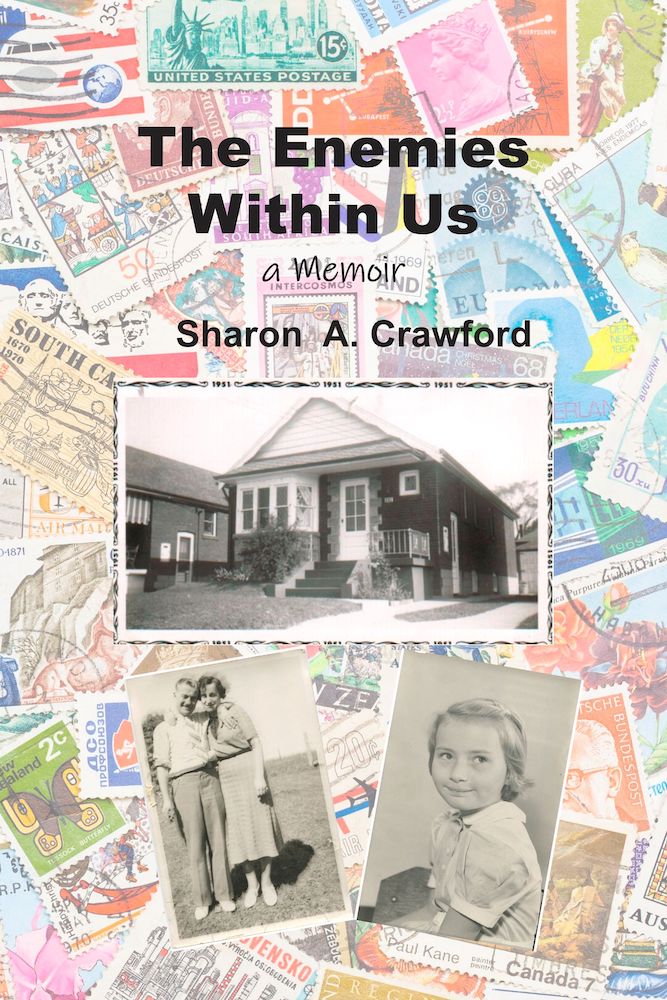
Sharon A. Crawford’s book. Click on the cover to go to amazon.com

The funniest things are the forbidden … The humorous story is told gravely; the teller does his best to conceal the fact that he even dimly suspects that there is anything funny about it.

— Mark Twain


I use humour in many of the short stories in my mystery collection Beyond the Tripping Point. My goal is not necessarily to be funny but the characters and their situations need humour, often the black comedy type. My characters are a little off from normal and get themselves in spots where they well, go beyond the tripping point in life and then have to sort it all out. Throw in crime and some of these characters need to go on the light side of life.

One of these stories “The Body in the Trunk” focuses on two close friends, Kelsie and Sally. Kelsie wants to dump her cheating husband but the normal divorce route doesn’t sit well on her shoulders. As she tells Sally,

“Divorce?” cried Kelsie when I’d said as much. “I’d have to split the house, the cottage, the golf set, the home entertainment centre, the BMW and,” she glared at me, “the dog. How do you split a dog? If Harry gets prison for life, he gets nothing and I get everything. And I really want that BMW.” (Excerpted from Beyond the Tripping Point, copyright Sharon A. Crawford, 2012).

\So Kelsie drags Sally into her plan so that Harry will… You didn’t really think I was going to tell you the story, did you? You’ll have to get the book.

Basically I created an original situation which is humorous and had my characters act in offbeat ways that are funny. For example, in a few scenes in the story Kelsie wears a clothespin on her nose. But it ties in with the plot and Kelsie’s character.

So, if you want to create humour in your fiction, your characters must be funny in character. None of this having a character tell jokes unless the character is a stand-up comedian. Otherwise it is forced humour and will fall flat on your reader’s eyes and mind.

Your whole plot can be something offbeat and lend itself to humour (as does “The Body in the Trunk”). And you don’t necessarily want all characters to be funny. Kelsie is, but she is balanced by Sally who while thrust into the ridiculous situation, is not a funny person. The formula for humorous skits applies here – the funny person needs a straight (and I’m not referring to sexual orientation here) person to play against. Of course, there are some humorous skits where both characters are funny. Some of you may remember the skits on the old Carol Burnette TV show. Of course Carol Burnette just has to appear on stage and she gets laughs, but until your characters get well-known in the reading world, it is better to play the funny one against a straight character. The Janet Evanovich series featuring bounty hunter Stephanie Plum is a good example. Stephanie is always getting herself into situations and the humour bounces off the pages.

Which bring me to Point of View – tell the story from the funny character’s POV or another character’s? That depends on who the funny character is – a main character or minor character, protagonist or antagonist, or in the case of mystery-crime stories – one of the suspects. With novels you can have multiple points of view (one POV per scene), so there is some choice. You can get into the funny person’s head and/or the straight person’s head   – with the latter you can get their take on the humorous character. If it is short story you are writing, you need to tell the story from one point of view but either the funny person’s or the straight person’s could work. Unsure which? Try writing your story twice – once from each character’s POV. Then read each out loud and see what seems to work best.

Whatever way you use humour in your novel or short story, make sure it isn’t forced. Readers will pick up on it.

One good thing with humour in book fiction – print, e-book or audio book – readers don’t have to suffer from that awful canned laughter on TV sit-coms…not yet anyway.

And I’m going to relent a little; you can hear me read the beginning of “The Body in the Trunk” from my reading on Liquid Lunch http://www.youtube.com/watch?v=pgOKYgBfAwY&feature=youtu.be

For Sharon A. Crawford’s upcoming events with Beyond the Tripping Point, go to the Beyond the Tripping Point page– http://www.samcraw.com/Articles/BeyondtheTrippingPoint.html I continually update it.

Cheers.

Sharon A. Crawford


Tags: , , , , , , , , , , , ,

Getting your book noticed with book reviews

Cover of Sharon A. Crawford's mystery short story collection

Cover of Sharon A. Crawford’s mystery short story collection

There is creative reading as well as creative writing.

–          Ralph Waldo Emerson

Even before your book goes to market you need to stake out possible book review sources. That applies for trade published books, self-published books whether in e-copy, print or both. Often you are ignored but sometimes serendipity steps in and you get a review or two or three, etc.

That happened to me – twice – and from the same event last year. My short story collection Beyond the Tripping Point had a publisher and I had a copy of the contract. But the contract wasn’t signed as I headed into the Bloody Words Conference last June in Toronto. My publisher’s instructions were: get the word out about your book and get some book reviews.

I did it –couldn’t shut up about it even though I felt a little strange doing it all so far in advance of publication. The first reviewer freelanced mystery book reviews for a daily paper from a neighbouring city – Hamilton, Ontario. Before I even got more than my name and I had a book coming out he asked, “So you want a review?” And he took down the particulars. The mini-review came out in print and online December 22, 2012 in The Hamilton Spectator at http://www.thespec.com/feature/article/857834–mini-reviews  (scroll down, it’s the second book reviewed and the newspaper, in error, left out the reviewer’s byline. It’s Don Graves).

The other review is the big serendipity one, thanks to persistence in networking. The book reviewer for Ellery Queen Mystery Magazine – one of the biggies for publishing short stories from mystery authors from around the world (the magazine is published in the United States) was a guest panelist at Bloody Words and also sat at the head table for the banquet. I missed talking to him after his panel gig, but on his way out after the banquet I “accosted” him (read: stopped him, introduced myself and my upcoming book and asked for a review). He gave me his business card and the name of  Jon Breen, the freelancer who does an annual review roundup of anthologies and short story collections. I gave him my card and thanked him. I did have to do a follow-up email to get the email address of the other book reviewer.

Then I emailed the other reviewer my pitch.

And he was interested. So my publisher sent him a pdf. It’s paid off. Recently  my publisher emailed me that he had received the hard copy proofs for that part of the May 2013 issue of Ellery Queen Mystery Magazine. A mini-review by Jon Breen of Beyond the Tripping Point  appears in it. It’s already available online at http://www.themysteryplace.com/eqmm/jury/ Scroll way down – it is there, 12th in the list of books . And it links to http://www.amazon.com

Those two make up for the nonsense trying to get a review in the big Toronto dailies and Quill & Quire, the Canadian publishers’ Bible. The Toronto Star got as far as email communication between me (initiated by me) and back with the reviewer who does mini-reviews of new arrivals. That didn’t happen despite me bringing the book down to her office in person. Some of us authors joked about the supposed big room where the Star stashes all the unreviewed books that come in before disposing of them – and how they do so was pure speculation.

So, what is an author to do to get a review? Besides this combination in-person and pseudo-social media and yes, social media, too, with the latter we can review each others’ books. If like me you have an author profile with your book on amazon.com, Goodreads, etc. this can be done. Just troll the sites to see who’s there. What about other bloggers you follow? You can also at least get interviews about your book on other authors’ blogs. You can do book review trades with other authors – they read and review your book; you do the same for theirs and both of you post your review on whatever social media you can. I’m currently doing this with another very prolific writer, Paul Lima, reading and reviewing his book on Writer’s Block and he’s doing the same with Beyond the Tripping Point. My publisher sent him a Kindle copy of my book and Paul sent me a pdf of his book as that’s what I requested.

So, next week we will revisit Writer’s Block with my review of Paul Lima’s book Unlock Writer’s Block. Paul has some very creative ways to get around this bane of writers.

Then I will have to follow my other advice above – start trolling Goodreads, Linked In groups, etc. to do and get more reviews. And in case anyone is interested in doing and posting a review of my book there or on Amazon.com, let me know. I have Kobo and pdf copies and can get the Kindle one from my publisher. And if you have a book published let me know and I might just review it.Of course, remember the unwritten rule for doing book reviews. The book is free of charge to the reviewer

For my upcoming events with Beyond the Tripping Point, go to my BTTP page on my website – http://www.samcraw.com/Articles/BeyondtheTrippingPoint.html I continually update it.

This evening (March 21, 7 p.m. to 9 p.m.) I moderate an author publisher panel featuring Andrew J. Borkowski,  the 2012 Toronto Book Award winner for his short story collection Copernicus Avenue and his publisher Marc Coté of Cormorant Books. This panel is at a meeting of the Canadian Authors Association Toronto Branch – more details at http://www.canauthorstoronto.org/events.html

Next Thursday, March 28, from 2 p.m. to 3 p.m. I talk about where my characters come from and read from Beyond the Tripping Point  at the Leaside Branch of the Toronto Public Library. (See the above BTTP link for more details.)

Cheers.

Sharon A. Crawford


Tags: , , , , , , , ,

Do your research and get your information correct

Amazon.com link to Sharon A.'s short story collection

Amazon.com link to Sharon A.’s short story collection

Whenever you write, whatever you write, never make the mistake of assuming the audience is any less intelligent than you are.

–           Rod Serling

If you think writing fiction eliminates any research, think again. Especially if you are writing mystery and science fiction. Do you want your police procedure to be incorrect, especially in connection with a crime scene?

According to police, that is a biggie with many authors (TV series are especially bad). Just watch some of the shows. Even a “lay person” can pick out some of the no-nos at a crime scene.

An older version of my short story “For the Love of Wills” from my mystery short collection Beyond the Tripping Point had glaring police procedural errors. I didn’t know that. Then I heard Toronto Police Constable Brent Pilkey, author of the Rage series of police procedural novels  http://www.brentpilkey.com/ talk last June on a couple of panels at the Bloody Words Mystery Writers Conference. One of those panels also featured a Chicago PI turned author. Their topic covered where fiction (mainly TV) gets the crime scene investigation wrong. I thought “oh, oh,” about the “Wills” story and with Brent’s permission, emailed him the first part of the story – just enough so he could see what the heck I was doing. He emailed back with the correct procedure and some suggestions – he was very polite and helpful. He also helped me clarify some skidmark issues in another story “Road Raging” in the same short story collection.

So, he became my police consultant, got acknowledged in my book as well as a complimentary book copy and also has helped me with police procedure for my prequel novel, which is set in the summer of 1998. Some of the procedure and set-up was different then. The one that really grabbed me was how wire-taps were done using reel-to-reel tapes that had to be turned on as the ransom call came in.

That one I should have had an inkling of because of my days as a journalist using reel-to-reel tapes, albeit the smaller cassette versions.

Then there is science fiction. Here, you want to make sure what you are writing about is actually still science fiction and not science fact – even if you take a science fact and spin it out beyond into fiction. A master novelist in that area is the award-winning Rob Sawyer  http://www.sfwriter.com/. Once you have established that you are writing science fiction, you will probably need to do research on how the details would pan out. Even though it is fiction, it has to make sense. The late Isaac Asimov http://www.asimovonline.com/asimov_home_page.html was also a master at that with his Foundation novel series.

You can do research in several ways:

  1. Interview/work with an expert in the area.
  2. Do research on the Internet – Google is a big help (but be careful – check the credentials of the website or blog poster). If you get a good one, you might want to email them for more information.
  3. Read newspaper and magazine articles; also books on the subject. (For my prequel novel, I read a book on serial killers; I didn’t want to rely 100 per cent on Criminal Minds. Also with the novel set in 1998 I didn’t want to mention serial killers and FBI etc. procedure that is post 1998). These three sources can also provide experts for you to contact to obtain further information.
  4. If you are writing historical fiction, or like me, even something 15 years before now, you will need to do a lot more research about what the social economic conditions were at that time. Plus little details – my favourite (although not for my novel) – was canned food available at specific times in history. You would be surprised how far back tinned food goes. You certainly wouldn’t want to have the Countess of Whatever flying around in a plane in 1789, although maybe a hot air balloon as the first one was supposedly invented in 1783 – unless you are writing science fiction.
  5. Time travel can also be tricky as you are bringing a character or character(s) into a past or future time. Besides the obvious of the time-traveller’s reaction to the “primitive” or “futuristic” conditions, you must get the right information into each time period. Diana Gabaldon  http://www.dianagabaldon.com/with her Outlander novel series is an expert at doing this and keeping the reader interested in the story.
  6. And that’s my last point. Don’t bore or bog down your fiction with research. Weave in the research with the story and characters and skip the expository, the character explaining, or worse the author as narrator explaining. It can turn away your reader or at least cause him or her to skip paragraphs, even pages. You know the old adage – it is easier to learn when you are having fun or being entertained.

How do you do research for your fiction?

For my upcoming events with Beyond the Tripping Point, go to my BTTP page on my website – http://www.samcraw.com/Articles/BeyondtheTrippingPoint.html

And clicking on the book logo at the beginning of this post links directly to my entry on amazon.com. Book is available in print and e-copy.

Cheers.

Sharon A. Crawford


Tags: , , , , , , , , , , , , , ,

Setting the setting for your fiction

Cover of Sharon A. Crawford's mystery short story collection

Cover of Sharon A. Crawford’s mystery short story collection

The real voyage of discovery consists not in seeking new landscapes but in having new eyes.

— Marcel Proust

Some authors use fictitious settings for their novels and short stories; some use the real thing. I do both. Which works best when?

In the four linked short stories in my mystery collection Beyond the Tripping Point (Blue Denim Press, 2012), I do both. Toronto and Goderich (the latter in the story “Saving Grace”) are real, albeit set back in 1999. But for the main location where the fraternal twin PIs, Dana Bowman and Bast Overture live and work, I use a fictitious small city, Thurston, approximately 30 miles north of Toronto. Thurston is a combination of Aurora and Newmarket, two small cities just north of Toronto, and Guelph, Ontario.

Why did I use this combo for setting?

I chose a fictitious place for the stories here and in the prequel novel because:

  1. I wanted the combination for various features unique to each. Guelph (which I have visited in the past) is for the lake. But I lived in Aurora for 23 years to late 1998 so am familiar with a lot of what Aurora was like then. Newmarket is barely three miles up the highway from Aurora (now they are practically joined with urban sprawl and strip plazas so bad that if you want to meet someone at McDonald’s you have to specify which Mcdonald’s).  So here I was going on the familiar.
  2. Aurora nd Newmarket are part of York Region and the police force there is York Regional. I base the police force in the twins ‘stories on York Regional but call it Cooks Regional Force (and the region is obviously Cooks Region). I do this so I don’t have to be exact with police procedure in York Region in the late 1990s, but make sure any police procedure is the way it was in police departments during that time. I have a police consultant who is also a published mystery (police procedure) author as well as a working police constable. Some police equipment used then surprises me – such as wiretapping –big reel-to-reel tape machines that had to be turned on manually when recording, for example, calls from kidnappers. That made for some tricky sequences as how to set it up in my prequel novel. Toronto Police and the Ontario Provincial Police (as you can see in “Saving Grace”) are “themselves.” I didn’t want to create fiction to the ridiculous,
  3. Place names and street names. One of my mystery-novel-writing colleagues uses real streets in Toronto, but makes the numbers higher than the actual streets. I use a mixture of fact and fiction. For Thurston, Ontario, addresses are made-up. But, from my past living experience in Aurora/Newmarket, they resemble somewhat what is there – not the Mini-Mall though, and not The Attic Investigative Agency, which the twins operate from the attic level of their old house. That house is actually based on a number of houses I’ve seen or been in: the outside comes from an old three-story house, complete with balconies and turrets, I saw and photographed in downtown, London, Ontario. The inside of the twins’ house is based on a one a late aunt and uncle lived in (Toronto) when I was growing up, plus other houses I’ve seen the inside of doing interviews for stories as a journalist or house hunting. In other stories, I use real places but may not name them. For example, in “Missing in Action” I have a murder occur behind a real church (including the real location) but don’t name the church. In “Porcelain Doll” I use the real town of Hanover (among other real towns and cities) but don’t name the antique ahop there. And as a good part of “Porcelain Doll” is set on a train in the summer of 1965 I make darn sure I have the train layout, etc. accurate. It helps that I rode trains in Ontario and Michigan as a child during that time period and my late Dad worked as a timekeeper for one of the Canadian railways then. But I also did further research – online, from books on the Canadian railways, and files I photocopied from the Ontario Archives.

Why this mix of fact and fiction? I think to protect both the “real thing” and yes, myself. It also give me a bit of leeway when writing. The main thing is what are you comfortable using and will it work? How much research do you want to do (and there is always research as you can see from the above)? And if you are writing fiction based on fact you might want to change the location.

What do you do for settings in your fiction? Fact or fiction or a combination?

And if you click on my book cover above it takes you to my book on http://www.amazon.com

Cheers.

Sharon A. Crawford


Tags: , , , , ,

Making time for your writing

Cover of Sharon A. Crawford's mystery short story collection

Cover of Sharon A. Crawford’s mystery short story collection

Many of us would like to spend more time writing our novel, short story, etc. But our hectic lives can get in the way. The only solution is to take stock of what we are doing and what is happening in our lives. What is necessary? What can wait? What can be scrapped?

I’ve reached that point again and am getting ruthless. Unlike some of you I don’t have children around the house – my son has been long grown up and left the nest. I don’t have a significant other – a partner. That has its downside when you consider all that must be done or at least organized – alone. In a nutshell, I’m juggling the house (regular housework and things that need repairing/replacing, snow shovelling, etc.), family and some friends (I’ll clarify the “some” shortly), what I call “self” (walking, gardening and reading – things I do for me), and my writing/editing/writing teaching. The latter is my business and maybe that is the key to getting at your writing. Under those four categories I prioritize daily.

However, stuff happens; sometimes you find yourself spending too much time on related (or not) things.

So what does a body and soul do to get writing regularly?

Here are a few pointers to get you thinking.

  1. The aforementioned treat your writing like a business, i.e., something that must be done.
  2. Divide what you do into categories. They don’t have to be the same as mine – whatever suits your situation.
  3. Prioritize – within categories and the categories themselves – this must be done on a weekly and daily basis.
  4. Use the three Ds to decide what to do with No. 3 – Delay, Delegate, Dump (or Delete). I use some of the suggestions by Alan Lakein in his book How to Get Control of Your Time and Your Life (1989, available at www.amazon.com). My version is much earlier but he has lots of helpful ideas, including dividing your so-called “to do” list into A, B and C’s. A’s – obviously your top priority (i.e. writing) for what must be done, B’s for somewhat important but could wait before doing – you do these when the daily A’s are done. C’s – dump, delete. Here is where I put phone voice-mail messages from telemarketers and the like, even some friends (here it comes) – friends who appear suddenly out of the blue and wonder why I haven’t phoned them when it’s been years since I’ve heard from them – unless I want to reconnect. Have to be “ruthless” here. Maybe it will move up to a B.
  5. Juggling what’s left. For example in the writing/editing/writing teaching biz, I look at the overall picture, figure out what is most important and slot it into an A, what I have to do at some point into a B, and what I can dump into a C. And I do it by week and day. So this week’s (based on deadlines) priorities are: finish editing one client’s book manuscript, continue with the rewrite of my prequel mystery novel (including some research that has popped up as I write), my blog posts, some PR for my current short story collection Beyond the Tripping Point (fortunately I have a writing colleague friend who put my marketing plan into Excel and my end is to critique one of her short stories – when she finishes it). This brings up another idea.
  6. Instead of directly delegating – do a skills trade with someone – but make sure for both sides it is on each others’ priority list. For example I am not going to babysit for someone so they will clean my house because I don’t babysit.
  7. Try to set a specific time each day, five days a week, each weekend to write, and decide what you are going to write before you start.
  8. Don’t work on too many writing projects at a time. I have a friend who did that until she realized she had to rein in what she was writing.
  9. For those with families to look after, insist on certain times a day (depending on your circumstances) for you to have undisturbed time to write. Yes, I did this when my son was still at home, albeit in his teen years his rock band sometimes practiced in my basement while I wrote. Although I liked their music, I used ear plugs when writing. There was a trade off. The band members helped move appliances and other kitchen stuff when my kitchen needed painting. Your trade-off may be if you have kid-free and spouse-free time to write, you spend other time with them.
  10. Limit your social media, email, texting, online group participation, and phone calls. Turn off your email account notification (or close your email), turn your i-Phones, etc. to vibrate and let voice mail take over when you are writing. And don’t answer your door unless you are expecting someone. I don’t always follow the email and door ones. But you can bet if the someone at my door is soliciting they get short shrift from me. I’ve sent those water heater company sales people scrambling down the front steps – with words alone.

Happy and productive writing.

Cheers.

Sharon A. Crawford


Tags: , , , , , , ,

Creating the actual story from real life ideas

Cover of Sharon A. Crawford's mystery short story collection

Cover of Sharon A. Crawford’s mystery short story collection

In last week’s post I discussed how much of yourself goes into your fiction and listed overall guidelines, especially when the idea isn’t taken from your life. Today, I’m going to show how I gelled a plot idea with the main characters to write a story.

“The Couch,” the first story in my mystery story collection Beyond the Tripping Point, originated with something I kept reading in mystery novels that annoyed me. This was 11 years ago – “The Couch” was previously published in an anthology – but the idea is still relevant today. Too many fictional private investigators seemed to have a hard time making ends meet. I decided to turn that issue around – my PI, named C.U. Fly, called “C.U.”, would be raking in the money from too many clients and was burnt out. C.U. first tried conventional means to downsize and when that didn’t work, C.U. turned to an unusual take on crime. I also used the axiom of “crime doesn’t pay” as my underlying theme. C.U. was 25, so the good fortune wasn’t from many years of work. I threw in one more main “character” an old horsehair couch – that idea came from a horsehair couch that sat in the living room of my late grandfather’s farmhouse. Of course, Grandpa’s couch didn’t have adventures like the fictional old horsehair.

Here’s the beginning of “The Couch.”

I blamed the whole business on that old blue couch. An heirloom on my mother’s side, it was stuffed with horsehair. She’d given it to me when I opened this office. “Old Horsehair” settled in permanently until the bitter crackling end.

How else could I explain my actions? I had no choice. Some days I spent 20 hours in the office. No partner took the load off my shoulders. Only that damn three-seater couch, which sucked in my clients like a magnet. I had repeat clients related to repeat clients.

Or was Ms Everglades to blame?

The story’s theme is set up with the first sentence. The main character’s name and profession aren’t revealed until a few paragraphs down and are done in two ways: first, the PI’s name and a reference to the profession in Ms Everglades’ dialogue.; second, the profession is revealed in a short backstory in Fly’s mind to show how the situation started. How the state-of-affairs progresses is shown in a parade of clients – via dialogue, action and C.U’s inner thoughts. The point of view stays with Fly.

Here’s another excerpt with one of these quirky clients.

Take Guido “Ratty” Rattali, a self-professed blackmailer. Ratty hired me to dig up dirt on well-heeled people. Then he threatened them with their dirt, collected the payoff and limped into my office. He heaved his Blue Jays cap onto the floor, shoved his greasy locks behind his ears and pushed his grimy beige trench coat off his shoulders and down over his ass. Then he dived face-down onto the couch. His sobs alternated with sneezes as his nose rubbed into Old Horsehair.

“I’m only the poor son of a poor greengrocer, achoo, excuse-a-me,” he said.

When his sinuses were completely blocked, he jumped up, tripping on his trench coat, and handed me a wad of cash for my fee—less his take, no doubt. (both excerpts copyright 2012 Sharon A. Crawford,  from Beyond the Tripping Point, Blue Denim Press, 2012)


 You can also see how Old Horsehair fits in. And Ratty is an example of the type of clientele, although he is more bent than some of the others. I also add a dog who chews into Old Horsehair and a furnace repair man who comes in to check the furnace downstairs – all necessary developments that foreshadow and lead to the credibility of what Fly eventually decides to do.

Does it work? You’ll have to read the story to find out.

From the above, we can learn the following:

  1. Use a combination of what annoys, scares, or concerns you with perhaps one other item from your life (I used the complaining poor PI’s from fiction and the horsehair couch from my past.)
  2. Use your imagination for your characters – you don’t want a replica or yourself or someone you know – but you can “steal” a few characteristics here (I used imagination only).
  3. Devise a plot for your characters that is not run-of-the mill. (I turned the situation around, using the “what if?” approach.
  4. Lighten it up with humour – it can balance some of the nastiness in the story (It helped with the presentation of a quirky story with quirky characters).
  5. Make sure your story follows its theme (mine was “crime doesn’t pay) but do it in an original way (sorry, not telling here).
  6. Use “show the reader” features – dialogue, action, inner thoughts but some narrative is okay.
  7. Let your readers be surprised by the unexpected – but make it credible.

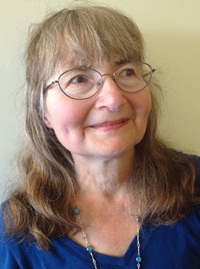
The first part of No. 7 occurred in a well, unexpected way. Tuesday evening I did a reading presentation from Beyond the Tripping Point entitled “Where do characters come from?” at the Runnymede Branch of the Toronto Public Library. When introducing me, the head librarian mentioned that her husband had been reading the stories and then looked at my photo on the back cover and said, “I can’t believe that sweet-faced woman wrote those stories.”

It’s the same photo of me as at the top of this blog page. The stories in BTTP contain murder, sexual assault, missing persons, kidnapping, revenge, suicide, vehicular mishaps, etc. You be the judge.

Cheers.

Sharon. A. Crawford


Tags: , , , , , , , , ,

Putting yourself into your fiction

Cover of Sharon A. Crawford's mystery short story collection

Cover of Sharon A. Crawford’s mystery short story collection

The most beautiful things are those that madness prompts and reason writes.

–          André Gide

If you write horror stories does that mean you have to run around with a chain saw chopping up people? If you write mysteries with serial killers does that mean you have to be a serial killer? What about romance writers? Children’s authors? How much of who you are factors in with what you write?

I’ve wondered about that lately because many of my short stories and the prequel novel are on the dark side – both in content and the humour sometimes used to tell them. But my stories also go to the other side of the creativity fence – I use emotions such as hope, love, gratitude, joy, generosity, empathy, even happiness (usually at the story’s end). In other words I make my characters human, characters who often have to overcome great odds to get some sort of hold back on their life and the lives of their family and friends.

For example, in my short story “Unfinished Business” from Beyond the Tripping Point (Blue Denim Press, 2012), the main character Lilly, has something traumatic happens when she is 12 years old. The consequences force her to run away from home at 15 and her life becomes one of too many men and never staying in one place for long. During that time she gives birth to a daughter, Trish, and her motherly instincts kick in, especially when Trish turns 12 and wants to see where Mom was born. The journey back holds bad memories for Lilly and when they arrive at her old home and the cause of the trauma shows up, mistaking Trish for Lilly, Lilly changes. She has to save her daughter from the same fate she had, and in doing so, she can get rid of the albatross she’s carried around on her shoulder, and change her life and her attitude. Besides the dark side of what happened to Lilly (and for the record, did not happen to me), the story shows hope and the indomitable spirit living somewhere in most humans. Lilly just needed strong motivation and mother love was it.

So, if you aren’t a serial killer or a sex fiend, how do you write about these areas and others you haven’t lived through yourself?

  1. Read, read, read on the topic. For serial killers, I’m reading Peter Vronsky’s book Serial Killers and I admit I watch Criminal Minds on TV. I do find the latter is more inventive in their serial killers and motives than some of those in real life. I say “some” because as the saying goes “truth is often stranger than fiction.”
  2. Other Research – interview experts. I’m not saying interview a serial killer but perhaps a profiler or a police officer familiar with catching serial killers.
  3. Put yourself (mentally and emotionally, not actually) in the mind of your character. How would they react to such and such? What is their story? Their background?
  4. Go inside yourself and draw out what is there that you can use? For example, did your parents die suddenly from, say a car crash, when you were a child? Did your father desert the family? Were you bullied in school? Did you grow up in poverty or do you live in poverty now?  Do you have a disability that affects your life? Do you have an affinity for certain people or types of people? For me, it’s the underdog – the one who has a lot of bad going on in their life. In other words, someone who has to overcome much and has a hard time doing so. Will he or she do so? That is what you have to figure out in your story.

The bottom line is this: what you write encompasses you, your life, your feelings – but it doesn’t mean you have to be a serial killer or even a mom. For the record, I am a mom, although my son is now in his mid-thirties; I was a single parent but had lots of parenting help from my ex; I was bullied as a child; my dad died after a long bout with cancer when I was 16; I suffered from depression some 30 years ago, and poverty is no stranger to me. But I don’t wield a chain saw – too heavy to hold and I’ve tried – but to trim trees and shrubs.

How much of you is in your fiction?

Cheers.

Sharon A. Crawford


Tags: , , , , , , , , , ,

Keeping your plot and characters consistent

Cover of Sharon A. Crawford's mystery short story collection

Cover of Sharon A. Crawford’s mystery short story collection

Be obscure clearly.

–          E.B. White

Nothing can be more frustrating to a writer (except maybe writer’s block) and a book editor too, than characters and/or plot starting to display inconsistencies. My favourite when doing manuscript evaluations for clients is the lady with short red hair in Chapter 2 who suddenly appears with long brown hair in Chapter 10. Did she suddenly don a wig? If so, say so…if it is consistent with what this character would do.

Or take these scenarios.

Does Tom suddenly appear in a conversation you thought was between Belinda and Sandra? James has a heart attack and is rushed to the hospital in Chapter 2; in Chapter 3 he is jogging down the street. Does Cathy arrive home in her car when in the previous chapter it was stolen? Then there is the “Who he? Who she? Syndrome” where one character makes a splash appearance near the beginning of the novel, does a disappearing act (from the writing, not the story) for the rest of the novel and then turns out near the end to be the murderer.

Oops.

I’m struggling with some inconsistencies in my prequel mystery novel. Part of the problem is the novel is complex. So I run into “How did Bast (one of the fraternal private investigators) find out about Y factor or how would he know? Didn’t I have some videotapes back in an earlier chapter? What happened to them? And one character, a TV reporter, who is not a major character and not the killer, has a history with Bast which creates conflict when they meet up after no connection for a year. After hinting at the conflict from this main character’s point of view and a couple of scenes where the two have an actual confrontation in the first half of the novel, “conflict character” all but disappears from the story. I call this inconsistency by deletion.

Readers will pick up on inconsistencies.

What should a writer do?

I’ve touched on this a few blogs ago, but it is important to have a follow-up list of any inconsistencies you notice as you write or pick up later in the first rewrite. Then, you can go back and fix the inconsistencies and mark “done” on the list.

It might also be a good idea to do an ongoing list of your characters and include their conflicts with each other and/or a brief ongoing chapter outline. When you are creating, your organizational skills take a backseat in your brain. This is not the time to multi-task or tell yourself  “oh, I’ll remember to bring Tom home in a later chapter,” or  “This scenario isn’t going to work with what has  happened before.” You also don’t want to stop the creative flow to fix an inconsistency.

How do you keep track of your characters’ interactions, conflicts and location so your final manuscript isn’t full of inconsistencies? Let’s compare notes. We might all learn something new.

Cheers.

Sharon A. Crawford


Tags: , , , , , , , , ,

Dialogue or narrative – that is the dilemma

Cover of Sharon A. Crawford's mystery short story collection

Cover of Sharon A. Crawford’s mystery short story collection

We care what happens to people only in proportion as we know what people are.

–           Henry James

My publisher wants me to make my prequel mystery novel a bit shorter. Part of the problem is my two main characters, fraternal twins Dana and Bast, get too chatty in some places, especially when they are bringing each other up to speed on their separate investigations.

When do you use dialogue and when do you use short narrative to summarize what characters tell each other so that your novel or short story flows and doesn’t bore your reader? You want to make your reader care about your characters, not have your characters put your reader to sleep. Here are a few (but not only or all) guidelines to consider:

  1. Do you need to show anything with their actual dialogue and any accompanying actions? For example, if one character is giving the other some bad news and their reaction includes what they say and how they say it, you might want to go the dialogue route.
  2. Don’t drag out the dialogue exchange between characters. It can turn into the equivalent of repeatedly driving your point home to your reader. For example, I have Bast and Dana often repeating the same setup ad nauseum when they are comparing notes – each are reacting the same way and sometimes their dialogue covers what is told elsewhere in the novel. Summarizing that Dana brought Bast up to speed on whatever situation would suffice.
  3. A caveat to the above two points: there is a fine line from using dialogue to bring out the character’s reactions to something when necessary and when the dialogue shows as repetition. Ask yourself: is the dialogue best to show foreshadowing and move the plot along? You might be better to use dialogue then. Also dialogue and/or action might work better if the character is changing – perhaps trying to be stronger than wimpy or holding in his or her anger.
  4. With mystery fiction where the police detective or private investigator is interviewing a number of “persons of interest,” summarize in narrative the ones who have little or no information to contribute and use dialogue where something of importance to your plot shows up in the interrogation.
  5. Be careful you don’t overdo the narrative just to contain your dialogue. You don’t want to overdo the telling and bore your reader this way. However, with narrative you can include the character’s inner thoughts and actions.
  6. Sometimes you can combine narrative with summary. Here’s how I did it in the short story Digging Up the Dirt, with the fraternal twins. Instead of Dana repeating to Bast her “interrogation” by the constable and what led up to it, I wrote:

And you actually let that constable order you around,” my fraternal twin, Bast, said later.

“Well, I had to listen to Fielding’s interrogation, especially of Aunt Doris.” I smiled.

(copyright 2012 Sharon A. Crawford. Excerpted from Beyond the Tripping Point, published by Blue Denim Press, 2012)

If you want to show how characters relate to each other under various circumstances and bring out their distinctive traits, dialogue with action might work best. If it gets too long, you can intersperse it with narrative. I do this in another story in Beyond the Tripping Point. Below is the link of my reading the opening scene in “Body in the Trunk,” clipped from my interview with Hugh Reilly on Liquid Lunch from thatchannel. The reading and the short preview before is three minutes long.

Sharon A. Crawford  Reading from Beyond the Tripping Point on Liquid Lunch http://www.youtube.com/watch?v=pgOKYgBfAwY&feature=youtu.be

Now I need to get back to my own novel and follow my advice.

Cheers.

Sharon A. Crawford


Tags: , , , , , , , ,

Keeping track of everything in your story

Amazon.com link to Sharon A.'s short story collection

Amazon.com link to Sharon A.’s short story collection

If you start to revise before you’ve reached the end, you’re likely to begin dawdling with the revisions and putting off the difficult task of writing.

–          Pearl S. Buck

Currently I’m rewriting the prequel novel to four linked short stories in Beyond the Tripping Point. I’m expanding and complicating the plot and telling the story from four points of view. The original novel had only one POV – the first person singular – Dana. Yes it is the fraternal twins again and my own head has been going back and forth from the points of view of Dana, her twin Bast, her son David, and a suspect who isn’t named. I am following the rules of one character’s POV per scene or chapter.

However, all this to-ing and fro-ing makes it more difficult to keep track of timelines, who is doing what and the biggie – consistency in story line, in character’s actions, etc. To lower the muddle factor, I started a new file called “Follow-up List.” Every time something occurs that requires checking/changing for consistency, timeline – even research, it goes on the list. Right now timeline, consistency and keeping all the police constables sorted out are the big factors.

Why am I doing this? Besides the obvious, if you constantly stop writing to do research or sort out characters and timeline, you lose your creative flow. Mind you, I am going back for a few things if they are interfering with moving the plot along from where I am working. But the research can wait – some of it is just re-checking facts I’m not sure I got right. Or some detail such as a name change, can be fixed by using the Find and Replace Word features – preferably at the end of your writing session.

Another action I take (and I’ve mentioned it in an earlier post) is refusing to stall over a word that doesn’t seem quite right or is repetitious. Stopping to look it up in the Thesaurus, even if online, also breaks the creative flow. For example, as I wrote this blog post, I spelled Thesaurus incorrectly but did not correct it immediately. Here Word underlined it in red so I could go back and change it. For repetitious words or words not quite right, you just need to put (word) or (repetition) in brackets after the offending word and return to it later in your rewrite or in my case, another rewrite to fine-tune the rewrite I’m doing now. One final suggestion – format your manuscript before you start writing. Or if your situation is similar to mine – a rewrite of a novel originally written 10 or 11 years ago, where the formatting was different, you can leave it until you are finished. Stopping to fix paragraph formatting stops the creative flow.

And how is my massive rewrite going? Nearly finished the first big rewrite. If all goes well I’m hoping to have it done by the end of the day tomorrow. Afterwards, I want to let it sit for a few days and then go through my follow-up list and well, follow it.

Meantime, I’m doing plenty of PR for my short story collection Beyond the Tripping Point. Tonight I’m doing a sort of performance reading of a short story excerpt as part of the Periodical Writers Association of Canada’s Talent Night. Sometime between 8 p.m. and 11 p.m. I’ll be onstage at the Free Times Cafe in downtown Toronto. If you are in the Toronto area perhaps you can drop in. Check out http://www.freetimescafe.com/ for more information, including location, or go to my website http://www.samcraw.com under Beyond the Tripping Point where I’m posting upcoming readings, etc. as I get them. All my links are either on this book page or at the top of my website home page you will find the usual social media icons.

And if you click on the book icon at the top of this post, when you get to amazon.com, please read my bio and click on the Like Icon. Thanks.

Keep the creative flow going.

Cheers.

Sharon A. Crawford


Tags: , , , , , , , , ,