RSS

Setting the setting for your fiction

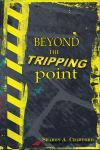
Cover of Sharon A. Crawford's mystery short story collection

Cover of Sharon A. Crawford’s mystery short story collection

The real voyage of discovery consists not in seeking new landscapes but in having new eyes.

— Marcel Proust

Some authors use fictitious settings for their novels and short stories; some use the real thing. I do both. Which works best when?

In the four linked short stories in my mystery collection Beyond the Tripping Point (Blue Denim Press, 2012), I do both. Toronto and Goderich (the latter in the story “Saving Grace”) are real, albeit set back in 1999. But for the main location where the fraternal twin PIs, Dana Bowman and Bast Overture live and work, I use a fictitious small city, Thurston, approximately 30 miles north of Toronto. Thurston is a combination of Aurora and Newmarket, two small cities just north of Toronto, and Guelph, Ontario.

Why did I use this combo for setting?

I chose a fictitious place for the stories here and in the prequel novel because:

  1. I wanted the combination for various features unique to each. Guelph (which I have visited in the past) is for the lake. But I lived in Aurora for 23 years to late 1998 so am familiar with a lot of what Aurora was like then. Newmarket is barely three miles up the highway from Aurora (now they are practically joined with urban sprawl and strip plazas so bad that if you want to meet someone at McDonald’s you have to specify which Mcdonald’s).  So here I was going on the familiar.
  2. Aurora nd Newmarket are part of York Region and the police force there is York Regional. I base the police force in the twins ‘stories on York Regional but call it Cooks Regional Force (and the region is obviously Cooks Region). I do this so I don’t have to be exact with police procedure in York Region in the late 1990s, but make sure any police procedure is the way it was in police departments during that time. I have a police consultant who is also a published mystery (police procedure) author as well as a working police constable. Some police equipment used then surprises me – such as wiretapping –big reel-to-reel tape machines that had to be turned on manually when recording, for example, calls from kidnappers. That made for some tricky sequences as how to set it up in my prequel novel. Toronto Police and the Ontario Provincial Police (as you can see in “Saving Grace”) are “themselves.” I didn’t want to create fiction to the ridiculous,
  3. Place names and street names. One of my mystery-novel-writing colleagues uses real streets in Toronto, but makes the numbers higher than the actual streets. I use a mixture of fact and fiction. For Thurston, Ontario, addresses are made-up. But, from my past living experience in Aurora/Newmarket, they resemble somewhat what is there – not the Mini-Mall though, and not The Attic Investigative Agency, which the twins operate from the attic level of their old house. That house is actually based on a number of houses I’ve seen or been in: the outside comes from an old three-story house, complete with balconies and turrets, I saw and photographed in downtown, London, Ontario. The inside of the twins’ house is based on a one a late aunt and uncle lived in (Toronto) when I was growing up, plus other houses I’ve seen the inside of doing interviews for stories as a journalist or house hunting. In other stories, I use real places but may not name them. For example, in “Missing in Action” I have a murder occur behind a real church (including the real location) but don’t name the church. In “Porcelain Doll” I use the real town of Hanover (among other real towns and cities) but don’t name the antique ahop there. And as a good part of “Porcelain Doll” is set on a train in the summer of 1965 I make darn sure I have the train layout, etc. accurate. It helps that I rode trains in Ontario and Michigan as a child during that time period and my late Dad worked as a timekeeper for one of the Canadian railways then. But I also did further research – online, from books on the Canadian railways, and files I photocopied from the Ontario Archives.

Why this mix of fact and fiction? I think to protect both the “real thing” and yes, myself. It also give me a bit of leeway when writing. The main thing is what are you comfortable using and will it work? How much research do you want to do (and there is always research as you can see from the above)? And if you are writing fiction based on fact you might want to change the location.

What do you do for settings in your fiction? Fact or fiction or a combination?

And if you click on my book cover above it takes you to my book on http://www.amazon.com

Cheers.

Sharon A. Crawford


Tags: , , , , ,

Making time for your writing

Cover of Sharon A. Crawford's mystery short story collection

Cover of Sharon A. Crawford’s mystery short story collection

Many of us would like to spend more time writing our novel, short story, etc. But our hectic lives can get in the way. The only solution is to take stock of what we are doing and what is happening in our lives. What is necessary? What can wait? What can be scrapped?

I’ve reached that point again and am getting ruthless. Unlike some of you I don’t have children around the house – my son has been long grown up and left the nest. I don’t have a significant other – a partner. That has its downside when you consider all that must be done or at least organized – alone. In a nutshell, I’m juggling the house (regular housework and things that need repairing/replacing, snow shovelling, etc.), family and some friends (I’ll clarify the “some” shortly), what I call “self” (walking, gardening and reading – things I do for me), and my writing/editing/writing teaching. The latter is my business and maybe that is the key to getting at your writing. Under those four categories I prioritize daily.

However, stuff happens; sometimes you find yourself spending too much time on related (or not) things.

So what does a body and soul do to get writing regularly?

Here are a few pointers to get you thinking.

  1. The aforementioned treat your writing like a business, i.e., something that must be done.
  2. Divide what you do into categories. They don’t have to be the same as mine – whatever suits your situation.
  3. Prioritize – within categories and the categories themselves – this must be done on a weekly and daily basis.
  4. Use the three Ds to decide what to do with No. 3 – Delay, Delegate, Dump (or Delete). I use some of the suggestions by Alan Lakein in his book How to Get Control of Your Time and Your Life (1989, available at www.amazon.com). My version is much earlier but he has lots of helpful ideas, including dividing your so-called “to do” list into A, B and C’s. A’s – obviously your top priority (i.e. writing) for what must be done, B’s for somewhat important but could wait before doing – you do these when the daily A’s are done. C’s – dump, delete. Here is where I put phone voice-mail messages from telemarketers and the like, even some friends (here it comes) – friends who appear suddenly out of the blue and wonder why I haven’t phoned them when it’s been years since I’ve heard from them – unless I want to reconnect. Have to be “ruthless” here. Maybe it will move up to a B.
  5. Juggling what’s left. For example in the writing/editing/writing teaching biz, I look at the overall picture, figure out what is most important and slot it into an A, what I have to do at some point into a B, and what I can dump into a C. And I do it by week and day. So this week’s (based on deadlines) priorities are: finish editing one client’s book manuscript, continue with the rewrite of my prequel mystery novel (including some research that has popped up as I write), my blog posts, some PR for my current short story collection Beyond the Tripping Point (fortunately I have a writing colleague friend who put my marketing plan into Excel and my end is to critique one of her short stories – when she finishes it). This brings up another idea.
  6. Instead of directly delegating – do a skills trade with someone – but make sure for both sides it is on each others’ priority list. For example I am not going to babysit for someone so they will clean my house because I don’t babysit.
  7. Try to set a specific time each day, five days a week, each weekend to write, and decide what you are going to write before you start.
  8. Don’t work on too many writing projects at a time. I have a friend who did that until she realized she had to rein in what she was writing.
  9. For those with families to look after, insist on certain times a day (depending on your circumstances) for you to have undisturbed time to write. Yes, I did this when my son was still at home, albeit in his teen years his rock band sometimes practiced in my basement while I wrote. Although I liked their music, I used ear plugs when writing. There was a trade off. The band members helped move appliances and other kitchen stuff when my kitchen needed painting. Your trade-off may be if you have kid-free and spouse-free time to write, you spend other time with them.
  10. Limit your social media, email, texting, online group participation, and phone calls. Turn off your email account notification (or close your email), turn your i-Phones, etc. to vibrate and let voice mail take over when you are writing. And don’t answer your door unless you are expecting someone. I don’t always follow the email and door ones. But you can bet if the someone at my door is soliciting they get short shrift from me. I’ve sent those water heater company sales people scrambling down the front steps – with words alone.

Happy and productive writing.

Cheers.

Sharon A. Crawford


Tags: , , , , , , ,

Creating the actual story from real life ideas

Cover of Sharon A. Crawford's mystery short story collection

Cover of Sharon A. Crawford’s mystery short story collection

In last week’s post I discussed how much of yourself goes into your fiction and listed overall guidelines, especially when the idea isn’t taken from your life. Today, I’m going to show how I gelled a plot idea with the main characters to write a story.

“The Couch,” the first story in my mystery story collection Beyond the Tripping Point, originated with something I kept reading in mystery novels that annoyed me. This was 11 years ago – “The Couch” was previously published in an anthology – but the idea is still relevant today. Too many fictional private investigators seemed to have a hard time making ends meet. I decided to turn that issue around – my PI, named C.U. Fly, called “C.U.”, would be raking in the money from too many clients and was burnt out. C.U. first tried conventional means to downsize and when that didn’t work, C.U. turned to an unusual take on crime. I also used the axiom of “crime doesn’t pay” as my underlying theme. C.U. was 25, so the good fortune wasn’t from many years of work. I threw in one more main “character” an old horsehair couch – that idea came from a horsehair couch that sat in the living room of my late grandfather’s farmhouse. Of course, Grandpa’s couch didn’t have adventures like the fictional old horsehair.

Here’s the beginning of “The Couch.”

I blamed the whole business on that old blue couch. An heirloom on my mother’s side, it was stuffed with horsehair. She’d given it to me when I opened this office. “Old Horsehair” settled in permanently until the bitter crackling end.

How else could I explain my actions? I had no choice. Some days I spent 20 hours in the office. No partner took the load off my shoulders. Only that damn three-seater couch, which sucked in my clients like a magnet. I had repeat clients related to repeat clients.

Or was Ms Everglades to blame?

The story’s theme is set up with the first sentence. The main character’s name and profession aren’t revealed until a few paragraphs down and are done in two ways: first, the PI’s name and a reference to the profession in Ms Everglades’ dialogue.; second, the profession is revealed in a short backstory in Fly’s mind to show how the situation started. How the state-of-affairs progresses is shown in a parade of clients – via dialogue, action and C.U’s inner thoughts. The point of view stays with Fly.

Here’s another excerpt with one of these quirky clients.

Take Guido “Ratty” Rattali, a self-professed blackmailer. Ratty hired me to dig up dirt on well-heeled people. Then he threatened them with their dirt, collected the payoff and limped into my office. He heaved his Blue Jays cap onto the floor, shoved his greasy locks behind his ears and pushed his grimy beige trench coat off his shoulders and down over his ass. Then he dived face-down onto the couch. His sobs alternated with sneezes as his nose rubbed into Old Horsehair.

“I’m only the poor son of a poor greengrocer, achoo, excuse-a-me,” he said.

When his sinuses were completely blocked, he jumped up, tripping on his trench coat, and handed me a wad of cash for my fee—less his take, no doubt. (both excerpts copyright 2012 Sharon A. Crawford,  from Beyond the Tripping Point, Blue Denim Press, 2012)


 You can also see how Old Horsehair fits in. And Ratty is an example of the type of clientele, although he is more bent than some of the others. I also add a dog who chews into Old Horsehair and a furnace repair man who comes in to check the furnace downstairs – all necessary developments that foreshadow and lead to the credibility of what Fly eventually decides to do.

Does it work? You’ll have to read the story to find out.

From the above, we can learn the following:

  1. Use a combination of what annoys, scares, or concerns you with perhaps one other item from your life (I used the complaining poor PI’s from fiction and the horsehair couch from my past.)
  2. Use your imagination for your characters – you don’t want a replica or yourself or someone you know – but you can “steal” a few characteristics here (I used imagination only).
  3. Devise a plot for your characters that is not run-of-the mill. (I turned the situation around, using the “what if?” approach.
  4. Lighten it up with humour – it can balance some of the nastiness in the story (It helped with the presentation of a quirky story with quirky characters).
  5. Make sure your story follows its theme (mine was “crime doesn’t pay) but do it in an original way (sorry, not telling here).
  6. Use “show the reader” features – dialogue, action, inner thoughts but some narrative is okay.
  7. Let your readers be surprised by the unexpected – but make it credible.

The first part of No. 7 occurred in a well, unexpected way. Tuesday evening I did a reading presentation from Beyond the Tripping Point entitled “Where do characters come from?” at the Runnymede Branch of the Toronto Public Library. When introducing me, the head librarian mentioned that her husband had been reading the stories and then looked at my photo on the back cover and said, “I can’t believe that sweet-faced woman wrote those stories.”

It’s the same photo of me as at the top of this blog page. The stories in BTTP contain murder, sexual assault, missing persons, kidnapping, revenge, suicide, vehicular mishaps, etc. You be the judge.

Cheers.

Sharon. A. Crawford


Tags: , , , , , , , , ,

Putting yourself into your fiction

Cover of Sharon A. Crawford's mystery short story collection

Cover of Sharon A. Crawford’s mystery short story collection

The most beautiful things are those that madness prompts and reason writes.

–          André Gide

If you write horror stories does that mean you have to run around with a chain saw chopping up people? If you write mysteries with serial killers does that mean you have to be a serial killer? What about romance writers? Children’s authors? How much of who you are factors in with what you write?

I’ve wondered about that lately because many of my short stories and the prequel novel are on the dark side – both in content and the humour sometimes used to tell them. But my stories also go to the other side of the creativity fence – I use emotions such as hope, love, gratitude, joy, generosity, empathy, even happiness (usually at the story’s end). In other words I make my characters human, characters who often have to overcome great odds to get some sort of hold back on their life and the lives of their family and friends.

For example, in my short story “Unfinished Business” from Beyond the Tripping Point (Blue Denim Press, 2012), the main character Lilly, has something traumatic happens when she is 12 years old. The consequences force her to run away from home at 15 and her life becomes one of too many men and never staying in one place for long. During that time she gives birth to a daughter, Trish, and her motherly instincts kick in, especially when Trish turns 12 and wants to see where Mom was born. The journey back holds bad memories for Lilly and when they arrive at her old home and the cause of the trauma shows up, mistaking Trish for Lilly, Lilly changes. She has to save her daughter from the same fate she had, and in doing so, she can get rid of the albatross she’s carried around on her shoulder, and change her life and her attitude. Besides the dark side of what happened to Lilly (and for the record, did not happen to me), the story shows hope and the indomitable spirit living somewhere in most humans. Lilly just needed strong motivation and mother love was it.

So, if you aren’t a serial killer or a sex fiend, how do you write about these areas and others you haven’t lived through yourself?

  1. Read, read, read on the topic. For serial killers, I’m reading Peter Vronsky’s book Serial Killers and I admit I watch Criminal Minds on TV. I do find the latter is more inventive in their serial killers and motives than some of those in real life. I say “some” because as the saying goes “truth is often stranger than fiction.”
  2. Other Research – interview experts. I’m not saying interview a serial killer but perhaps a profiler or a police officer familiar with catching serial killers.
  3. Put yourself (mentally and emotionally, not actually) in the mind of your character. How would they react to such and such? What is their story? Their background?
  4. Go inside yourself and draw out what is there that you can use? For example, did your parents die suddenly from, say a car crash, when you were a child? Did your father desert the family? Were you bullied in school? Did you grow up in poverty or do you live in poverty now?  Do you have a disability that affects your life? Do you have an affinity for certain people or types of people? For me, it’s the underdog – the one who has a lot of bad going on in their life. In other words, someone who has to overcome much and has a hard time doing so. Will he or she do so? That is what you have to figure out in your story.

The bottom line is this: what you write encompasses you, your life, your feelings – but it doesn’t mean you have to be a serial killer or even a mom. For the record, I am a mom, although my son is now in his mid-thirties; I was a single parent but had lots of parenting help from my ex; I was bullied as a child; my dad died after a long bout with cancer when I was 16; I suffered from depression some 30 years ago, and poverty is no stranger to me. But I don’t wield a chain saw – too heavy to hold and I’ve tried – but to trim trees and shrubs.

How much of you is in your fiction?

Cheers.

Sharon A. Crawford


Tags: , , , , , , , , , ,

Keeping your plot and characters consistent

Cover of Sharon A. Crawford's mystery short story collection

Cover of Sharon A. Crawford’s mystery short story collection

Be obscure clearly.

–          E.B. White

Nothing can be more frustrating to a writer (except maybe writer’s block) and a book editor too, than characters and/or plot starting to display inconsistencies. My favourite when doing manuscript evaluations for clients is the lady with short red hair in Chapter 2 who suddenly appears with long brown hair in Chapter 10. Did she suddenly don a wig? If so, say so…if it is consistent with what this character would do.

Or take these scenarios.

Does Tom suddenly appear in a conversation you thought was between Belinda and Sandra? James has a heart attack and is rushed to the hospital in Chapter 2; in Chapter 3 he is jogging down the street. Does Cathy arrive home in her car when in the previous chapter it was stolen? Then there is the “Who he? Who she? Syndrome” where one character makes a splash appearance near the beginning of the novel, does a disappearing act (from the writing, not the story) for the rest of the novel and then turns out near the end to be the murderer.

Oops.

I’m struggling with some inconsistencies in my prequel mystery novel. Part of the problem is the novel is complex. So I run into “How did Bast (one of the fraternal private investigators) find out about Y factor or how would he know? Didn’t I have some videotapes back in an earlier chapter? What happened to them? And one character, a TV reporter, who is not a major character and not the killer, has a history with Bast which creates conflict when they meet up after no connection for a year. After hinting at the conflict from this main character’s point of view and a couple of scenes where the two have an actual confrontation in the first half of the novel, “conflict character” all but disappears from the story. I call this inconsistency by deletion.

Readers will pick up on inconsistencies.

What should a writer do?

I’ve touched on this a few blogs ago, but it is important to have a follow-up list of any inconsistencies you notice as you write or pick up later in the first rewrite. Then, you can go back and fix the inconsistencies and mark “done” on the list.

It might also be a good idea to do an ongoing list of your characters and include their conflicts with each other and/or a brief ongoing chapter outline. When you are creating, your organizational skills take a backseat in your brain. This is not the time to multi-task or tell yourself  “oh, I’ll remember to bring Tom home in a later chapter,” or  “This scenario isn’t going to work with what has  happened before.” You also don’t want to stop the creative flow to fix an inconsistency.

How do you keep track of your characters’ interactions, conflicts and location so your final manuscript isn’t full of inconsistencies? Let’s compare notes. We might all learn something new.

Cheers.

Sharon A. Crawford


Tags: , , , , , , , , ,

Dialogue or narrative – that is the dilemma

Cover of Sharon A. Crawford's mystery short story collection

Cover of Sharon A. Crawford’s mystery short story collection

We care what happens to people only in proportion as we know what people are.

–           Henry James

My publisher wants me to make my prequel mystery novel a bit shorter. Part of the problem is my two main characters, fraternal twins Dana and Bast, get too chatty in some places, especially when they are bringing each other up to speed on their separate investigations.

When do you use dialogue and when do you use short narrative to summarize what characters tell each other so that your novel or short story flows and doesn’t bore your reader? You want to make your reader care about your characters, not have your characters put your reader to sleep. Here are a few (but not only or all) guidelines to consider:

  1. Do you need to show anything with their actual dialogue and any accompanying actions? For example, if one character is giving the other some bad news and their reaction includes what they say and how they say it, you might want to go the dialogue route.
  2. Don’t drag out the dialogue exchange between characters. It can turn into the equivalent of repeatedly driving your point home to your reader. For example, I have Bast and Dana often repeating the same setup ad nauseum when they are comparing notes – each are reacting the same way and sometimes their dialogue covers what is told elsewhere in the novel. Summarizing that Dana brought Bast up to speed on whatever situation would suffice.
  3. A caveat to the above two points: there is a fine line from using dialogue to bring out the character’s reactions to something when necessary and when the dialogue shows as repetition. Ask yourself: is the dialogue best to show foreshadowing and move the plot along? You might be better to use dialogue then. Also dialogue and/or action might work better if the character is changing – perhaps trying to be stronger than wimpy or holding in his or her anger.
  4. With mystery fiction where the police detective or private investigator is interviewing a number of “persons of interest,” summarize in narrative the ones who have little or no information to contribute and use dialogue where something of importance to your plot shows up in the interrogation.
  5. Be careful you don’t overdo the narrative just to contain your dialogue. You don’t want to overdo the telling and bore your reader this way. However, with narrative you can include the character’s inner thoughts and actions.
  6. Sometimes you can combine narrative with summary. Here’s how I did it in the short story Digging Up the Dirt, with the fraternal twins. Instead of Dana repeating to Bast her “interrogation” by the constable and what led up to it, I wrote:

And you actually let that constable order you around,” my fraternal twin, Bast, said later.

“Well, I had to listen to Fielding’s interrogation, especially of Aunt Doris.” I smiled.

(copyright 2012 Sharon A. Crawford. Excerpted from Beyond the Tripping Point, published by Blue Denim Press, 2012)

If you want to show how characters relate to each other under various circumstances and bring out their distinctive traits, dialogue with action might work best. If it gets too long, you can intersperse it with narrative. I do this in another story in Beyond the Tripping Point. Below is the link of my reading the opening scene in “Body in the Trunk,” clipped from my interview with Hugh Reilly on Liquid Lunch from thatchannel. The reading and the short preview before is three minutes long.

Sharon A. Crawford  Reading from Beyond the Tripping Point on Liquid Lunch http://www.youtube.com/watch?v=pgOKYgBfAwY&feature=youtu.be

Now I need to get back to my own novel and follow my advice.

Cheers.

Sharon A. Crawford


Tags: , , , , , , , ,

What motivates your characters?

Click on the book cover to go to amazon.com

Click on the book cover to go to amazon.com

A novelist is a person who lives in other people’s skins.

–           EL Doctorow

Why do your fiction characters do what they do? Are they acting/reacting in character or way out of character? How do you “make” your characters behave?

First of all, you only have some control over your characters. As you are writing, often a character will “take over” and “decide” just what they are going to do. Fine, but you still need to make sure they aren’t acting outside of who they are. Or that you, as the author, aren’t manipulating what they are doing, especially having them do something just to move your story along or worse, just to write something.

Let me give an example.

Take Dana, the PI In “Gone Missing” and “Saving Grace,” two of the four linked short stories in my short story collection, Beyond the Tripping Point. Dana is also the mother of a seven-year old boy. So her dual role must factor in what her character thinks and does. Add to that the fact that her son is psychologically mute because of something that happened to him in the prequel novel (more on that shortly) and my work was cut out for me. In a critique of “Gone Missing” a few years back, I was chastised for not making Dana more professional. But with her problems with David, she wouldn’t be operating as a PI only – all professionalism –unless she is a “bad” mother – finds her son an impediment to her life, etc. Dana is not that and is always torn between her two roles, something readers can identify with in real life. So I have her wrestling with David and helping him as well as trying to solve the missing persons’ cases in those two stories. In “Saving Grace” she has a bit of a meltdown at one point chastising herself for being a bad mother. And to add insult to injury, another character Great Aunt Doris, who is a traditionalist where mothers are concerned, calls her a bad mother.

What is a mother/PI to do? Be human. Act in character.

In the prequel novel which I am rewriting for my publisher to look at, the actual occurrence which causes David’s muteness and all its implications has Dana roller-coasting a lot more than in the short stories. She does some stupid things, briefly goes into a catatonic state and sometimes gets more aggressive than usual. But – and it’s a large “but” all this change, all these actions and reactions come from her basic character and who she is. I don’t pull them out of the air. She is acting in character and characters have to deal with hurdles and change. So do people in real life and maybe that is a bottom line.

Make your characters real. What motivates them? Are they acting in character even when they don’t seem to be?

And go to my publisher’s page for a link to my interview with Hugh Reilly on thatchannel.com where I talk about some of these characters and where they and the plots originated. Eventually I’ll get that video up in the main part of this blog.. For now go to http://www.bluedenimpress.com/sharon-crawford.php and click on the link at the bottom of my bio.

Cheers.

Sharon A. Crawford


Tags: , , , , , , , ,

Keeping track of everything in your story

Amazon.com link to Sharon A.'s short story collection

Amazon.com link to Sharon A.’s short story collection

If you start to revise before you’ve reached the end, you’re likely to begin dawdling with the revisions and putting off the difficult task of writing.

–          Pearl S. Buck

Currently I’m rewriting the prequel novel to four linked short stories in Beyond the Tripping Point. I’m expanding and complicating the plot and telling the story from four points of view. The original novel had only one POV – the first person singular – Dana. Yes it is the fraternal twins again and my own head has been going back and forth from the points of view of Dana, her twin Bast, her son David, and a suspect who isn’t named. I am following the rules of one character’s POV per scene or chapter.

However, all this to-ing and fro-ing makes it more difficult to keep track of timelines, who is doing what and the biggie – consistency in story line, in character’s actions, etc. To lower the muddle factor, I started a new file called “Follow-up List.” Every time something occurs that requires checking/changing for consistency, timeline – even research, it goes on the list. Right now timeline, consistency and keeping all the police constables sorted out are the big factors.

Why am I doing this? Besides the obvious, if you constantly stop writing to do research or sort out characters and timeline, you lose your creative flow. Mind you, I am going back for a few things if they are interfering with moving the plot along from where I am working. But the research can wait – some of it is just re-checking facts I’m not sure I got right. Or some detail such as a name change, can be fixed by using the Find and Replace Word features – preferably at the end of your writing session.

Another action I take (and I’ve mentioned it in an earlier post) is refusing to stall over a word that doesn’t seem quite right or is repetitious. Stopping to look it up in the Thesaurus, even if online, also breaks the creative flow. For example, as I wrote this blog post, I spelled Thesaurus incorrectly but did not correct it immediately. Here Word underlined it in red so I could go back and change it. For repetitious words or words not quite right, you just need to put (word) or (repetition) in brackets after the offending word and return to it later in your rewrite or in my case, another rewrite to fine-tune the rewrite I’m doing now. One final suggestion – format your manuscript before you start writing. Or if your situation is similar to mine – a rewrite of a novel originally written 10 or 11 years ago, where the formatting was different, you can leave it until you are finished. Stopping to fix paragraph formatting stops the creative flow.

And how is my massive rewrite going? Nearly finished the first big rewrite. If all goes well I’m hoping to have it done by the end of the day tomorrow. Afterwards, I want to let it sit for a few days and then go through my follow-up list and well, follow it.

Meantime, I’m doing plenty of PR for my short story collection Beyond the Tripping Point. Tonight I’m doing a sort of performance reading of a short story excerpt as part of the Periodical Writers Association of Canada’s Talent Night. Sometime between 8 p.m. and 11 p.m. I’ll be onstage at the Free Times Cafe in downtown Toronto. If you are in the Toronto area perhaps you can drop in. Check out http://www.freetimescafe.com/ for more information, including location, or go to my website http://www.samcraw.com under Beyond the Tripping Point where I’m posting upcoming readings, etc. as I get them. All my links are either on this book page or at the top of my website home page you will find the usual social media icons.

And if you click on the book icon at the top of this post, when you get to amazon.com, please read my bio and click on the Like Icon. Thanks.

Keep the creative flow going.

Cheers.

Sharon A. Crawford


Tags: , , , , , , , , ,

Setting Writing Goals for 2013

amazon.com link to Sharon A. Crawford's book

amazon.com link to Sharon A. Crawford’s book

The best time for planning a book is while you’re doing the dishes.

–          Agatha Christie

I’m not sure what the characters in my mystery short story collection Beyond the Tripping Point would plan to do in the new year. Some of the stories take place way before 2013 – for example 1965, 1997 and 1998. Be that as it may, that is no excuse why I and any other writer can’t set writing goals. It’s a new year and that brings new chances to write. If you’ve been procrastinating about finishing or even starting that novel or short story, here are a few outside the box (and a few inside the writing box) ideas how to get yourself from wishful thinking to actually writing.

1.    Do something else, like the late Agatha Christie’s suggestion above and I don’t think she meant using a dishwasher unless the dishwasher is you. Also try gardening (outdoors in season or indoor gardening in winter), walking, vacuuming and dusting, even sleeping. The idea is something mechanical and boring (washing dishes) and something that frees your mind to think creativity (walking, gardening) can kick-start an idea in your mind.
2.    Keep a notepad – electronic or hard copy – and write these ideas down as they hit your brain – you don’t want to operate like a gnat. That means keep something to do so near your bed at night.
3.    Take this latter a step further and start writing down your dreams no matter how silly they seem – analyze them or not, but the content alone may inspire a story.
4.    Learn from other writers – aspiring, established or in-between. Read blogs, attend writing workshops and courses (online or in person), join writing organizations and groups (preferably some that you have to go to in person as the personal connection with writers is good for your writing soul).
5.    Read novels and stories like you want to write – in print or e-book, whichever works for you. Reading others’ writing inspires you, not just with ideas, but with the writer’s style and grace.
6.    Blog excerpts of your writing – but make sure you state that it is copyrighted by you and don’t post the whole story because it could be considered a first publication and may interfere with other publication (unless you self-publish; then you can do what you want). On the other hand blog posts can often turn into seeds for books – trade or self-published. For an example, see posts by Alex Leybourne at http://alexlaybourne.com/
7.    Blog about your writing journey. We can learn from each other. For an example, see blog posts at http://bottledworder.wordpress.com/
8.    Try to write every day, even if just for an hour. For inspiration on this check out Julia Cameron’s The Writer’s Way at http://juliacameronlive.com/
9.    And perhaps most important – set writing goals for the year. Check http://bottledworder.wordpress.com/2012/12/31/new-years-resolutions-2013-guide-for-writers/ and Alex Laybourne’s blog post for Jan. 2 at http://alexlaybourne.com/2013/01/01/new-beginnings-a-guide-to-2013/

Happy and prolific writing for 2013.

If you read my book (see book cover at the top), please review it. Thanks.

Cheers.

Sharon A. Crawford


Tags: , , , , , , , , , , , , , ,

How do fiction characters act in a snowstorm?

Amazon.com link to Sharon A. Crawford's book

Amazon.com link to Sharon A. Crawford’s book

As soon go kindle fire with snow, as seek to quench the fire of love with words.

–          William Shakespeare

Toronto and other parts of Ontario as well as Quebec and the Maritimes got blasted with the first big snowfall of the season overnight. So I thought it might be interesting to dump some of our fiction characters into a snowstorm and see how they could behave.

My obvious choice of characters are the two friends, Millie and Jessica, from my short story “No Breaks” in my short story collection Beyond the Tripping Point. The story is set on a hot and humid August day but what would happen if the duo were driving up Ontario’s Highway 11 to the Muskoka cottage during a snow storm? This area gets lots of snow on the highway and with the brakes in Millie’s car failing, would Millie’s work-around that even be feasible in a snow storm? Perhaps the storm itself stalls traffic. So setting is changed but the reason for their trip up to Jessica’s family cottage wouldn’t be summer and beach related. Perhaps they are headed up there for Christmas. If you take all the other factors in the story (and I’m not telling all; you have to read the book to find out – book available on Amazon.com and Amazon.ca – link to the former on the book above and to the latter on the book at the end of this post), things will change.

Think about it. The two friends will be stuck in the car on a continuous basis. Millie is already fed up with the way her life isn’t going and Jessica, a non-driver, is scared they won’t get out of their situation. Millie is a control freak and Jessica hangs onto her Blackberry like it’s her lifeline – even when there is no reception. In the actual story, the relationship between the two friends changes as Millie learns some hard facts which hurl her over her personal tripping point. This could intensify and Millie’s actions could happen much faster and maybe being stuck in the snow with Jessica might bring out new terrifying traits and changes in the two women.

In your fiction – short story or novel – put your main characters, preferably the antagonist and protagonist, stuck in a snowstorm – if not in a car, maybe at a pub, a hotel, a meeting, a resort. How would they react? Would their conflict get worse or would it give them time to pause and do something about it? And remember, these are two idnividual characters here, so one may want to sort out their differences and the other one might not. One might get nastier; one might have a fear of being trapped and how would that affect his or her character? The possibilities are endless.

Put your characters in a snowstorm – even if only as a writing exercise. It will show you different sides of your characters and perhaps give you some insights into their development that you can use in your story – snowstorm or not, for example, how do your characters deal with unexpected adversity, especially of the severe weather kind?

Now, I better psyche myself out to shovel all that snow. I don’t dream of a White Christmas season. I dream of summer and my garden. Meantime, I have a guest blog post appearing on another Crime Writers of Canada member’s blog, December 28, 2012. Check it out at http://sweatercursed.blogspot.ca/

Cheers.

Sharon A. Crawford

Link to amazon.ca for Sharon A. Crawford's book

Link to amazon.ca for Sharon A. Crawford’s book


Tags: , , , , , , , , ,