RSS

Tag Archives: Blue Denim Press

Lessons learned from a Book Promo Frenzy

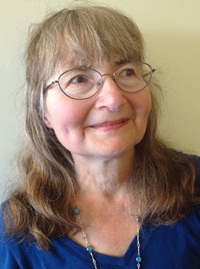
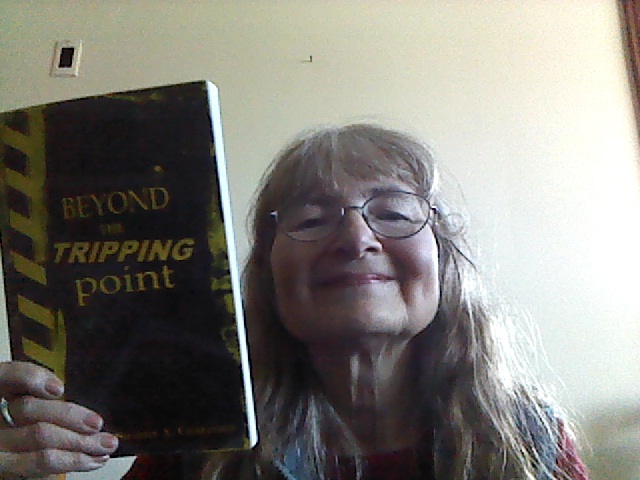
Sharon A. Crawford holding up copy of Beyond the Tripping Point

If the writing is honest it cannot be separated from the man who wrote it.

Tennessee Williams

With the windy and rainy remnants of Hurricane Sandy hitting Toronto, I wasn’t sure I would even make it to the TV taping. Didn’t get enough sleep the night before. But Sandy’s winds died down Tuesday morning and I showed up for the Internet TV interview about my short story collection Beyond the Tripping Point.

And if you are thinking, “I’m just writing my book so why would I be interested in doing interviews?”  Besides thinking ahead for the PR aspect (self-publishing or traditional publishing, you have to do PR), interviews (in front of a camera or not) can provide a good experience for you to focus on what your book is about, how you came to write it and who your characters are. I’ll cover just the highlights of my interview because once the interview is edited it should be online.

The studio is on the fourth floor of an old five-story building in downtown Toronto. The elevator didn’t look too promising so I took the stairs, went around a corner and opened the door to the studio. Everything is one room and the atmosphere is a combination of professional, friendly and helpful. I signed in, met the host and co-host, handed them a copy of my book and after their beginning preamble, I was introduced.

I wasn’t really nervous, probably because I do public speaking, readings, teach writing workshops and run a writing critique group. And I had prepared – just a brief list of what to expect from the channel’s previous podcasts, but mostly I had done practice runs in my head and verbally (Confession: I sometimes talk to myself). In the back of my mind was the editor at Blue Denim Press’s warning to try to stay on topic as the host sometimes wanders off topic.

In the 20 minutes we covered a lot of territory, including my background as a journalist, book editor and fiction writer, as well as some of the quirky characters in the story. I talked about the fraternal twin private investigators, Dana Bowman and Bast Overture in the four linked stories and the control freak protagonist in “No Breaks.” For the latter I delved into how that story came into existence – based on a true experience when a friend and I were driving up Highway 11 and her brakes failed. She was driving and knew enough to use her parking brake; we also went in and out of gas stations trying to find a bay so the brakes could be fixed. That’s where the true story ends. In “No Breaks” (the word has a double-meaning, hence the spelling), the story is told from the point-of-view (had to get POV in here somewhere) of the protagonist, Millie, who is not attractive, lost her job a few months previously, and has decided when they get up to the cottage owned by her friend, Jessica’s grandmother, she is going to jump in the lake. Things don’t go as planned and Millie, for once, goes over her tripping point and spontaneously commits a crime.

The co-host seemed to connect with my book’s characters. And the host had fun playing with some of the items I had brought along – items appearing in or used by some of the characters in Beyond the Tripping Point – an oversized magnifying glass (Great Aunt Doris in “Digging Up the Dirt”), a toy-size steam engine that sometimes starts “whoo-whoing” (“Porcelain Doll”),and a toy ambulance (“Missing in Action”). I even had a chance to read about a page and a half of one story, “The Body in the Trunk” and I could see to read from my book. In answer to a question about upcoming readings, etc. I plugged my book launch this Sunday, Nov. 4 from 2 p.m. to 5 p.m. (Eastern Standard time) at The Rivoli in downtown Toronto.

How the interview actually turned out will be seen once the edited version is up on the station’s website. It is live-streamed when being taped but the recorded version isn’t up yet, so I’m feeling a bit apprehensive. Did I curse the taping? My editor says it takes a few days for it to get edited and up.

So, back to an author with a book in-the-works being interviewed. You can do like I did years ago (back in the grey ages) in the writing courses I took. The instructor had us pair up and interview each other. For your practice interview, get someone (but not a close friend or family member – they know you too well) to interview you. If the person is in the interview biz, all the better – they can come up with pertinent questions about you and your book. You can do some prep beforehand like I did with the brief list and head/talk-to-myself practices. But the best bet is to know your book – plot and characters – and why you wrote/are writing it. You’ve been living with your book so it should be in your head. You may feel nervous but take a deep breath and go with the flow. You might even want to video record it (and perhaps put it on You Tube and connect it to your website or blog).

At any rate, the interview experience can bring you closer to your book’s characters and plot – and maybe even help you sort out any inconsistencies in plot and character. Consider it a learning experience for the real deal when you publish your book.

Meantime, check http://www.thatchannel.com later on for my interview on The Liquid Lunch. Hopefully it will be up there soon.

If you are in the Toronto area, come to my book launch at The Rivoli Nov. 4. More details at http://www.bluedenimpress.com  – click on “Toronto. Or go to http://www.amazon.com for copies of my book. O better still, click on the book cover image below.

Now please excuse me while I send out some book launch reminders and drop off a copy of Beyond the Tripping Point for review at a Toronto newspaper office.

Cheers.

Sharon A. Crawford
Sharon’s book Beyond the Tripping Point up close


Tags: , , , , , , , ,

Point of View: whose story is it anyway?

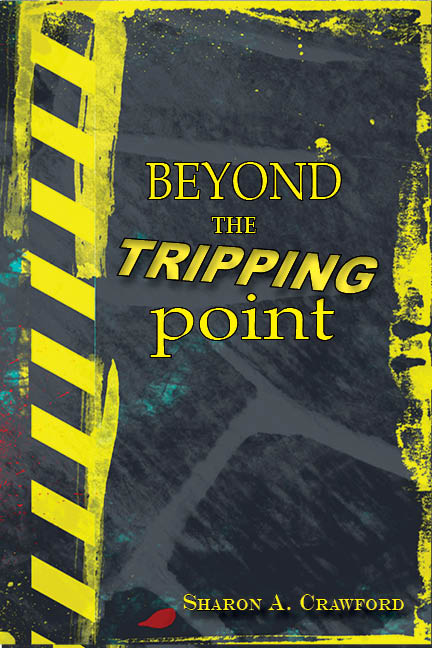
Cover of Sharon’s short story collection Beyond the Tripping Point. Book Launch Nov. 4, 2012 at The Rivoli, Toronto, Ontario,Canada

What is written without effort is in general read without pleasure

– Samuel Johnson

We writers often get into a kerfuffle about the point(s) of view in our story – short or novel. Maybe it’s because we get so caught up in the plot and characters we do a version of not seeing the forest for the trees. So in one paragraph Suzie and Bert may be talking but Suzie’s thoughts are incorporated with her dialogue and in the next Bert’s thoughts are included with his dialogue. Oops. That’s two points of view in one scene. I call it “jumping heads” (but it’s not nasty like lice).

The reader can definitely get confused with this setup (Picture the reader jumping back and forth from Suzie to Bert; hence the term “jumping heads”).

Often this problem has its roots in the author not being clear just whose story it is?

Let’s look at a brief excerpt from my short story “Gone Missing” from my mystery collection Beyond the Tripping Point. This story features the fraternal twin private investigators, Dana Bowman and Bast Overture. In the beginning, they are in their office talking to a new client.

“The police can’t find her, Ms Bowman,” Robin Morgrave says to me.

Rosemary Morgrave’s gone missing and I’m putting on the brave smile for her twin brother. Robin sits on the other side of the desk in the third floor office of The Attic Agency. Only my twin brother, Bast, nodding, stops me from losing it. Ever since David my seven-year-old son was abducted last August I’ve been living in Panicville. Sure, we got David back, but how much of him returned? He follows Bast around like an investigator-in-training. His brown eyes stare right through my soul. I wish he’d just say how he feels. But since his return, David hasn’t opened his mouth except to swallow liquids and food. He doesn’t even cry. (Copyright 2012 Sharon A. Crawford.Excerpted from “Gone Missing” from Beyond the Tripping Point 2012 Blue Denim Press)

This sets the point of view for this story. Although it might appear to be Robin Morgrave’s story from the beginning dialogue, the second paragraph clearly lets us know that it is Dana’s story – because behind dealing with Robin’s case, Dana is still dealing with the fallout from her own son’s kidnapping and how that affects finding Rosemary. That will be following throughout the story. So, the Point of View is with Dana. You can also see that you don’t necessarily have to start the story with something said about, some narrative about, or something said by the POV character. You can weave it in – as long as it stays in that character’s POV and comes across as such.

So, how do you decide whose point of view to tell your story from? You ask yourself “whose story is it?” which can help… somewhat. There are exceptions, such as Scott Fitzgerald’s The Great Gatsby, which is not told from The Great Gatsby’s point of view but from his friend. However, the story is basically about Gatsby. It can get tricky.

There is a way to get around this “whose story is it” when the novel is really more than one character’s story or the story is about something such as catching a serial killer. The latter may involve a couple of police officers, the victim or victims, and even the serial killer. Here you are allowed to use multiple points of view. But there are guidelines. The rule of thumb is each chapter or each scene (if you have more than one scene in a chapter) must be from the point of view of one character only. When you start another chapter you can change the point of view. You just leave a double space to show scene changes.

Short stories are usually told from one point of view, but again there are exceptions. However, it is best to keep it to two points of view maximum as a short story has limited space in which to tell your story. Again, you can use the scene change set-up to go from one character’s point of view to another character’s. You can also segue from one character to another – once – in a scene, not a constant flipping back and forth. This latter is more difficult to do.

My short stories in Beyond the Tripping Point keep to one character’s point of view – sometimes in first person and sometimes in third person. We’ll cover that aspect in a future post. Now, in the rewrite of a prequel novel (to “Gone Missing,” “Saving Grace” and the other two linked stories in Beyond the Tripping Point) I use multiple points of view. You can probably guess from the beginning of “Gone Missing” above what the novel is about. But because it’s a novel with police officers, two private investigators, a little boy and others, I’m focusing on the bigger picture of the story line and how it affects not only Dana, but other key players. My technique here is to put the character’s name at the top of the scene/chapter for point of view – mainly because I put Dana in the first person and everyone else in third person. And yes, I use the scene change technique.

In another post we will also look at some tricks to “get inside” the non POV characters without jumping heads and staying with the POV character.

What is my story now? I’m busy doing pre-book launch PR for Beyond the Tripping Point. That includes an interview appearance on a podcast TV show. It’s been awhile since I’ve been in front of a video camera (or behind one) so we’ll see how it goes. I’ll report in the next blog.

For information on my book launch (it’s November 4, 2012) go to http://www.bluedenimpress.com and click on “Toronto.”

Cheers.

Sharon A. Crawford


Tags: , , , , , , ,

Connecting with publishers and agents

Cover of Sharon’s short story collection Beyond the Tripping Point

To write what is worth publishing, to find honest people to publish it, and get sensible people to read it are the three great difficulties in being an author.”

~ Charles Caleb Colton

Last week I blogged about the traditional way to pitch your book manuscript to publishers and agents. Other ways exist and for some you have to have imagination and nerve. Then there is what Brian Henry said in his workshop last Saturday “Luck” or as I see it – “right place, right time.”

How I got my publisher for my mystery short story collection Beyond the Tripping Point comes under the latter. The Editor at Blue Denim Press used to come regularly to my East End Writers’ (critique) Group when he still lived in Toronto. He is also a writer. Once we traded manuscripts for evaluation (although mine was a memoir, not the short story collection). When he and the other half of Blue Denim Press, his wife, the Publisher, did a presentation about Blue Denim Press and marketing books at a Canadian Authors Association Toronto branch meeting last fall, I approached them and mentioned a collection of short stories. They said send it in during January and February when they look at manuscripts. So I did – but only seven of my stories.

They were interested but needed more stories. So I was writing and rewriting stories right up to and beyond signing my contract with them (but that’s another story).  Something else I found out – the Publisher’s taste in fiction – she reads half a dozen mystery books a week – and my short stories are in that genre. Of course, it helps to write well and have something different about your manuscript. Mine isn’t called Beyond the Tripping Point for nothing. All 13 stories feature quirky characters and as I state in the PR to promote the book:

Murder, attempted murder, sexual abuse, kidnapping, missing persons, vengeance, revenge, suicide, gambling, explosions, vehicular mishaps, indignity to a dead body, even love occur. Like all life’s happenings, they affect the characters–women, men and children–in their journey through life–emotionally, sometimes damaging them, sometimes stalling them in limbo, but often forcing them to reach beyond the tripping point. And to get there, these quirky characters frequently do the absurd and the unthinkable, often with unexpected results. 

By the way, I thought of the title and the publisher loved it.

So, what can we learn from my experience besides the obvious that I did not follow convention?

  1. Network, network and network – a combination of social media and in-person works best.
  2. Network with specific targets and goals. I focused on the publishing industry – trade shows, conferences, writing organizations, and workshops. You will meet a variety of writers, publishers, agents, etc. You might just chat with them for a bit and exchange business cards. Follow up by email.You might also do more (see below).
  3. Join some of these writing organizations and attend their meetings and seminars.
  4. Talk to the people at the conferences, etc. (wallflower acting not allowed) – introduce yourself and what you write. Ask the publisher or literary agent who is the guest speaker/attending the conference, etc. if you could send a query letter/part of your manuscript. Most will say yes, but remember that doesn’t guarantee you they will publish you or represent you. It means they will read your submission (and often they will skip their guidelines and say “just email the manuscript”). Follow-up within a week or two and in your cover or query letter make sure you remind them where you met.
  5. Remember the above can be a two-way street when you network. Sometimes it includes what you can do for them. For example, with writing organizations they are always looking for volunteers. Volunteering with a writing organization can help you connect with more writers, publishers, etc. It is also a good way to learn the ins and outs of the writing business. And it looks good on your bio for future query letters, etc.
  6. Join a writing critique group – this will help you hone your writing.
  7. Social media includes: Facebook, a blog about your book, Twitter, Goodreads, Linked In.
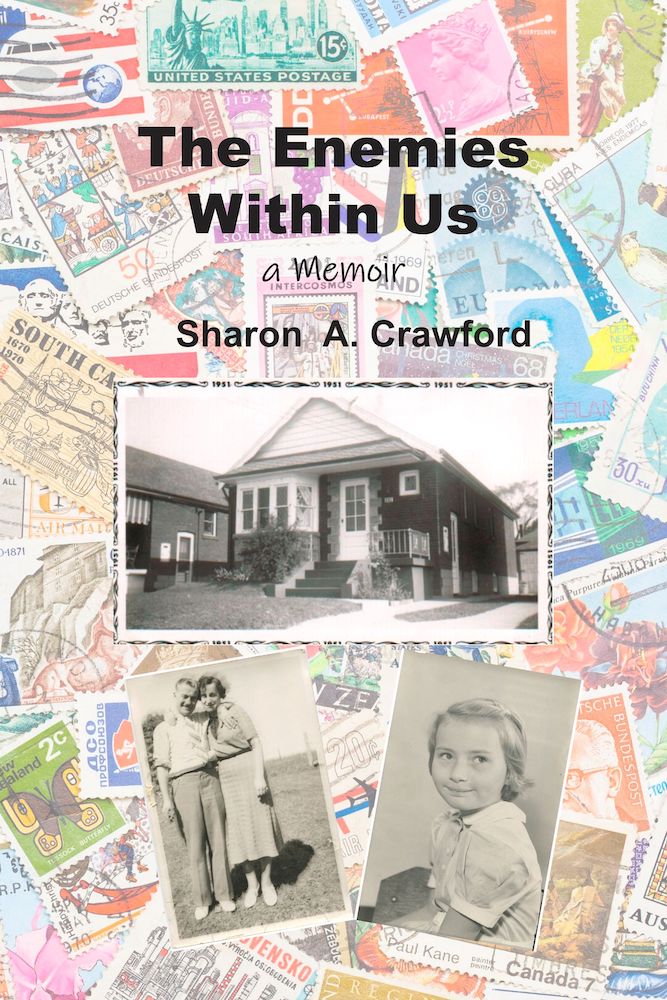
  8. Don’t give up. My memoir is still trying to find a home. (Note: at this point Blue Denim Press publishes only fiction).

Good luck.

The book launch for Beyond the Tripping Point, presented by Blue Denim Press, will take place Sunday, November 4, 2 p.m. to 5 p.m. eastern standard time at The Rivoli in Toronto. You are invited if you can make it (well, if you are in say, Australia, maybe not). Guests are coming from northern Ontario and possibly Michigan in the USA. I am honoured and grateful to those who do come to my book launch. More details at http://www.bluedenimpress.com and click on “Toronto.”

For those too far away to attend, Beyond the Tripping Point is available at http://www.amazon.com. Just click on the book cover at the top of this post.

Cheers.

Sharon A. Crawford


Tags: , , , , , , , , , ,

Getting published the traditional trade book way

Book cover for Beyond the Tripping Point

Times are bad. Children no longer obey their parents, and everyone is writing a book.

— Cicero

I’m off to another public reading for my just released collection of mystery short stories Beyond the Tripping Point (Blue Denim Press, 2012). It’s all part of the book promo and it is and has been busy, what with trying to get book reviews, nailing TV and radio appearances, etc. My publisher shares this marketing, which really helps.

But before you get into this book PR, you have to land your publisher or literary agent. And that can seem daunting. There are so many unpublished authors with talent, many more than “publishing spaces.” E-books are creating more readers (and more publishing space), but some authors are going the self-publishing route and I say more power to them. But what about those who prefer the traditional route?

You can’t just dump your novel or short story collection on an agent or publisher. They don’t have time to read the whole story unless something about it grabs their attention. Your job is to get their attention – right away.

One way is through query letters, synopses, and sample chapters. Some agents and publishers want this whole package; most prefer the query letter only and then if that gets their attention, they will ask for more.

A good query letter has to hook the agent or publisher with the first sentence. Starting with the obvious “I’m looking for an agent to represent my novel” will put the agent to sleep. Grab the agent with a wowee sentence about your book. Here’s an example. “When Abigail Cooke reunites with her birth mother, she has no idea that her new family connection will lead to buried bodies, psychosis, and the Mob.”

There are variations to the “when setup,” which focus more on the characters, the time period – whatever is most pertinent to your novel AND will grab the agent’s or publisher’s attention.

In your second paragraph you get to expand – a little. In this mini-synopsis you give the highlights of your novel’s plot and main characters. Pick the attention getters. Don’t do it resume style – it has to flow – and watch for boring summaries starting with “Abigail Cooke is a tall, slim blonde who teaches kindergarten.” Yawn. What does that have to do with your beginning sentence? The agent or publisher wants to read on from paragraph one. It also is a good idea to give the title of your book. Better would be “In Can of Worms, Abigail Cooke, a young schoolteacher who was adopted at birth, has always found something missing in her life – her birth mother. After agonizing the pros and cons, she starts searching online and finds her birth mother, Sara Tusani. The two begin an email correspondence. Despite Abigail’s apprehension about Sara, which she puts down to “just nerves,” she agrees to meet Sara in her native Rome, Italy during her summer vacation. When she’s met at Leonardo da Vinci Airport by her mother’s chauffeur, but not her mother, she ignores her gut feeling of apprehension and relishes the luxury. When she arrives at Sara’s mansion on the outskirts of Rome and meets her mother’s brother-in-law, Luigi Tusani, a philandering alcoholic and her half-brother, Giuseppe Tusani, a computer nerd who hibernates in the attic, she has second thoughts. But her mother seems normal, gracious and friendly…at first. As the day turns to dark, loud bangs and a haunting caterwauling in the mansion wake up Abigail. The next morning’s questions give her only “you must be imagining things” answers. That night when the noises come, Abigail is ready. Grabbing a hairbrush for a weapon, she leaves her room, walks along the hall and goes downstairs into the kitchen, sees the basement door open, and takes the stairs down…”

You would add a sentence or two, supplying a bit more information. Depending on your storyline you can have a summary sentence that perhaps goes back to your first paragraph’s sentence, for example, “Abigail finally realizes she should have listened to her instincts and now must lose her new family or risk losing her life.”

Paragraph three covers your background – published writing (books, stories in journals or magazines, newsletters, especially if you’ve won any writing contests or awards). Not a published author? What about your education and expertise? Is it related to your novel? For example, for Can of Worms if the author is adopted and tried to find her birth mother, is or was a school teacher, and has travelled to Rome (in order of importance to the novel – all not necessary), you can use that to establish credentials for writing the novel.

Some agents or publishers want a little marketing information from you, so you could either put it in a second sentence in paragraph one or write a short fourth paragraph (better). Focus on how your novel is different from what’s out there. Be specific, including naming another novel. Also state who your readers would be (thirty-somethings, seniors, adoptees, etc.).

Your final paragraph is The Thank You and the Ask. Thank the agent or publisher for their time, ask if they would like a synopsis and sample chapters and you look forward to their reply.

Your query should be only one page but with most sent by email you can cheat – but just a little – no equivalent to one and a half to three pagers. Another suggestion: check submission guidelines on the agent’s or publisher’s website and follow them to the well, query letter.

For those of you in the Toronto, Ontario, Canada area, Brian Henry is running a workshop on Getting Published which includes writing a query letter and a literary agent as guest speaker. This workshop is sponsored by my East End Writers’ Group and will be held at The World’s Biggest Bookstore in downtown Toronto from 10 a.m. to 4 p.m. Saturday, October 13, 2012. Check for more details and how to register at http://quick-brown-fox-canada.blogspot.ca/2012/06/how-to-get-published-workshop-toronto.html

Next week we’ll go into another way of getting the attention of agents and publishers, including how I got my publisher for Beyond the Tripping Point.

Cheers.

Sharon A. Crawford


Tags: , , , , , , , , , ,

Reading your writing out loud

Sharon A. Crawford almost reached her tripping point reading from Beyond the Tripping Point

Always read something that will make you look good if you die in the middle of it.                                                                                            ~P.J. O’Rourke

The stage was set for the public reading. The host introduced me and I grabbed the author copy of my book Beyond the Tripping Point. I walked up to the lectern, took the mic, opened the book, prepared to read…

And could barely see the words.

No, folks I wasn’t going blind. And my glasses were (and are) just fine.

The culprit was not enough light. Only dim ceiling lights. The restaurant had supplied the lectern and mic but did they forget we would need to see to read? I wasn’t the only one who had problems seeing. Usually I enjoying reading in public and am told I do it very well. Not last Thursday evening’s session in the patio room at a Toronto restaurant. I was reading as part of the Toronto branch of the Canadian Authors Association season launch, which outside of the restaurant’s gaff with the lack of light, went very well and brought in record numbers for the branch. I was proud to be reading as part of the CAA program. And yes I did manage to stumble through the short passage I read (and was actually heard as others told me afterward). However, I was so disconcerted by the lighting situation that I forgot to mention the date of my book launch (November 4, 2012). My publisher did, when he went up to the lectern.

My publisher since told me to print out my reading excerpt from my Word copy double-spaced in 14 point. Another author told me to use sans serif font and print all caps. Not sure whether my eyes could deal with the latter, but the large print sans serif sounds good. I might also bring a flashlight or a clip-on book light – if I can find new batteries for my book light and figure out how to insert them. Never again will I complain about bright lights shining in my eyes as I do a public reading.

Fortunately, this reading was a dry run (as my publisher put it) for the book launch.

This reading experience made me think how much reading out loud can help the manuscript in-the-works. Sometimes hearing what you have written puts your story in a different perspective. And your setup for reading-out-loud can bring out different experiences. If you read out loud, record it and play it back, you can hear your words as if coming from another person. If you merely read out loud, you hear the sound from inside your head.

Both methods can give you excellent feedback. You might discover:

Something in the plot sounds jarring and doesn’t work.

One character’s dialogue doesn’t sound right for the character or for the scene.

The point of view you have used may not work. For example if you wrote it from the third person omniscient – see all and hear all – like looking down from a cloud – it might sound cold and distant for what is intended to be an intimate story. (We will be covering the ins and outs of point of view in an upcoming blog. Soon).

You will hear your word errors – words that don’t fit exactly for what you mean, words left out or repeated.

Reading out loud can be an enlightening experience (pun on word intended). You can hear your characters live, breath, and speak. Reading out loud is an excellent tool to help you improve your writing. Playing back what you read works even better.

And if you are going to read in public, be prepared. Bring a large printout of your reading material and a book light or small flashlight. And practice beforehand. That latter (and my experience reading in public) was my saving grace last Thursday evening. Otherwise, I might have been tempted to walk away without reading.

Cheers.

Sharon A. Crawford

Author of Beyond the Tripping Point

http://www.bluedenimpress.com


Tags: , , , , , , , , , ,

Fiction-writing lessons from my students and more

Cover of my short story collection Beyond the Tripping Point

"The role of a writer is not to say what we all can say, but what we are unable to say."
                                    ~ Anaïs Nin

Tuesday evening I taught a workshop on Developing Character and Dialogue in Fiction at the Runnymede Public library branch in Toronto. We covered what I’ve been blogging about the past few weeks and a bit more. I used excerpts from my mystery short story collection, Beyond the Tripping Point, to illustrate some points – which I’ve been doing here. There was one big difference – I had the proof copy of my book in my hands. This is very exciting and I’m putting the book cover up at the top of this post. You can find out more about Beyond the Tripping Point at my publisher’s website www.bluedenimpress.com.

Okay, back to the workshop.

One thing I really like about these workshops is the sharing and the learning. I always learn something. A student amazed me with his beginning of a story about a teenager starting the first day at high school. The student was a girl and that means he wrote it from a female perspective and did so very well. We will be covering this aspect and others for Point of View in writing fiction in future posts.

This story was one of three scenarios suggested to write the beginning of a story (novel or short story) focusing on bringing out the characters. The first time round they wrote using everything but dialogue, i.e., character actions, thoughts and working in what they see going on around them. After we talked about dialogue, they went back to their story and added some dialogue. It was interesting to see that most of them chose the student starting high school scenario.

Here are the three suggested scenarios:

a)      A teenage girl’s first day attending high school.

b)      A former bully returns to her high school reunion. She is 40ish and a psychiatrist.

c)      A man sits in court waiting for the verdict to a criminal charge for a crime he did not commit.

All of them conjure up various ideas. For a) the participants in this workshop had somewhat shy students. I don’t want to reveal their plots because they may want to develop them into their own stories. However, some ways to show the character as shy would be to have her hang back from the others, maybe get sick to her stomach before she leaves home, get lost trying to find her first class. And what would be really different is if the student was a guy. Usually guys would be more brash but what about making the fellow shy. How would he react? Would he get bullied? What story lines can you come up with?

For b) you would be taking the other side of the fence – the bully returning to her alma mater, especially when she (or it could be a he) is now a psychiatrist. How would the ex-bully feel about even going to the reunion? Would he or she go alone or insist a spouse or best friend come along for moral support? Maybe the ex-bully hasn’t told friends or spouse about his or her checkered background. How does being a psychiatrist influence? What happens as the ex-bully walks in the school front door, the auditorium? Especially when he or she spots one or more former classmates that were bullied? The scenarios are endless here.

For c), which a couple of students tackled, you might go inside the accused’s head as he waits for the jury to return? How does the accused feel? Remember this accused did not commit the crime. How are the others in the courtroom behaving – his lawyer, the prosecutor, etc.? What is the courtroom like in relation to how it makes the accused feel? Has the accused locked his thoughts onto one juror and watches Juror No. whatever to see what this juror’s face shows. And when the jury returns and the foreperson is delivering the verdict, how does the accused feel as the foreperson speaks? And after? If found guilty? If found not guilty? Again, the scenarios are endless.

Try writing the beginning of a short story for all suggested scenarios and see what you come up with. Pay attention to developing your character and use dialogue. You never know; you might have the beginning of a good story.

Cheers.

Sharon A. Crawford


Tags: , , , , , , ,

Start your story with a bang

“If in the first chapter a hurricane is going to blow down an oak tree which falls through the kitchen roof, there’s no need to first describe the kitchen.”

— James Thayer, Author Magazine

We’ve all read short stories and novels that begin with a long description of a scene or a lot of telling about one of the major characters which may or may not include the character’s back story.

None of those is bad in itself. It is when these story beginnings are presented as a dull almost-exposition that leaves the reader yawning. I don’t know about you, but I always read the first page of a novel before deciding whether to buy the book or borrow it from the library. If I start flipping through the pages for something to grab my interest, I usually put the book back in the shelf.

Thayer says it so succinctly above. Why would you describe the kitchen first?

Some authors might figure they are building up the suspense slowly. News flash: This is the story or novel’s beginning. Sure, you want to create suspense but you want to jump right in with any suspense, not draw it out – leave the latter to later in your plot.

Let’s look at one of my earlier beginnings for my short story “Porcelain Doll.”

Sarah Holden eyeballed the porcelain doll in the window.  It sat among old tea sets and silver candleholders in Hanover’s newly opened antique shop. The doll’s eyes hypnotized Sarah back to 1965.  She saw another porcelain doll, her father dealing cards, and her last train ride.*

Although this isn’t the worst of beginnings, it is far from the best. It tries to grab the reader’s attention by trying to insinuate that something happened in 1965 but it doesn’t really excite the reader.

The first sentence in the second paragraph doesn’t help much either.

Sarah shuddered.  Her thoughts fastened on to that train ride.*

Maybe a little enticement with the “shuddered.” But the third paragraph nullifies any reader-grabbing potential.

That 1965 train trip started much the same as any other summer’s trip.  Sarah’s father worked for the railway which guaranteed the Holden family free train rides.*

*(All excerpts above Copyright 2002 Sharon A. Crawford)

You could get away with the above if you had a dynamite beginning. But with a weak beginning, the reader doesn’t care.

Flash forward to many, many versions later and to the final being published…

I can’t stop staring at the porcelain doll in the window. It sits among old tea sets and silver candleholders in Hanover’s newest antique shop. I keep trying to look away, but I can’t, despite my heart dancing inside my chest and my breath trying to keep time with it.

I have no business coming back to this area. I should have left the past with Mama when she died last fall from a tumble down the cellar stairs. But when I sorted through her clothes, a newspaper clipping fell from a dress pocket. Of course I had to read it. (Excerpted from Beyond the Tripping Point, copyright 2012 Sharon A. Crawford. Book available fall 2012 from Blue Denim Press)

The biggest difference is changing the Point of View from third person to first person (and we will cover POV in future posts.) That draws in the reader. We also still have Sarah staring in the window. But we also get her emotions as she does so. The reader wonders why and wants to read on.

The next paragraph goes into the past – but not back to 1965 yet. Here we get more teasers and realize there is more to this story than Sarah just looking at a doll in the window of an antique store.

So how can you start a story to grab the reader”

  • Create suspense as in “Porcelain Doll” above.
  • Start with dialogue but make it interesting. Don’t talk about the kitchen décor but get right into it. For example, my story “Gone Missing” begins with

The police can’t find her, Ms Bowman,” Robin Morgrave says. (Excerpted from Beyond the Tripping Point, copyright 2012 Sharon A. Crawford. Book available fall 2012 from Blue Denim Press)

You can also use a newspaper, radio or TV news excerpt (real or made up for your story), e-mail or text message to start. Just make sure it ties in with your story. For example a news story about a hurricane in Florida beginning a story about finding a missing child in Toronto won’t work – unless the search takes the main character to Florida or the hurricane spreads to Toronto and figures in the climax.

  • Blend in the setting with the story as I do in “Unfinished Business.” This also is an example of a longer lead.

Lilly Clark sat cross-legged on the park bench. She leaned forward, resting elbows on tanned knees. The background hum of cars on the nearby expressway competed with her daughter’s singing Sarah McLachlan’s I Will Remember You while flying high on the swing.

Trish, at 12, was perched on the edge of womanhood.

Lilly, at 12, had lost her childhood and fought the urge to revisit it. She’d only faltered once, but even then hadn’t given in completely.

      Until today. (Excerpted from Beyond the Tripping Point, copyright 2012 Sharon A. Crawford. Book available fall 2012 from Blue Denim Press)

  • Create a mood consistent with your story. The cliché is a character hearing footsteps in the fog. Come up with an original mood – this works in mystery and suspense stories. Just make sure you put the character in the scene and show the character’s feelings and actions. I start “My Brother’s Keeper” with

Dear Danny:

It’s a bleak hide-inside winter’s day. Did the wind shudder that day you went to your studio for the last time? Did you have to push through deep snow from the house to the end of the driveway? Why the studio? Were you making an artistic statement setting the scene among the clay sculptures and paintings that, since Ellen’s death, were all you had left? (Excerpted from Beyond the Tripping Point, copyright 2012 Sharon A. Crawford. Book available fall 2012 from Blue Denim Press)

Cheers.

Sharon A. Crawford

Author of Beyond the Tripping Point

See http://www.bluedenimpress.com


Tags: , , , , , , , ,

Making your characters speak – Part 2

Often I’ll find clues to where the story might go by figuring out where the characters would rather not go.

– Doug Lawson

In my short story, “No Breaks,” Millie and her friend Jessica are driving up to a cottage when the main brakes fail. The following excerpt shows Millie going where she would rather not go but her only other choice is a possible collision.

This calls for controlled action, Millie decides. She steers the car over to the shoulder of the road, hits the parking brake, and when the vehicle slides into a stop, switches on the car’s double blinkers. The shakiness sweeps through her body. Her fingers smash against her open purse, knocking out most of its contents.

“Shit,” she says.

“Millie,” Jessica replies. But it is only a half-hearted reprimand. Jessica is bent almost into a ball ready to roll onto the floor. But she’s still hanging onto The Berry. Mille can see it peeking out from her right hand.

“You okay, pal?” Millie asks. “Hey, come on, we’re going to make it…”

(Excerpted from Beyond the Tripping Point, copyright 2012 Sharon A. Crawford. Book available fall 2012 from Blue Denim Press).

As you can see from the above passage, readers find out about your characters from what they say, what they do, what they think and what other characters say about them. What they do ties in with Doug Lawson’s quote above. And it is better to show what your characters are doing instead of telling the reader. That can be incorporated with the other three criteria.

Let’s look at what characters say and how their dialogue shows them to the reader. In the above conversation between Jessica and Millie, we can see that Millie is irreverent, speaks first and thinks later, has a short fuse, is probably scared and is definitely not pleased at the situation she finds them in. When Millie really looks at her friend, she realizes how scared she is and tries to reassure her.

We can also see from Jessica’s actions that she is scared. She is bent over double but she’s still hanging onto her BlackBerry (nicknamed The Berry by Millie, which also shows something about Millie – that comes earlier in the story – Millie is not a fan of current technology).

Both women are scared, but they each react differently.

Let’s look at another excerpt from further along in the same story. Millie and Jessica have finally found a gas station with a bay. While waiting their turn to get the brakes fixed, they go for a sundae at the attached fast food place.

“Want a sundae, pal?”she asks Jessica.

“All right. But no whipped cream.”

Jessica develops stubbornness to a fine art when the pasty-faced counter girl oozes whipped cream on top of her vanilla sundae.

“Remove the whipped cream,” Jessica says.

“But it comes with the order,” the girl replies.

“Then take it off.”

“I can’t. It’s already on.”

“Oh, here,” Millie says. “Give me that sundae, and the other one you make you just hold the whipped cream. Get it?”

“But you wanted chocolate.”

“So? Here, let me.” Millie grabs the spoon, removes the whipped cream, places it on a napkin and pushes the sundae towards the girl. “Okay, now you can bring the chocolate. And I want the whipped cream.” (Excerpted from Beyond the Tripping Point, copyright 2012 Sharon A. Crawford. Book available fall 2012 from Blue Denim Press).

Here we have a problem with a food order where the server messes up. Instead of telling the reader what happens, the dialogue and the characters’ actions show the reader. We learn that Jessica isn’t just the scaredy-cat we might have thought and we also see that she is particular about her food. It is also her way of gaining some control in the bad situation of the main plot. The server is shown as someone who won’t accept responsibility for her mistakes. Millie again shows she is impatient and has to take some action so she butts in. We can visualize this scenario and relate to it because we’ve all had bad restaurant service at some time and maybe we didn’t have the nerve to do more about it than complain to our dinner companion. So, here we are connecting to the reader emotionally as well in an “aha” way.

The other points to remember about creating dialogue (besides showing the reader the characters) are:

  1. Dialogue must be relevant to the story, not just the characters, and move the plot along. The first dialogue excerpt above does this.
  2. Dialogue must be relevant to the characters. We’ve looked at what the characters are like from their dialogue but you wouldn’t have characters speak out of well, character. For example, an uneducated young man would probably say “ain’t” but wouldn’t speak like a university professor or vice-versa. However, remember, characters can change as the story progresses and they have to learn how to deal with their situation. That won’t make the uneducated young man suddenly talk posh – unless he goes through a Professor Henry Higging remake as in the play and movie, My Fair Lady.
  3. You can also work a character’s looks into dialogue. In “No Breaks,” at one point Jessica says that Millie has a nice heart-shaped face.
  4. Incorporate the character’s emotions into what she says rather than telling the reader. In the second excerpt above, it is clear that Millie is riled by their brake situation and so uses the sundae episode to try to take control…of something.
  5. Remember, the reader should be able to hear your characters speak.

Show not tell

Cheers.

Sharon A. Crawford


Tags: , , , , , , , ,

Making your characters speak: part 1

“An editor is one who separates the wheat from the chaff and prints the chaff.”

– Adlai Stevenson

I’ve posted a lot about finding and creating characters. But they need to speak. There is an art to creating dialogue and some writers seem to have the gift for getting the dialogue rolling. Others need a little nudge and practice.

However, before we get into creating dialogue, I’m going to put on my editor’s hat and talk about setting up the dialogue. When I edit books, dialogue setup is one of the three top ways authors mess up. And no wonder. If you check out published books, the authors and editors seem to be all over the map with dialogue setup. I admit that some of the traditional rules have loosened up. But some still stand. So, here goes with the rules of thumb for setting up dialogue.

  1. Generally, you start a new paragraph with the dialogue and start a new paragraph when you go back into narrative. EXCEPTIONS: You can insert some action by the character speaking as they speak or as they finish speaking.
  2. The setup for dialogue is: “Dialogue,” Michael said. OR less common: Michael said, “Dialogue.” OR “Dialogue.” Michael smiled and stepped back. (In the latter Michael is doing something as he speaks, so it’s not necessary to put “Michael said.”
  3. Notice where the punctuation and quotation marks go. NO to “Dialogue”, he said. Instead, it is “Dialogue,” he said. And it is double quotation marks for Canadian and US style, with single quotation marks for British style. For US and Canadian style, if the speaker is quoting someone else, the quote uses single quotation marks as in “Shelly said, ‘Don’t you dare,’ which startled me,” Mark said. British style is reversed.
  4. Don’t be creative with speaker attributes. NO to “Get out of my way,” he barked. Dogs, not people, bark. I’ve had my knuckles wrapped (figuratively) for being creative with my speaker attributes. Stick to the standard he/she said/replied/asked.
  5. Keep the …ly adverbs out of the speaker attributes. NO to “Get out of my way,” he said sharply. Instead show the reader the speaker’s emotions in either what he says or what he is doing when speaking. We’ll cover this more in next’s week’s post.
  6. When you have two, even three speakers yakking for some time, you don’t need to have a broken record of he/she saids. Use each character’s name the first time he or she speaks and after that just use their dialogue. If the dialogue goes on for awhile, have your characters do something (and you can use their name here) to differentiate. For example, in my story “Saving Grace” from Beyond the Tripping Point (Blue Denim Press, fall 2012), when Detective Sergeant Fielding is speaking to Dana Bowman, it is obvious when he speaks, because he stutters. Again, we’ll get into these intricacies of dialogue next week.
  7. If one character speaks a lot at once, for example if recounting a story, don’t shove it all into one paragraph. You can divide it up into paragraphs. But the quotation marks setup changes – here you put opening quotation marks at the beginning of each paragraph, but no closing quotation marks until the character shuts up.
  8. Just for fun (and confusion) – when you are reading a book (e-book or print), see how the dialogue setup is handled. You’ll be surprised at the variation – some of which actually confuses the reader.

Or is that the editor in me speaking here?

Cheers.

Sharon A. Crawford


Tags: , , , , , ,

Creating eccentric characters

I might write pages and pages of conversation between characters that don’t necessarily end up in the book, or in the story I’m working on, because they’re simply my way of getting to know the characters.

–          Norton Juster

Quirky characters appear in many novels and TV series. Think the main character in
Dexter
, all of the characters in NCIS and NCIS Los Angeles and the Agatha Christie character, Hercule Poirot, who has crossed from books into movies and TV. Not surprising as life is filled with eccentric characters. Look around you as you go about your day. It could be that old lady wearing sandals, a winter coat and straw hat standing on the corner and yelling. It might be your dad who insists on having one white vegetable, one yellow vegetable and one green vegetable at dinner; then meticulously cuts them all into tiny pieces before spooning them into his mouth.

Or maybe it’s you.

How do you create an eccentric character for your short story or novel and what can you “borrow” from life or can you?

Most of my short stories in Beyond the Tripping Point have at least one eccentric character, although most, if not all, the characters contain a certain amount of quirkiness. My favourite is Great Aunt Doris who appears in two of the four linked stories featuring the fraternal twin PIs, Dana and Bast.

Where did Doris come from?

I did have an eccentric aunt who at one time when she was alive was the same age (70s) as Great Aunt Doris. Like Doris, my aunt was short and had a mouth on her. There any resemblance ends. My aunt was deep into Catholicism and anti-fluoridation and spoke her mind on both in a somewhat whiny voice, punctuated by a grin showing all her yellow teeth. Great Aunt Doris isn’t particularly religious, but she is conservative and has set ideas on what mothers should do and be. And she hates gays. As Dana is a mother and a PI with a son and Bast is gay, you get an idea where that could go. Doris is also the great aunt of Dana’s ex-husband, but that doesn’t stop her from showing up uninvited on Dana’s and Bast’s doorsteps. And meddling in their lives.

  1.  You can base your eccentric characters on someone you know or met but remember “base” is a four-letter word. Pick one or two traits you like about your real-life eccentric and build your character from there using your imagination.
  2. Envision how your character looks and sounds: Great Aunt Doris has an ugly face – her aging wrinkles and puffy, yet sagging cheeks, plus that ruby-red lipstick make her resemble a gargoyle, especially when she opens her mouth. And she does, in a gravelly voice, to criticize Dana’s parenting skills and insult Bast as well as poke herself into the Attic Agency’s current case. Her usual garb is a flowered housedress and flat shoes or pumps but when she’s on a case, she does a female version of Sherlock Holmes – minus the pipe. I did say she was conservative.
  3. Don’t create an eccentric character just for the sake of having one. He or she must fit into your story and interact realistically with the other characters. In other words, he or she must do the impossible – blend in as well as stand out as a distinct character. Here’s a dialogue excerpt from my short story “Saving Grace.” Dana is in the middle of tracking down a suspect when her cell rings. It is Great Aunt Doris.

“Yes, Doris,” I say.

“David…David,” deep breath, “David…is throwing a tantrum,” Aunt Doris says. “He’s…hey, little fellow, take it…gulp…easy. Dana, you’d better be a good mother and get back to the hotel…now.”

“Aunt Doris, calm down. I’ll be—”

A vehicle’s coming down the road, slowing down.

“Just a minute, Aunt Doris.” Without disconnecting the cell, I jump off the veranda and scurry behind a nearby bush.

“What is the matter with you, Dana? Your little boy is having a fit and you run off….”

“Shh, Aunt Doris.”

“Don’t you shush me young lady. Your son—”

(Excerpted from “Saving Grace,” from Beyond the Tripping Point, Copyright 2012 Sharon A. Crawford, Blue Denim Press, due out fall 2012).

There is also Detective Sergeant Fielding who gets migraines and sometimes stutters. But that’s another story…or is it? He appears in many of the Dana and Bast stories and shares one trait with Great Aunt Doris. He doesn’t like Bast, but not because Bast is gay. So your eccentric doesn’t have to be a pariah. Remember the eccentric must fit into your story.

When you get an idea for an eccentric character, do a detailed character sketch. Don’t forget the feelings, including how you feel about him or her. What is the character’s purpose in the story? And make sure the eccentric isn’t someone from your real life. This is fiction, not memoir.

Cheers.

Sharon A. Crawford


Tags: , , , , , , , , ,