RSS

Tag Archives: Characters in Fiction

Your life in fiction?

amazon.comlink to Sharon A. Crawford's mystery short story collection

amazon.comlink to Sharon A. Crawford’s mystery short story collection

If you have other things in your life—family, friends, good productive day work—these can interact with your writing and the sum will be all the richer.

  • David Brin


How much of your life do you put into your fiction? What do your favourite fiction authors do? It is supposed to be fiction after all.

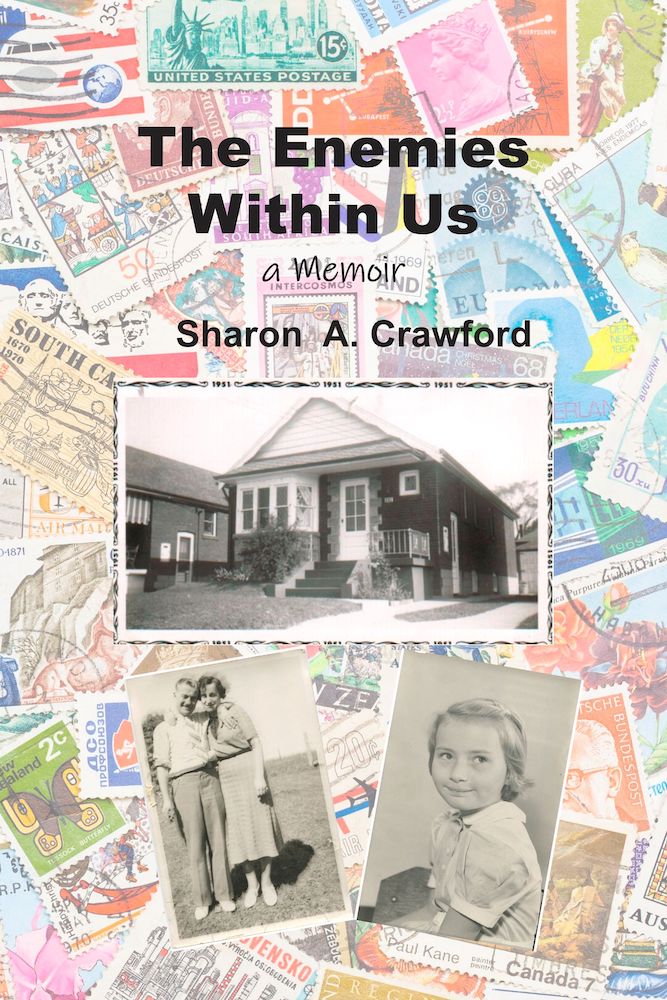
But life creeps in – sometimes a barely-concealed fact turned into fiction – usually because the story is too painful to the author or she is afraid to put herself into a real-life story with all the people who did her wrong or are, well, scoundrels. Then there is the fear of retribution or the desire to tell her story but keep herself out of it. My personal opinion here is to write it as a memoir and use pseudonyms (and state you are doing so). That’s what I’m doing – but that’s another story.

So that leaves us with what can you put from your life into fiction and how can you do it?

Disclaimer here: this is my opinion from my experience. It is not the only way to go about it and some of you may think I cross some lines between fact and fiction.

Here are a few instances from my short story collection Beyond the Tripping Point and my soon-to-be-published first mystery novel Beyond Blood.

In “No Breaks” (BTTP) two female friends are driving to one woman’s family cottage and on the way the car’s main brakes fail. In my life I once did ride with a friend up to her mother’s cottage and on the way her brakes failed. Except for the way my friend managed to get us up to the cottage (she had a few driving tricks up her sleeve), the two friends, Millie and Jessie, in “No Breaks” are completely different from my friend and me. The storyline in “No Breaks” also gets somewhat sinister and crimes are committed (it is mystery fiction). And the title is not spelled incorrectly as the main character in the story feels life has treated her very badly and so she has had “no breaks” in life – and that includes the trip to the cottage. Even when she tries to give herself some breaks it doesn’t exactly work out as she planned. As many of us do, sometimes I feel as if I am getting a lot of bad breaks in life – but there are good things happening too. Millie doesn’t feel that way about her life.

So how did I go from some facts to fiction? I took this scenario in my life and pulled out relevant parts that I thought could be the root for a story. Then I used my imagination to develop my plot and characters.

In Beyond Blood I take so many things from life – not just mine – and fictionalize them into the mystery. One of the threads running through the story is something many mothers can relate to – the working mother and how she balances raising her child(ren) and doing her job. Dana Bowman, one of the fraternal twins is a private investigator and she is always concerned that she doesn’t give enough of her time to her son, David, yet she has to work and she chooses to work with her twin brother in something she is interested in. It doesn’t help that Great Aunt Doris disapproves of Dana working and chastises her constantly for it – another thing working mom’s have to deal with, although it might be a mother-in-law. So when something happens to David, Dana is really in conflict – should she be “working on the case” (Note: I don’t want to give away some of the plot) or just spend her time being mom. Also the twins are in their late 30’s, David is six years old, and Dana is divorced – more fodder to connect to today’s working moms who are having children into their 30s and even 40s. I don’t think Dana would resonate with readers as much if she was in her 20s. (And I have been told by several readers that they like Dana and Bast, too)

So how did I get from fact to fiction here? David did come from the fact that I have a son and am divorced (although he was much younger than his 36 years and my ex and I were separated, not divorced, when Beyond Blood was first conceived in my head and I started writing it.) Yes, it has been a long haul of on and off writing because I had to make my living as a single mother of one son. Not as a PI but as a freelance writer, book editor and writing instructor. The direction I take with all of those have changed and I do less editing and more teaching, but it is doing something I enjoy.

Which Dana was doing with her twin Bast when they opened their investigative agency on the attic floor of their house. Then thing started happening and…

But that would be a spoiler. You’ll have to read Beyond Blood when it comes out. Stay tuned here and my other social media – I will be posting as soon as I get more details about the book launch.


Sharon A. Crawford


You can read about my characters and their stories in my short story collection Beyond the Tripping Point (Blue Denim Press, 2012). Click on the book at the top and it takes you to Sharon A. Crawford’s profile – including book reviews – at http://www.amazon.com.
More info on Sharon A.’s upcoming gigs, workshops, guest blog posts, etc. at http://www.samcraw.com/Articles/BeyondtheTrippingPoint.html And keep checking http://samcraw.com/Articles/BeyondBlood.html for the latest news on the release of my first mystery novel Beyond Blood, also published by Blue Denim Press http://www.bluedenimpress.com More info on the Beyond Blood page as we get closer to the date. And remember that clicking on the book icon at the top gets you to my Amazon profile.


Cover of Dead Wrong by Klaus Jakelski, published by Blue Denim Press

Cover of Dead Wrong by Klaus Jakelski, published by Blue Denim Press

Cover of Beyond Blood by Sharon A. Crawford, published by Blue Denim Press

Cover of Beyond Blood by Sharon A. Crawford, published by Blue Denim Press
 

Tags: , , , , , , , , , , , , , ,

Juggling time to publicize first novel and write second novel

Amazon.com link to Sharon A.'s short story collection

Amazon.com link to Sharon A.’s short story collection

I’m writing a book. I’ve got the page numbers done.
– Steven Wright

I am doing the happy dance because my first novel Beyond Blood will be published fall 2014 by Blue Denim Press and continuing to write my second novel Beyond Faith.

How the heck do you balance the time for both? I am a newbie at this and as many of you know I have another book out, Beyond the Tripping Point, also published by Blue Denim Press. The juggle is doable, but before I give my tips, I want to refer you to a blog post by another author Amy Sue Nathan who had the same dilemma last year. She has more juggling experience here and each of her novels have completely different characters. So she had the difficult task of keeping her characters separate See http://bookpregnant.blogspot.ca/2013/07/publicizing-one-book-while-writing.html for her post about this dilemma.

My novels are series and so the main characters are the same. Ditto the four linked stories that are part of Beyond the Tripping Point. So that should make it easier to keep track of characters. Right?

Wrong. Especially the timing of the books being published vis-a-vis the timeline in the three books.

My main characters are fraternal twin private investigators Dana Bowman (divorced mother), and Bast Overture (single, gay), Detective Sergeant Donald Fielding (investigating police officer from Major Crimes), PC Joseph Oliver (Records Bureau head who is the twins police connection), Great Aunt Doris (the eccentric aunt of Dana’s ex-husband who lands on Dana unannounced) and David, Dana’s son.

The latter makes things more difficult as he is psychologically mute in Beyond the Tripping Point because of what happens in Beyond Blood. So the actual order of the stories is not the order of the books published. The timeline for the stories (short and novels) is:

Beyond Blood – eight days in August 1998

Beyond the Tripping Point (the four linked stories) from May 1999 to late October 1999

Beyond Faith (title at this point) – late November 1999 into January 2000.

So, while the characters are basically the same (with added ones for each story/novel) I have to watch their development based on that timeline. So, when writing Beyond Blood (actually rewriting as this was the novel in an earlier version that sat on the shelf and on the computer), I had to go back in time and be careful not to mix up the character and plot development order. With Beyond Faith, one thing I have to remember is that Bast shaved off his beard in one of the BTTP stories.

With all this in mind, how am I progressing with publicizing two books actually and writing the third?

First, as BTTP is almost two years old, I have now moved it into the “and other books published” category so any publicity for it will be tagged onto Beyond Blood. That leaves the two books.

I do what I have been doing for years with my writing, editing and teaching writing workshops – use a combination of go-with-the-flow-of-work (I may have just turned senior but I still have to earn a living) and use a Daytimer and to-do lists.

First, except for teaching day-long workshops and attending writing conferences, I don’t work weekends. (Of course I think of story ideas, plots and characters, but that’s internal work, not sitting at the computer and actually writing). Sundays I go over what needs to be done for writing, editing and workshop clients, for book writing and promotion for the next week. And I list them. I divide them up time and day-wise by marking “Mon. a.m.”, “Mon. aft.” etc. beside each. Then I transfer the items to a “to do” list in the appropriate date in my Daytimer. Except for client meets and workshop teaching dates, I don’t specify time of day.

The hope is that I will give each enough attention to move them along for the week. When I was still doing readings for BTTP that often occurred evenings. Ditto some writing workshops I teach. So, I factor that in.

And then the interruptions march in and try to take over, sometimes succeeding. Last week it was a potential new client who kept changing the time and day of our meet, sometimes making up the time. Luckily I phoned him first or I would have showed up at the right place but the wrong time. His last change-of-time was not showing up for last Friday’s appointment (by then I had moved it to my home office to save me some grief). He phoned an hour and a half after the meet time and wanted to come over to meet then. No way. I had other concerns and told him so.

I haven’t contacted him since but guess I will have to. Instead I contacted the client whose manuscript I was evaluating about my progress, finished the work and then emailed her again to set up our final meet. She knows the value of keeping appointments but she is a journalist. I also emailed another client I consult with on her writing and the other mystery author Blue Denim Press is publishing (we plan to do some joint PR – just to make life more complicated). And I managed a couple of sessions of working on Beyond Faith. I also write this weekly blog post (that ties in with book promo) and another more personal blog post Tuesdays that loosely ties in with my memoir I am finishing rewriting – but that’s another story.

Bottom line – you have to be organized, flexible and creative.

And give yourself permission to yell when something gets screwed up.
I also have a house and a garden. Today the guy from the window company is putting in three new windows. I am still after the arborist to cut down the dead silverlace and boxwood (damaged by our wicked winter) and deal with other personal stuff.
All fodder for future writing.

Cheers.

Sharon A. Crawford

You can read about my characters and their stories in my short story collection Beyond the Tripping Point (Blue Denim Press, 2012). Click on the book at the top and it takes you to Sharon A. Crawford’s profile – including book reviews – at http://www.amazon.com.
More info on Sharon A.’s upcoming gigs, workshops, guest blog posts, etc. at http://www.samcraw.com/Articles/BeyondtheTrippingPoint.html And keep checking http://samcraw.com/Articles/BeyondBlood.html for the latest news on the release of my first mystery novel Beyond Blood, also published by Blue Denim Press http://www.bluedenimpress.com More info on the Beyond Blood page as we get closer to the date.


Tags: , , , , , , , , , , , ,

Writing fiction as a diversion from problems

Amazon.com link to Sharon A.'s short story collection

Amazon.com link to Sharon A.’s short story collection

Writing is a struggle against silence.

– Carlos Fuentes
Many writers freeze up when overloaded with problems or buried in deep depression. You don’t have to and I’m living proof.

When I was depressed for a number of years, writing was my main hold on life. The depression started as post-partum blues in the late 1970s and escalated to full-blown depression.

Disclaimer here: the psychiatrist diagnosed it as reactionary depression and some high anxiety. In other words outside events caused me to feel depressed. So, perhaps the type of depression had something to do with my ability to keep on writing. I also had a regular freelance writing gig, doing a weekly column and feature articles for one of the local newspapers. And I had a son to raise. Those were the two responsibilities that I focused on.

Not to say I didn’t fall off the wagon. But that’s another story.

I haven’t been depressed for years but I still have the high anxiety – a regular fallout from outside events. Instead of depression, I get angry. But anger makes me get going and accomplishing things. Including writing, particularly fiction.

So, how can you use your fiction writing as at least a distraction from your problems and/or your depression? Let me illustrate the ways.

1. Instead of writer’s block when you turn on your computer, write. Start by writing where the fear, where the anger is and where it leads you. This is called freefall writing. That will open up your creative juices to get to No. 2. Or you may be able to skip No. 1.

2. Start a new short story or novel chapter – or work on one already started. Force yourself to start writing. It may take a few go’s, but once you get into it, you become absorbed in what you are writing. Your characters and their concerns will fill your mind and you will connect to them so much that your problems will go behind the back burner of your mind.
3. If you want to do something about the problem, for example if someone is causing you grief and you are stymied about a solution, then write a short story loosely based on the problem. Or do as I did in one of my stories in Beyond the Tripping Point – put the infuriating person in your life into your story. And don’t make them a nice person. This particular relative had been giving me grief about something I had put in the original version of my memoir. I was so upset I wasn’t going to let her off the hook. So I used her essence, i.e., her age and appearance for one of the characters in that short story (“Gone Missing,” if you really want to know). I even had the character working in the same type of “industry” but in another capacity. And here is the crème de la crème – that character was one of the suspects who turned out to be very bad. I often mention this in my talks and readings from Beyond the Tripping Point, with the added comment, “You don’t want to tick me off.”

4. Keep a journal. Yes, I know journaling about your problems on a daily basis is nothing new. But how about doing a twist on that. Use the fiction writing angle. One way is to write the daily postings from the point of view of one of the characters in your short stories or novel. Get inside your character’s head. How would this character see and handle the problem and/or problem person? Or better still, skip your goody-two-shoes character and use a nasty one. How would your nasty character see the problem and handle it?
Using the above, you might find a possible solution to your problem. Or you might get more insight into your characters and write more fiction. At the very least, you have found a creative way, an all encompassing way, to distract you for some time from the misery in your life.
And that’s not just good for your writing; it is also good for your health.
You can read about my characters and their stories in my short story collection Beyond the Tripping Point (Blue Denim Press, 2012). Click on the book at the top and it takes you to Sharon A. Crawford’s profile – including book reviews – at http://www.amazon.com.

More info on Sharon A.’s upcoming gigs, workshops, guest blog posts, etc. at http://www.samcraw.com/Articles/BeyondtheTrippingPoint.html And keep checking http://samcraw.com/Articles/BeyondBlood.html for the latest news on the release of my first mystery novel Beyond Blood, also published by Blue Denim Press http://www.bluedenimpress.com More info on the Beyond Blood page as we get closer to the date.

Cheers.

Sharon A. Crawford


Tags: , , , , , , , , , , ,

Short Story and Novel Writing with series characters – Part 5 – Point of View

Amazon.com link to Sharon A.'s short story collection

Amazon.com link to Sharon A.’s short story collection

Moving series characters between novels and short stories gives the characters a chance to speak. With short stories you are limited to one character’s point of view to tell the story. Novels give more leeway but you still don’t want too many characters jumping in. The reader will be confused and possibly annoyed and you, the author may lose the plot thread. Or more realistically have too many plot threads that end up in a tangle.

You can take a major character or a minor character in your novel and write a short story with this character as your point of view character. So, let’s say your novel has three major characters – Angela, the person being stalked; Detective Walkins the police officer working on her case, and Jude her boyfriend as the three point of view characters in the novel. However, there are several minor characters: Janet, the nosey old neighbour across the street, Ben, Angela’s co-worker, Angela’s daughter, etc. etc. All of these characters have their stories, their life, their idiosyncrasies, their voice. In you novel they appear only as they are seen by one or more of the three main characters.

Give one, or all of these characters, their own short story. It can have little or nothing to do with the novel. Perhaps the story has to do with something else in their life. The nosey neighbour, for instance – just how did she become nosey and butting into everyone else’s business. Maybe she is a former investigative reporter who messed up and had to move on to another profession. But she misses digging up the dirt, so she puts herself into her neighbours’ business. Or Detective Watkins – he may have other cases, that one-by-one could generate several short stories – maybe even a novel.

You see where all this can get you?

You can read about my characters and their stories in my short story collection Beyond the Tripping Point (Blue Denim Press, 2012). Click on the book at the top and it takes you to Sharon A. Crawford’s profile – including book reviews – at http://www.amazon.com. The book is available there in print and Kindle. For Kobo e-book go to http://store.kobobooks.com/en-CA/ebook/beyond-the-tripping-point or go to any bricks and mortar store and order in a print copy. Spread the word.
More info on Sharon A.’s upcoming gigs, workshops, guest blog posts, etc. at http://www.samcraw.com/Articles/BeyondtheTrippingPoint.html
Sharon A. Crawford’s prequel novel Beyond Blood, featuring the fraternal twins will be published fall 2014 by Blue Denim Press. Stay tuned.
Cheers.

Sharon A. Crawford


Tags: , , , , , , , , , , , ,

Short Story and Novel Writing with Series Characters – Part 4

Amazon.com link to Sharon A.'s short story collection

Amazon.com link to Sharon A.’s short story collection

It begins with a character, usually, and once he stands up on his feet and begins to move, all I can do is trot along behind him with a paper and pencil trying to keep up long enough to put down what he says and does.

– William Faulkner
When writing series fiction, particularly novels, how do you keep the continuity going with your main characters from novel to novel? As mentioned in last week’s post, you need to put some reference to previous novel(s) plot and characters or the reader is left confused.

For example, in novel No. 1, let’s say your main character, a police officer, is shot during the story’s climax. It is touch and go, but he wakes up in a hospital bed and is able to talk to his partner, his girlfriend, etc. However, he has been shot in the chest and it just missed his heart, but he still has a long recuperation period.

Unless you are skipping a period of time until he is up and around, you need to include this recuperation period in your next novel. Perhaps your detective is put temporarily on a desk job or he is still on sick leave. His (or her) colleagues get a case or two that he wants to be involved in and they need his help. But he is supposed to stay put. You can work around that by having him act as a consultant – his colleagues can drop into the hospital or recuperation facility (if he is not home yet) or his home to talk it over with him. He could be on the phone constantly to his colleagues or at least his partner. They can be doing all this behind the back of their supervisor and you know how that can pan out. You can hype it up with his shooter still out there (that would have to be clear at the end of the previous novel) and trying to get him. He has to get through the recuperation period but you don’t want a novel all about that if you are writing a mystery novel. You need to blend in what is happening with the characters, how they are developing based on what goes on in their lives. An injured detective recuperating and somewhat immobilized would have much to face, especially if he is used to being active.

The late Robert Parker in his Spencer series did this very well. His private detective, Spencer, was shot in the chest in one novel and the next novel incorporated his recuperation with how it affected his relationship with his girlfriend, Susan, a psychologist, plus the novel’s mystery. Parker was good at writing complicated.

Most of the TV series now follow the main characters’ development and well, private life, and incorporate these into the story. The hit series Rookie Blue (now back on for the summer, 22 episodes this year), does that very well, even if you don’t agree with what they do. The five original rookies are still there and each season they add one or more new rookies. One of the original rookies has been promoted to detective. But all have personal lives and with all these characters who work closely together, their personal lives become entwined and changes occur. It is complicated, but well done. I suggest you watch it. The Good Wife is another TV series that has work and personal lives intermingle with a lot of complications. This time the characters are lawyers, instead of police officers. They even killed off one of the series main characters this season. Rookie Blue did that a couple of seasons ago as well. Killing off a main character is not always a good idea, but if you do, you need to incorporate the repercussions from that and how it affects the other characters in future books or TV episodes.

All these things will affect your plot. It’s the chicken and egg situation. Which comes first – the plot or the characters? It is a combination of both – either can lead – but both are connected and drive each other.

Meantime, read any of the mystery series novels by Peter Robinson and see how he handles continuity and consistency in character and plot.
Also, you can read more about the characters and their stories in Beyond the Tripping Point (Blue Denim Press, 2012). Click on the book at the top and it takes you to Sharon A. Crawford’s profile – including book reviews – at http://www.amazon.com. The book is available there in print and Kindle. For Kobo e-book go to http://store.kobobooks.com/en-CA/ebook/beyond-the-tripping-point or go to any bricks and mortar store and order in a print copy. Spread the word.
More info on Sharon A.’s upcoming gigs, workshops, guest blog posts, etc. at http://www.samcraw.com/Articles/BeyondtheTrippingPoint.html

Sharon A. Crawford’s prequel novel Beyond Blood, featuring the fraternal twins will be published fall 2014 by Blue Denim Press. Stay tuned.

Cheers.

Sharon A. Crawford


Tags: , , , , , , , , , , , , ,

Short Story and Novel Writing with Series Characters – Part 3

Cover of Sharon A. Crawford's mystery short story collection

Cover of Sharon A. Crawford’s mystery short story collection

I have so many different projects, I hear voices in my head – the characters talking all at once – and I have to write to make them stop.
– Eli Roth

When transitioning series characters between novels and short stories, you need to keep the timeline and events straight. We touched on this issue two blog posts back. Remember that your mind will carry all the information to date about your characters, including their actions, including relationships. Your readers’ minds don’t.

Especially if your reader is not reading your short stories and novels in chronological order. As readers we (and I count myself in here) don’t always read series books in order. So, in the first novel in the series you read Alice is having a baby with Jack. Later you get to the first novel where Alice meets Jack. I’m doing this with the Deborah Crombie mystery series. I still haven’t read the book where the main character and her boss change their relationship from just business to personal but I’ve read books where they are living together and ironing out the kinks with a blended family, plus dealing with their respective outlaws, I mean in-laws, although sometimes they may act like the former.

Take this a step further with your series characters hopping in and out of short stories and novels. Which came first? And if you write a novel, then some short stories, then another novel, etc. with the same series characters, be careful. A character in a short story set in 2000 would not know what will happen in the following years, unless you want him or her to be psychic.

A character in a story set in an earlier time would not be as fully developed as in a later story. This can get a little confusing if you are back and forth in time with your story. Sometimes taking your character’s traits outline (remember that suggestion from last week’s post?) a little deeper by listing how they were then and later can help. Also listing the trigger (another character’s actions, something they experienced, etc.) that changed them after the first story, can help.

Again, you may not use all of this in your stories, but after writing out all the information, it is embedded in your mind – somewhere. The trick is to pull out the right characteristic for the right story.

This brings up another question. How much do you reveal about your main characters (and plot for that matter) in novels and short stories that has occurred in a previous novel or short story? You don’t want to give away character and plot from the previous. Yet you don’t want your reader kept wondering if your characters seem to appear out of the blue. Or family and friends and situations are mentioned briefly and in a way that leaves your readers scratching their heads and muttering, “Huh?”

With two of the linked stories in Beyond the Tripping Point (Blue Denim Press, 2012) I am right upfront about what happened to David, Dana’s son in the prequel novel Beyond Blood (to be published by Blue Denim Press in the fall of 2014). I have to be, because in those short stories David is psychologically mute. Otherwise the reader will wonder why and if he has always been like that. So I state it but blend it into the main plot of the short story. Here’s an example from the beginning of “Gone Missing.”
The police can’t find her, Ms Bowman,” Robin Morgrave says.
Rosemary Morgrave has gone missing and I’m putting on a brave smile for her twin brother. Robin sits on the other side of the desk in The Attic Agency’s third floor office. Only my twin brother, Bast, nodding, stops me from losing it. Ever since David, my seven-year-old son, was abducted last August, I’ve been living in Panicville. Sure, we got David back, but how much of him returned? He follows Bast around like an investigator-in-training. His brown eyes stare right through my soul. I wish he’d just say how he feels. But since his return, David hasn’t opened his mouth except to swallow liquids and food. He doesn’t even cry. (Excerpted from Beyond the Tripping Point, Blue Denim Press, 2012, copyright Sharon A. Crawford).

Next week we will talk more about plot consistency and how much to reveal without giving it all away.

Meantime, read any of the mystery series novels by Peter Robinson and see how he handles continuity and consistency in character and plot.
Also, you can read more about the characters and their stories in Beyond the Tripping Point (Blue Denim Press, 2012). Click on the book at the top and it takes you to Sharon A. Crawford’s profile – including book reviews – at http://www.amazon.com. The book is available there in print and Kindle. For Kobo e-book go to http://store.kobobooks.com/en-CA/ebook/beyond-the-tripping-point or go to any bricks and mortar store and order in a print copy. Spread the word.
More info on Sharon A.’s upcoming gigs, workshops, guest blog posts, etc. at http://www.samcraw.com/Articles/BeyondtheTrippingPoint.html

Sharon A. Crawford’s prequel novel Beyond Blood, featuring the fraternal twins will be published fall 2014 by Blue Denim Press. Stay tuned.
Cheers.
Sharon A. Crawford


Tags: , , , , , , , , , , ,

Short Story and Novel Writing with Series Characters – Part 2

Amazon.com link to Sharon A.'s short story collection

Amazon.com link to Sharon A.’s short story collection

You learn by writing short stories. Keep writing short stories. The money’s in novels, but writing short stories keeps your writing lean and pointed.

– Larry Niven


After all my time-line tips last week I goofed. I put the wrong year for the four linked short stories in Beyond the Tripping Point. Ditto for the related series novel. It should be 1999 for the short stories and 1998 for the novel. At least I had it correct which came first. The years are now corrected on last week’s blog post.

Mea culpa, mea culpa.

This post will deal with length of short stories versus novels and start the discussion about series characters for both. The latter is complicated and we won’t cover everything today.

First length.

Short story length can be anywhere from the flash story of 50 words to longer stories of 8,000, even 10,000 words. Ellery Queen Mystery Magazine and Alfred Hitchcock Mystery Magazine stories tend to run in the upper word count limit. However, some authors take the short story up to 18,000 words. In this case, many are self-publishing – either e-copy or online or in print or all of those. To me, this is a variation of the traditional poetry chap book publications. This is all good. The only caveats I offer here are: if submitting to publications or short story contests, follow the submission guidelines; and watch you don’t make the stories too long or you will be writing a novella.
Novel lengths vary from 65,000 words to 120,000 words (think Elizabeth George for the longer novels). Most novels are somewhere in between and it depends on the publisher or the author if self-publishing. My publisher, Blue Denim Pressm tends to go for the lower page count. Personally I like any length as long as the story flows and doesn’t read as if it is padded with plot lines, character development and points of view that are way too much and detract from the story. Shorter novel requirements sure make the author learns how not to be overly wordy, as I’m finding out. But as a former journalist, I always wrote long and then rewrote to fit the editorial requirements. Writing too short here would create the dilemma of insufficient information and it is harder to add than to subtract – believe it or not.

Characters in novels versus short stories

This is a loaded one. Novels and short stories written in the literary vein are more about the characters than the plot. However, the trend today in commercial fiction (including genres such as mystery and romance, particularly in novels, is to develop characters more). While I like Agatha Christie mystery novels – they were what I grew up on, what got me interested in mysteries (along with the old Perry Mason TV series), her characters, although intriguing and original, were not fully developed. The exceptions are her two main series characters – Hercule Poirot and Miss Jane Marple.

So, how many characters do you put in a novel and in a short story? Obviously because of length, you wouldn’t cram many characters into a short story. War and Peace crunched down to a short story it is not. Take two or three main characters and a few minor characters and go from there, i.e., you will develop the three main characters fully but not the few minor ones. By “develop fully” I mean it wouldn’t hurt to do an extensive character sketch of your main characters before you start writing – with the caveat that they are not sealed in cement, granite or avalanche. When writing stories, characters sometimes take over and you as a writer have to respect that. Key question to ask here: is what this character is doing characteristic of him or her? That’s when you may have to return to your character sketch.

And you won’t use everything in your character sketch in your short story – or even in your novel, but you will use more in your novels. With a short story, every character element and development has to tie in with your basic story plot. With a novel you can add in the extras, although they have to tie in with the plot, but you have more leeway.

For example, in my prequel novel Beyond Blood, Dana Bowman has more space to show how she feels about a certain situation with her son as well as the conflict she has with being a mother of a six year old and a private investigator, especially when the two collide. If I didn’t do this, Dana would come across as shallow, one-dimensional and unbelievable. In the four linked stories in Beyond the Tripping Point (remember these are the year after the novel occurs), Dana is still reacting over what happened to David, but in the interest of space and plot, the whole story can’t be about her reaction. So I weave it in with the case she is investigating. In “Saving Grace,” while she is following a lead on a country road outside Goderich, Ontario, she stops the car and has a mini-break-down. But it doesn’t last long; she has to pull herself together and get on with it.

In the novel Beyond Blood, after the actual event that triggers all this has happened, Dana has many instances of having difficulty dealing with the situation. In one scene (without giving it away), she wakes up and is somewhat disoriented and depressed so she acts a bit strangely. She also has nightmares that act as a sort of premonition of what will happen. The time she spends with her son and her feelings about him there, as well as developing a possible relationship with Detective Sergeant Donald Fielding, all tie in with the plot. Without this character development, some of the future plot lines would have the reader saying, “This doesn’t make sense. How would she know how to do that? This action is not credible.”

These pointers are more for commercial fiction than literary fiction.

Next week we will delve more into the makings of series characters appearing in novels and short stories.

Meantime, you can read more about the characters and their stories in Beyond the Tripping Point (Blue Denim Press, 2012). Click on the book at the top and it takes you to Sharon A. Crawford’s profile – including book reviews – at http://www.amazon.com. The book is available there in print and Kindle. For Kobo e-book go to http://store.kobobooks.com/en-CA/ebook/beyond-the-tripping-point or go to any bricks and mortar store and order in a print copy. Spread the word.
More info on Sharon A.’s upcoming gigs, workshops, guest blog posts, etc. at http://www.samcraw.com/Articles/BeyondtheTrippingPoint.html

Sharon A. Crawford’s prequel novel Beyond Blood, featuring the fraternal twins will be published fall 2014 by Blue Denim Press. Stay tuned.

Cheers.

Sharon A. Crawford


Tags: , , , , , , , , , , , ,

Short Story and Novel Writing with Same Characters

Amazon.com link to Sharon A.'s short story collection

Amazon.com link to Sharon A.’s short story collection

You can’t write a novel all at once, any more than you can swallow a whale in one gulp. You do have to break it up into smaller chunks. But those smaller chunks aren’t good old familiar short stories. Novels aren’t built out of short stories. They are built out of scenes.

—Orson Scott Card, September 1980

Transitioning series characters from short story to novel or vice-versa presents challenges for fiction writers. It requires the combination of imagination and keeping facts straight.

Unless you are time-travelling with your stories or are deliberating putting them at an earlier or later age, time-lines can be tricky. Where in your characters’ story timeline do you want the short stories to appear? Or if the short stories came first, then your novel needs to be kept in the time-line. That can affect your characters development. For example, you don’t want one character to be divorced in the short story and newly married to the same person in a novel obviously set at a later date. You need to be consistent and realistic. If you mess up, your readers will find it.

My story situation has the timeline and consistency problem in spades (and I don’t mean the spade that digs the graves for bodies dead from murder). My short story collection Beyond the Tripping Point was published first. In it are four linked stories featuring fraternal twin PIs Dana Bowman and Bast Overture, Dana’s son David and a few other series’ characters. It is David I have to be concerned with because these four stories happened after the novel Beyond Blood, which I call the pre-quel novel. The four stories occurred in 1999 and the novel in the summer of 1998.

David is psychologically mute in Beyond the Tripping Point. In Beyond Blood, the reader finds out why. So, obviously he is talking at least for the first part of Beyond Blood.

Then there are the other characters, such as the ones I kill off in Beyond Blood. Obviously they didn’t appear in Beyond the Tripping Point.

Characters are supposed to grow and develop, so in a prequel novel, the characters have to be a few steps behind in that area. For example, in Beyond Blood, Dana could not be at the point where she is dealing with a mute David – that comes in BTTP. Things happen to characters and that’s what changes them one way or the other. But the event must happen before the change – something to keep in mind when transitioning from novel to short story or vice-versa.

To make the situation more complicated with me, I had actually written an earlier version of the pre-quel novel before those four linked short stories. So, when writing the stories, I had to keep the novel’s content in mind. When I returned to rewriting the novel for the publisher (after BTTP was published) I then had to make sure I was consistent – even though I was expanding the plot, making it more complicated. One of my base lines was why David became psychologically mute and when he is mute.

There is also the obvious difference in short stories and novels – length. The short story has to be more succinct because you do not have novel-length. You can’t have multiple plots in a short story or multiple points of view. How much about characters do you include?

Next week’s blog post will deal with some of those issues.

Meantime, you can read more about the characters and their stories in Beyond the Tripping Point (Blue Denim Press, 2012). Click on the book at the top and it takes you to Sharon A. Crawford’s profile – including book reviews – at http://www.amazon.com. The book is available there in print and Kindle. For Kobo e-book go to http://store.kobobooks.com/en-CA/ebook/beyond-the-tripping-point or go to any bricks and mortar store and order in a print copy. Spread the word.
More info on Sharon A.’s upcoming gigs, workshops, guest blog posts, etc. at http://www.samcraw.com/Articles/BeyondtheTrippingPoint.html

Sharon A. Crawford’s prequel novel Beyond Blood, featuring the fraternal twins will be published fall 2014 by Blue Denim Press. Stay tuned.

Cheers.

Sharon A. Crawford


Tags: , , , , , , , , , ,

Fiction Characters Interviewing Fiction Characters – Part 45

Amazon.com link to Sharon A.'s short story collection

Amazon.com link to Sharon A.’s short story collection

All fiction is about people, unless it’s about rabbits pretending to be people. It’s all essentially characters in action, which means characters moving through time and changes taking place, and that’s what we call “the plot.”

– Margaret Atwood

The missing Bast has suddenly appeared at the dining room table with Robbie Stuart and the ghosts of Roger Stuart and Susan Stuart. Bast looks pale.

Dana, staring at the dining room table: Bast, are you okay? How did you get here?

Swan: Yeah, how? Did Robbie make you materialize somehow?

Fielding: Shut up Swan. You’re in no position to ask questions. Bast, answer your sister’s questions.

Dana, slightly agitated: Wait a minute. I need to ask Mr. Swan a question first. Who is sitting at the table with Bast?

Swan: Why Robbie Stuart of course.

Dana: Nobody else?

Swan: Who else would there be? The rest of us are over here. That’s why I want to know…

Fielding: I said shut up, Swan. Now, Mr. Overture, please answer your sister’s questions.

Bast: I’m fine, a little tired and weak. I had help getting here from Susan and Roger.
Swan: Wait a minute. You’re telling us that a couple of dead people helped you?

Bast: Yes. Susan and Roger are sitting right with me here. I gather you can’t see their spirits.

Susan’s Spirit: Bast, you’re right. Both Dad and I working together managed to keep you out of harm’s way temporarily and bring you back safely here. Sorry, Dana and you three cops, but we couldn’t say anything until you had Swan under control for Bast’s safety.

Dana: But you are really back, Bast?

Bast: Yes.

Fielding: Now, Mr. Overture, you have some explaining to do.

Bast: What Susan, Roger and Robbie said is true. Robbie has a memoir accepted for publication and I was to do another newspaper article on it with a sort of update. What you don’t know is Robbie also wanted me to write the Forward to the book. Both these, particularly the newspaper article, would give details of Swan’s shenanigans in the past and current. And he didn’t want that happening, so he took measures. Susan and Roger helped me. (He turns to them). Thank you. But you know me, Dana, the old crime reporter, I have to find out what is going on, so sorry, I had to disappear from Susan’s protection to find out and I couldn’t tell you for safety’s sake. Swan caught up with me and tried to use David’s and Aunt Doris’ safety as a lever. You know the rest.

Dana: So, you will be writing the story?

Bast: Oh yes, but maybe it will be delayed for a bit until Hutchinson or Fielding take Swan into custody.

Hutchinson (standing up): Get up Swan. I am arresting you for kidnapping, pointing a firearm, blackmail, uttering threats. And there will be more added later. You have the right to a lawyer…”

After Hutchinson finishes his spiel, Dana stands up and walks over to the table: Thank you Susan and Roger and Robbie, too.

Susan and Roger: You are welcome.

Susan: Now that we see justice is being done, we will leave you. But I will be keeping an eye on you Dana and Bast and your family. If you need me, just touch the painting in the library boardroom and I will appear.

Roger: Yes, it feels good to finally come clean with the full story. Now, as Susan said we must leave.

Susan’s and Roger’s spirits disappear. Dana sits down beside Bast.

Swan: What just happened? Are you all nuts? I see just Bast, Dana and Robbie at the table.

Hutchinson: Shut up, Mr. Swan.

Robbie looks up finally and glares at Swan: My sister and Dad didn’t keep you in the spirit loop because you are bad. And I’m glad I wrote the memoir to set the record straight.

Cheers.

Sharon A. Crawford

Dana, Bast and the others will take a rest for a bit. But they will be back with more original stories based on the stories and characters in Beyond the Tripping Point.

Next week’s blog will talk about fiction writing – short story versus novel, particularly when both use the same series characters. So, in a way, Dana and Bast will be back to illustrate some ideas here. Watch for upcoming posts with guest bloggers. Stay tuned. Meantime…

Sharon A. Crawford’s prequel novel Beyond Blood, featuring the fraternal twins will be published fall 2014 by Blue Denim Press. Stay tuned.

Meantime, you can read more about the characters and their stories in Beyond the Tripping Point (Blue Denim Press, 2012). Click on the book at the top and it takes you to Sharon A. Crawford’s profile – including book reviews – at http://www.amazon.com. The book is available there in print and Kindle. For Kobo e-book go to http://store.kobobooks.com/en-CA/ebook/beyond-the-tripping-point or go to any bricks and mortar store and order in a print copy. Spread the word.
More info on Sharon A.’s upcoming gigs, workshops, guest blog posts, etc. at http://www.samcraw.com/Articles/BeyondtheTrippingPoint.html


Tags: , , , , , , , , , , , ,

Interview with Fiction Characters by Fiction Characters – Part 44

Amazon.com link to Sharon A.'s short story collection

Amazon.com link to Sharon A.’s short story collection

Make everybody fall out of the plane first, and then explain who they were and why they were in the plane to begin with.

– Nancy Ann Dibble

All the main characters, except the missing Bast Overture, are assembled in the dining room of the Stuart house in Toronto, Ontario. Will Bast show up? And if so, how? In physical person? Or in spirit. And what about PC Joseph Oliver? What is he going to do?

Swan (waving the gun he just fired): Next time I’ll hit one of you.

Fielding: Put that gun down, Swan.

Hutchinson: You heard him. Put that gun down.

Dana, still shaking from the gun’s noise: Better listen to them, Swan.

Swan: Or you’ll do what. I’m the one with the gun here. I…oh…

Roger’s and Susan’s spirits are creating havoc around Swan but they can’t seem to get the gun out of his hand.

Oliver (rushing forward to Swan and reaching up): I’ll take that.

Oliver knocks the gun from Swan’s hand, sending the gun flying. Hutchinson picks it up and points it at Swan.

Hutchinson: Cuff him, Oliver.

He does and Susan’s and Roger’s spirits return to the table where Robbie hasn’t budged. Robbie appears as if in a trance, as if he is talking to someone that no one else can see.

Dana, looking at Swan: We got you now. It might be in your best interest to tell me where my brother is. NOW.

Swan smirks: Of course. Look over there.

Dana follows his eyes. Sitting at the dining room table with Robbie, and the two spirits, is Bast. He appears to be talking to Robbie. The other two don’t seem to notice.

And Bast’s face looks very very pale.

Cheers.
Sharon A. Crawford

Sharon A. Crawford’s prequel novel Beyond Blood, featuring the fraternal twins will be published fall 2014 by Blue Denim Press. Stay tuned.

Meantime, you can read more about the characters and their stories in from Beyond the Tripping Point (Blue Denim Press, 2012). Click on the book at the top and it takes you to Sharon A. Crawford’s profile – including book reviews – at http://www.amazon.com. The book is available there in print and Kindle. For Kobo e-book go to http://store.kobobooks.com/en-CA/ebook/beyond-the-tripping-point or go to any bricks and mortar store and order in a print copy. Spread the word.
More info on Sharon A.’s upcoming gigs, workshops, guest blog posts, etc. at http://www.samcraw.com/Articles/BeyondtheTrippingPoint.html


Tags: , , , , , , , , , , ,