RSS

Tag Archives: Blue Denim Press

Your life in fiction?

amazon.comlink to Sharon A. Crawford's mystery short story collection

amazon.comlink to Sharon A. Crawford’s mystery short story collection

If you have other things in your life—family, friends, good productive day work—these can interact with your writing and the sum will be all the richer.

  • David Brin


How much of your life do you put into your fiction? What do your favourite fiction authors do? It is supposed to be fiction after all.

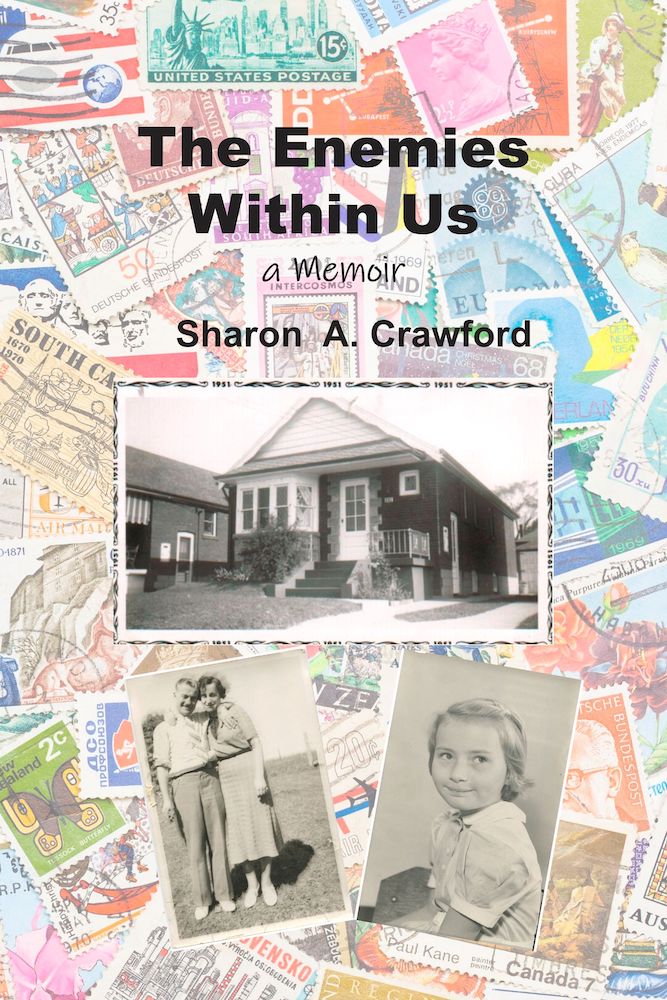
But life creeps in – sometimes a barely-concealed fact turned into fiction – usually because the story is too painful to the author or she is afraid to put herself into a real-life story with all the people who did her wrong or are, well, scoundrels. Then there is the fear of retribution or the desire to tell her story but keep herself out of it. My personal opinion here is to write it as a memoir and use pseudonyms (and state you are doing so). That’s what I’m doing – but that’s another story.

So that leaves us with what can you put from your life into fiction and how can you do it?

Disclaimer here: this is my opinion from my experience. It is not the only way to go about it and some of you may think I cross some lines between fact and fiction.

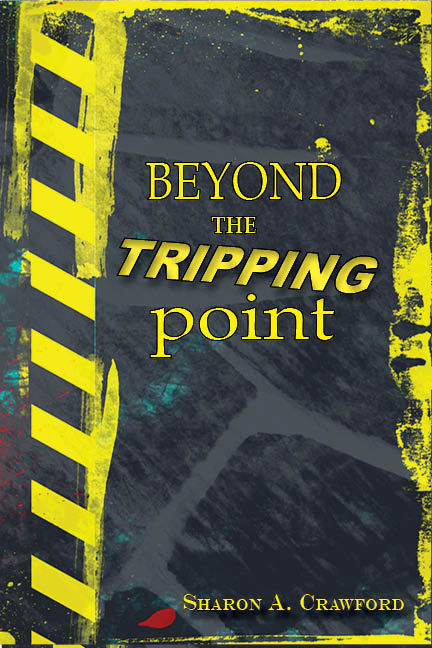
Here are a few instances from my short story collection Beyond the Tripping Point and my soon-to-be-published first mystery novel Beyond Blood.

In “No Breaks” (BTTP) two female friends are driving to one woman’s family cottage and on the way the car’s main brakes fail. In my life I once did ride with a friend up to her mother’s cottage and on the way her brakes failed. Except for the way my friend managed to get us up to the cottage (she had a few driving tricks up her sleeve), the two friends, Millie and Jessie, in “No Breaks” are completely different from my friend and me. The storyline in “No Breaks” also gets somewhat sinister and crimes are committed (it is mystery fiction). And the title is not spelled incorrectly as the main character in the story feels life has treated her very badly and so she has had “no breaks” in life – and that includes the trip to the cottage. Even when she tries to give herself some breaks it doesn’t exactly work out as she planned. As many of us do, sometimes I feel as if I am getting a lot of bad breaks in life – but there are good things happening too. Millie doesn’t feel that way about her life.

So how did I go from some facts to fiction? I took this scenario in my life and pulled out relevant parts that I thought could be the root for a story. Then I used my imagination to develop my plot and characters.

In Beyond Blood I take so many things from life – not just mine – and fictionalize them into the mystery. One of the threads running through the story is something many mothers can relate to – the working mother and how she balances raising her child(ren) and doing her job. Dana Bowman, one of the fraternal twins is a private investigator and she is always concerned that she doesn’t give enough of her time to her son, David, yet she has to work and she chooses to work with her twin brother in something she is interested in. It doesn’t help that Great Aunt Doris disapproves of Dana working and chastises her constantly for it – another thing working mom’s have to deal with, although it might be a mother-in-law. So when something happens to David, Dana is really in conflict – should she be “working on the case” (Note: I don’t want to give away some of the plot) or just spend her time being mom. Also the twins are in their late 30’s, David is six years old, and Dana is divorced – more fodder to connect to today’s working moms who are having children into their 30s and even 40s. I don’t think Dana would resonate with readers as much if she was in her 20s. (And I have been told by several readers that they like Dana and Bast, too)

So how did I get from fact to fiction here? David did come from the fact that I have a son and am divorced (although he was much younger than his 36 years and my ex and I were separated, not divorced, when Beyond Blood was first conceived in my head and I started writing it.) Yes, it has been a long haul of on and off writing because I had to make my living as a single mother of one son. Not as a PI but as a freelance writer, book editor and writing instructor. The direction I take with all of those have changed and I do less editing and more teaching, but it is doing something I enjoy.

Which Dana was doing with her twin Bast when they opened their investigative agency on the attic floor of their house. Then thing started happening and…

But that would be a spoiler. You’ll have to read Beyond Blood when it comes out. Stay tuned here and my other social media – I will be posting as soon as I get more details about the book launch.


Sharon A. Crawford


You can read about my characters and their stories in my short story collection Beyond the Tripping Point (Blue Denim Press, 2012). Click on the book at the top and it takes you to Sharon A. Crawford’s profile – including book reviews – at http://www.amazon.com.
More info on Sharon A.’s upcoming gigs, workshops, guest blog posts, etc. at http://www.samcraw.com/Articles/BeyondtheTrippingPoint.html And keep checking http://samcraw.com/Articles/BeyondBlood.html for the latest news on the release of my first mystery novel Beyond Blood, also published by Blue Denim Press http://www.bluedenimpress.com More info on the Beyond Blood page as we get closer to the date. And remember that clicking on the book icon at the top gets you to my Amazon profile.


Cover of Dead Wrong by Klaus Jakelski, published by Blue Denim Press

Cover of Dead Wrong by Klaus Jakelski, published by Blue Denim Press

Cover of Beyond Blood by Sharon A. Crawford, published by Blue Denim Press

Cover of Beyond Blood by Sharon A. Crawford, published by Blue Denim Press


Tags: , , , , , , , , , , , , , ,

Final touches on books make a difference

Amazon.com link to Sharon A.'s short story collection

Amazon.com link to Sharon A.’s short story collection

Half my life is an act of revision.

  • John Irving


Tuesday evening I commiserated with Klaus Jakelski, the other mystery novelist being published in October by Blue Denim Press. His book is a medical mystery – Dead Wrong – and mine is the prequel novel Beyond Blood. For the past couple of months it has been back and forth with the publisher’s editor to fix a few things in our novels. In my case a freelance editor I hired and the author doing the back page review got into the act.

Klaus and I gave a combined sigh of relief (on the phone) that this part is over and we can get down to the business of promoting our books – some of it we will do together.

Despite all the work, sometimes with a day’s turnaround, it is worth it. Speaking for Beyond Blood, the hired freelance editor fixed all my ellipses. One of my characters, Detective Sergeant Donald Fielding stutters. This editor hoped that by the next book in the series, Fielding’s stuttering is decreased. Not too much hope for that as he stutters most when in the presence of one of the fraternal twin PI’s – Dana Bowman because he has a thing for her. Is it mutual? Well, you’ll have to read the books. I’m still deciding how I will play that out in the next book – Beyond Faith – as I continue with that in my spare time.

The author writing the back page review found a couple of things that didn’t make sense – just a slight change in words and one word added to Dana’s activities with her son – to make it more believable for something she does near the end of the book, were a big help.

Meantime while to-ing and fro-ing with the publisher’s editor, we both found a few errors. To my horror I discovered I had spelled Bobby Darin’s name incorrectly and also his big hit Mack the Knife. These are the correct spellings. I also found a couple of errors in the acknowledgements – I had misspelled that editor’s (he of the ellipses issue) last name although it might have been a typo. And one of my previously published books, a novella co-authored with another writer, had the authors’ names mixed up – that was the publisher’s editor. I also found a period after one of the chapter numbers.

But mostly it was commas we fixated on, especially on the back page.

I also had to check the back page for wordage as he had to delete and reword a bit for space. Not a problem with me.

And the cover is awesome. See below at the end of this post for book covers for both Klaus’s Dead Wrong and my Beyond Blood. Right now everything for Klaus’s and my book is off to the printer. And yes, both books will be available in Kindle and e-pub on amazon.com, etc. The publisher already has the ISBN numbers for that and for print.

So, despite all the back and forth, I am glad it was all done that way. The more pairs of eyes the better – although when it gets down to those pesky commas, you won’t get two editors in a room (physically or online) who agree completely with comma usage. To paraphrase my publisher’s editor – it is all subjective.

The main thing is being accurate, consistent and no spelling errors or typos.

Toes crossed (can’t cross fingers and type) that all is now well with both Klaus’s and my books.

And we now are working on the PR.

One thing we are looking for is more book reviews. We have leads and also ways to get some book reviews but are open to suggestions. In particular, I’m looking for ways to get online book reviews that I can post on my social media accounts. I had a chat with another writer who is doing research on the author-reader connection and he said that after the book launch hoopla has worn off an author still needs book reviews and the six to 12-month period after publication dates is crucial.

Meantime I will continue with posting to some of the groups I belong to in Linked In. I’m pretty active on Linked In and want to do the same with my Goodreads account – which I have to update. But I find Goodreads a bit of a pain to manoeuvre around in. Others say the same. It is still a good place to connect with readers. So are libraries (and I do lots of that with readings and teaching workshops).

And posting here. Sometimes a progress report on the PR, sometimes more fiction-writing tips. And as we get closer to the book launch (October 19), I will be bringing back those characters from Beyond the Tripping Point who are also in Beyond Blood – to well, take over as they did before. So, just like the regular TV series (and even the same timeline) returning soon will be Dana Bowman and her fraternal twin Bast Overture, Detective Sergeant Donald Fielding, PC Joseph Oliver, Great Aunt Doris Bowman, Dana’s son David, as well as a few other characters from Beyond Blood.

Stay tuned.

Cheers.

Sharon A. Crawford

You can read about my characters and their stories in my short story collection Beyond the Tripping Point (Blue Denim Press, 2012). Click on the book at the top and it takes you to Sharon A. Crawford’s profile – including book reviews – at http://www.amazon.com.
More info on Sharon A.’s upcoming gigs, workshops, guest blog posts, etc. at http://www.samcraw.com/Articles/BeyondtheTrippingPoint.html And keep checking http://samcraw.com/Articles/BeyondBlood.html for the latest news on the release of my first mystery novel Beyond Blood, also published by Blue Denim Press http://www.bluedenimpress.com More info on the Beyond Blood page as we get closer to the date. And remember that clicking on the book icon at the top gets you to my Amazon profile.

Cover of Dead Wrong by Klaus Jakelski, published by Blue Denim Press

Cover of Dead Wrong by Klaus Jakelski, published by Blue Denim Press

Cover of Beyond Blood by Sharon A. Crawford, published by Blue Denim Press
Cover of Beyond Blood by Sharon A. Crawford, published by Blue Denim Press


Tags: , , , , , , , , , ,

Some thoughts on marketing your published book

Amazon.com link to Sharon A.'s short story collection

Amazon.com link to Sharon A.’s short story collection

Almost anyone can be an author; the business is to collect money and fame from this state of being.
– A.A. Milne

The book cover for my new mystery novel Beyond Blood is about ready for print. Shane the editor at my publisher’s (Blue Denim Press) and I have been to-ing and fro-ing by email to proofread the cover, mainly the back page info. I think we got the last comma squared away. Whew!

And the cover is awesome and reflects the book’s title and content. When Shane emails me the actual cover in a smaller size, I will post it on this blog.

Meantime I continue on the pre-book launch PR. I also have to consider the other mystery novelist (first novel for both of us) being published by Blue Denim Press – Klaus Jakelski, a medical doctor and author of the medical mystery Dead Wrong. Ironically, Klaus is one of my editing clients although except for providing Blue Denim Press’s contact info, I had nothing to do with his book getting accepted by them. But Klaus and I will be doing some of the PR together.

There are many, many ways an author can publicize his or her book. My publisher is doing some PR (Shane sent me a list, including what we authors can do). However, I have learned much from my PR efforts with my debut mystery short story collection Beyond the Tripping Point.

1. You need a marketing plan as I found out when trying to book a gig reading Beyond the Tripping Point (before it came out) at a bookstore in Waterloo, Ontario. The store manager wanted to see my marketing plan first.
2. You need to organize your marketing plan to suit you. I tried doing it by category (i.e. book launch, writing organizations, etc.) first in a Word Table and then a colleague set it up in Excel. Too confusing. For yet another possible marketing venture, I had to list my Marketing plan by the month. That one works best for me. Under each month I list what I will do by – you guessed it – category. The list meshes social media, email and in-person. And it is always in flux and open to additions – some of which my publisher emails me.

What else have I learned from the PR I did for BTTP?
1. A combination of social media, email and in-person appearances/readings,workshops and lots of book reviews is the way to go. Despite this digital age, author appearances reading should not be excluded. People still like to connect in person with authors.
2. E-mail PR can still work and can be segued into social media and result in book sales.
4. Videos of author reading (short) and interviews (shortish) are also draws if posted on You Tube and all your other social media.
5. Blogging, including blog tours, with connections to amazon.com, etc. and other social media works.
6. A book page on the now old-fashioned website. I have one for Beyond the Tripping Point and have started one for Beyond Blood at http://www.samcraw.com. You can list your author gigs, including blog tours and other relevant info. Just keep it short and use links where possible.


What new strategies I need to use with Beyond Blood:

Among others – book trailer, using my social media much more, getting more book reviews, visiting more bricks and mortar bookstores for readings (with or without other Crime Writers of Canada authors) and getting more TV interviews and maybe a radio one, and the DVD copies of the interviews to put up on You Tube, etc. (with my son, Martin, the computer expert’s help), and using a tagline for all of this (for Beyond Blood and Klaus’s Dead Wrong it is Blue Murder, a play on words for the publisher’s name. Shane from Blue Denim Press came up with that one.

It’s almost a full-time job, but as I posted a few weeks ago in https://sharonacrawfordauthor.com/2014/07/10/juggling-time-to-publicize-first-novel-and-write-second-novel/

I do other writing, teaching and editing. It boils down to being organized and picking my battles for all the other stuff in my life that goes wrong. Like the bank (i.e. one of their tellers) paying my property tax money into the city utility (water and waste) account by mistake, so I get a big fine for “non-payment” of property taxes. The bank manager is supposed to be fixing that and seemed very interested if I knew which teller was responsible, so I hope they nail her. She should be paying my fine.

And if any of my readers use other PR strategies for their published books (whether Indie or traditional publisher), please comment.

Meantime, back to the PR for Beyond Blood.

Cheers.

Sharon A. Crawford

You can read about my characters and their stories in my short story collection Beyond the Tripping Point (Blue Denim Press, 2012). Click on the book at the top and it takes you to Sharon A. Crawford’s profile – including book reviews – at http://www.amazon.com.
More info on Sharon A.’s upcoming gigs, workshops, guest blog posts, etc. at http://www.samcraw.com/Articles/BeyondtheTrippingPoint.html And keep checking http://samcraw.com/Articles/BeyondBlood.html for the latest news on the release of my first mystery novel Beyond Blood, also published by Blue Denim Press http://www.bluedenimpress.com More info on the Beyond Blood page as we get closer to the date. And remember that clicking on the book icon at the top gets you to my Amazon profile.


Tags: , , , , , , , , , , , , ,

Author Editor Relationship – keep it professional and respectful

Amazon.com link to Sharon A.'s short story collection

Amazon.com link to Sharon A.’s short story collection

Your editor is not your ninth grade English teacher (at least I hope not) and is not there to rap your knuckles for forgetting some arcane rule. Editors are professionals who are accustomed to interacting with authors in a mutually respectful relationship.

– Dick Margulis (Editor)
http://www.intelligentediting.com/editorauthorrelationship.aspx

We authors need editors to edit our fiction because we are too subjective with our stories. A fresh pair of eyes and brain can see what our tunnel vision misses. However, many authors have tunnel vision in how they deal with their editor. Sadly, so do editors with their authors.

I should know as I work both sides of the fence as a writer and an editor. And I also teach writing and coach clients in writing. And balancing on that fence (not barbed wire, although sometimes it feels like it), I have seen some strange situations. So, from my personal experience, here are a few tips (with a few weird anecdotes) to help smooth your relationship with your editor.

1. Be professional. You are hiring the editor to evaluate and edit your writing. So no prima donna activities such as insisting the editor can edit but must not change one comma.

2. Realize that editing takes time. You are not going to get a good edit in a few days or a few weeks – even if the editor works 18/7.

3. Realize that editing costs money. Editors do not all charge the same rates. I once had an author include me in his extended fishing expedition to find an editor. He was looking for dirt cheap for editing his book-length manuscript. He told me some of his “contacts” charged as low as $300 and I charged the highest. He didn’t go with me, but I wonder which editor he chose. You get what you pay for. However, it is a good idea to check out a few editors.
4. Choose an editor who actually edits in your genre. I do decline work in some areas I don’t edit in (children’s books and erotica to name a couple, but I do edit young adult books. The first one is not in my area of editing expertise – I don’t have the mindset here and the second I just prefer not to edit). But I will sometimes take on other areas I seldom edit in. Maybe the story interests me or maybe I want to help the author. Or maybe the publisher is my client and the author is the publisher’s client.

5. Both editor and author need to be somewhat flexible with time. As they say, stuff happens and the editor might get behind. Ditto the author when he or she has to answer questions about unclear novel content or make changes. (Note: the author is the copyright owner of the novel, not the editor, so if there are major structural changes I suggest them, especially if I am evaluating, not editing, the manuscript).

6. More on time: don’t bombard your editor with constant emails asking how it is going or worse, sending unasked for changes in your novel for the editor to add in while the editor is still editing. I had a client do the latter, but she found it difficult to follow my requests to please source the references she quoted from.

7. There should always be a contract, or at least a written agreement, between editor and author. This keeps both on track re the editor’s tasks, time-lines, fees, etc. I use the contract suggested by the Editors’ Association of Canada.

8.  For the editors – when editing or evaluating a manuscript, do not be sarcastic. Be honest but polite. Keep it professional. Do not play school marm. You are there to help the writer not wave the big stick.

9. And here is the latest bug-a-boo. If you have made an appointment to meet with an editor before hiring him or her, keep the appointment or at least treat it like you would any other business appointment – if you have to cancel, contact the editor and reschedule. The same goes for editors. I had a would-be-client on a constant change-the-time-and-date spree. He would phone up and ask to do so. That would be okay once. Stuff happens. But when the would-be client agreed to a certain time-change and then changed it to something else without telling the editor… Or one and a half hour after the appointment the author called and said he got tied up and could he come to my home office now? You can imagine my answer to that one. On the other hand, people get sick and have family emergencies. One writing client I tutor has medical issues and I respect that. We work around them. I do not dump clients or refuse clients because of health issues; I have enough of my own to work around

I could go on and on but you get the gist.

An author-editor relationship is a business one. Both should be professional in their dealings with the other.

Cheers.

Sharon A. Crawford

You can read about my characters and their stories in my short story collection Beyond the Tripping Point (Blue Denim Press, 2012). Click on the book at the top and it takes you to Sharon A. Crawford’s profile – including book reviews – at http://www.amazon.com.
More info on Sharon A.’s upcoming gigs, workshops, guest blog posts, etc. at http://www.samcraw.com/Articles/BeyondtheTrippingPoint.html And keep checking http://samcraw.com/Articles/BeyondBlood.html for the latest news on the release of my first mystery novel Beyond Blood, also published by Blue Denim Press http://www.bluedenimpress.com More info on the Beyond Blood page as we get closer to the date.


Tags: , , , , , , , , , , ,

Juggling time to publicize first novel and write second novel

Amazon.com link to Sharon A.'s short story collection

Amazon.com link to Sharon A.’s short story collection

I’m writing a book. I’ve got the page numbers done.
– Steven Wright

I am doing the happy dance because my first novel Beyond Blood will be published fall 2014 by Blue Denim Press and continuing to write my second novel Beyond Faith.

How the heck do you balance the time for both? I am a newbie at this and as many of you know I have another book out, Beyond the Tripping Point, also published by Blue Denim Press. The juggle is doable, but before I give my tips, I want to refer you to a blog post by another author Amy Sue Nathan who had the same dilemma last year. She has more juggling experience here and each of her novels have completely different characters. So she had the difficult task of keeping her characters separate See http://bookpregnant.blogspot.ca/2013/07/publicizing-one-book-while-writing.html for her post about this dilemma.

My novels are series and so the main characters are the same. Ditto the four linked stories that are part of Beyond the Tripping Point. So that should make it easier to keep track of characters. Right?

Wrong. Especially the timing of the books being published vis-a-vis the timeline in the three books.

My main characters are fraternal twin private investigators Dana Bowman (divorced mother), and Bast Overture (single, gay), Detective Sergeant Donald Fielding (investigating police officer from Major Crimes), PC Joseph Oliver (Records Bureau head who is the twins police connection), Great Aunt Doris (the eccentric aunt of Dana’s ex-husband who lands on Dana unannounced) and David, Dana’s son.

The latter makes things more difficult as he is psychologically mute in Beyond the Tripping Point because of what happens in Beyond Blood. So the actual order of the stories is not the order of the books published. The timeline for the stories (short and novels) is:

Beyond Blood – eight days in August 1998

Beyond the Tripping Point (the four linked stories) from May 1999 to late October 1999

Beyond Faith (title at this point) – late November 1999 into January 2000.

So, while the characters are basically the same (with added ones for each story/novel) I have to watch their development based on that timeline. So, when writing Beyond Blood (actually rewriting as this was the novel in an earlier version that sat on the shelf and on the computer), I had to go back in time and be careful not to mix up the character and plot development order. With Beyond Faith, one thing I have to remember is that Bast shaved off his beard in one of the BTTP stories.

With all this in mind, how am I progressing with publicizing two books actually and writing the third?

First, as BTTP is almost two years old, I have now moved it into the “and other books published” category so any publicity for it will be tagged onto Beyond Blood. That leaves the two books.

I do what I have been doing for years with my writing, editing and teaching writing workshops – use a combination of go-with-the-flow-of-work (I may have just turned senior but I still have to earn a living) and use a Daytimer and to-do lists.

First, except for teaching day-long workshops and attending writing conferences, I don’t work weekends. (Of course I think of story ideas, plots and characters, but that’s internal work, not sitting at the computer and actually writing). Sundays I go over what needs to be done for writing, editing and workshop clients, for book writing and promotion for the next week. And I list them. I divide them up time and day-wise by marking “Mon. a.m.”, “Mon. aft.” etc. beside each. Then I transfer the items to a “to do” list in the appropriate date in my Daytimer. Except for client meets and workshop teaching dates, I don’t specify time of day.

The hope is that I will give each enough attention to move them along for the week. When I was still doing readings for BTTP that often occurred evenings. Ditto some writing workshops I teach. So, I factor that in.

And then the interruptions march in and try to take over, sometimes succeeding. Last week it was a potential new client who kept changing the time and day of our meet, sometimes making up the time. Luckily I phoned him first or I would have showed up at the right place but the wrong time. His last change-of-time was not showing up for last Friday’s appointment (by then I had moved it to my home office to save me some grief). He phoned an hour and a half after the meet time and wanted to come over to meet then. No way. I had other concerns and told him so.

I haven’t contacted him since but guess I will have to. Instead I contacted the client whose manuscript I was evaluating about my progress, finished the work and then emailed her again to set up our final meet. She knows the value of keeping appointments but she is a journalist. I also emailed another client I consult with on her writing and the other mystery author Blue Denim Press is publishing (we plan to do some joint PR – just to make life more complicated). And I managed a couple of sessions of working on Beyond Faith. I also write this weekly blog post (that ties in with book promo) and another more personal blog post Tuesdays that loosely ties in with my memoir I am finishing rewriting – but that’s another story.

Bottom line – you have to be organized, flexible and creative.

And give yourself permission to yell when something gets screwed up.
I also have a house and a garden. Today the guy from the window company is putting in three new windows. I am still after the arborist to cut down the dead silverlace and boxwood (damaged by our wicked winter) and deal with other personal stuff.
All fodder for future writing.

Cheers.

Sharon A. Crawford

You can read about my characters and their stories in my short story collection Beyond the Tripping Point (Blue Denim Press, 2012). Click on the book at the top and it takes you to Sharon A. Crawford’s profile – including book reviews – at http://www.amazon.com.
More info on Sharon A.’s upcoming gigs, workshops, guest blog posts, etc. at http://www.samcraw.com/Articles/BeyondtheTrippingPoint.html And keep checking http://samcraw.com/Articles/BeyondBlood.html for the latest news on the release of my first mystery novel Beyond Blood, also published by Blue Denim Press http://www.bluedenimpress.com More info on the Beyond Blood page as we get closer to the date.


Tags: , , , , , , , , , , , ,

Writing fiction as a diversion from problems

Amazon.com link to Sharon A.'s short story collection

Amazon.com link to Sharon A.’s short story collection

Writing is a struggle against silence.

– Carlos Fuentes
Many writers freeze up when overloaded with problems or buried in deep depression. You don’t have to and I’m living proof.

When I was depressed for a number of years, writing was my main hold on life. The depression started as post-partum blues in the late 1970s and escalated to full-blown depression.

Disclaimer here: the psychiatrist diagnosed it as reactionary depression and some high anxiety. In other words outside events caused me to feel depressed. So, perhaps the type of depression had something to do with my ability to keep on writing. I also had a regular freelance writing gig, doing a weekly column and feature articles for one of the local newspapers. And I had a son to raise. Those were the two responsibilities that I focused on.

Not to say I didn’t fall off the wagon. But that’s another story.

I haven’t been depressed for years but I still have the high anxiety – a regular fallout from outside events. Instead of depression, I get angry. But anger makes me get going and accomplishing things. Including writing, particularly fiction.

So, how can you use your fiction writing as at least a distraction from your problems and/or your depression? Let me illustrate the ways.

1. Instead of writer’s block when you turn on your computer, write. Start by writing where the fear, where the anger is and where it leads you. This is called freefall writing. That will open up your creative juices to get to No. 2. Or you may be able to skip No. 1.

2. Start a new short story or novel chapter – or work on one already started. Force yourself to start writing. It may take a few go’s, but once you get into it, you become absorbed in what you are writing. Your characters and their concerns will fill your mind and you will connect to them so much that your problems will go behind the back burner of your mind.
3. If you want to do something about the problem, for example if someone is causing you grief and you are stymied about a solution, then write a short story loosely based on the problem. Or do as I did in one of my stories in Beyond the Tripping Point – put the infuriating person in your life into your story. And don’t make them a nice person. This particular relative had been giving me grief about something I had put in the original version of my memoir. I was so upset I wasn’t going to let her off the hook. So I used her essence, i.e., her age and appearance for one of the characters in that short story (“Gone Missing,” if you really want to know). I even had the character working in the same type of “industry” but in another capacity. And here is the crème de la crème – that character was one of the suspects who turned out to be very bad. I often mention this in my talks and readings from Beyond the Tripping Point, with the added comment, “You don’t want to tick me off.”

4. Keep a journal. Yes, I know journaling about your problems on a daily basis is nothing new. But how about doing a twist on that. Use the fiction writing angle. One way is to write the daily postings from the point of view of one of the characters in your short stories or novel. Get inside your character’s head. How would this character see and handle the problem and/or problem person? Or better still, skip your goody-two-shoes character and use a nasty one. How would your nasty character see the problem and handle it?
Using the above, you might find a possible solution to your problem. Or you might get more insight into your characters and write more fiction. At the very least, you have found a creative way, an all encompassing way, to distract you for some time from the misery in your life.
And that’s not just good for your writing; it is also good for your health.
You can read about my characters and their stories in my short story collection Beyond the Tripping Point (Blue Denim Press, 2012). Click on the book at the top and it takes you to Sharon A. Crawford’s profile – including book reviews – at http://www.amazon.com.

More info on Sharon A.’s upcoming gigs, workshops, guest blog posts, etc. at http://www.samcraw.com/Articles/BeyondtheTrippingPoint.html And keep checking http://samcraw.com/Articles/BeyondBlood.html for the latest news on the release of my first mystery novel Beyond Blood, also published by Blue Denim Press http://www.bluedenimpress.com More info on the Beyond Blood page as we get closer to the date.

Cheers.

Sharon A. Crawford


Tags: , , , , , , , , , , ,

Get your writing critiqued

Cover of Sharon A. Crawford's mystery short story collection

Cover of Sharon A. Crawford’s mystery short story collection

Every time I’d get a critique or some redirection, I’d always just take it very personally. Now I have no problem with it.

-Jessica Alba

Besides proofreading which I talked about in last week’s post, another tool for the writer is to get your writing critiqued by other writers. I have posted about this before but it is important enough to do an updated version.

Let me take you to yesterday evening when my East End Writers’ Group met at S. Walter Stewart Library in Toronto. We are basically a writing critique group and that is what writers come here for. Some new members joined us and we had some interesting writing excerpts from some very talented and intelligent writers.

Some of the issues that other writers picked up on and commented about:

For the beginning of a literary novel. Use more dialogue – the author knew this but needed some guidance on how to go about it.

For a non-fiction self-help book which was written in plain language. Some structural changes were suggested by other writers, such as use sub-headings, use more anecdotes and less instruction.
For a synopsis for an opera – yes we have a music composer who also writes short stories. We were all getting lost in all the characters. Suggestions were to make the synopsis shorter (as it would be going on the program) and list the characters and a bit about each separately.
So you can see how more pairs of eyes and ears can pick up what the writer misses. When we write we do so in solitude (we would hope no outside interruptions). We also have tunnel vision (subjective) with our work and sometimes “can’t see the forest for the trees.” Even when we know something isn’t working, we may try and try again, several times, and run out of options to fix it. Others can see what our mind may miss.

This is where a writing critique group comes in. I urge you to join one – online or in person – whichever you prefer. Just a few caveats. You shouldn’t have to pay for this – it is mutual writers helping writers. Maybe everybody can bring food or beverage for a snack. With East End Writers’ Group I ask everyone to bring a gluten-free snack or juice. I usually bring cheese, rice crackers, fruit and peppermint tea bags. Now if I just could get the kettle working at the library – despite being shown it just doesn’t work for me. It is not the straightforward plug in the electric kettle version.

Kettles no matter – what does matter is you pick a group that suits your needs. Find out if the group is open to all writing genres or just fiction or poetry, etc. Which do you prefer? Do you pre-submit your writing excerpt for critique or just bring it to the gathering? If online, how do you submit it – in a form online or as a Word attachment? What about copyright online? It should remain with you the author. If online, are you expected to critique other writers’ work? How many? Check the timeline for these and see if you can work within the group’s timeline. For groups meeting in person, look at when they meet and how often. Do you want to go every week (some do meet once a week and that can prove hectic and too much), once a month or? And do you prefer weekday daytime, weekday evenings or Saturday mornings or afternoons. Will you fit in with the group, i.e., are they giving constructive criticism? Are they negative? Are they nasty?

Give the group a test drive. Attend for a few sessions or sign up online for a few sessions and if you don’t like, bow out.
Where do you find these groups? For in-person, check your area library branches – their websites should have them all listed. Or check the library branch itself – often they have a flyer posted. Or ask a librarian. A librarian can often tell you what other branches are offering. Universities that offer writing courses often have writing groups as well. Check their bulletin boards. Also some writing organizations also offer writing critique groups, often online – these would be open to members. There is also Meet-up if you have that in your area, which has writing groups.

Or go to Mr. Google and just try “Writing Groups” (that one also gets you some links for info how groups operate and what to look for) or “Writing Groups (your location here)”. When I add “Toronto” to “Writing Groups” my East End Writers’ Group is listed as the top two and three. Guess that is good SEO.

You can read about my characters and their stories in my short story collection Beyond the Tripping Point (Blue Denim Press, 2012). Click on the book at the top and it takes you to Sharon A. Crawford’s profile – including book reviews – at http://www.amazon.com.

More info on Sharon A.’s upcoming gigs, workshops, guest blog posts, etc. at http://www.samcraw.com/Articles/BeyondtheTrippingPoint.html

Cheers.

Sharon A. Crawford


Tags: , , , , , , , ,

Proofread your writing – always

Click on the book cover to go to amazon.com

Click on the book cover to go to amazon.com

Imagine that everything you are typing is being read by the person you are applying to for your first job. Imagine that it’s all going to be seen by your parents and your grandparents and your grandchildren as well.
– Tim Berners-Lee

The manuscript of my first mystery novel Beyond Blood came back again for more proofreading. I didn’t complain but got right down to doing another proofreading. As a former proofreader for a legal publishing company for seven years in the 1990s I know the importance of many proofreads of a manuscript by several readers. Even the same readers having another crack at it.

Because the old eyes don’t always catch something the first go-round. And what one person doesn’t catch another person can. It is not something to be lazy about if you want your published novel to be nearly perfect.

I say “nearly perfect” because nobody is 100 per cent perfect. But you have to aim high or you might be embarrassed what gets published. True, with electronic publishing there is room for some changes later on. But most trade publishers publish both e-copies and print copies and it’s the latter which can land the author in hot water. Readers for the most part tend to be smart and will catch errors. However, it is the author they usually go after. Maybe the author is at fault, maybe not. But, if enough pairs of eyes haven’t proofread the manuscript several times, it really doesn’t matter who is to blame. The error is there.

Back in the days of my proofreading for the legal publishing company, a few things did slip through to print. We were reading from the galleys, often from manuscripts scanned and then printed out for proofing. In those days of the early scan, sometimes weird things came out. One (and this one was not from a manuscript I was proofing) was “the Crown Attorney” as “the Clown Attorney.” It wasn’t caught. As you can imagine that didn’t go over very well with the president and other big wigs in the company, not to mention the “Crown Attorney” himself or herself.

And my current manuscript?
Most of the snafus are apostrophes and backward quotation marks with a few mea culpa’s thrown in. I mean you would think that I, a “child” of the late 1950s and 1960s would know how to spell the late singer Bobby Darin’s name and his big hit “Mack the Knife.” I came out with Bobby Darrin and Mac the Knife. I caught it on this last round of proofreading. It doesn’t help that I know why I goofed. There is also a singer (still living) from the same era – James Darren (hence the two r’s) and some of you younger readers may remember him better as an actor on TV series such as T.J. Hooker (William Shatner and Heather Locklear also starred), The Time Tunnel, and Star Trek: Deep Space Nine. The Mac error comes from the more common spelling of Mac. I have to list all these proofreading errors in a separate sheet for my editor at the publisher’s to fix as he has done some formatting on the manuscript. Any that were my spelling errors like in this Darin case, and content errors (I also had one character sitting in a chair and a few paragraphs down she got up from the chesterfield), I have put “Mea Culpa” in brackets after it.

Proofreading your writing-in-progress before even submitting it is a very good idea. Editors of magazines and publishing houses, as well as agents, are turned off by a lot of typos and actual miss-spellings in a manuscript.

Happy writing and proofreading.


You can read about my characters and their stories in my short story collection Beyond the Tripping Point (Blue Denim Press, 2012). Click on the book at the top and it takes you to Sharon A. Crawford’s profile – including book reviews – at http://www.amazon.com. The book is available there in print and Kindle. For Kobo e-book go to http://store.kobobooks.com/en-CA/ebook/beyond-the-tripping-point or go to any bricks and mortar store and order in a print copy.
More info on Sharon A.’s upcoming gigs, workshops, guest blog posts, etc. at http://www.samcraw.com/Articles/BeyondtheTrippingPoint.html

Cheers.

Sharon A. Crawford


Tags: , , , , , , , ,

Writing conferences help writers

Amazon.com link to Sharon A.'s short story collection

Amazon.com link to Sharon A.’s short story collection

This country’s crazy in terms of fame and what people think it means. They expect a writer to be something between a Hollywood starlet and the village idiot.

– Kent Haruf

Last weekend I attended the Bloody Words mystery writing conference at a hotel in downtown Toronto, Ontario, Canada. It was Bloody Words’ 13th conference since 1999, but it is also their last. Bloody you-know-what. As an author I’ve found Bloody Words to be very helpful, the other authors just as weird (we are crime writers, after all) as me. And friendly and helpful. Two years ago at Bloody Words, I received a lot of encouragement and help for my mystery short story collection Beyond the Tripping Point. And at that time it was accepted for publication by Blue Denim Press but I hadn’t yet signed the contract, although I had a copy and was reading through it. I was also rewriting some of the short stories for the publisher. From this conference, among other things, I found a book reviewer for an Ontario city newspaper, for Ellery Queen Mystery Magazine. and my police consultant, also a mystery novelist (police procedures from the constable’s viewpoint), Brent Pilkey. Brent helped me sort out some police procedure and crime scene difficulties in two of those not-yet-finished short stories.

Fast forward to this year’s conference. My first novel, Beyond Blood, the prequel mystery to four linked stories in Beyond the Tripping Point, is being published this fall by Blue Denim Press. This time the contract is signed and the manuscript final is with the publisher. I also moderated a panel on short stories, Are short stories the new black? which went over well – lots of positive feedback, not only from the panellists but from the audience – there was good rapport among us all during the panel discussion. And I kept us on time – my big bugaboo with running panels. But it helped that for once I didn’t have a panellist who talked too much at a time. Ditto the audience with questions and comments. Great way to share info.

But one of the big pros with this conference is another way to help a writer – in a closer way. One of my editing clients also has his first mystery novel (first published work even) being published by Blue Denim Press in the fall. The editor at Blue Denim Press is calling it Blue Murder and my client, who is also a writing colleague and friend for 18 years,  and I will be doing some publicity under the Blue Murder from Blue Denim Press “banner.” So, I introduced my colleague to many other published authors and we asked questions about PR in different areas of Canada. I introduced him to one of the Crime Writer of Canada executive and she made it her business to get him signed up for CWC – because doing readings with CWC authors at various outlets is good for exposure and we might even sell a few books. I also introduced him to the book critic at Ellery Queen Mystery Magazine who sat at the table next to us during the Saturday evening banquet. He was there with the Hammett (as in the late great mystery author Dashell Hammett – remember The Maltese Falcon?) awards also presented in conjunction with BW. He stated when he needs the books for reviews and in what format. So, he may do book reviews of our books. Also learned a few places to go in Montreal for readings, and I finally joined the Toronto branch of Sisters in Crime who are really good about promoting their author-members’ books and readings.

So all this networking and the panels (I did attend others) were also learning experiences. Among other things I learned that my short stories help other writers with the techniques in their short stories, how other authors create their characters, and had a lot of fun.

More information on Bloody Words is at http://2014.bloodywords.com/

Remember the two mystery novels coming out this October 2014 from Blue Denim Press:

Dead Wrong, a medical mystery set in Boston and Toronto by my friend and colleague Klaus Jakelski who is also a doctor in Sudbury, Ontario, Canada and Beyond Blood, a mystery with the two fraternal twin PIs Dana Bowman and Bast Overture by Sharon A. Crawford. More anon on these as we get closer to the publication date.

And as a follow-up to last week’s posts on writing contests I will be posting a link each week to another writing contest. Here is this week’s, which also has a writers’ and readers’ celebration in Cobourg, Ontario, Canada

Word Northumberland
Saturday, October 25, 10 a.m. to 4 p.m.
The writing contest is just below the celebration deets.
http://spiritofthehills.org/word-northumberland/

Meantime, you can read about my characters and their stories in my short story collection Beyond the Tripping Point (Blue Denim Press, 2012). Click on the book at the top and it takes you to Sharon A. Crawford’s profile – including book reviews – at http://www.amazon.com. The book is available there in print and Kindle. For Kobo e-book go to http://store.kobobooks.com/en-CA/ebook/beyond-the-tripping-point or go to any bricks and mortar store and order in a print copy. Spread the word.
More info on Sharon A.’s upcoming gigs, workshops, guest blog posts, etc. at http://www.samcraw.com/Articles/BeyondtheTrippingPoint.html

Cheers.

Sharon A. Crawford


Tags: , , , , , , , , , , , , , , , ,

Short Story and Novel Writing with series characters – Part 5 – Point of View

Amazon.com link to Sharon A.'s short story collection

Amazon.com link to Sharon A.’s short story collection

Moving series characters between novels and short stories gives the characters a chance to speak. With short stories you are limited to one character’s point of view to tell the story. Novels give more leeway but you still don’t want too many characters jumping in. The reader will be confused and possibly annoyed and you, the author may lose the plot thread. Or more realistically have too many plot threads that end up in a tangle.

You can take a major character or a minor character in your novel and write a short story with this character as your point of view character. So, let’s say your novel has three major characters – Angela, the person being stalked; Detective Walkins the police officer working on her case, and Jude her boyfriend as the three point of view characters in the novel. However, there are several minor characters: Janet, the nosey old neighbour across the street, Ben, Angela’s co-worker, Angela’s daughter, etc. etc. All of these characters have their stories, their life, their idiosyncrasies, their voice. In you novel they appear only as they are seen by one or more of the three main characters.

Give one, or all of these characters, their own short story. It can have little or nothing to do with the novel. Perhaps the story has to do with something else in their life. The nosey neighbour, for instance – just how did she become nosey and butting into everyone else’s business. Maybe she is a former investigative reporter who messed up and had to move on to another profession. But she misses digging up the dirt, so she puts herself into her neighbours’ business. Or Detective Watkins – he may have other cases, that one-by-one could generate several short stories – maybe even a novel.

You see where all this can get you?

You can read about my characters and their stories in my short story collection Beyond the Tripping Point (Blue Denim Press, 2012). Click on the book at the top and it takes you to Sharon A. Crawford’s profile – including book reviews – at http://www.amazon.com. The book is available there in print and Kindle. For Kobo e-book go to http://store.kobobooks.com/en-CA/ebook/beyond-the-tripping-point or go to any bricks and mortar store and order in a print copy. Spread the word.
More info on Sharon A.’s upcoming gigs, workshops, guest blog posts, etc. at http://www.samcraw.com/Articles/BeyondtheTrippingPoint.html
Sharon A. Crawford’s prequel novel Beyond Blood, featuring the fraternal twins will be published fall 2014 by Blue Denim Press. Stay tuned.
Cheers.

Sharon A. Crawford


Tags: , , , , , , , , , , , ,