RSS

Category Archives: Sharon A. Crawford

Crime (Writing) not dead in Canada

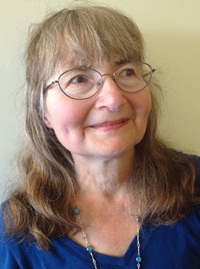
Sharon A. Crawford mugshot

The title might be an oxymoron, but to rephrase it – dead people populate crime fiction and non fiction, but the genre and all its books are popular and prolific in Canada. The annual Arthur Ellis Awards banquet held annually by Crime Writers of Canada proves that.

We packed them in last evening in the great hall of The Arts and Letters Club in downtown Toronto. We ate, drank, chatted, and then the awards were presented. Unlike the Oscars and the like awards presentation aren’t drawn out, boring, and exaggerated. A bookseller did the duties of handing envelopes and award statuettes, the CWC president spoke briefly at the beginning and then called each presenter in turn. The presenter read the authors shortlisted and then named the winner (and no Oscar wrong name fiasco). The winner, if present, came up on stage, did their thank you and then posed for a few seconds for a photo with their presenter.

The latter got a bit funny when the CWC member taking photographs – Rick Blechta won the  Lou Alin Award for Best Novella. But Cathy Ace, the CWC president stepped up to the camera and took the photo.

There was also some humour from all and the winners’ thank yous were interesting and diverse.

Donna Morrisey won for best novel. And no, I’m not going to list all the winners. You can check that out at the Crime Writers of Canada website.You will also see what the award statute looks like. But you won’t be able to make its hands and feet work. One of the winners showed us how at the banquet Can’t do that with an Oscar. I am also not putting a graphic of Arthur at the top for copyright reasons, so you have to contend with my mug. At least I was there.

And for avid crime readers – no matter where you live – you can receive a quarterly electronic copy of Cool Canadian Crime which lists their members newest books coming out. Just scroll down the page to “Books”. Warning, commercial – sort of here – my newest Beyond mystery Beyond Faith comes out this fall, so if I remember to send out the info in time, it should be listed in Cool Canadian Crime later this year.

And when you check out CWC home page, you get a selection of new books releases by members floating across the screen. Check out the bios for what we all do between the book covers. Murder and mayhem and much more.

And we can get away with crime (between the book covers).

Cheers.

Sharon A. Crawford


Tags: , , , , , ,

Show not tell in fiction

The second beyond book.

How many times have you read (or written) a scene in a novel or short story that reads something like this?

John decided to tell Mary off and do it loudly.

“Mary, you are a disgrace to the club,” John yelled.

What’s wrong here?

It not only tells the reader what John is going to do,but then puts the same thing in dialogue.I call this overkill and is an insult to the reader’s intelligence. It is equivalent to hitting them on the head and slapping them in the face. Show, not tell the reader works better.

So, what can you do here? Delete the narrative where it tells what John plans to do and go right to the dialogue. Of course this is taken out of context (NOTE: not anything in particular – just off the top of my head  – before said head was hit, of course).

Besides the dialogue you can show John in action. Does he point a finger at Mary. Does he throw a book? Does his face contort into a red mass of fury? You can also show how John feels about doing this. Maybe he is scared to stand up to Mary as he may be on the shy side and Mary is a forceful person. So maybe his yelling and actions show this.

Having said all this, it is okay to have some narrative which can include telling your story, showing what characters are like and what your Point of View character feels and thinks.

Just don’t tell when you can show. And never do both around dialogue.. Readers don’t like being insulted.

Cheers.

Sharon A. Crawford

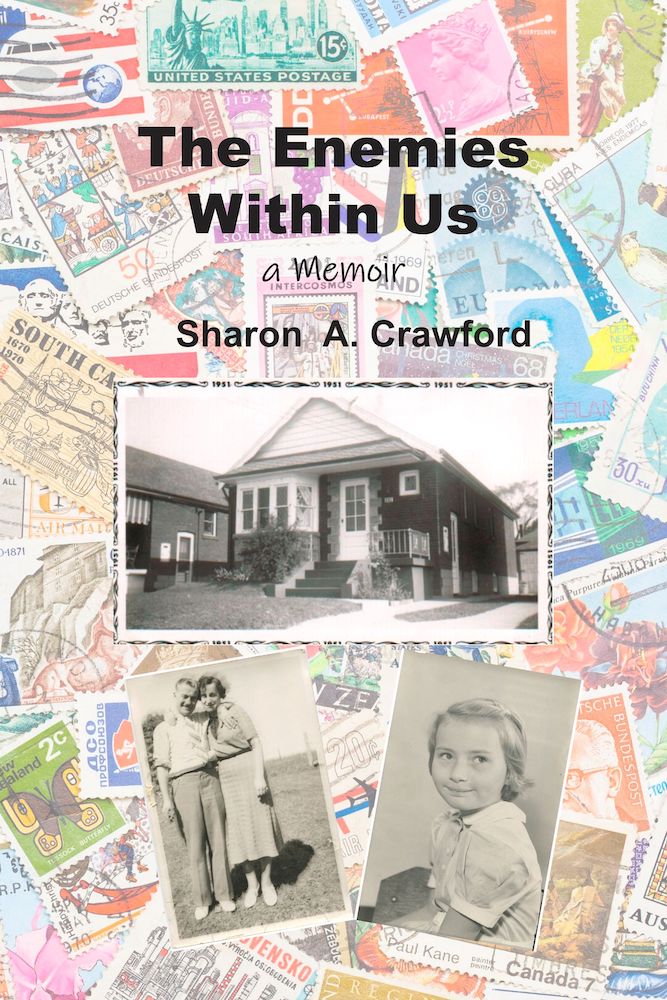
The next book in Sharon A. Crawford’s Beyond mystery series, Beyond Faith (published by Blue Denim Press will be out this fall 2017. Meantime, click on the Beyond book at the top of this post and get more info about Sharon and her Beyond books.


Tags: , , , , , , , ,

The Credibility Factor in Fiction Writing

The second Beyond book.

We writers let our imaginations flow. We get creative and write outside the box. However, sometimes we go on tangents with our plots, and characters’ actions and dialogue, often resulting in going way off the credibility meter.  We don’t always see that, but our readers do.

And to make it more complicated – credibility can be relative. What is credible for fantasy may not be credible for mystery or romance – at least the plot. Character, no matter the genre, always need to be credible.

I’m not immune to this credibility tangent. Just ask my publisher. And read last week’s post here.

So, how do we get make sure our characters and plot are credible?

One thing I sometimes do is act out a scene. Can a character actually do this? No, I don’t jump off buildings – nothing extreme like that (I’m afraid of heights anyway.) But I do it to get the logistics of a character’s action. For example to see if a character could actually see something from a certain window? Or what it is like walking in heavy rain. Yes, you can use your imagination, but I bet you’ll forget some detail. So get out there and experience your scene. Hook yourself up to your cell phone  so if you have to talk like your character, you don’t risk strange looks from others you pass. If you are using present time and present location and not making any of that up, it might be a good idea to get the lay of the land as it is now for streets and crossings. You don’t want your characters crossing a street called Main Street today that last week was renamed to Markham Avenue.

Use a credibility meter for characters to decide on action or dialogue. (And remember, this might be done in a rewrite). Ask yourself how your character  would act or react- based on their traits, based on their background, based on their psyche, based on what has happened with and to them before in your novel. Would a timid character suddenly start arguing with someone who is clearly trying to get her goat? But remember, part of a novel’s premise is things change and that includes the characters. So if something happens to your character to bring about a change, maybe that character will finally tell that other character off. Don’t make it easy for him or her. It would be a struggle.

It also is a good idea to have your writing critiqued by a writing critique group – online and/or in person.

Remember, writers can have tunnel vision about their work. But other writers will look at it fresh and from other viewpoints.

That is taking your writing out of the box in another way.

Cheers.

Sharon A. Crawford


Tags: , , , , , , , ,

Using Fiction Tools to Write Memoir (continued)

Again, I connect you to my post on my Only Child Writes blog. This time it is using another fiction writing technique for memoir – setting. Blog post is here.

And next week we’ll get back to strictly fiction.

Cheers.

Sharon A. Crawford

Author of the Beyond mystery series.


Tags: , , , , , , ,

Memoir writing and fiction writing are connected

Writing fiction and writing memoirs have a few things in common. Both have characters; a POV, setting, narrative and dialogue. But there is something very different about them, that you need to remember. In fiction, you make up your plot and characters. In memoir you are telling your truth, your life (or parts of it as you remember). And the people in a memoir are real people from your past and/or present – even if you change the name to protect the guilty. However, in both fiction and memoir, emotions and feelings are very important.

As mentioned in last week’s post, I am teaching a memoir writing course at the Toronto Reference Library. And again like last week I put a snippet of what we cover this week on my other blog Only Child Writes. Like last week I’ll refer to it and this time will include the link here.

In this post I excerpt a small part of a chapter from my memoir. The excerpt is shortened even more. And yes, I change the people’s names. But the excerpt shows how you can write memoir, fiction style. The main character here is of course, me (or in your memoir, you).

Cheers.

Sharon A. Crawford

Author of the Beyond mystery series. More info about  Beyond Blood here.


Tags: , , , , , ,

Let it rain – between your book covers

I hate heavy rain, especially large amounts, especially mixed with strong winds. Which we are getting today in Toronto,Canada. So, what am I doing about it? Besides staying in and checking the basement for any water getting in?

I put the rain in my third Beyond mystery book. Not the rain coming down right now. In one scene I have my main character, PI Dana Bowman, walking through a rain – heavy with blowing winds. Unlike me, Dana drives, but she has been somewhere near home so left the car in the driveway before the rain started. Now she is walking home, but the rain and what it brings – including the kickstart to the novel’s story- begin happening as she struggles through the rain.

In a nutshell, I took a re-occurring scenario in my life, a scenario I don’t like – and fictionalized it.

You can do that, too, but there are caveats.

  1. If your story occurs in another time – an that means not today – make sure you are accurate in presenting your story.. My novel takes place in late fall 1999 in a fictional town called Thurston, Ontario. Thurston is loosely based on Aurora and Newmarket in York Region, Aurora is where I lived for 23 years – although I got out of Dodge in 1998. Rain storms today are not the rain storms of 1999. In Canada and the United States we get way too many and in some cases they are of possible flood proportions. The winds now are stronger and more frequent. So I researched Environment Canada’s historical weather information for the lower half of York Region in  November 1999, right down to the day.
  2. You may think your memory of your situation is clear in your mind to the point where you are right there, but it might be a good idea to list its components – with the rain again – were there many puddles?   Did the wind turn your umbrella inside out? Was it daylight, dusk or night? What exactly from this scene do you want to use – its essence or something specific?
  3. Remember, the scene must have something to do with you story’s plot. Don’t just put in heavy rainstorms because you like or hate them and find them cool. Maybe your main character is chasing someone in the rain. Does he or she slip or fall? What is going on around her? I work in the cars splashing by and what Main Street, Thurston is like during a rain storm. But it is all part of the plot.
  4. When you get down to actually writing that scene in your story, keep writing and don’t stop. Hopefully you’ve done any research and have some idea how you want to morph it into part of your story. When you go through it to rewrite, you can check to see if it makes sense, if it is part of the plot.
  5. Make sure it doesn’t go off into a long expository tangent.Just work in some information with your plot.For example with the rain in my novel, I show the reader how heavy the rain is by how it affects Dana struggling to walk along Main Street and also the others she meets, including … well, that would be giving some of the plot away,

And don’t forget to enjoy, to get lost in the creativity of the writing. It can help get your mind off current problems – even if they include heavy rain. Speaking of which, it is time to check the basement again. And oh yeah, it was also our garbage pickup day today, so while we had a lull in the rain earlier, but not the heavy wind, I was continually running outside to right bins – mine and a few friends across the street. And of course, today was the day the city decided our street should have the new supposedly racoon-proof green bins for wet waste delivered. They may be racoon proof, but not extreme-weather proof. The bins were flying all over the place and mine came minus the scoop and instructions. I did grab the instruction paper as the wind blew it down the street. A very wet sheet, now drying on a kitchen chair.

But that’s for another story, another day. Dana Bowman wasn’t dealing with garbage bins.

How do you work reality into your fiction?

And as usual, click on the Beyond book icon at the top to find out more about the first two Beyond books.

Cheers.

Sharon A.. Crawford

Dana Bowman, looking for her umbrella before braving the elements?


Tags: , , , , , , , , ,

Rolling out the author readings with Canadian Authors Toronto

Now that spring is here, it is time for me to get back into author readings.So next Tuesday evening, April 4, I will be taking my Beyond books for a reading at a Toronto library branch. Four other authors will join me: Bianca Lakoseljac, K.V. Skene, Michael Pawlowski, Ellen Michelson, Catharine Fitton

The readings are being held by the Canadian Authors Association Toronto Branch. This branch has been shall we say “sleeping” the past couple of years, but now branch president Chris Canniff has kick-started it with this author reading which is open to the public.

The Canadian Authors Association has been around for close to 100 years. It was started in 1921 by some prominent Canadian authors, including Canadian humorist, Stephen Leacock. It’s focus has been and still is “writers helping writers”, which it does in many ways. These include work with copyright issues for writers, establishing literary awards including the annual CAA Literary Awards for non fiction, fiction, poetry, and drama. CAA also came up with the first book contract between authors and publishers.

And, oh yeah, members are both published and non-published authors.CAA has branches right across Canada.

Some of these branches have a Writer in Residence. Vancouver branch’s WiR is well-known poet, editor, and short fiction author Bernice Lever. Bernice used to live in my neck of the woods and she was one of my mentors. She used to run a writing critique group in Richmond Hill, just north of Toronto. When I lived in the area, I attended it. Bernice inspired me to start my East End Writers’ Critique group in September 2000 and EEWG is loosely based on the Richmond Hill group.

I, too, had the honour of being Writer in Residence for the CAA – the Toronto branch, from 2001 to 2003, and then again from 2009 to 2015, although the current Toronto branch website still has me listed as WiR. The website is to be updated shortly.

You can check out more about the Canadian Authors Association here. There are links to the branches and much more information.

As for the Toronto branches Authors Reading evening, here is the “dirt” according to Chris Canniff and a link to the CAA Toronto Facebook page. And you don’t have to be a CAA member to read at this event, but if you are in the area you can drop in to meet us.

“We want your stories! The Canadian Authors Association Toronto Branch is having a meeting on Tuesday, April 4 at 6:15pm and we want you to come prepared to read, or come to listen to what others are writing. Event details are below Bring your best work, or a work in progress! Please RSVP to president@canauthorstoronto.org to sign up for a reading. Readings are generally 3-5 minutes long, but that can be extended depending upon the number of readers. Beverley Burgess Bell, who hosts an Oakville Writers Group, will be moderating. Come out, bring a friend, and help us make this meeting a success. We look forward to seeing you there! Check out our new Facebook page, at > https://www.facebook.com/CanadianAuthorsAssociationTorontoBranch/ And our soon-to-be-updated website www.canauthorstoronto.org Event Details: What: Member Reading. Non-Members are also welcome to attendd, but all members and non-members should RSVP. Non-members are encouraged to consider membership!
When: Tuesday, April 4 from 6:15 – 8:15 Where: Toronto Public Library [Annette St. Branch] – 145 Annette St. Website: http://www.torontopubliclibrary.ca/detail.jsp?R=LIB022 Location Details: Closest major intersection is Keele and Annette Streets. Branch is located on the southwest corner of Annette Street and Medland Street.”

And if you click on the Beyond book icon at the top it will take you to more info about my books.

Cheers.

Sharon A. Crawford


Tags: , , , , , , , , , , ,

Are librarians to be made redundant?

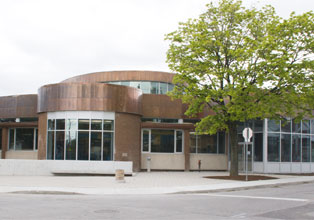
S. Walter Stewart – Sharon’s library branch

I am a big fan of librarians. In all my years of using the library (since I was 12, back in the grey ages, the early 1960s), I have received all kinds of help from librarians from finding books to other research to daily living. Now, the Toronto Public Library Board is starting a pilot project in the cities two smallest library branches – Todmorden in the east and Swansea in the west.

The project would extend the hours the libraries are open. But there is a big catch. There will be no librarians present. If you need to contact a librarian, it will all be by video. And no security guards, so good luck if some crime is committed. Video cameras may catch it, but with no staff person present in the library, good luck.

A City TV news story describes the situation, including listing the crimes that have been committed in the last year or so in various branches. You will notice we are not talking about stealing books in this story here. The librarian union head, Maureen O’Reilly, is interviewed in the story. Ms. Reilly also emailed out petitions, copies to go to the city’s mayor and the signer’s local councillor. You bet I clicked on the email and went to the page with the petition letter. The letter also had space for alterations/additions to content and so I added a short summary of how l have always used libraries and how as a writer and reader the librarians have helped me.One example I gave was one of the librarians at the S. Walter Stewart Branch was instrumental in getting my East End Writers’ Group (a writing critique group, see my website for more info on EEWG) to meet there at no cost to us – we are now partners with the branch and part of their programs.

Interestingly, this branch is the first library branch I started going to as a child of 12 – when the new big branch first opened. Except for the 23 years I lived in Aurora, S. Walter Stewart has been and still is my library branch. And yes, when in Aurora I was a regular patron of the Aurora Library where one of the librarians (who became a friend) helped me with some health information when I was still a journalist – getting me set up on data bases to check out the information. This was in the early 1990s before a lot of this info was available on line.

But I still go to the librarians in person for info, to teach writing workshops and courses, for presentations with my Beyond mystery books – with or without other authors.

And on a more personal note – when my son was a toddler and driving me nuts in the  Aurora Public Library, the head librarian quietly called me over and spoke to me. Not to tell me to get my son to shut up. She was concerned with me, with my getting frazzled, etc. by being a young mother. The librarian suggested we take a break one day soon and go to lunch. And we did.

Meantime, the librarian at S.Walter Stewart helps me with PR for our EEWG meetings and also when we have guest speakers and do presentations. Perhaps one of the biggest clarification of that is a few years ago after EEWG celebrated its 13 anniversary with a presentation in the library auditorium, after the presentation a few of us went out to a nearby pub to chat and grab a drink and some food. This librarian and her husband came along, too.

I can’t even fathom doing workshops or courses at a library branch with no librarian present (although the two in the pilot project don’t have the room for this). I am constantly asking questions and asking for help in workshop setup. Sure, some is done by email and phone, but not all, especially when I show up. What would happen if problems occurred with a workshop? And if there are no librarians present, who sets up the room, including bringing in and setting up any AV and computer equipment?

This is all very short-sighted and stupid by the City of Toronto and the library board. If they are trying to save some bucks and increase library open hours, the flip side doesn’t work. Librarians will be out of work and we the librarian patrons will be worse off for it.

Here, the end doesn’t justify the means, especially as the end is questionable.

If you want to read more about this situation just Google “Toronto public library no staff at Todmorden” and you will get a long list.

I hear this situation is happening in a few other places too.

Is this the price of progress? If so, turn the time back to the 1990s. And if I sound like a curmudgeon, so be it.

What do you think of this situation?

Comments, please.

Cheers.

Sharon

And yes, copies of my Beyond books are in some of the public library branches Toronto and York Region (latter includes Aurora). For those outside these area, you can check out my Beyond books by clicking here.
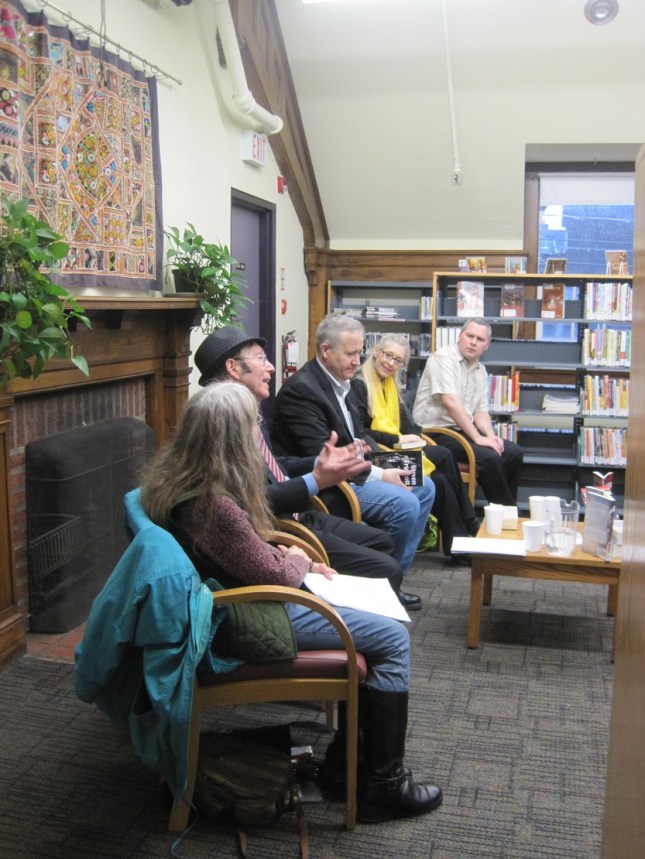
The CWC gang up close at Gerrard/Ashdale library. Photo courtesy of Gail Ferguson – a librarian then




Tags: , , , , , , , ,

Listen to your publisher

I am lucky that the editor at my publisher’s goes through my submitted manuscript and makes suggestions. Then we book a phone consult to hash through all these suggestions and comments.

It really gets me thinking beyond whatever box I was writing in.

I had that experience earlier this week. This was the “final” submission, i.e., the one that would make or break whether my new Beyond novel would be accepted for publication.He was quick to praise that it was a much better story and worth being published, but it came with the suggested changes. And some of them pointed out what wasn’t working and left the how-to-do-so up to me.

So we had, as the current dialogue goes, “a conversation about it”. We were both polite but explored what could be done. He said he had read the novel as a reader and not a publisher and that’s where his suggestions came from.

Besides stretching the creativity limit, it also served as pointing-out what just might not work. He didn’t say it, but he was playing devil’s advocate.

Not all publishers do this with their authors – whether new. Often it is “my way or the highway if you want it to be published.” That often stifles the author’s creativity. It is okay for authors to talk about why they wrote what, but go from there. Get past the ego that everything in your manuscript, down to the last comma, is sealed in gold and it has to be published exactly that way. We have probably all read published trade books where the publisher gave the author (often a well-known author) free rein. I won’t mention any names, but some of those books could have been shortened by 200 pages or so.

Getting published, at least by a trade publisher, is a two-way street. Remember, your publisher wants to sell your book, so making that more viable is a good idea. And it can also increase not only your royalties but the book’s presence in a very crowded market.

I have to the end of April to make the changes. So, after our phone conversation, I spent the rest of the afternoon and into dinner time going through the whole novel again and making short comments to his comments based on our conversation. Because being human, I would not remember it all if I didn’t do that.

I’ll keep you posted on Beyond Faith.

Meantime, you can familiarize yourself with the Beyond mystery series by clicking on the Beyond Blood icon a the top.

Cheers.

Sharon A. Crawford


Tags: , , , , , , , ,

Writing fiction from reality

beyond-the-tripping-point-cover Amazon link-72dpi4Sometimes writing fiction from reality can make a stronger story. And I am not referring to the “reality” of so-called reality TV shows. I’m talking about your personal experiences.

There is a catch, though. You are writing fiction so you need to change charactes’ names. You might also want to change places and timelines. One of the most important points is that because this is fiction, you can change what happens – in fact you can use what happened in your life as the seed for your story and go from there.

One of the short stories, Porcelain Doll, in my short story collection Beyond the Tripping Point (Blue Denim Press, 2012) is taken from a regular occurrence in my childhood – but a pleasant one. So I did a “what if?”

My late father worked for many years as a timekeeper for one of the railway companies. Mom and I had free travel passes on that railway line and the competing railway. That was how we travelled to visit Mom’s relatives and to other places each summer.

So, I took that travel and the approximate time and created a “What if?”

What if the dad was a bully?( My Dad wasn’t.) and the mom was a doormat scared of him? (My Mom wasn’t.) What if the dad also bullied the daughter? (My dad didn’t – he used to call me his princess.)

So, I extracted a few facts from real life – a family of three who annually visited a grandfather on a farm, the mom knitting, the dad obsessed with the train service, and what the train ride was like at that time (early to mid-1960s), and the daughter’s obsession with reading Agatha Christie mysteries and dolls. Here the resemblance gets more than murky.

What never happened on a train in real life (at least not on any trips I took), occurred here – from playing poker for money, a prize doll (hence the story’s title), murder, disappearances, the aforementioned bullying – and the aftermaths. Story is told going back and forth between the present (1989) and the past to move the plot along to a startling conclusion.

With this use of my past I could get the feeling of being there on a train ride in the late 50s and early 60s including some little known facts such as the trains actually had a separate coach for smokers and you couldn’t smoke in any other coach, a somewhat novel idea in the days before smoking and non-smoking regulations across the board. My dad smoked back then. There was also the train route and where you would have to change trains – although I kept it to the same route I changed the location where the grandfather lived. So, I had feelings and remembrances of these train rides.

What I didn’t have was how the little girl in Porcelain Doll would react and act to what happened. That was pure fiction and that is where I had to get inside Sarah’s head. And…

No, I’m not telling you anymore. This is an example to give you an idea how you can do it. If you are stuck for a story idea. I think Porcelain Doll is a stronger story because of my past experience. Certainly others who have read it have said so.

If you want to read Porcelain Doll and the 12 other stories in Beyond the Tripping Point, you can click on the book icon at the top to get more information about the book.

What personal experiences have you had that could be turned into fiction – with a lot of well, fiction in them?

Cheers.

Sharon A. Crawford


Tags: , , , , , ,