RSS

Category Archives: Writing

Interview with Fiction Characters By Fictional Character – Part 3

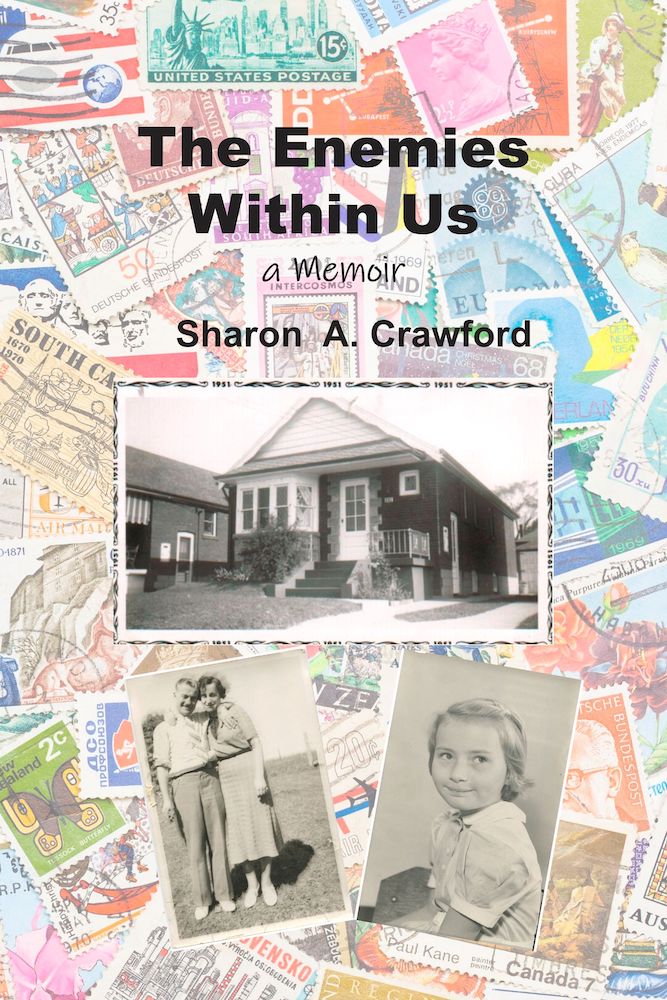
Cover of Sharon A. Crawford's mystery short story collection

Cover of Sharon A. Crawford’s mystery short story collection

Writing is a struggle against silence.

          Carlos Fuentes

Bast takes on perhaps the most difficult interview so far – with his seven-year-old nephew David Bowman. David has become psychologically mute because of a traumatic experience in the pre-quel novel Beyond Blood. David appears in the four linked stories in Beyond the Tripping Point – “Gone Missing,” “Saving Grace,” “Digging Up the Dirt” and “Road Raging.”

Bast: David, let’s play private eye. Let’s pretend I’m the private investigator and I’m interviewing you. I know…

Dana (who has sneaked into the room and interrupts): You are a PI little brother and David knows this.

Bast: Sis, I’m trying to conduct an interview here. Your turn will come next week.

Dana: Okay then. Let’s see what David thinks about this.

Bast: Fine. David, do you want your mother present during this interview.

David shakes his head “no.”

Bast (smiling): Dana, your son has spoken.

Dana: Okay. (shrugs her shoulders and leaves the room).

Bast: Now David, is it okay if we play PI and I ask you questions.

David nods “yes.”

Bast: Good. Now I know you won’t speak, so I’ll keep most questions to “yes” and “no” answers, but here’s a pen and notepad for you to write your answers on.”

David pushes the pen and pad away and shakes his head “no” vigorously. He picks up his box of crayons, dumps the crayons out on the table, and grabs his sketch pad.

Bast (shrugs): Okay. In “Saving Grace” you kept pushing your mother to find the missing Grace. Was that because of what happened to you last year?

David picks up a red crayon and starts drawing a girl’s face. Then he picks up a black crayon and draws a boy’s face. He colours in the hair yellow. Underneath the girl’s face he prints “G” and underneath the boy’s face he draws  “?” He hands the picture to Bast.

Bast (pointing to the boy’s face in the picture). “Is this you David?”

David snatches the picture from Bast, then picks up a black crayon and starts scribbling on the paper. He hands it back to Bast.

Bast (looking at the picture). I see you have crossed out the “?” and put in a “D.” Okay, how did you know where to find Grace?

David picks up an orange crayon and starts drawing on another sheet of paper. When finished, he hands it to Bast.

Bast (looking at this picture). This looks like a doll.

David nods “yes.”

Bast: Would this be Grace’s Raggedy Anne doll?

David nods “yes” and starts wriggling in his seat.

Bast: So, the doll helped you?

David nods “yes” and then shakes his head “no.”

Bast: Which is it David – yes or no?

David grabs a purple crayon and starts scribbling on another piece of paper. When finished he throws the paper at Bast.

Bast: Hm. I don’t understand David. All these purple lines and circles. What do they represent? I mean.

David points to his head and moves his mouth as if trying to make a sound.

Bast: Okay, David. Let’s move on. Now in “Gone Missing,” at one point you are riding with your mother in her car and you drive to the dock at Snow Lake. You made a dramatic change here from complete silence. You…

David jumps up and starts moving around the room as if disoriented, then moves up to Bast and starts stomping his foot.

Dana (now back in the room). “That’s enough Bast. I don’t think David wants to play your game anymore, do you David?

David just continues his foot stomping. Dana goes over to him, crouches down to his level and puts her arm around him. David wiggles and tries to push her away, but eventually the feet and hands go still and he puts his head on Dana’s chest. Loud sobs are coming from him. Bast walks over to them and gets down on his knees.

Bast: Sorry David.

David looks up from Dana and over to Bast. And winks.

You can read more about David, Dana, Bast, Great Aunt Doris, Detective Sergeant Donald Fielding and the others in the four linked stories which are part of my mystery short story collection Beyond the Tripping Point, (Blue Denim Press, 2012. Click on the book at the top and it takes you to my profile – including books reviews – at www.amazon.com. The book is available there in print and Kindle. For Kobo e-book  go to http://www.chapters.indigo.ca/books/search/?keywords=Beyond%20the%20Tripping%20Point

 or go to any bricks and mortar store and order in a print copy.

Next week: Bast interviews his fraternal twin Dana Bowman.

Cheers.

Sharon A. Crawford


Tags: , , , , , , ,

Interview with Fiction Characters by Fictional Character: Part 2

Cover of Sharon A. Crawford's mystery short story collection

Cover of Sharon A. Crawford’s mystery short story collection

The things that you know more about than you want to know are very useful.

            — Robert Stone


In this post, Bast Overture, crime reporter turned private investigator interviews Detective Sergeant Donald Fielding. Fielding appears in three of the four linked shorts stories in Beyond the Tripping Point (“Gone Missing,” “Digging up the Dirt,” and “Road Raging”). Note: Bast has encountered Fielding in his crime reporting days and the two are not best friends – forever or for any time.

Bast:  Now Detective Sergeant, you have been the lead investigator in several of the crimes that The Attic Investigative Agency has been involved in and…

Fielding (in his clipped British accent): Meddling might be more accurate…

Bast: Very well then but don’t you think that both you and our agency each came up with information that helped solve the cases and that  by cooperating and pooling our resources…

Fielding: The police do not cooperate with private investigators.

Bast: Yes, but didn’t you pass some information along to my sister, Dana, about some of the principals involved in “Road Raging.”

Fielding: That information was already in the press and I “passed it along” as you call it to your sister because when it was in the newspapers she was. shall we say, busy with trying to find her kidnapped son so she may have missed it (From the pre-quel novel, currently in rewrite stage).

Bast: And isn’t that another instance of you helping us?

Fielding: I said the police don’t cooperate with…

Bast: I know you said that but sometimes you do and don’t you think it helps solve the case?

Fielding: Listen here, Sebastian Overture. You and I go back to your crime reporting days, so I know your tricks to get information. What are you insinuating here? That the police act unprofessionally?

Bast: Of course not. (Bast clears his throat). I’m merely asking if the mutual info exchange helped. Hold on a minute before you say anything. If you remember in “Gone Missing,” Dana gave you some valuable information about the missing Rosemary – something we gleaned from our interview with her twin brother Robin – a blue text book. And that led to another person…

Fielding: (raising his hand). We were already talking to that person of interest.

Bast: Very well. Now, you are saying that the police don’t usually cooperate with private detectives. But what about when one of the PIs is shall we say more than a PI to you?

Fielding: (face going red). What are you insinuating Overture?

Bast: Come on Fielding. It’s no secret that you are attracted to my sister. So, I’m asking you – do your feelings for Dana have anything to do with the sharing of information.

Fielding (clipped British accent more pronounced): You’re making things up. That would be unprofessional.

Bast: But isn’t it true that you are attracted to my sister?

Fielding: That is none of your business. You leave D…D…Dana out of this.

Bast: Very well, then…

Fielding’s cell phone rings. He opens it.

Fielding: “Yes, Fielding here… Uh huh. Fine. What’s the address? Fine. I’ll be right there.” (He closes the cell). “Sorry, Overture. Duty calls.” (He stands up to leave)

Bast: Very well. Thanks for your time. I’ll catch you later for the rest…”

“Fielding: “No. This interview is finished.”

You can read more about Great Aunt Doris, Bast, Dana, David, Detective Sergeant Fielding and the others in the four linked stories which are part of my mystery short story collection Beyond the Tripping Point, Blue Denim Press, 2012. Click on the book at the top and it takes you to my profile – including books reviews – at www.amazon.com

Next week: Bast interviews his nephew David, which proves challenging as David is psychologically mute.

Cheers.

Sharon A. Crawford


Tags: , , , , , , , , ,

Interview with Great Aunt Doris from Beyond the Tripping Point

Cover of Sharon A. Crawford's mystery short story collection

Cover of Sharon A. Crawford’s mystery short story collection

We care what happens to people only in proportion as we know what people are.

— Henry James

A couple of weeks ago, my guest blogger Rosemary McCracken interviewed her novels’ main character, Pat Tierney.  In today’s post, Great Aunt Doris, the eccentric old family busybody from two of the linked stories – “Saving Grace” and “Digging Up the Dirt” in my short story collection Beyond the Tripping Point is interviewed by crime reporter turned private investigator, Bast Overture – one of the fraternal twins in the linked stories. A word of note – Great Aunt Doris doesn’t like Bast so she is totally unpredictable.

Bast: Now Aunt Doris, you have been a sort of patriarch of the Bowman family and so have a –

Aunt Doris: I am not your aunt. I’m not even your sister Dana’s aunt. Her husband, Ron Bowman whom she had the stupidity to divorce, is my family and so is his son, David.

Bast: Yes, well, it is your family and its roots I want to talk to you about, especially in relation to this house. How did the Bowman family obtain this house?

Aunt Doris: You got that right. My late father, bless his soul (she crosses herself) bought this house when I was only five and my older  brother George and I lived in it even after Dad died. George got it in his will and he and his wife Ellen lived in it and so did their son, Ronald Bowman who got the house when my brother died. So this house is really his, not yours and Dana’s. Ron should be living here with David, not you and Dana. It…

Bast: Yes, thank you Aunt Doris for this background. I’d like to talk a little bit about your involvement in two of our stories in Beyond the Tripping Point. First, “Digging up the Dirt” where I understand you helped with the investigation. Could you tell us why, especially when you are so against Dana being a PI?

Aunt Doris: Well Dana is the mother of David –

Bast: So you are acknowledging Dana Bowman as the mother of your nephew’s son.

Aunt Doris: Don’t interrupt me young man. Yes, Dana is David’s mother but she sure doesn’t act like one, chasing all over for criminals. But it should be Ron living here to help raise David and keep Dana in line not somebody like you, a queer.

Bast: Ah yes, well I am gay but lots of gay men raise children.

Aunt Doris: But David is not your son.

Bast: True. Now back to my original question – why did you help with the investigation in Digging Up the Dirt?”

Aunt Doris: Because a childhood friend, Douglas Crandock and his mother were murdered during his mother’s 100th birthday celebration and I had to do something. So, I donned my PI gear (Note: slacks, sweater, cap, large magnifying glass and even bigger mouth) and went out and asked questions.

Bast: But my sis…Dana was with you and…?

Aunt Doris: I let her come along but I took a lot of control of the interviews.

Bast: Why is that?

Aunt Doris: Someone had to be blunt and ask the important questions, not skirt around it as Dana does.

Bast: But it was both of you who figured out who and why?

Aunt Doris: Hm…I suppose. But it was my knowledge of my childhood and early adult life and friends that was crucial.

Bast: Very well. Now let’s switch to “Saving Grace” where you, Dana and David went on a holiday to Goderich, Ontario. You also became involved in…

Aunt Doris: It would have been a good holiday if Dana hadn’t meddled in finding that missing girl, Grace what’s her name.

Bast: Milhop, Grace Milhop. But wasn’t it David who drew Dana into looking for Grace?

Aunt Doris: Young man, don’t you point the finger at David – he’s family, blood family.

Bast: True. But David’s situation (Note: mute from the trauma of his own kidnapping the previous year – in the prequel novel) was instrumental in getting him involved and therefore Dana and you, of course. Would you say you were instrumental in getting this case solved well, safely – for Dana and David?

Aunt Doris:  I guess so. I suppose if I hadn’t been there things could have gone much differently. But that doesn’t make it right that Dana is always meddling in these cases, as you call them. She’s a mother first and she should be acting like one. What is David going to grow up as with his mother and you (She glares) raising him?

Bast: Perhaps a private investigator.

Aunt Doris: Not as long as I’m around. I may be 71 but I plan to be around for another 20 years at least.

End of interview:

You can read more about Great Aunt Doris, Bast, Dana, David and the others in the four linked stories which are part of my mystery short story collection Beyond the Tripping Point. Click on the book at the top and it takes you to my profile – including books reviews – at www.amazon.com

Next week: Bast interviews Detective Sergeant Donald Fielding.

Cheers.

Sharon A. Crawford


Tags: , , , , , , , , , , ,

Backstory using flashbacks

Cover of Sharon A. Crawford's mystery short story collection

Cover of Sharon A. Crawford’s mystery short story collection

One of my many theories about short stories is that their titles and first lines ought to be memorable, because if not memorable they will not be remembered, and if not remembered the stories will not be reprinted (because no one can find them).

– Damon Knight

I’m posting one day early this week only because I’m at the MagNet magazine publishing industry conference all day tomorrow. The time setup to fix a date and time to publish a post later is nowhere to be found on WordPress.com. Hope you enjoyed Rosemary McCracken’s guest post last week.

And now as promised (albeit a week late) – some ideas on using flashbacks for your backstory.

You have to be careful with flashback so you don’t overuse  it because it can take away from your main story’s thrust. For a novel a bit of backstory could work in a short prologue. But even better is to weave in your flashback(s) with the present day story. The latter can work for short stories which don’t usually have prologues.

In my short story “Porcelain Doll” I blend in the flashbacks – and there are actually two time periods of flashback. This is somewhat unusual for short stories. The story begins in the present with:

 I can’t stop staring at the porcelain doll in the window. It sits among old tea sets and silver candleholders in Hanover’s newest antique shop. I keep trying to look away, but I can’t, despite my heart dancing inside my chest and my breath trying to keep time with it.


Right after this paragraph I transition into the most recent time flashback with:

I have no business coming back to this area. I should have left the past with Mama when she died last fall from a tumble down the cellar stairs. But when I sorted through her clothes, a newspaper clipping fell from a dress pocket. Of course I had to read it.

Spring thaw uncovers man’s skeleton near Hanover in the Lake Huron area. Contents of a wallet found nearby indicate the man could have been one Charles Holden who disappeared 16 years ago….

It was dated April 14, 1981, two months before Mama married Eric Luftus and seven and a half years before her death.


Then I bring in a bit about the present and transition back to the late 1980s when Mama died.

I pilfered the newspaper story and took it home with me.

The doll’s eyes seem too blue, too real. Or maybe I’m just wrapped too much in old memories. They began seeping from the nether area of my brain while I watched Mama lowered into the ground.

There are a few paragraphs more about this time right after Mama’s funeral and leading back to the present (seven months later) with Sarah (the main character) still looking in the window at that porcelain doll. Then I transition into the main flashback, which is a big part of the short story, with

I press my nose to the shop’s window. The doll’s eyes seem to suck me right in and spin me back 24 years. In the whirl, I see another porcelain doll, Daddy dealing cards, and my last train ride. It feels more like a roller coaster ride, and I shudder.

That 1965 train trip started much the same as any other summer’s trip. (All excerpts from Beyond the Tripping Point, copyright 2012 Sharon A. Crawford)

The story does eventually wind its way back to the present including some backstory about Eric and Sarah’s mom with the latter part focusing on the present to finish up what started back in 1965.

If you read through the excerpts closely you will see that anything in the past (1965 or 1981 or 1989) is written in the past tense while anything happening now is written in present tense. This is one way to help your reader keep track of time.

In novels, another way is to keep backstory and present in separate chapters with the year and possible month(s) or season(s) at the beginning of the chapter.

Or you can weave in the backstory for each main character whose point of view is used to tell your story. But watch that it doesn’t come across as an expository resume. Connect it to something the character is doing or about to do, another character they are going to see, talk to. What is some of their history? Are they long-time friends from what and where? If the characters have had a falling out, bring this in here just before they will meet. How does the point of view character feel about this? Will it affect how they are going to act?

Sue McGrath (of the alphabet mysteries: A is for, etc.) does this very well when she brings in her main character’s (Kinsey) family backstory – many members whom Kinsey is estranged from or never met. But McGrath doesn’t drag in these family members until the novels where Kinsey is actually going to have to connect to them. If you are writing a mystery novel, you don’t want a lot of unnecessary family backstory cluttering up your plot.

So make sure your backstory connects to your plot in some way. It is also not necessary to give every character’s backstory – just the main ones where it will affect the plot and what these main characters will be doing and saying.

You don’t want to lose your readers to the past.

Cheers.

Sharon A. Crawford

Beyond the Tripping Point is available at www.amazon.com (just click on the book cover at the top) and for those in Canada at www.amazon.ca  – both in print and e-copy. Or you can go into a bricks and mortar bookstore and order in a print copy.


Tags: , , , , ,

Guest blogger interviews her protagonist

Rosemary McCracken author of Safe Harbor and Black Water mystery novels

Rosemary McCracken author of Safe Harbor and Black Water mystery novels

Rosemary McCracken has written two mystery novels (so far) – Safe Harbor and Black Water – featuring financial advisor Pat Tierney. Please welcome guest blogger Rosemary McCracken as she interviews this financial expert whose life is anything but usually dull.

Pat, how do you feel about being the main character of a book?

When you decided to make me the central character of Safe Harbor, the first book in her mystery series, I was puzzled. I’m just an ordinary, forty something woman. Widow, mother of two girls, business woman.Nothing special. But you thought people would be interested in me and my adventures.

And, to my amazement, they were. “I can’t wait for the next Pat Tierney installment,” one reader posted on Amazon. “I look forward to seeing what trouble Pat Tierney gets herself into next,” another reader said.

So I’m back—this time in Black Water.


Why did you become a financial advisor?

My late husband, Michael, was a financial advisor with a large investment firm, and his enthusiasm for his work was contagious. I took courses, got my accreditation and then joined Michael at the branch he ran.

I love helping my clients get their financial houses in order. It’s important work and I take it very seriously.


How did you get yourself involved in a murder investigation—again?

When it comes to my family, I’m a big softie. When Black Water opened, my relationship with my eldest child, Tracy, was stretched to the limits. I had to set it right. So when she asked me to help locate her sweetheart, Jamie, I had no choice in the matter. I headed out to cottage country north of Toronto where an elderly man had been killed in a suspicious fire. And Jamie was the prime suspect.


Did the events ofBlack Watermake youa better person?


Definitely. I’ve learned to get to know people before I judge them. I wasn’t at all happy when Tracy introduced me to Jamie—because Jamie is a woman. You see, I had no inkling of my daughter’s sexual orientation. I’d always considered myself a champion of diversity—racial, religious and sexual. But it’s easy to be open-minded until your own kid comes out.

In short, I botched it big time. After I met Jamie, I threw myself into my work, hoping Tracy would get over her infatuation. I made no effort to get to know Jamie.

But when Tracy asked me to help when Jamie went missing, I realized how important Jamie was to her. She wasn’t just friend. Jamie was the special person in my daughter’s life. Her partner.

I also realized that Tracy had been keeping things from me for a long time. I love my daughters and I don’t want them to keep secrets from me. I decided that I’d get to know Jamie, and if she was the one for Tracy, I’d stand by her choice.

The more I learned about Jamie, the more I liked her. She’s an exceptional young lawyer who secured a landmark judgment on behalf of an elderly woman who lost her savings when a financial advisor put them into high-risk investments. Jamie has talent, energy and integrity. And best of all, she’s devoted to Tracy.


What was the most challenging situation you found yourself in in Black Water?

That’s a difficult question to answer. I met up with some truly dreadful people in this book, and a couple of times I really thought it was game over for me. But I’d have to say the biggest challenge was driving a huge snowmobile named Molly across a series of frozen lakes in cottage country. I’d never operated a snowmobile before, and the lakes weren’t as frozen as they should have been. At one point, I had to resort to snowmobile skipping. Have you ever heard of snowmobile skipping? It’s driving a snowmobile across a stretch of open water by approaching it at a very high speed. It’s pretty scary. If you don’t make it over that icy water, you sink like a stone.


What’s your greatest failing?

I’m a worrier. I worry about everything, which makes bad situations twice as bad. I worry about them beforehand, and then I have to live through them.


Can we look forward to reading about you again?

I know that you have  two more books mapped out for me. Looks like I’ll be getting into trouble for some time to come.

Book cover for Black Water

Book cover for Black Water

BLACK WATER: synopsis 

When Pat Tierney’s daughter, Tracy, asks her to help find Tracy’s partner, Jamie Collins, their mother-daughter relationship is stretched to the limits. Pat heads out to cottage country where an elderly man, who killed Jamie’s sister in an impaired driving accident years ago, has perished in a suspicious fire. Unfortunately, Jamie is the prime suspect.

Pat takes charge at the new branch her investment firm has opened in the seemingly idyllic community where Jamie grew up, and her search for Tracy’s missing sweetheart takes her through a maze of fraud, drugs, bikers and murder.

Once again, Pat proves that her family can always count on her.

 Rosemary McCracken has worked on newspapers across Canada as a reporter, arts reviewer, editorial writer and editor. She is now a Toronto-based fiction writer and freelance journalist. Her first mystery novel, Safe Harbor, was shortlisted for Britain’s Crime Writers’ Association’s Debut Dagger in 2010 and published by Imajin Books in 2012. You can buy it here.

Black Water, the second book in the Pat Tierney series, has just been released at the special introductory price of .99! You can buy it here.

Visit Rosemary’s website at http://www.rosemarymccracken.com/.

Follow Rosemary on http://rosemarymccracken.wordpress.com/. And on Twitter at https://twitter.com/RCMcCracken and on Facebook at https://www.facebook.com/rosemarymccracken?ref=tn_tnmn


Tags: , , , , , , , , , ,

How and Where to fit Back Story into Your Fiction

Cover of Sharon A. Crawford's mystery short story collection

Cover of Sharon A. Crawford’s mystery short story collection

We care what happens to people only in proportion as we know what people are.

— Henry James

Everyone has a story to tell, including the characters in your novel and short story. Back story is part and parcel of who the characters are. Many authors have trouble fitting the back story into their fiction.

Where should it go? How much? All at once like a bio? Start the story off with the bio? Introduce each new point-of view character with his or her bio? Work in little chunks where appropriate throughout the story? Skip it as back story per se and just filter in references to it as the story unfolds.

Think about what you have read in back story in published novels and short stories. For obvious reasons, short stories will have less, even when appearing in chunks. But in novels, how did you react when the author started the novel with the back story or started each scene featuring a new POV character with a chunk of their past, especially if it went on for pages. As my late creative writing instructor, Paul Nowak would write on my manuscript – “so what?”

Sure we need to know some of the characters’ histories. But it should reflect what is happening in the story and why the characters are doing what they are doing. Going on back story tangents can lose the reader.

However, the other main way (which I use) – working in little chunks where appropriate can also lose the reader, especially if a lot of action is happening. But it can be done. Here’s the beginning excerpt from “For the Love of Wills” where I actually filtered in some background.

“Clara, I’m going to fall.”

“Pipe down, Mother. Do you want them to hear us?”

“I can’t move. I’m stuck. See.” She tried tapping her toes against the stone rock wall, but to no avail.

“Well, whose idea was this anyway?” I whispered.

“Yours.”

“Mine?  Now, listen here….”

“Shush. Do you want Will and that blonde Bimbo to hear us?”

That blonde Bimbo is what got Heidi Anastasia Clarke started. Bad enough that on her 62nd birthday, her husband of 40 years, William Everett Clarke, decided to toss her out of their old-money mansion in Toronto’s Rosedale. All this for a post-mid-life crisis which brought his oh-so-much younger secretary in and sent my mother packing.

“And they’re not even married,” Mother had said.

How could that be? Mother didn’t want a divorce. Although I didn’t condone Dad’s actions, I’m a realist. What happens, happens, and I believe in making the best of it and moving on. Mother, however, has to grab the situation and yank it for all it’s worth. Bleeding her husband half dry in a divorce didn’t appeal.

“You’ll get a lump sum, half his pension and half the house,” I had said.

“I can’t live in half a house with them living in the other. No, Clara I’ve got a better idea. We’ve got to see his will.”

“His will? What the hell for?”

“I need to see that he’s still leaving me everything and hasn’t changed it to the Bimbo.”

“Wouldn’t it be simpler to just ask William, Jr.? He is the family lawyer?”

She’d smirked and muttered something about keeping her ideas close to her mind.

“Fine. How do you propose we see this will? Do you know where or even if Dad keeps it in the house?”

“Of course he does. A copy, at least. Why else do you think he kicked me out and changed the locks?”

I hadn’t reminded her about the secretary moving in but suggested I visit Dad and ask him, which sent her into a hissy-fit.

“And let him know what I’m up to? No. I have a better idea.” She’d brought her tantrum to a full stop and curled her thin lips into a misshapen smile. Oh, oh. She had mixed trouble into her stew.


That was how we arrived here, as dusk turned to dark, scaling up the back wall of the three-storey family mansion, harnessed into a rope, anchored at various protrusions along the way: metal awnings, window ledges, open window shutters, and the irregular jutting stone wall. Now, on our last leg, I managed to throw our anchor up, hooking it to the top balcony railing. Heidi had insisted it was the only way in without being noticed. (Excerpted from Beyond the Tripping Point, Blue Denim Press, 2012, Copyright Sharon A. Crawford 2012)

If you analyze the above excerpt you will see that it covers not only some of the mother’s and Clara’s background, but also some events in the immediate past leading up to now.  The big priority is to begin the story with NOW and work your way back. Only use what is relevant to your story. Here it includes the mother’s age, marriage background (but only what is necessary), the relationship between mother and daughter. Everything is from one person’s – the daughter’s – point of view. Watch that you don’t end up writing the big tell. Show the reader by using dialogue and the character’s reactions to each other’s dialogue and behaviour.

Flashback is another way – if handled well. Next week we’ll go into using flashback techniques to work in your back story.

Meantime, you can hear and see me read an excerpt from another story – “The Body in the Trunk” from Beyond the Tripping Point at https://www.youtube.com/channel/UC505OMPiVNy27zCFfND_8WA  Click on “Sharon A. Crawford Reading”

And check out my website for upcoming Beyond the Tripping Point readings in person at http://www.samcraw.com/Articles/BeyondtheTrippingPoint.html

Cheers.

Sharon A. Crawford


Tags: , , , , , , ,

Story Settings from riding the bus to readings

Cover of Sharon A. Crawford's mystery short story collection

Cover of Sharon A. Crawford’s mystery short story collection

Fiction depends for its life on place. Place is the crossroads of circumstance, the proving ground of, What happened? Who’s here? Who’s coming?

          Eudora Welty

I don’t have a car and don’t drive so I have to take public transit to get to locations for my book readings (unless out of town). Public transit can include subways and streetcars, but mostly it has been on Toronto buses. Besides opening my eyes to new areas of Toronto and getting around in them, what I experience can conjure up story settings, characters and even plots.

For a couple of library readings I had to change buses at the Warden subway station. The bus bays here are open at both ends and could be very windy. Because the bays resemble a somewhat dark tunnel (lights on at night) it conjures up stories of someone or something menacing suddenly appearing at one end of the tunnel. There are nine bus bays so a chase scene between victim and suspect or cop and suspect can be easily imagined. Throw in a bus or two entering or exiting a bus bay and you have a different take on the chase scenes that occur between and against cars on busy streets..

The bus stop at the other end for both library branches wasn’t right by the library. One was at an intersection of three major roads – very busy and on the dark and not stormy night I returned home – cold. I stayed in the bus shelter, hoping I was at the right stop and my bus would arrive soon before any strange person in this unfamiliar area came by. It all worked out okay and I even made an immediate bus transfer at the Warden station. A subsequent trip to this library branch for another reason was in daylight and although the weather wasn’t warmer, the difference in atmosphere was palpable – from blackness to sunny brightness. This contrast could make for a great setting to perhaps show the main character going through a somewhat familiar area in daylight but how menacing it becomes at night, especially if a weird person shows up at the bus stop. Or maybe someone from a car tries to grab her. You can use your imagination.

The other bus ride from this Warden Station was 40 minutes up to the north end of Toronto. I did this run early afternoon. The scenery was a mixture of bungalows, apartment buildings and plazas. Nothing really interesting on the surface. The interest was inside the bus – it was a good representation of all ages and cultures in Toronto. Throw in large baby strollers and bungle buggies (not the wheelies) taking up space on a crowded bus and you could conjure up a story of conflict between some passengers, especially if the protagonist has no other way to get around with her twins and the antagonist hates strollers on buses. (This is an issue in Toronto).

Another bus route took me through the older well-kept homes in the Leaside area of Toronto – some green grass with spring just awakening – all of it filled me with peace. But what if your main character was riding home on the bus in this quiet area when the doors open at a stop and a passenger steps in, then pulls out a gun, and starts firing.

So, the next time you take public transit (even underground) notice your surroundings. They can provide the setting for your next story and kick-start a plot with original characters. Just don’t get too carried away and miss your stop.

Upcoming events with Beyond the Tripping Point readings:

This evening, Thursday, May 16, 7 p.m. to 9 p.m.

Crime & Mystery Writing Panel

Moderating a panel of mystery novelists on plot and characters especially when police enter the picture. Presented by the Canadian Authors Association Toronto Branch and featuring Crime Writers of Canada authors, Toronto, Ontario, Canada.

Panelists:

  • Brent Pilkey http://www.brentpilkey.com/  author of the Rage novels who, as a police constable with Toronto Police Services, has an inside view of police procedure; and
  • Rick Blechta http://www.rickblechta.com/ whose novels aren’t exactly cozies — all have main characters involved in the music industry and when murder enters their lives, come into contact with the police.

More info http://www.canauthorstoronto.org/events.html

Thursday, May 23, 7 p.m. to 10 p.m.

Sharon A. Crawford hosts a Crime Writers of Canada Books ‘n’ Beverages reading at Q Space

Join these CWC authors as they read from their latest crime (fiction and fact) books, Meet and mingle, have a drink, something to eat and buy some books.

Melodie Campbell

Mel Bradshaw

Rosemary McCracken

Meg Howald

Brent Pilkey

Catherine Astolfo

Simone St. James

Nate Hendley

Rick Blechta 

Sharon A. Crawford

Location: 382 College St., Toronto, Ontario

More info about these authors at http://crimewriterscanada.com/

More upcoming gigs listed at http://www.samcraw.com/Articles/BeyondtheTrippingPoint.html

And for those who can’t make these events check out my videos – one link to all three now.

https://www.youtube.com/channel/UC505OMPiVNy27zCFfND_8WA

Beyond the Tripping Point now has two reviews on my amazon.com account. Click on the book cover at the top. If you’ve read the book and made any recent purchase from amazon.com you can add your review if you wish.

And I haven’t forgotten about the readings with the Grade 7 classes – all 42 students. Coming up in a future post.

Cheers.

Sharon A. Crawford


Tags: , , , , , , , ,

What Writers Can Learn from Authors’ Readings

Cover of Sharon A. Crawford's mystery short story collection

Cover of Sharon A. Crawford’s mystery short story collection

I loved words. I love to sing them and speak them and even now, I must admit, I have fallen into the joy of writing them.

          Anne Rice

The emcee introduced me and I headed up to the podium with my book, Beyond the Tripping Point, opened the page to read, looked at the page. And the lighting was dismal – a dim way overhead light. I struggled to see what I was reading. Apparently I did okay – at least the audience heard me or so I was told.

We writers can learn a few things from attending readings by other authors or in my case from my own reading. Here I learned to always carry a printout in 14 pt. to read from in case the lights fail. To date, since then, the lights have been bright enough to read from the book.

A good writer does not necessarily make a good reader. How often have we attended a reading when the author seemed to be in a race against time (understandable as reading time limits can be as little as four minutes), the reading voice was so low we wished they used a mic or the reading was so wooden we dozed off. The latter may be combined with the author reading way too long.

Those are the negatives but they can teach authors how not to read in public.

On the positive side, I’ve learned how to do a book marketing summary, how to pick the interesting bits to read, but the most rewarding is when interaction occurs between the audience and the reader – when the audience starts asking questions about my stories’ plots and characters and when they talk about their stories.

Some of those questions have been a little disconcerting. For example, the driver trainer who asked about the car that lost its brakes in “No Breaks.” He wanted to know if it was a standard or automatic car. Duh. I hadn’t given it any thought. As the story was triggered by a ride to Ontario’s cottage country I had years ago with a friend, I just used the type of car she had – automatic. And yes, what my friend did – used the parking brakes – worked with an automatic car but even I know that there would be problems with a standard car.

But it was a wake-up call to make sure I do all my research even when the proof seems to be in the pudding.

A favourite with many audiences is how much of your stories come from real life and if you can run into trouble with that. I sometimes use a bit from life as incentive for stories and often will bend the “rules” a little. For example, in one story in Beyond the Tripping Point (and I’m not saying which story) I developed an unfriendly character loosely based on someone in my family (not a close relative) who upset me with comments about what should or shouldn’t go in my memoir. But the character wasn’t really her. You could say she inspired the one character. Ditto the nasty father in “Porcelain Doll” whose only connection to my late father was his penchant for being on time and working for the railway. My dad otherwise was entirely different – more gentle, and he certainly didn’t gamble or verbally abuse his wife and daughter. But many of my characters just show up in my head – like the fraternal twins Dana Bowman and Bast Overture – with a mixture of what I see in the world and what I would like to see. As I’ve told other writers – you do have to be careful what you put in, but also be aware that readers sometimes see themselves or people they know in your stories’ plots and characters even when they are not the character source.

And that’s a good thing because it shows you connect with your readers.

So, besides reading your own writing (published or unpublished) in public, why not go to author readings. You might not only enjoy yourself but learn something, too.

Next week I will be expanding my reading experience as I’m adapting my presentation for a grade 7 group at one of the Toronto Public Library branches. And I’m sure I’ll learn something from this younger audience. I will also be reading for adults and moderating a panel of a couple of crime novel authors. Here’s the info on the latter two.

Tuesday, May 14, 7 p.m. to 8.30 p.m.

Crime Writers of Canada Books ‘n’ Beveragesreading with nine other CWC authors at:

Turner Park Branch of the Hamilton Public Library, Hamilton, Ontario, Canada http://www.hpl.ca/events/books-and-beverages-crime-writers-canada

Thursday, May 16, 7 p.m. to 9 p.m.

Crime & Mystery Writing Panel

Moderating a panel of mystery novelists on plot and characters especially when police enter the picture. Presented by the Canadian Authors Association Toronto Branch and featuring Crime Writers of Canada authors, Toronto, Ontario, Canada.

Panelists:

  • Brent Pilkey, author of the Rage novels who, as a police constable with Toronto Police Services, has an inside view of police procedure; and
  • Rick Blechta, whose novels aren’t exactly cozies — all have main characters involved in the music industry and when murder enters their lives, come into contact with the police.

More info http://www.canauthorstoronto.org/events.html

Check out more May readings, etc. at http://www.samcraw.com/Articles/BeyondtheTrippingPoint.html

Cheers.

Sharon A. Crawford


Tags: , , , , , , , , ,

Importance of Seasons and Days in Story

Cover of Sharon A. Crawford's mystery short story collection

Cover of Sharon A. Crawford’s mystery short story collection links to amazon.com

It was a dark and stormy night; the rain fell in torrents — except at occasional intervals, when it was checked by a violent gust of wind which swept up the streets…

          Opening sentence of Paul Clifford (1830) by Edward Bulwer-Lyyton

Your story’s protagonist is heading out the door for work. She is wearing a dress, no coat, but your story is set in December. Or you have her complaining of waking up to yet another rainy day, yet when she gets in her car and drives, there is no mention of rain pelting down on her car windows.

Obviously the author isn’t paying attention to her story’s setting – time of day, time of year, and location. (December in North American is different than December in Australia or New Zealand).

The seasons and time of day (or night) are important to your story’s (short story of novel) content. They can also factor in with your plot. In my story, “Porcelain Doll” from my short story collection Beyond the Tripping Point it is stated that it is summer and the Holden family is going on their annual train trip to grandpa’s farm. The scene with the parents and 12 ½ -year-old Sarah about her attire goes like this.

“Daddy,” I said.

“Sarah, what is that you are wearing?” He pointed the cigar up at me.

“That” was the new sundress Mama had slaved over late last night. When I put it on this morning, Mama had smiled with pleasure. I thought it made me look quite grownup.

“You look like a floozy.” Daddy shook the cigar. “Go up to your room and change into something decent. And bring down one of your dolls. You can carry it.” He turned to Mama. “Alice, what were you thinking?” (Copyright 2012 Sharon A. Crawford, Beyond the Tripping Point, Blue Denim Press)

The actual season or time of day or weather doesn’t mean the characters can’t dress inappropriately if there is a reason such as the character always wears long underwear, jeans and a sweatshirt. But you have to work that aspect into your story. Or, as with Sarah Holden, after this outburst from Daddy, she does the following:

I burst into tears and clomped upstairs. I yanked off the sundress and pulled on a vest, long-sleeved dress and a jacket. That should make me look flat, like “Daddy’s little girl.” (Copyright 2012 Sharon A. Crawford, Beyond the Tripping Point, Blue Denim Press)

In “Road Raging,” Dana Bowman is driving along Lake Road…

Take that hit-and-run on Lake Road last fall. You probably read about it in the Thurston Herald-Times.  October 20, 1999 I believe was the date.

That night, I was driving along Lake Road at dusk,… (Copyright 2012 Sharon A. Crawford, Beyond the Tripping Point, Blue Denim Press)

And shortly thereafter…

The car interior jarred into brightness. A red car, high beams on, flew by, just missing me. I jerked the steering wheel and my car slid to the right. I hit the brakes.

“Damn.” I pounded the steering wheel. “No, you’re not getting away with this.” I restarted the car and resumed my route.

A few miles up the road, where it takes a wild turn before you reach Snow Lake, my car lights spotted the forest green car, dented like a junkyard special,…

Here it is fall at dusk so car lights would be on and the above makes sense. Later in the story when the police arrive, it is fully dark and when they try to find where Dana is almost run off the road, they can’t find it.

In both these examples, these setting aspects play a part in the plot.

So, to summarize a few rules of thumb:

  1. Make sure your setting’s time, season and weather are appropriate and consistent to your plot. This doesn’t mean your story can’t take place in different seasons, but you need to let the reader know either in the narrative or as some authors do, setting up chapters into different seasons or days.
  2. For any story not set in the actual present (even two months ago), check online with weather organizations (US National Climatic Data Centre, Environment Canada, etc.) pertinent to your setting for what the weather was like then. You don’t want to have everything dry in New Orleans when Katrina hit in 2005.
  3. Try to work in the weather, time of day, etc. into your plot and how your characters act. For example, a snowstorm could isolate characters with an unknown murderer at a ski chalet – no hydro and no phones (even cell) and no one can get in or out. This is a cliché but you can get the picture.
  4. Don’t forget the idiosyncrasies of your characters if that includes not dressing for the weather.

Happy writing. I will be taking a week’s break from readings and workshops connected to my book but will be updating my social media for May’s activities. Check my website www.samcraw.com for links, including the Beyond the Tripping Point page. But give me a few days. I have a garden to attend to as well.

Cheers.

Sharon A. Crawford


Tags: , , , , , , , , ,

Looking at story endings

Click on the book cover to go to amazon.com

Click on the book cover to go to amazon.com

Whenever you write, whatever you write, never make the mistake of assuming the audience is any less intelligent than you are.

— Rod Serling

Last evening I had a discussion with members of the book club at the Albert Campbell Branch of the Toronto Public Library. One of the many interesting questions from one of these readers was about the ending to my short story “Porcelain Doll” from Beyond the Tripping Point. And the ensuing discussion got me thinking.

I’ve blogged about the beginning and middle of short stories and novels, but endings are just as important for the writer and especially the reader. You want to have your readers hanging onto every word of your story but you don’t want to disappoint them in the end. That doesn’t necessarily mean a main character shouldn’t die but…

Let’s look at endings. Without completely spoiling the ending of  “Porcelain Doll,” when the protagonist Sarah Holden is reunited with her father she has mixed feelings – relief, love – lots of heavy emotions – but when she sees him being led out in handcuffs and sees ”a glimmer of the old Daddy in his eyes,” she shudders. (Copyright 2012 Sharon A. Crawford Beyond the Tripping Point)

The book club member and I explored this ending where Sarah Holden has these mixed feelings about reconnecting with a father who for years she thought was dead because of her, a father who was a nasty piece of goods in that he was verbally abusive to her and especially to her mother. But he had one redeeming quality – he loved his daughter. He found it difficult to express his love so did the one thing he thought would please her – try to win a big porcelain doll through a poker game.

This ending works because it brings out the mixed feelings Sarah has for her father. If she completely forgave him and ignored the pain he caused her, particularly for deserting her and her mother which left her with feelings of guilt, it wouldn’t be realistic. His arrest is minutes after she is reunited with him so she has little time to digest all that happened and is happening. Perhaps if it was a few years after the reunion and Daddy and Sarah got to know each other…maybe.

What can we learn about endings?

1.      They must be logical and follow through with the plot and characters.

2.   That point doesn’t eliminate surprise endings but again the plot and characters must point towards what happens in the surprise. Killing off a bad character or even a superfluous one because the author can’t figure any other way to deal with him or her doesn’t work. Killing off a bad character in a “shoot-out” type of scene might work if the antagonist corners the protagonist and it is a “kill or die yourself” situation.

3.   Happy versus sad endings – both can work, but being a so-called “romantic” at heart (some of you will have a hard time believing that), I think often the sad ending could actually be turned into a better ending, even of hope – especially if the author is writing a series. For example, a steamy relationship that occurs in the novel or a blossoming relationship, is ended at the story’s finish. Why not leave it up in the air somewhat for readers and give them some hope and a hook to read the next book. Pamela Callow is good at that in her thriller mystery novels, Damaged and Indefensible. The protagonist has professional run-ins with a former lover, whom she still has feelings for, in both novels, but there is also a blossoming relationship with another character.

4.      No long drawn out endings. We don’t need a line-by-line account of the “steamy relationship” couples’ marriage or an injured protagonist’s recovery. Watch this with Epilogues. It can bore the reader. Just a few sentences or a few paragraphs where the fellow proposes and the woman just had to say “yes,” or “of course we got married six months later.”

5.      Balance – with plot and character – is the key word.

I discuss some of my characters in this Liquid Lunch interview part.

 http://www.youtube.com/watch?v=5xMhcTRANMY&feature=youtu.be

.Cheers.

Sharon A. Crawford


Tags: , , , , , , , , , , , , ,