RSS

Tag Archives: Novel writing

Three Author Snafus Editors find

I’m wearing my Editor’s hat today and the hat pin is keeping it firmly in place. There are several “concerns” (to put it gently) I come across when editing an author’s fiction manuscript. Today, I’ll highlight three of them with quick suggestions on how to avoid.

  1. Point of View does the lice movement, i.e., switches heads a lot. Sometimes this switch occurs many times within one scene and it is confusing for the reader. The scary part here is some of the POV switching occurs in published novels. Somebody was dozing at the wheel. Yes, you can have multiple points of view in a novel. Often, depending on the novel’s plot, multiple POV is very necessary. But the rule of thumb is to keep the same POV for the chapter, or a scene in the chapter. Get inside one character at a time. If it helps subhead the POV character’s name for the chapter or scene (you can remove that subhead later). Refer back to that subhead when you finish writing the scene’ or chapter’s draft.
  2. When detail becomes expository. This can happen with describing rooms, towns or history and when it gets out of hand can put the reader to sleep. Why? Because the prose is coming across as a lecture. Even putting it as dialogue doesn’t always help. Yes, put the character in the scene and if describing rooms or towns, beaches, etc. do it as the character goes into the room, etc. and what they see. If the room is untidy, maybe they trip over something. For history, keep it to a minimum – what actually is connected to the story’s plot – not the area’s whole history from BC. Yes, use some dialogue, but keep it short and have the characters do something while talking, have other characters ask the history teller questions or make comments. And have the conversation interrupted with something else happening. For example, if they are in a car, maybe the car blows a tire; maybe they are being followed (but watch the POV here); and maybe there is a sudden storm.
  3. Weird formatting in Word. I’m talking beyond what a copy editor would do – such as changing paragraphing to traditional style for submission to publisher. I have had hard returns in manuscripts, extra space suddenly appearing at the bottom of the pages, backward quotation marks. And my favourite for “the author is in the doghouse” – submitting a manuscript for editing when the manuscript has already been formatted in Word’s book form. Huh? Keep it simple and basic. If you can’t do this, hire a Word professional to type up your manuscript. Oh yeah, handwritten manuscripts are never acceptable.

These are just a few of the “idiosyncrasies” I have received from authors expecting me to edit their manuscript.and I have received worse.

Okay, back to wearing my author’s hat.

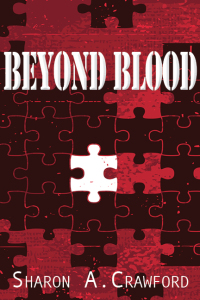
And as usual, if you click on the Beyond book at the top, it will link to more information. Teaser: there may be some news of another Beyond book soon.

Cheers.

Sharon


Tags: , , , , , , , , ,

Same old same old to twisted plots

beyond-the-tripping-point-cover Amazon link-72dpi4If I saw one more TV mystery where the cops found the dead body in the trunk, I was going to do more than scream. And I did. I wrote “The Body in the Trunk” (from my short story collection Beyond the Tripping Point, Blue Denim Press, 2012). Instead of a body being found in the trunk the story deals with getting a body into a trunk and the why behind it. I also, as I often do with these stories, wrote it as a satire, in the noir black vein.

At one point I was also getting bored with reading mystery novels where the main character, a private investigator seemed to be continually broke. So, in “The Couch” I created a young (mid-20s)  private investigator who has too many clients. The story, also a satire noir black, deals with how the PI tries to downsize the clients – first using standard legit means, and when that doesn’t work, turning to crime. The payback is unexpected. “The Couch” was first published in an anthology, before being published in Beyond the Tripping Point.

So if you hit writer’s block on creating a new plot – take a twist on an old one, but one that is overused to the point of boredom.

And let your creativity loose.

You never know what will surface. It is just criminal. (Sorry, couldn’t resist that).

Cheers.

Sharon

And as usual, click on the book icon at the top to find out more about my Beyond books.


Tags: , , , , , , , ,

Snafus getting in the way of your writing?

The latest Beyond book in the series

The latest Beyond book in the series

The actual “final” rewrite of my latest Beyond mystery is coming along and I am enjoying doing it because I get more creative insights, can fix inconsistencies, check the research and am really tightening up the wordage.

However, I’ve hit a few outside snags that are interfering with my writing time. And they make me angry. So, I’m doing something about them.

One biggie comes under the heading “My health ate my life.” So far since 2017 arrived I’ve been and am faced with two separate unexpected molar extractions. The dental surgery for the second is the day before my publisher’s deadline. As he has given me two extensions already and for health reasons, I do not want to push my luck – it would also not be fair to the publisher.

To get the manuscript and its synopsis (the latter rewritten this week with the word count part left open so far) done in time, I’ve arbitrarily given me an earlier deadline before the publisher’s and before the dental surgery.

It has also forced me to do something I had started to do this  year. Get rid of a lot of the stuff I do that isn’t really important and put some of the others in “pending”.

So far I’ve cancelled me going to a meeting tonight, limited what I get involved in within my community. Important are my East End Writers’ Group and keeping track of a nearby Light Rail Transit line being built as that will affect me in many ways. I am also a member of a local garden club and go to some of their meetings but no volunteering there this year. A couple of other community things I’m interested in I signed petitions and will let the persons organizing them do all the work – just keep me informed. At this point I am also careful of how many social and pseud-social events I go to.

And I finally found someone to shovel my snow when we get bigger snowfalls.

The big take-away point here for writers – whatever you are writing or rewriting – is you can’t do everything, especially what others think you should be doing. Figure out what is important and don’t be afraid to say “no” and/or put some of that on hold. Prioritize. Make the word “no” a big word in your vocabulary even if you have to post it all around your house and on your devices – maybe create an electronic file with a big “NO” and click on it sporadically. You can figure something out.

What I have kept in is family. Last Saturday I was to take out my son and his girlfriend for his birthday dinner (which is actually tomorrow but he will be out of town in the US for a tour with his band – Beams). Martin was sick last weekend. I wanted to see him and at least get his birthday present to him before tomorrow – the present, although not connected to music, is something useful for travelling. So, we arranged for me to make a “flying visit” to his and his girlfriend’s place in another part of Toronto last evening – if you can call buses and subway “flying.” He was feeling better. Dinner will be rescheduled when he returns home.

I know this isn’t exactly about writing, but perhaps if those getting distracted from their writing from whatever, can see one person’s way to deal with the problem, maybe it will help.

How do you deal with writing distractions?

Comments please in the comment section.

Cheers.

Sharon

And as usual, click on the book icon at the top to find out more about my Beyond books.


Tags: , , , , , , , , ,

Creating suspense in fiction

The latest Beyond book in the series

The latest Beyond book in the series

How many books have you read where the plot seems to flatline? Maybe the characters get too chatty. Maybe the description of characters or setting reads more like an expository. Maybe the scenes themselves are mundane. Do you then yawn?

Those spell boredom for the readers. And I see it happening in novels that are supposed to be mysteries. A village scene, instead of creating some touch of menace or at least some suspense, reads more like a slice of village life. Not all authors can do the village scene as well as the late Agatha Christie did.

There are ways your novel can get a life readers will want to read about. And just to clarify. Suspense doesn’t only equal mysteries and thrillers. All fiction needs some suspense – and that includes romance novels with their relationships. In fact, the twists and turns of relationships in any novel are fodder for creating suspense. Characters are at the core.

Here a few tips to create suspense in fiction:

  1. Start your story with something to draw in your reader. If you must have your village scene, get inside your main character’s head and show her take on the scene. Perhaps she dreads the town council meeting, the gardening club meeting, the tea, etc. Why? Or something terrible happens at the beginning at that meeting. Here’s a quick example. Marion would never call Fairfax council meetings boring again.
  2. Dialogue is good – reveals and develops characters and their interactions, as well as moves the plot forward. Unless your characters get overly chatty and go on and on for pages about religion, politics and more mundane things. All three might be relevant to your story, but add some spice, some suspense. Maybe one of the characters chatting is not making sense, seems to be high on something. More to the point, have a character reveal something startling to move the plot forward. Or have the dialogue interrupted by something happening. Depending on your story’s genre, could be somebody unexpected bursting into the room and creating chaos.
  3. Character descriptions. Forget the long expository but blend it in with the storyline and reveal something or several somethings about the POV character and other characters in this scene. In Beyond Blood, PI Dana Bowman meets Det. Sgt. Donald Fielding for the first time when her house is broken into. I show it from Dana seeing Fielding from the feet up as he comes down the basement stairs. The two clash. Dialogue and action show this and builds suspense about what could happen later on with two strong personalities trying to solve crimes when they can’t even agree on what crime happened in Dana’s basement. You can also have characters make snide remarks about another character’s hair or clothes. That would tell you something about both characters. Some narrative is necessary, but don’t drone on.
  4. Same can be said for settings. Nothing is more boring than reading paragraph after paragraph describing the main street of a town or the town itself. You aren’t writing a travel piece: you’re writing a novel or short story. In my Beyond mystery novels, I don’t just describe the town of Thurston, Ontario (fictional town), but have Dana  or her twin PI Bast  actually drive down a street, Suspense could be someone following Dana or better still she thinks someone is following her and dodges all over town to ditch the person. Or there is a collision – accident or intentional? Or if one of the twins goes into a shop or restaurant, I work in the location and relevant characters inside. “Relevant” is the key word. .

Visualize what you want and then write it for the reader to get the picture Remember: show, not tell the reader.

These are just a few suggestion. I also suggest you read published books by authors in the genre you are writing – authors who know what they are doing to create suspense within the mundane. Sometimes the latter is the most frightening.

If you click on the Beyond Blood novel above it will take you to more information about my Beyond books.

Cheers.

Sharon


Tags: , , , , , , , , ,

Writing stories from extreme weather

The latest Beyond book in the series

The latest Beyond book in the series

Can you take an extreme weather situation you lived through and write a story about it?

Often living through these types of events can cause a lot of trauma, even post traumatic stress disorder (PTSD). And one way to get on the road to healing is to write about it. If it is too painful to write your story, then why not use it as a basis for fiction. Getting your imagination to work with what is now a reality can often produce a powerful short story or novel.

Examples are floods, tornadoes, volcanoes, and ice storms, The one in the news lately is the severe prolonged ice storm in the province of New Brunswick in Canada’s Maritimes. That one caused widespread prolonged power damages.

I wasn’t there for that one, but did go through the one in southern Ontario, particularly Toronto, in December 2013.

So, give your imagination free reign for story ideas. If you’ve lived through an experience, your experience will factor in for what it feels like, what can happen, what it looks like. But you want a different story, different characters – could be mystery, science fiction, fantasy, young adult, romance.

Or you might want to take one or two events that happened during the storm – to you or friends and go from there. For example, in the December 2013 ice storm in Toronto, I had a belligerent boarder and her cat living with me when the power went off. Fortunately the phone (a land line) still worked so my son (who still had power – it wasn’t everywhere in Toronto – in fact there were blocks with no power right beside blocks with power) could phone me. My son arranged and paid for a hotel room for the boarder, her cat and me for two days and took us out to dinner the first evening there.

Outside it was icy – sidewalks, roads, trees and power lines, some still down. Until downtown where the hotel was – the scene was more normal, dry sidewalks, lights and heat.

Oh yeah, the boarder’s cat was black.

So, what can you come up with in a story with just that much information?

If you click on the Beyond Blood novel above it will take you to more information about my Beyond books. No floods or tornadoes, but there is a scary scene in a lake, both above and under water in Beyond Blood, and a hair-raising car drive up a highway in the short story “No Breaks” from Beyond the Tripping Point. The idea for the short story came from something that happened to a friend and me, but the short story is not our story. The scary lake scene in Beyond Blood comes from a few pieces in my life – I can’t swim, being on a sailboat with a friend, her boyfriend and my son, and the swimmer (my friend), not me, falling into the lake. This latter wasn’t a traumatic scene (it was actually funny and yes my friend did get herself safely back onto her sailboat – and she was laughing all the way about it), but it does give you the idea of taking something you lived through and “spinning a yarn” from it.

Creative writing to all.

Cheers.

Sharon


Tags: , , , , , , , ,

Writing critique group comes through

Beyond the Tripping Point Cover 72dpiI have posted before about writing critique groups and how they can help us writers. But it never hurts to add more on the subject because we writers write in a vacuum of me, myself and I. So we often think in opposites – our short story, or essay, or novel is brilliant or our writing piece is awful. Sometimes we think with wisdom – we know something is just not working but we don’t know exactly what or if we do, we don’t know how to fix it. Enter a writing critique group.

As the organizer and facilitator of the East End Writers’ Group in Toronto, I don’t always bring a piece for critique to our almost monthly meetings There is only so much time for a limited number of authors to read and get their work critiqued, so  If I did bring something to each gathering, other members might think “oh, she runs the group, so she can do this.”  This isn’t true as I find we are all helping each other whether we bring in something or not. And we are polite as well as giving constructive criticism. Nobody should feel their work is really bad.Each of us has our own individual writing experience and knowledge which we can put into the critique – even if we don’t write in the genre of the writing work being critiqued.

So, last evening I brought in the first five pages of a humorous mystery short story for critique. And I learned a few things. One author who also writes short stories wanted to know the age of the two main characters. The ironic thing here (and I got it and mentioned it) is I am always suggesting he do the same in his stories. Somebody else misread the ages of these two characters and it was from what she read and also what wasn’t there for her to read. She asked me how old the two characters were and when I told her, she said they were much too young as women at that age nowadays would be more technical savvy. She said that one sounded like she was retired. After I explained that the “retired” one was currently unemployed and she was the one not technically smart, but the other one  was and that the latter was in the story, I realized that I needed to include some ages, fix the bugaboo I had in with the technological luddite, and mention she is currently unemployed. She should be early 50s and her friend 15 years younger. The latter would work, not only because she has an elderly mother who figures in the story, but my son is late 30s and is very tech savvy – in fact his work is with computers, software and architecture and the like. And he is my computer expert who helps me with my computers.

So you can see how a writer’s tunnel vision can work, or not work. I didn’t even consider including the characters’ ages. As one of the others said, and I paraphrase. You see in your mind how your story is going and presume everyone else knows as much as you do.

Wise words, and something for us writers to consider.

Do you belong to a writers’ critique group – in person or online? If so, how has the group helped you?

Cheers.

Sharon

And if you want a looksee at my collection of published short stories in Beyond the Tripping Point, just click on its icon at the top.


Tags: , , , , , , , , , ,

Don’t Write the Same Old Same Old

The latest Beyond book in the series

The latest Beyond book in the series

When writing fiction, particularly mystery, thriller and suspense, don’t develop plots and characters that have been used before. Do readers really want another jaded police detective who is an alcoholic? How about yet another body found in a trunk?

Readers want to be surprised, entertained, and have something different. Those who like to try to figure out who done it and why like a challenge. If it is too easy, that won’t work.

Twists and turns in suspense, mystery and thriller novels work very well – provided they are different. And if you are writing a series, you need to write the unexpected even more so your readers don’t get too comfortable with your series characters. You want them to relate to the characters and develop a bond, but you have to shake them up with each book’s plot and characters.

Remember your characters need to be like real people – they can’t be stagnate. Throw them lots of curve balls and see how they act and react.

Some authors that are masters at this are Julia Spencer Fleming, Peter Robinson and Harlan Coben. The latter writes standalone mystery-suspense, while the former two write series mysteries. Spencer Fleming, for example throws a big curve with each book. Just as something seems to be sorted out between her two main characters – Rev. Clare Fergusson and Russ Van Alstyne –  right at the end of the novel, something happens that seems to come out of the blue.

But it is not really out of the blue – if you go back throughout the novel you will see events and what the characters are doing that make the unexpected logical. Some examples (without stating which novel) are when the priest and the cop finally get their relationship solidified, the priest who was previously in the armed forces and is now on reserve, is put on active duty outside the US. Right at the end of the book. Great hook to get the reader to read the next one in the series.

The reader knew Clare’s background here,so that wasn’t grabbed from the air. It was the timing.

And that’s what is important. Timing. In my Beyond novels, I build up the suspense with (among other things) a growing relationship between the main character PI Dana Bowman and Detective Sergeant Donald Fielding. Both are relationship shy – that isn’t too different. But how it evolves (or does it?) is different because of other things going on in the novel. The ending has a big twist.

This is the novel I’m still putting the finishing touches on for the publisher. So, I’m not going into more details. The previous and most recent one, Beyond Blood has a bit of a cliff hanger at the end – the premise here being, when a crime victim has been rescued, it may not all be rosy and comforting for them. In fact, it isn’t in real life.  I took that idea and left the reader wondering about a character’s dealing with after effects. The short story collection Beyond the Tripping Point has four stories featuring Dana Bowman and most of the rest of the Beyond gang. These stories take place the year after. And the current Beyond book is later that same year and the character is still suffering some after effects.

Unexpected events change people – how they live their lives afterwards.And that varies with each person. So, too, should your fiction.

Don’t be lazy and write the same old same old. Surprise your readers – but make it logical. That may sound like an oxymoron, but be creative.

And read what is already written to see what works, what surprises and what doesn’t. Read books by Julia Spencer Fleming, Peter Robinson and Harlan Coban, and yes my Beyond books too.

You can get more information about the Beyond books by clicking on the Beyond Blood icon at the top.

Cheers.

Sharon


Tags: , , , , , , , , , , , , , , ,

Make Writing regularly a 2017 goal

The latest Beyond book in the series

The latest Beyond book in the series

If you’ve been struggling to write that novel, short story, novella, etc. because you don’t seem to have time because other stuff to do is taking over your, life, whatever the reason, 2017 is coming in. Time for a fresh start.

Forget about “New Year’s Resolutions” which go down the drain after the first few weeks. Instead think goal, yes that’s singular. And make that goal to write on a regular basis in 2017.

For parts of 2016 I have struggled to find time to get at rewriting my third Beyond novel. The editor at my publisher’s (bless his soul) has given me a couple of extensions. But he is not the problem and I have to find a solution – make that several solutions to deal with the multitude of impediments that come at me “from outside.”

Just to clarify, “from outside” doesn’t mean things like sleeping in, too much socializing to name a few. Mine also include: gardening (in spring to fall, not now in horrible winter), doing client work (editing and teaching writing workshops and courses), and promoting my first two Beyond mystery books.Those things in the previous sentence I don’t begrudge doing and they are under my control and it is my business to get them in order so I do have time to write.

I’m talking about what just seems to come out of the blue at you. Some of mine are unforeseen health issues, house and property issues and weather (which often affects the house and property). It is true we just had Christmas and Boxing Day and I spent Christmas with my son and his girlfriend and Boxing Day just relaxing reading and phoning friends. What I did on those two days was my choice.

Most of the first half of my day today was not. I do a daily “to-do” list for what I call “Biz” and another for what I call “Other.” Unfortunately, like this morning, the “other” took over.

First there was the snow that came overnight. I had watched the Weather Network last evening and my “Other” schedule had up to one hour for shovelling the white shit that fell down. And I did it in that time.

Then things went wrong. The main time-stealer was the heating cable. I went to plug it in to melt the snow off the roof and discovered the cord just before going into the plug was suddenly frayed.And it got that way because it is a tight squeeze and turn to get it into the outside electric outlet. I taped it with electrical tape, then called my neighbour, a retired electrician, over to check to see I had done it right. He wouldn’t touch it, and instead gave me a long rant about he wouldn’t even check it because of liability, etc. The cord got frayed in the first place because my regular handyman (electrical stuff is one of his specialties) didn’t do anything about the short cord – didn’t even put it on a heavy-duty extension cord which my neighbour at least suggested. To make a long story short, I took my shortest heavy duty outdoor extension cord and found the plug from the heating cable wouldn’t go all the way in. I called the handyman and blasted him – he should have done it right first and I’ll pay for any new parts, but not labour. He is coming by later today or tomorrow morning to check it out.I made sure he knew I had expensive dental surgery coming up in January.

So, the bottom line is I have to come up with some way of dealing with all these outside problems that come at me unexpectedly. A year ago, I started dealing with all the health issues, one month at a time for each – even if I had to repeat this a few months down the road. I’m not sure about house and property things – certainly if not emergency issues they can be paced out per month based on time and money available (double hah-hah here).

Because I am fed-up with all this stuff getting in the way of my writing. (There’s a story there). I think the important thing is to figure out what is important. Staying healthy, of course, but when it gets beyond eating healthy, taking supplements, regular exercise (walking and gardening for me), getting enough sleep, and relaxing, then it is too much.

I may have found a way beyond the one medical issue per month – my writing is important for me to stay healthy. It is creative; it makes me feel good and relaxed. And it gets me out of the crap taking over my life. So it needs my time.

Perhaps, putting writing in one of your daily living categories, will get you writing regularly. Remember “regularly” will differ with each of us. If you have a full time job and/or raising a family/looking after an elderly parent, you will have a different regular schedule than I do. The trick is to look at what is taking over too much of your time, see where you can cut back and/or get help, and work in some time – whether it is two hours in the evening and/or Saturday and Sunday mornings – that is up to you. You also need to consider if some of the things you do are really necessary. For example, do you have to spend so many hours tweeting? Or even doing email. Shopping online or in bricks and mortars? If something is taking a lot of your time, that’s a clue to look at it closely.

And  tell family members and friends (remember, socializing takes up time, too) what you are doing and why – nicely. You have the best reason to do so now – a new year and a new goal. And think of the result – that novel finally underway, those short stories written, etc.

Good luck and may you write, write, write in 2017.

Cheers.

Sharon A. Crawford

Click on either Beyond Blood at the top or Beyond the Tripping Point below to link to more information about the books. Hopefully later next year the third Beyond book will join them.


Cover of Sharon A. Crawford's mystery short story collection. Click on it for publisher's website


Tags: , , , , , ,

Writing the right story beginning

Amazon.com link to Sharon A.'s short story collection

Amazon.com link to Sharon A.’s short story collection

If you have ever started to read a novel and became bored by the end of paragraph one, it might not be that the story is dull. There is a good chance that what you are reading isn’t really the story’s beginning.

One story beginning, particularly with novels, that has me yawning is the big character background story. Or the big travelogue of a city or a town. As my old journalist and creative writing instructor would say, “So what?”

You can start with character or setting or both together. The trick is to bring in something about your story. Something that will grab your reader. You need a good lead (or “lede” as it is sometimes spelled), as we old journalists call it.

I was a freelance journalist for 35 years and writing a good lead for my articles was very important. Otherwise it was impossible to write the rest of the story. The lead lets the reader know something about what the story is going to cover and teases them in to read all the details.

So when I write fiction or edit other authors’ fiction, I always pay attention to the lead. Sometimes the lead is hidden a few pages later or even a few chapters later. One author’s novel’s actual lead was a chapter near the middle. She needed to pull out that chapter and a few after it and bring them to the front. And then do some rewriting.

Rewriting, of course, is always necessary when writing fiction and ho-hum leads can be fixed then.

Off the top of my head here is an example of a bad story beginning.It is made up and not from any client’s fiction or any of mine.

Ellen was born in 1960 in the town of Crystal, the third in a family of four siblings. Her mother was an Osborne before her marriage to James Clark. She was a shy child who didn’t say much in school but she always got good grades. Her mother was also quiet and her father spoke in a loud boisterous voice. Ellen’s two older siblings, Daniel and Robert, teased her. Her younger sibling, Gail got on better with her brothers.

And on and on ad nauseum.

Do we really care about Ellen and her family?

Let’s see what we can do with that beginning – if we want to get some family background in and make it relevant to the story. If we want to make the reader care about Ellen and her family and read on. Something like this:.

Ellen Clark had always been shy and withdrawn. Until now. If her older brothers, Danny and Robbie, could see her now, they would be sorry they spent her childhood teasing her. They would be proud of her for what she just did for them, for her, and for the rest of the family. Especially Gail. Poor Gail. Best friends with Danny and Robbie had not helped Gail.

Ellen smiled as she looked down at her feet and what lay there.

Or something like that. Hey, I write mystery fiction. Anyway, let’s compare the two story beginnings. We still have Ellen, her shyness, her two brothers and the fact that they teased her and her sister Gail hanging out with the two brothers. We don’t mention Ellen’s birthday year or the town,  or her parents names or their main traits. That can come later. We have woven in a few things to tease the reader in. What did Ellen do just now? How did she go from being shy and withdraw to taking some kind of action. And what about Gail or the parents? What is lying at Ellen’s feet? Or should that be “who”?

This is the type of lead to draw in the reader. Even if you are not writing a mystery, a story needs some suspense, which could  very well be about the relationships in that Clark family. Or it could be something else – whatever your imagination conjures up.

I’ll end with the beginning of one of the short stories in my mystery collection Beyond the Tripping Point as it does have some family background woven into it. And I’ve used another technique to start the story and then pushed into the family background.

“The police can’t find her, Ms. Bowman,” Robin Morgrave says.

Rosemary Morgrave has gone missing and I’m putting on a brave smile for her twin brother. Robin sat on the other side of the desk in The Attic Agency’s third floor office. Only my twin brother, Bast, nodding, stops me from losing it. Ever since David, my seven-year-old son, was abducted last August, I’ve been living in Panicville.Sure, we got him back, but how much of him returned? He follows  Bast around like an investigator-in-training. His brown eyes stare right through my soul.I wish he’d just say how he feels. But since his return, David hasn’t opened his mouth except ti swallow liquids and food. He doesn’t even cry. (Excerpted from Beyond the Tripping Point, copyright Sharon A. Crawford, published  by Blue Denim Press, 2012).

You can pick it apart and try to guess what will happen in the story. Or you can read it. If you click on the BTTP icon at the top of this post, it takes you to my Amazon profile as well as to information about Beyond the Tripping Point and the novel (with the same three characters) Beyond Blood.

Cheers.

Sharon A. Crawford


Tags: , , , , , , , , , , ,

Writers in Residence can help authors

The latest Beyond book in the series

The latest Beyond book in the series

If you are writing a novel, a short story or anything else and you want some outside feedback, consider consulting a Writer in Residence. Writers in Residence are all over – with writing groups, libraries and art clubs to name a few. Sometimes you have to be a club or organization member to talk to a writer in residence. However, usually with a library-based Writer in Residence you don’t.

I have been a writer in residence – not for a library (not yet anyway) but for the Canadian Authors Association, Toronto branch – twice – 2001 to 2003 and 2009 to 2014. So I can see this from both sides of the writing fence.

From the WiR side of the fence I have done one-on-one consultations with writers – in person, by email and on the phone. I have edited and/or evaluated a few pages of their manuscripts and had lively conversations about their marketing their stories or novel, for example. For the in-person consultations, we have met in my home office and in libraries. Yes, libraries, but not connected to library WiR. This was the CAA Toronto chapter appointment  – the earlier one.Before the regular meeting in the library auditorium, I would be available for half an hour or so for anyone who wanted to talk to me about their writing or have me take a look at something they had written. If it was a per-arranged appointment, often we met in the Food Court as this library is in a mall. And at the beginning of the CAA branch meeting, I would say a few words (up to five minutes) on some aspects of writing – writing tips. I found the whole experience very satisfying as I could help other writers and I also learned a lot from them. It’s a two-way street..

Writers-in-Residence sometimes are paid – it depends on the organization. CAA Toronto paid me, although each residency had a different payment setup.

Toronto Public Library writers in residence are paid quite well and so they should be with all they have to do. This includes spending some time in a room set aside for them a the library branch – usually one of the largest branches. They can do some of their own work, but they also use the room to consult with writers – usually for half an hour. Writers can get in to see the WiR by submitting a 20-page manuscript to the library branch at the beginning of the residency and then the library gives them an appointment time and day. This does not cost the writer anything.

Currently the Toronto Reference Library is looking for a Writer in Residence for spring 2018. This means that the twice yearly (spring and fall) WiR sessions are full for 2017. Obviously with it being December and the Christmas season, the fall 2016 WiR session is over. But here is a list of criteria for the library’s WiR

Eligibility Criteria

:

Canadian citizen, permanent resident of Canada


Minimum of two books in print, published by a professional publishing house, at least one of which is a memoir


Active in the writing profession; active online presence


Experience in teaching creative writing


Understanding of the needs of aspiring writers


Experience developing and delivering programs, workshops, readings


Working on or planning to work on a new project intended for

book-length publication.


That’s just it in a nutshell. And yes, I have consulted with Writers in Residence before – both with the Toronto Library and with the Toronto Heliconian Club Literature Section – of which I am a member. I have had line by line edits and comments in person, the writer pre-reading the manuscript pages and commenting on it when we met. These occasions turned into lively discussions and I learned a lot. Not only  possible changes in my manuscript but encouragement to continue writing for publication. Only once did I consult with a library WiR who didn’t resonate with my manuscript. Despite the criteria for WiR listed above, this author did not have memoir-writing experience and I had submitted 20 pages from my memoir-in-the works. So, he just didn’t get it. However, he is an accomplished and published literary fiction author so I am sure he helped many writers writing in that genre. That was a few years ago anyway.


So, wherever you live I urge you to find a writer in residence and make an appointment with them for whatever your writing concerns are – writing or marketing.


And the usual, click on the Beyond Blood graphic at the top to go to my author profile and books and where to purchase. Christmas is only 17 days away. Gulp! I have my Christmas decorations up (finally) but still have a bit more Christmas presents to buy. And for a huge lot of one of them (fudge) online shopping just won’t do. The best fudge in town is homemade fudge with no additives or preservatives which to buy I have to go to the Christmas Market at the Distillery in Toronto. Maple Fudge is the name of the company with the fudge booth there. They have a store in Niagara on the Lake and I have been there when out that way visiting cousins during the summer. But now it’s the Distillery Christmas markets where I have to also deal with the crowds. And go on weekdays or pay the $6. entrance fee on weekends from 5  p.m. Friday. Something about paying to get in to do Christmas shopping is just not right. But they do it because the weekends were getting overcrowded.


But I must have my fudge and it isn’t ALL for me. Some is, though. Fudge is fuel for writing energy. Or that’s my excuse anyway.


Happy writing.


Cheers.


Sharon A. Crawford


Tags: , , , , , , , , ,