RSS

Tag Archives: Novel writing

Sharon A. Crawford presents Rene Natan and The Woman in Black

Romance/suspense author Rene Natan

Romance/suspense author Rene Natan

As promised, here is a look at suspense/romance novelist Rene Natan and her writing, including my review of The Woman in Black


How do you come up with your novel ideas, particularly with The Woman in Black?


From events in my life, the life of a person close to me or from the news. When my house got destroyed, I felt a deep sense of disruption, almost of abandon. I tried to portray this feeling in my first novel, Mountains of Dawn. What triggered me to write The Woman in Black was the difficulty a police officer encounters when she had to impersonate a call girl


What is your process for writing a novel? Do you do an outline first? Rewriting and editing as well?


Normally I write an outline to start with. However this first outline changes as I go along, mostly around the first half of the novel. After that, the personas almost write their own story.


Why do you write suspense romance novels?


Love is the main force in life, being parental love, conjugal love, or forbidden love. I wouldn’t dare to write anything without SOME kind of love. Suspense is needed to keep the reader turning one page after the other. Will the two lovers get together? Would the abducted child be rescued? Would the police capture the sadistic killer? The writer is the deus ex machina; he can forge the characters to his liking and take the reader along, in a journey of emotional “high,” fun and anticipation.


Rene Natan Bio:


Rene Natan was first attracted by the myriad possibilities offered by computers and pursued a career in information technology. The desire of being a storyteller, however, never left her since plots kept taking shape in her mind. After following a number of online courses on fiction writing, she started to jot down her stories. The Blackpox Threat won the first prize in the 2012 Five Star Dragonfly Award and was one on the four finalists in the 2011 Indie Excellence Award competition.


Book Review:

Cover of The Woman in Black by Rene Natan

Cover of The Woman in Black by Rene Natan

The Woman in Black by Rene Nathan is a romantic suspense novel set in the fictitious town of Varlee, Ontario the end of 2000 and beginning of 2001.

Chief Detective Conrad Tormez has a lot on his mind. His mentally challenged teenage daughter has been missing for two years and he needs to nail the criminal gang causing havoc in Varlee. The latter requires going to the head of the gang. To find the gang’s leader, he takes advantage of something this criminal doesn’t know – his girlfriend Clara Moffat has just died in a vehicle accident. So he hires a former police officer and friend, Savina Thompson, to impersonate Clara and set up the next wealthy victim. Using a newly-designed voice emulation system and another friend, wealthy businessman Denis Tailllard, to play this victim, Tormez hopes to rid Varlee of the thieving gang. Despite Tormez’s various plans for possible scenarios, he cannot foresee everything.

For nothing is simple and anything that can go haywire does.

As the story unfolds, the characters, plot and subplot become connected. Natan uses a multi-layered approach that peels like the proverbial onion to constantly reveal something else unexpected. Just when you wonder why a piece of plot or another character appears, it soon becomes relevant and adds to the suspense. The events leading up to and including the climax will keep the reader on the edge. Warning: be careful if reading The Woman in Black on public transit or while walking down the street – you might miss your stop or bump into someone or something.

The complicated plot and many characters, at times can get a little overwhelming. But Natan‘s listing of characters and short chapters help keep the reader oriented.

If you like intrigue, The Woman in Black is for you. However, it might be wise to block some time to read it. As this reviewer discovered, reading it in chunks may not work as you will want to continue reading to see what happens next.

Reviewed by Sharon A. Crawford author of the Beyond mystery books – Beyond the Tripping Point (Blue Denim Press, 2012) and Beyond Blood (Blue Denim Press, 2014). See www.samcraw.com for info about Sharon’s books and social media links.


Partial list of Rene Natan’s published novels:


The Woman in Black, ebook, 2014, $2.95 US, http://www.amazon.com/dp/B00QQZ08QE

The Loves and Tribulations of Detective Stephen Carlton, ebook, 2014, $2.99 US, https://smashwords.com/books/view/471255

Fleeting Visions, ebook, 2013, $3.75 US, http://www.amazon.com/Fleeting-Visions-Rene-Natan-ebook/dp/B00HNG53LU

The Bricklayer, ebook, 2012, $2.64 US, www.amazon.com/dp/B007PKCHBI

The Blackpox Threat, 2010, $4.27US, www.Oldlinepublishing.com, http://www.amazon.com


http://www.vermeil.biz

http://www.facebook.com/rene.natan.7

https://mobile.twitter.com/redmanor

http://www.goodreads.com/user/show/4891285-rene-natan

E-books can be purchased on Amazon.com (Kindle). The Bricklayer and The Blackpox Threat are also available as print on Amazon.com

Cheers and Happy New Year

Sharon A. Crawford

P.S. Rene Natan turns the tables on me when she interviews me at http://www.scribd.com/doc/251460632/Interview-with-Sharon-Crawford
 

Tags: , , , , , , , , , , ,

Why do writers write?

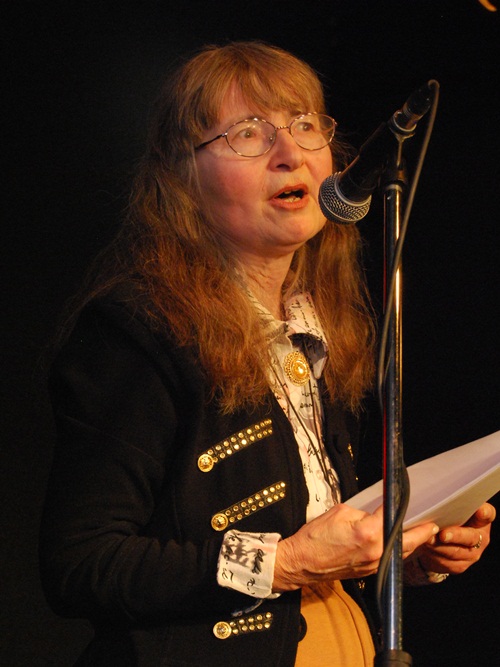
Sharon reads from her Beyond book series

Sharon reads from her Beyond book series

If the writing is honest it cannot be separated from the man who wrote it.


  • Tennessee Williams


I was hit with this question and connected it to my crime fiction Beyond Blood and Beyond the Tripping Point.

The trigger was listening to best-selling author Linden MacIntyre being interviewed this morning by Mike Duncan on Classic 93.6 FM radio station. MacIntyre was talking about his new novel Punishment and its theme of vengeance versus justice. And he is also a former journalist, albeit a high profile broadcast journalist lately host of CBC’s investigative TV show The Fifth Estate. (More information on MacIntyre in this Toronto Star story http://www.thestar.com/entertainment/books/2014/11/21/linden_macintyre_on_community_vengeance_and_punishment.html


What is it about journalists turning to writing fiction, often crime fiction?

I’m beginning to think it is our sense of justice, justice not really being meted out today to those who commit crimes, especially heinous crimes. And as journalists we certainly see our share of that in the true stories we write, as well as in what we read in the newspapers and magazines, whether in print or online. (For the record – now that is a journalistic phrase – I read both print and online.)

With me, this sense of justice is something I have carried from my childhood. Blame it on my Catholic background. As an ex-Catholic I can no longer stand by some of those beliefs. Although I have to admit that my sense of justice comes more from the “eye for an eye” of the Old Testament.

That may be where the vengeance factor fits in.

In all my short stories in Beyond the Tripping Point, no one who commits a crime gets away with it. Not all the baddies get arrested but they get their just desserts. For example, in “Unfinished Business” a woman who was sexually assaulted as a child gets her chance to get back at the guilty party when he becomes a threat to her 12-year-old daughter.

Then there are the four-linked stories featuring the fraternal twin PIs Dana Bowman and Bast Overture. Here all the baddies do get arrested. Dana and Bast both have a great sense of justice. Bast was a former crime reporter so he’s seen a lot of bad things and talked to a lot of bad people. As a journalist he had to try to sit on the observation side. As a PI, especially in my new novel Beyond Blood, he can do more.

But it is Dana who drives this search for justice. Especially after her son David is kidnapped. Then it becomes more personal. Nothing like motherly love to motivate someone.

Maybe that has something to do with my sense of justice – at least adds fuel to the fire. My son is in his mid-thirties now and was never kidnapped but there have been instances over the years where I went to bat for him, even if just the normal growing-up incidents that happen.

Of course, there are other reasons why I write and why crime fiction. I’ll cover them in future blog posts.

For now, I would like to know

Why do you write?

Please comment.

Cheers.

Sharon A. Crawford

This Saturday, Nov. 29, 11 a.m. to  4 p.m. I will be selling copies of Beyond Blood and Beyond the Tripping Point at the Toronto Heliconian Club Fine Arts and Gift Sale, 35 Hazelton Ave. (Yorkville area), Toronto, Ontario, Canada. For more info about the Toronto Heliconian Club and this sale (open to the public), see http://heliconianclub.org/ Scroll down a bit – it is there.

For those not in the Toronto, Canada area, you can click on my book covers below – they will lead you to my publisher Blue Denim Press’s website. Scroll down and you can see where Beyond Blood is currently available, including at www.bluedenimpress.com.

And check my website www.samcraw.com – click on Beyond Blood. I constantly update my gigs on that site.

Cover of Beyond Blood by Sharon A. Crawford, published by Blue Denim Press. Click for link to purchase e-copies

Cover of Beyond Blood by Sharon A. Crawford, published by Blue Denim Press. Click for link to publisher’s website

Cover of Sharon A. Crawford's mystery short story collection. Click on it for publisher's website

Cover of Sharon A. Crawford’s mystery short story collection. Click on it for link to publisher’s website


Tags: , , , , , , , , , , , , , , , , , , , , , , , ,

Beyond Blood shows up in print


Cover of Beyond Blood by Sharon A. Crawford, published by Blue Denim Press

Cover of Beyond Blood by Sharon A. Crawford, published by Blue Denim Press

To write what is worth publishing, to find honest people to publish it, and get sensible people to read it, are the three great difficulties in being an author.

~ Charles Caleb Colton


My publisher just delivered my print copy of Beyond Blood and it is bloody good – lots of red on the cover, better than the icon here.

Beyond Blood had a long journey from inception to print. The original story was first conceived in the late 1990s. I researched, wrote, rewrote, rewrote (many times),

Think again, Sharon A.

Sure, one publisher asked for the full manuscript and read it – but rejected it. So did several other publishers who looked at only one to three chapters.

Into the drawer. Hide it on my computer.

Until my short story collection Beyond the Tripping Point was published by Blue Denim Press in fall 2012. Just before that the editor at BDP, Shane and I were talking about a series and I mentioned the closet novel. He was interested in looking at it.

So the big rewrite began. I started working from a printed copy because that is easiest for me to grasp the whole story and scribble notes. Not that I looked at them all when doing the rewrites. Something about putting it down on paper ingrained the changes in my mind. And when I rewrote, the ideas expanded.

I thought it was ready for Blue Denim Press. Not quite. But they were willing for me to have another go. So I did with Shane’s suggestions and fine-tuned it some more. Then I sent it back.

Not quite yet – but they were accepting it. I just needed to do some more rewriting. So, with Shane’s suggestions (and some more ideas of my own that they spawned), I got back to work rewriting. Even hired a freelance editor to proofread it and the author who wrote the back page review even took it upon herself to comment in a few places. So more changes were made.

After a bit more to-ing and fro-ing of questions and comments between Shane and I the bloody manuscript was ready. And I’m not swearing – remember, the novel’s title is Beyond Blood. And that was my original title.

It’s taken 17 years, but Beyond Blood has come to fruition.

So all you “closet” novelists, keep writing and rewriting. Keep persisting. Get feedback.

Don’t give up.

For a peak at what Beyond Blood is about – go to www.bluedenimpress.com Check out the flyer for information on the book launch October 19 – and if you are in the southern Ontario Canada area, come to the book launch.

And stay tuned – the fraternal twin PIs from the Beyond books – Dana Bowman and Bast Overture will be back here starting in next week’s post.

The book at the top of this blog post links to Amazon. Click on Sharon A Crawford for my profile.

For those of us with Kobo’s, here is that link for the e-pub version. http://store.kobobooks.com/en-CA/ebook/beyond-blood-1 And check out my updated web page at www.samcraw.com and click on Beyond Blood. Still more updates on my reading gigs to be added as I get them.

Cheers.


Sharon A. Crawford


Tags: , , , , , , , , , , , ,

Your life in fiction?

amazon.comlink to Sharon A. Crawford's mystery short story collection

amazon.comlink to Sharon A. Crawford’s mystery short story collection

If you have other things in your life—family, friends, good productive day work—these can interact with your writing and the sum will be all the richer.

  • David Brin


How much of your life do you put into your fiction? What do your favourite fiction authors do? It is supposed to be fiction after all.

But life creeps in – sometimes a barely-concealed fact turned into fiction – usually because the story is too painful to the author or she is afraid to put herself into a real-life story with all the people who did her wrong or are, well, scoundrels. Then there is the fear of retribution or the desire to tell her story but keep herself out of it. My personal opinion here is to write it as a memoir and use pseudonyms (and state you are doing so). That’s what I’m doing – but that’s another story.

So that leaves us with what can you put from your life into fiction and how can you do it?

Disclaimer here: this is my opinion from my experience. It is not the only way to go about it and some of you may think I cross some lines between fact and fiction.

Here are a few instances from my short story collection Beyond the Tripping Point and my soon-to-be-published first mystery novel Beyond Blood.

In “No Breaks” (BTTP) two female friends are driving to one woman’s family cottage and on the way the car’s main brakes fail. In my life I once did ride with a friend up to her mother’s cottage and on the way her brakes failed. Except for the way my friend managed to get us up to the cottage (she had a few driving tricks up her sleeve), the two friends, Millie and Jessie, in “No Breaks” are completely different from my friend and me. The storyline in “No Breaks” also gets somewhat sinister and crimes are committed (it is mystery fiction). And the title is not spelled incorrectly as the main character in the story feels life has treated her very badly and so she has had “no breaks” in life – and that includes the trip to the cottage. Even when she tries to give herself some breaks it doesn’t exactly work out as she planned. As many of us do, sometimes I feel as if I am getting a lot of bad breaks in life – but there are good things happening too. Millie doesn’t feel that way about her life.

So how did I go from some facts to fiction? I took this scenario in my life and pulled out relevant parts that I thought could be the root for a story. Then I used my imagination to develop my plot and characters.

In Beyond Blood I take so many things from life – not just mine – and fictionalize them into the mystery. One of the threads running through the story is something many mothers can relate to – the working mother and how she balances raising her child(ren) and doing her job. Dana Bowman, one of the fraternal twins is a private investigator and she is always concerned that she doesn’t give enough of her time to her son, David, yet she has to work and she chooses to work with her twin brother in something she is interested in. It doesn’t help that Great Aunt Doris disapproves of Dana working and chastises her constantly for it – another thing working mom’s have to deal with, although it might be a mother-in-law. So when something happens to David, Dana is really in conflict – should she be “working on the case” (Note: I don’t want to give away some of the plot) or just spend her time being mom. Also the twins are in their late 30’s, David is six years old, and Dana is divorced – more fodder to connect to today’s working moms who are having children into their 30s and even 40s. I don’t think Dana would resonate with readers as much if she was in her 20s. (And I have been told by several readers that they like Dana and Bast, too)

So how did I get from fact to fiction here? David did come from the fact that I have a son and am divorced (although he was much younger than his 36 years and my ex and I were separated, not divorced, when Beyond Blood was first conceived in my head and I started writing it.) Yes, it has been a long haul of on and off writing because I had to make my living as a single mother of one son. Not as a PI but as a freelance writer, book editor and writing instructor. The direction I take with all of those have changed and I do less editing and more teaching, but it is doing something I enjoy.

Which Dana was doing with her twin Bast when they opened their investigative agency on the attic floor of their house. Then thing started happening and…

But that would be a spoiler. You’ll have to read Beyond Blood when it comes out. Stay tuned here and my other social media – I will be posting as soon as I get more details about the book launch.


Sharon A. Crawford


You can read about my characters and their stories in my short story collection Beyond the Tripping Point (Blue Denim Press, 2012). Click on the book at the top and it takes you to Sharon A. Crawford’s profile – including book reviews – at http://www.amazon.com.
More info on Sharon A.’s upcoming gigs, workshops, guest blog posts, etc. at http://www.samcraw.com/Articles/BeyondtheTrippingPoint.html And keep checking http://samcraw.com/Articles/BeyondBlood.html for the latest news on the release of my first mystery novel Beyond Blood, also published by Blue Denim Press http://www.bluedenimpress.com More info on the Beyond Blood page as we get closer to the date. And remember that clicking on the book icon at the top gets you to my Amazon profile.


Cover of Dead Wrong by Klaus Jakelski, published by Blue Denim Press

Cover of Dead Wrong by Klaus Jakelski, published by Blue Denim Press

Cover of Beyond Blood by Sharon A. Crawford, published by Blue Denim Press

Cover of Beyond Blood by Sharon A. Crawford, published by Blue Denim Press


Tags: , , , , , , , , , , , , , ,

Get motivated to write that novel or short story.

I

Amazon.com link to Sharon A.'s short story collection

Amazon.com link to Sharon A.’s short story collection

It is by sitting down to write every morning that one becomes a writer.
—Gerald Brenan


You want to start writing that novel but can’t seem to find the time. The kids need ferrying to their soccer games; you have to clean out the garage, and hey you are going on holidays in a couple of weeks and need to plan your itinerary. Or you are beyond hooked on social media.

Meantime that novel sits either deadlocked at Chapter 3 or the novel plot and characters are scurrying around you mind faster than mice in your house.

What do you do? Who do you call?

You need someone to help get you motivated to write. You can get another writer friend who can empathize with your predicament, join a writing critique group. Or hire a writing consultant.

I briefly mentioned in last week’s post that I coach clients in writing. But what exactly does that mean? What exactly do I do?

First I talk to the client (either in person or by Skype or regular phone) to see where they are at (or not at) with their novel, short story, or memoir. We talk about their goals and if that is nebulous we try to get the goals more concrete. I present suggestions for working with them – in person or via Skype or a combination of both.

So, what exactly can happen during the consult?

If the author hasn’t actually started writing, we discuss an outline for our time together based on their story outline. I may get them to write a synopsis of their novel just to nail it down. The next step depends on the client. With one client we brainstormed ideas for each chapter and she took notes. Then she went home, wrote the chapter, maybe with a revision, and emailed that chapter to me to look over before our next consult.

At this meeting, we first went through this chapter with me making suggestions, which we discussed and then she made notes to do so (if the client brings his or her laptop or iPad, he or she can make the changes right then). The rest of the session we brainstormed for her next chapter. And then the process was repeated as we did with her previous chapter.

Another client is well into her manuscript and just needs feedback on what she has written. We work either in person or with Skype. She emails me the chapter she is working on (often a few hours before our appointment) and I look it over. When she is “here” she looks at her copy on her laptop and I look at it on my computer. She gives me a brief synopsis of where this chapter will fit in her book (it is non-fiction), what it focuses on and what she hopes to accomplish with this chapter. I make suggestions and ask questions about the content. Often I will suggest moving something up for the beginning, rewording the beginning or the middle, clarifying different things, adding different things, etc. As we talk, she is making the changes or making note of changes to make if it will take some time to do so (for example, if she has to check her research or do more research). Once we are done with the chapter, if there is still time in our hour together, she might go into what she will be working on next in the book.

The fiction-writing client and I met once a week. The non-fiction-writing client and I meet twice a month. Sure, there is a fee, but the feedback I get from my clients is that it is worth it for them to get going at their writing.

These writing sessions establish regularity in writing and because the author also has to write outside the sessions, a few meetings may be all she needs before she embarks on writing that novel, that memoir, that short story collection, without someone on her case. I see where these sessions also help the writer gain some self-confidence that she can actually do this, and actually write something. The latter ties in with the writing critique part.

So, if you don’t want to hire someone to coach you in your writing, join a writing critique group – it will motivate you to write if you have to produce something for critique every couple of weeks.


Sharon A. Crawford


You can read about my characters and their stories in my short story collection Beyond the Tripping Point (Blue Denim Press, 2012). Click on the book at the top and it takes you to Sharon A. Crawford’s profile – including book reviews – at http://www.amazon.com.
More info on Sharon A.’s upcoming gigs, workshops, guest blog posts, etc. at http://www.samcraw.com/Articles/BeyondtheTrippingPoint.html And keep checking http://samcraw.com/Articles/BeyondBlood.html for the latest news on the release of my first mystery novel Beyond Blood, also published by Blue Denim Press http://www.bluedenimpress.com More info on the Beyond Blood page as we get closer to the date. And remember that clicking on the book icon at the top gets you to my Amazon profile.


Tags: , , , , , , , , , , , ,

How and Where to fit Back Story into Your Fiction

Cover of Sharon A. Crawford's mystery short story collection

Cover of Sharon A. Crawford’s mystery short story collection

We care what happens to people only in proportion as we know what people are.

— Henry James

Everyone has a story to tell, including the characters in your novel and short story. Back story is part and parcel of who the characters are. Many authors have trouble fitting the back story into their fiction.

Where should it go? How much? All at once like a bio? Start the story off with the bio? Introduce each new point-of view character with his or her bio? Work in little chunks where appropriate throughout the story? Skip it as back story per se and just filter in references to it as the story unfolds.

Think about what you have read in back story in published novels and short stories. For obvious reasons, short stories will have less, even when appearing in chunks. But in novels, how did you react when the author started the novel with the back story or started each scene featuring a new POV character with a chunk of their past, especially if it went on for pages. As my late creative writing instructor, Paul Nowak would write on my manuscript – “so what?”

Sure we need to know some of the characters’ histories. But it should reflect what is happening in the story and why the characters are doing what they are doing. Going on back story tangents can lose the reader.

However, the other main way (which I use) – working in little chunks where appropriate can also lose the reader, especially if a lot of action is happening. But it can be done. Here’s the beginning excerpt from “For the Love of Wills” where I actually filtered in some background.

“Clara, I’m going to fall.”

“Pipe down, Mother. Do you want them to hear us?”

“I can’t move. I’m stuck. See.” She tried tapping her toes against the stone rock wall, but to no avail.

“Well, whose idea was this anyway?” I whispered.

“Yours.”

“Mine?  Now, listen here….”

“Shush. Do you want Will and that blonde Bimbo to hear us?”

That blonde Bimbo is what got Heidi Anastasia Clarke started. Bad enough that on her 62nd birthday, her husband of 40 years, William Everett Clarke, decided to toss her out of their old-money mansion in Toronto’s Rosedale. All this for a post-mid-life crisis which brought his oh-so-much younger secretary in and sent my mother packing.

“And they’re not even married,” Mother had said.

How could that be? Mother didn’t want a divorce. Although I didn’t condone Dad’s actions, I’m a realist. What happens, happens, and I believe in making the best of it and moving on. Mother, however, has to grab the situation and yank it for all it’s worth. Bleeding her husband half dry in a divorce didn’t appeal.

“You’ll get a lump sum, half his pension and half the house,” I had said.

“I can’t live in half a house with them living in the other. No, Clara I’ve got a better idea. We’ve got to see his will.”

“His will? What the hell for?”

“I need to see that he’s still leaving me everything and hasn’t changed it to the Bimbo.”

“Wouldn’t it be simpler to just ask William, Jr.? He is the family lawyer?”

She’d smirked and muttered something about keeping her ideas close to her mind.

“Fine. How do you propose we see this will? Do you know where or even if Dad keeps it in the house?”

“Of course he does. A copy, at least. Why else do you think he kicked me out and changed the locks?”

I hadn’t reminded her about the secretary moving in but suggested I visit Dad and ask him, which sent her into a hissy-fit.

“And let him know what I’m up to? No. I have a better idea.” She’d brought her tantrum to a full stop and curled her thin lips into a misshapen smile. Oh, oh. She had mixed trouble into her stew.


That was how we arrived here, as dusk turned to dark, scaling up the back wall of the three-storey family mansion, harnessed into a rope, anchored at various protrusions along the way: metal awnings, window ledges, open window shutters, and the irregular jutting stone wall. Now, on our last leg, I managed to throw our anchor up, hooking it to the top balcony railing. Heidi had insisted it was the only way in without being noticed. (Excerpted from Beyond the Tripping Point, Blue Denim Press, 2012, Copyright Sharon A. Crawford 2012)

If you analyze the above excerpt you will see that it covers not only some of the mother’s and Clara’s background, but also some events in the immediate past leading up to now.  The big priority is to begin the story with NOW and work your way back. Only use what is relevant to your story. Here it includes the mother’s age, marriage background (but only what is necessary), the relationship between mother and daughter. Everything is from one person’s – the daughter’s – point of view. Watch that you don’t end up writing the big tell. Show the reader by using dialogue and the character’s reactions to each other’s dialogue and behaviour.

Flashback is another way – if handled well. Next week we’ll go into using flashback techniques to work in your back story.

Meantime, you can hear and see me read an excerpt from another story – “The Body in the Trunk” from Beyond the Tripping Point at https://www.youtube.com/channel/UC505OMPiVNy27zCFfND_8WA  Click on “Sharon A. Crawford Reading”

And check out my website for upcoming Beyond the Tripping Point readings in person at http://www.samcraw.com/Articles/BeyondtheTrippingPoint.html

Cheers.

Sharon A. Crawford


Tags: , , , , , , ,

Story Settings from riding the bus to readings

Cover of Sharon A. Crawford's mystery short story collection

Cover of Sharon A. Crawford’s mystery short story collection

Fiction depends for its life on place. Place is the crossroads of circumstance, the proving ground of, What happened? Who’s here? Who’s coming?

          Eudora Welty

I don’t have a car and don’t drive so I have to take public transit to get to locations for my book readings (unless out of town). Public transit can include subways and streetcars, but mostly it has been on Toronto buses. Besides opening my eyes to new areas of Toronto and getting around in them, what I experience can conjure up story settings, characters and even plots.

For a couple of library readings I had to change buses at the Warden subway station. The bus bays here are open at both ends and could be very windy. Because the bays resemble a somewhat dark tunnel (lights on at night) it conjures up stories of someone or something menacing suddenly appearing at one end of the tunnel. There are nine bus bays so a chase scene between victim and suspect or cop and suspect can be easily imagined. Throw in a bus or two entering or exiting a bus bay and you have a different take on the chase scenes that occur between and against cars on busy streets..

The bus stop at the other end for both library branches wasn’t right by the library. One was at an intersection of three major roads – very busy and on the dark and not stormy night I returned home – cold. I stayed in the bus shelter, hoping I was at the right stop and my bus would arrive soon before any strange person in this unfamiliar area came by. It all worked out okay and I even made an immediate bus transfer at the Warden station. A subsequent trip to this library branch for another reason was in daylight and although the weather wasn’t warmer, the difference in atmosphere was palpable – from blackness to sunny brightness. This contrast could make for a great setting to perhaps show the main character going through a somewhat familiar area in daylight but how menacing it becomes at night, especially if a weird person shows up at the bus stop. Or maybe someone from a car tries to grab her. You can use your imagination.

The other bus ride from this Warden Station was 40 minutes up to the north end of Toronto. I did this run early afternoon. The scenery was a mixture of bungalows, apartment buildings and plazas. Nothing really interesting on the surface. The interest was inside the bus – it was a good representation of all ages and cultures in Toronto. Throw in large baby strollers and bungle buggies (not the wheelies) taking up space on a crowded bus and you could conjure up a story of conflict between some passengers, especially if the protagonist has no other way to get around with her twins and the antagonist hates strollers on buses. (This is an issue in Toronto).

Another bus route took me through the older well-kept homes in the Leaside area of Toronto – some green grass with spring just awakening – all of it filled me with peace. But what if your main character was riding home on the bus in this quiet area when the doors open at a stop and a passenger steps in, then pulls out a gun, and starts firing.

So, the next time you take public transit (even underground) notice your surroundings. They can provide the setting for your next story and kick-start a plot with original characters. Just don’t get too carried away and miss your stop.

Upcoming events with Beyond the Tripping Point readings:

This evening, Thursday, May 16, 7 p.m. to 9 p.m.

Crime & Mystery Writing Panel

Moderating a panel of mystery novelists on plot and characters especially when police enter the picture. Presented by the Canadian Authors Association Toronto Branch and featuring Crime Writers of Canada authors, Toronto, Ontario, Canada.

Panelists:

  • Brent Pilkey http://www.brentpilkey.com/  author of the Rage novels who, as a police constable with Toronto Police Services, has an inside view of police procedure; and
  • Rick Blechta http://www.rickblechta.com/ whose novels aren’t exactly cozies — all have main characters involved in the music industry and when murder enters their lives, come into contact with the police.

More info http://www.canauthorstoronto.org/events.html

Thursday, May 23, 7 p.m. to 10 p.m.

Sharon A. Crawford hosts a Crime Writers of Canada Books ‘n’ Beverages reading at Q Space

Join these CWC authors as they read from their latest crime (fiction and fact) books, Meet and mingle, have a drink, something to eat and buy some books.

Melodie Campbell

Mel Bradshaw

Rosemary McCracken

Meg Howald

Brent Pilkey

Catherine Astolfo

Simone St. James

Nate Hendley

Rick Blechta 

Sharon A. Crawford

Location: 382 College St., Toronto, Ontario

More info about these authors at http://crimewriterscanada.com/

More upcoming gigs listed at http://www.samcraw.com/Articles/BeyondtheTrippingPoint.html

And for those who can’t make these events check out my videos – one link to all three now.

https://www.youtube.com/channel/UC505OMPiVNy27zCFfND_8WA

Beyond the Tripping Point now has two reviews on my amazon.com account. Click on the book cover at the top. If you’ve read the book and made any recent purchase from amazon.com you can add your review if you wish.

And I haven’t forgotten about the readings with the Grade 7 classes – all 42 students. Coming up in a future post.

Cheers.

Sharon A. Crawford


Tags: , , , , , , , ,

Looking at story endings

Click on the book cover to go to amazon.com

Click on the book cover to go to amazon.com

Whenever you write, whatever you write, never make the mistake of assuming the audience is any less intelligent than you are.

— Rod Serling

Last evening I had a discussion with members of the book club at the Albert Campbell Branch of the Toronto Public Library. One of the many interesting questions from one of these readers was about the ending to my short story “Porcelain Doll” from Beyond the Tripping Point. And the ensuing discussion got me thinking.

I’ve blogged about the beginning and middle of short stories and novels, but endings are just as important for the writer and especially the reader. You want to have your readers hanging onto every word of your story but you don’t want to disappoint them in the end. That doesn’t necessarily mean a main character shouldn’t die but…

Let’s look at endings. Without completely spoiling the ending of  “Porcelain Doll,” when the protagonist Sarah Holden is reunited with her father she has mixed feelings – relief, love – lots of heavy emotions – but when she sees him being led out in handcuffs and sees ”a glimmer of the old Daddy in his eyes,” she shudders. (Copyright 2012 Sharon A. Crawford Beyond the Tripping Point)

The book club member and I explored this ending where Sarah Holden has these mixed feelings about reconnecting with a father who for years she thought was dead because of her, a father who was a nasty piece of goods in that he was verbally abusive to her and especially to her mother. But he had one redeeming quality – he loved his daughter. He found it difficult to express his love so did the one thing he thought would please her – try to win a big porcelain doll through a poker game.

This ending works because it brings out the mixed feelings Sarah has for her father. If she completely forgave him and ignored the pain he caused her, particularly for deserting her and her mother which left her with feelings of guilt, it wouldn’t be realistic. His arrest is minutes after she is reunited with him so she has little time to digest all that happened and is happening. Perhaps if it was a few years after the reunion and Daddy and Sarah got to know each other…maybe.

What can we learn about endings?

1.      They must be logical and follow through with the plot and characters.

2.   That point doesn’t eliminate surprise endings but again the plot and characters must point towards what happens in the surprise. Killing off a bad character or even a superfluous one because the author can’t figure any other way to deal with him or her doesn’t work. Killing off a bad character in a “shoot-out” type of scene might work if the antagonist corners the protagonist and it is a “kill or die yourself” situation.

3.   Happy versus sad endings – both can work, but being a so-called “romantic” at heart (some of you will have a hard time believing that), I think often the sad ending could actually be turned into a better ending, even of hope – especially if the author is writing a series. For example, a steamy relationship that occurs in the novel or a blossoming relationship, is ended at the story’s finish. Why not leave it up in the air somewhat for readers and give them some hope and a hook to read the next book. Pamela Callow is good at that in her thriller mystery novels, Damaged and Indefensible. The protagonist has professional run-ins with a former lover, whom she still has feelings for, in both novels, but there is also a blossoming relationship with another character.

4.      No long drawn out endings. We don’t need a line-by-line account of the “steamy relationship” couples’ marriage or an injured protagonist’s recovery. Watch this with Epilogues. It can bore the reader. Just a few sentences or a few paragraphs where the fellow proposes and the woman just had to say “yes,” or “of course we got married six months later.”

5.      Balance – with plot and character – is the key word.

I discuss some of my characters in this Liquid Lunch interview part.

 http://www.youtube.com/watch?v=5xMhcTRANMY&feature=youtu.be

.Cheers.

Sharon A. Crawford


Tags: , , , , , , , , , , , , ,

Rewriting your fiction

Click on the book cover to go to amazon.com

Click on the book cover to go to amazon.com

Proofread carefully to see if you any words out

–          Author Unknown

In previous posts I’ve talked about when you write that first draft you need to keep on writing and never mind fixing it up. At some point, you will need to wake up the editor inside your head and rewrite. Here are a few tips I’ve learned over the years and in particular while working with the editor at the publisher (Blue Denim Press) of Beyond the Tripping Point.

  1. What you think needs rewriting and others think may not always mesh. And that’s a good thing because you want many readers for your book.
  2. You don’t have to do exactly as someone else suggests – for example in my story “16 Dorsey St.” my editor suggested making the seniors younger. That would mess up the story’s timeline, so I compromised – I took three or four years off the seniors’ ages and worked in that they were not frail.
  3. Often someone else’s suggestion makes the story better. My editor suggested deleting out a very long ending to “My Brother’s Keeper” with an alternate shorter ending, plus deleting and/or changing parts of “Porcelain Doll.” I complied and had two better stories.
  4. Get feedback from other writers – joining a writers’ critique group (online or in person) is helpful here.
  5. When you get right down to it, you will be doing the rewriting and BEFORE you show it to anyone you should do some rewriting:
  6. When rewriting look for:

a)      Too wordy phrases – can you say it in one or two words?

b)      Anything that doesn’t make sense to you.

c)      Repetition – in action, scenes, words (do a “Find” for the latter – you’d be surprised how many times a “was” or my problem word “but” appear).

d)     Watch for any scene, etc. that makes you yawn (outside of when you are tired).

e)      In line with d) pace yourself in rewriting. Don’t try to rewrite a whole novel in one go.

f)       Make sure your plot and character actions make sense to you and aren’t vague and inconsistent. Sure, you want to leave your readers guessing about some things but having your character suddenly start karate-chopping a villain when you’ve already presented the character as slight in build, meek, with no interest in martial arts, oh…oh.

g)      However, make sure your characters undergo some change. This might sound counter to f) but show some characteristic that would motivate their actions despite a weakness. For example, in “Unfinished Business,” my main character, Lilly, avoids confronting her past until her past threatens her 12-year-old daughter. The story up to then shows that Lilly loves her daughter.

h)      Can whole scenes, parts of scenes, parts of chapters, even whole chapters be eliminated? Here look for a plot thread or tangent that isn’t really necessary to the story. In my prequel novel (still in rewriting stage), I removed whole scenes connected to one thread – another murder. Instead of having  PI Dana Bowman do a long trip down to Toronto to find a specific person (and finding her body), I had her computer savvy twin brother Bast Overture find a news story on the Internet about it. All it needed was a follow-up with Detective Sergeant Fielding for the police end to include an important plot part without all the extras. If your novel manuscript is longer than say 75,000 to 90,000 words (and the latter is pushing it), that might be an indication to cut. Or maybe rewrite it all into two books. (Note: as an editor I turned down copy editing a novel manuscript that was 205,000 words – gulp, although I had a time issue here too).

i)        For short stories, remember they are short stories, so even with the longer stories (6000 words and over) make sure every word counts – no tangents. A specific word count from your targeted market (contest, publisher, etc.) can be used here.

j)        On your later rewrites, do a line check for extra words and phrases. Be ruthless.

These are my 10 pointers for rewriting fiction. Does anyone have a pointer to add? How do you rewrite your fiction? Please share.

For my upcoming events with Beyond the Tripping Point, go to my BTTP page on my websitehttp://www.samcraw.com/Articles/BeyondtheTrippingPoint.html I continually update it. In particular:

Thursday, April 18, 2013,7 p.m.

Crime Writers of Canada Arthur Ellis Awards Short List Party Toronto http://crimewriterscanada.com/awards/annual-awards-events/shortlist-events

I’m reading a short suspenseful excerpt from Beyond the Tripping Point. Eleven other CWC readers  are reading excerpts from their books as we anxiously await the names of who made the short list. Our books are for sale, too.

Location: Indigo Chapters in the Manulife Centre, Bay St. at Bloor St. W., Toronto

Cheers.

Sharon A. Crawford


Tags: , , , , , , , ,

Keeping your plot and characters consistent

Cover of Sharon A. Crawford's mystery short story collection

Cover of Sharon A. Crawford’s mystery short story collection

Be obscure clearly.

–          E.B. White

Nothing can be more frustrating to a writer (except maybe writer’s block) and a book editor too, than characters and/or plot starting to display inconsistencies. My favourite when doing manuscript evaluations for clients is the lady with short red hair in Chapter 2 who suddenly appears with long brown hair in Chapter 10. Did she suddenly don a wig? If so, say so…if it is consistent with what this character would do.

Or take these scenarios.

Does Tom suddenly appear in a conversation you thought was between Belinda and Sandra? James has a heart attack and is rushed to the hospital in Chapter 2; in Chapter 3 he is jogging down the street. Does Cathy arrive home in her car when in the previous chapter it was stolen? Then there is the “Who he? Who she? Syndrome” where one character makes a splash appearance near the beginning of the novel, does a disappearing act (from the writing, not the story) for the rest of the novel and then turns out near the end to be the murderer.

Oops.

I’m struggling with some inconsistencies in my prequel mystery novel. Part of the problem is the novel is complex. So I run into “How did Bast (one of the fraternal private investigators) find out about Y factor or how would he know? Didn’t I have some videotapes back in an earlier chapter? What happened to them? And one character, a TV reporter, who is not a major character and not the killer, has a history with Bast which creates conflict when they meet up after no connection for a year. After hinting at the conflict from this main character’s point of view and a couple of scenes where the two have an actual confrontation in the first half of the novel, “conflict character” all but disappears from the story. I call this inconsistency by deletion.

Readers will pick up on inconsistencies.

What should a writer do?

I’ve touched on this a few blogs ago, but it is important to have a follow-up list of any inconsistencies you notice as you write or pick up later in the first rewrite. Then, you can go back and fix the inconsistencies and mark “done” on the list.

It might also be a good idea to do an ongoing list of your characters and include their conflicts with each other and/or a brief ongoing chapter outline. When you are creating, your organizational skills take a backseat in your brain. This is not the time to multi-task or tell yourself  “oh, I’ll remember to bring Tom home in a later chapter,” or  “This scenario isn’t going to work with what has  happened before.” You also don’t want to stop the creative flow to fix an inconsistency.

How do you keep track of your characters’ interactions, conflicts and location so your final manuscript isn’t full of inconsistencies? Let’s compare notes. We might all learn something new.

Cheers.

Sharon A. Crawford


Tags: , , , , , , , , ,