RSS

Category Archives: Plot and Characters

More on your setting in fiction

The latest Beyond book in the series

The latest Beyond book in the series

Besides actual location, setting also includes information peculiar to what is happening in the location. For example, in my novel Beyond Blood, the main character PI Dana Bowman goes sailing with Detective Sergeant Donald Fielding. Fielding has been sailing for years but this is Dana’s first time aboard a large sailboat – more like a small yacht. So I combined my limited sailing background with checking in with an expert in this area and also some reading online and in books about sailing..

A few years ago I wrote a newspaper story on a fellow, a seasoned sailor, who was planning to sail at least partway around the world. His “sailboat” (the small yacht type) was anchored in the Harbourfront area of Toronto Harbour. I made an appointment to interview him for the story and met him on his boat. When I arrived he was swabbing the deck.

I told him I was also going to ask a few extra questions for background information for a novel I was writing. He gave me the boat tour – it is amazing what can be packed into the small enclosed area below – everything from a small kitchen to a bathroom to a place to sleep. He was very informative but he did not take me out on Lake Ontario. So, I had to go back a few years when my son, still a child, and I went sailing with my friend and her boyfriend – for the feel of it, to remember you always wear a life jacket when on a sailboat, to how the winds affect the sailing, to falling into the water. No, I (who can’t swim) didn’t fall in, but my friend, a good swimmer did. She was okay with her life jacket on and just laughed about it as she swam the short distance back to the boat and climbed back aboard. But it gave me information for Beyond Blood although no one falls in the water.

So when Dana first goes out on the water with Fielding, I work it in as a friendly lesson while avoiding making it an expository or Sailing 101. Here is a short excerpt:

“Here put on a life jacket.” He handed me one which I donned. Fielding put on the other one and shoved the cooler under the floor. “Please sit down while I hoist the sail.”

” Need any help?”

“No.” He looked into my face. “Fine, but you have to obey orders if you want to crew.”

“Aye, aye sir.” I saluted,

Fielding moved away and moved into what resembled a cockpit, lowered the centreboard and removed the tarp, exposing two sails.”

“Here, store the tier below deck.”

“Huh?”

Fielding pointed to where the cooler rested. Taking hold of the tier, I folded it and placed it below deck.

“Maybe I’ll just watch this time.” I sat down on one of the benches.  (From Beyond  Blood, copyright Sharon A. Crawford, 2014, Blue Denim Press)

Dana does help more a bit later. The whole chapter is not about learning to sail as Fielding and Dana also use the time to find out more about each other until…

Well, I’m not going to say what happens or how this chapter ends.You’ll have to read Beyond Blood to find out. Click on the book cover at the top to find out one of the places the book is available. For now,  I’ll just say that later in the novel, Dana has to use her sailing knowledge to try to save a family member. So, the first sailing episode was not just a respite from all the murder and mayhem, but also served a purpose – showing how Dana learns something about sailing so that when she has to use it in a life-threatening situation, it is not a skill pulled out of air with a quick explanation such as “I (Dana) learned to swim a few years ago” tacked on to it.

That is something else to remember. You may have more leeway in a novel to go off on so-called tangents, but make sure they have something to do with character development and plot – especially in mystery novels.

Cheers.

Sharon A. Crawford


Tags: , , , , , , , , , ,

Using real life in your fiction – more info

Sharon A. Crawford's latest in the Beyond series

Sharon A. Crawford’s latest in the Beyond series

A writer friend recently told me that I was one of the strongest people she knows and then she referenced that I raised my son as a single parent.

Once I got over the shock (I seem to live my life in worry and fear lately but I am very vocal and get after people and organizations that mess up my life), I started thinking that this may have a lot to do with the family situation I created in my novel Beyond Blood.

My main character, PI Dana Bowman has a seven-year old son, David. She is also divorced, so a single mom.

In my life, I do have a son whom I raised as a single mom. But I did have help from my ex-husband. Dana gets no help from her ex, Ron, but she and David live with her fraternal twin brother, Bast Overture, also a PI.

My son was a young child in the 1980s while Beyond Blood is set in 1998. But subconsciously I guess some of raising my son rubbed off. But there are several differences besides the time frame. Dana is much more outspoken than I was back then and she ventures where another character Great Aunt Doris says she shouldn’t because she is a mother. Aunt Doris says Dana shouldn’t be working as a private investigator and chasing after bad people also because it’s not safe for David.

Unfortunately, it turns out Aunt Doris is right here because David is kidnapped. But that puts Dana in the double-bind of being the PI to find her son and being his mother. That creates a lot of character conflict which influences the plot. And that is pure imagination. My son was never kidnapped. The closest he came to “disappearing” was when he was four years old. I couldn’t find him anywhere in the house (and yes, I was home at the time) or outside – at first. Then I looked a little closer in the big backyard. Yup! There he was, crouched down in the grass and playing with his toys.

My point here is you can use some situations and even characters loosely in your novels and short stories. But you have to fictionalize it all. Just think “trigger point” and use your imagination from there.

Maybe living my life in fear (balanced by being very outspoken and yes, I admit, sometimes grumpy) has spawned something good. Because Dana’s family situation continued in the four linked short stories in Beyond the Tripping Point and in the current Beyond novel I am currently rewriting.

Cheers.

Sharon A. Crawford

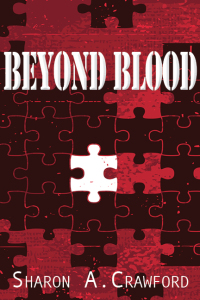
And as usual, if you click on the book cover at the top it takes you to my amazon profile and my two Beyond books


Tags: , , , , , , , , , ,

Writing through complicated novel plots

Sharon A. Crawford's latest in the Beyond series

Sharon A. Crawford’s latest in the Beyond series

Sometimes novel plots can get away from you, especially if like me, you write mysteries or thrillers. Even doing an outline before starting to write won’t stop potential confusion for several reasons.

Characters, especially the main ones, have a habit of taking over the novel and that means directing the plot. Which can be a good thing, because it shows that your novel has life. But when, like me in my Beyond mystery series, you have more than one point of view  character, you not only have to deal with one rogue character, but sometimes two. Dana Bowman the main character in Beyond Blood is an outspoken willful PI with a mind of her own. Her fraternal twin brother, Bast Overture her partner in solving crime is a bit tamer. But he is a former crime reporter and the words “reporter” and “journalist’ send out flares of “digging up the dirt.”

So with two nosy-parkers on the loose (often working somewhat separately) and adding in some other characters such as police Detective-Sergeant Donald Fielding and Dana’s six or seven-year old son (age depending on which book), this author is often juggling a lot of plot development.

A disclaimer: I don’t do much of an outline beforehand. Sure, I have some idea of where I want the story to go, but I find if I do too much outline or summary I seem to automatically switch to write-the-novel mode and I’m off in that direction for then.

So, what do I do to try to keep the plot consistent and making some sense?

I do some flipping back and forth to check – maybe after the day’s writing session or perhaps just before I start writing the next time. Or as often happens a couple of niggling plot developments are in my mind and I need to sort them out. So I use the Word “Find” tool to go to these plot developments and from there do one or two things:

Make a note either in brackets in red in the paragraph or whole scene or with the Comment tool about what needs to be changed. I also keep separate files on some areas of plot development that come up and/or I want to put in. Not exactly an outline, but more of a description of what I’m trying to do…at that point. Until Dana and/or Bast step in.

When all else fails I just go in there and make the changes/corrections.

With two PIs I have to make sure they don’t overlap in what they do – unless they are actually doing some of their investigation together. When working alone, they have to keep each other informed of what they find or the reader could wonder “How did he know that?” And do it without long conversations between the two. Sometimes they leave each other phone messages or sometimes I use a couple of short narrative sentences, such as “Bast brought Dana up to speed.”

It gets even trickier in the current Beyond novel I’m rewriting when one of the twins suffers a concussion.

But, hey I like a challenge. It is one of the things that makes writing fiction interesting.

Cheers.

Sharon A. Crawford

Click on the Beyond Blood book at the top to go to my amazon author profile and books.

To see what I’m up to with the Beyond books and characters check out the Gigs and Blog Tours page of this blog here


Tags: , , , , , , , , ,

Point of View clarity important in writing fiction

Sharon A. Crawford's latest in the Beyond series

Sharon A. Crawford’s latest in the Beyond series

Currently I am reading a mystery novel where the characters’ points of view are all over the map  – in one chapter without a scene change, in one scene, Even in one paragraph the point of view switches from one police detective to the other. They are police partners, but this “jumping heads” (as it is known in the editing business) is not only ridiculous and annoying it is distracting from the story. And it is an interesting story.

Looks like the author’s editor was asleep at the computer. I blame the editor, not the author because as an editor I find that 85 per cent of my fiction clients mess up the point of view. And, yes, if the author mixes up points of view, then it is his or her editor’s job to fix it.

So, what is acceptable in fiction writing (unless you are going for experimental fiction, which this mystery novel is not)? Here we go with the standards:

In novels it is acceptable to have multiple points of view as long as it isn’t overdone. Do we really need to know what minor characters A and B think?

Up to five points of view are the limit in my opinion.

Keep the same point of view within a chapter or a scene. Next chapter or next scene you can change the point of view. For scenes this is usually indicated by extra line spacing and starting the first paragraph flush left or separating the scenes with an asterisk. Read Peter Robinson’s mystery novels. He usually has three points of view and does a superb job of it. He uses the change of scene change of character POV method with extra line spacing.

Other authors indicate change of character POV by putting the character’s name at the top of the change – this can be with a new chapter or new scene. I use this method in my latest Beyond book, the mystery novel Beyond Blood. The story is told from four different points of view – Dana Bowman, Bast Overture (the two fraternal twin PIs), David Bowman (Dana’s six-year-old son), and the mysterious “Him.” I put the character name and the date and time (a word on that in a sec) just before the character POV change. This change usually occurs with chapters but I do have it within chapters – change of scene change of character POV with the above-mentioned indication.

It is not necessary to always use time and date unless it is relevant to your novel. I’m not the only author who does this. I do it because Beyond Blood is a fast-paced mystery that occurs during eight frantic days in August 1998. Often when I switch point of view what is happening with that character is happening simultaneously with another POV character. And that is another reason to switch POVs.

Switching POVs is also a good way to heighten suspense – if you end one scene/chapter with one character left out on a limb and the reader does not know what will happen with him or her next. Instead they go on to another character – more waiting to find out/more suspense. And it also allows plot development that just might not be possible using one character’s POV>

Switching points of view in a novel also allows the author to get deeper into each main character – and gives the readers a more intense looksee at the characters.

My POV on POV anyway.

Cheers.

Sharon

Click on the Beyond Blood icon at the top to find out more about my Beyond books.


Tags: , , , , , , , , , ,

Electronic mania versus telling a good story

Sharon A. Crawford's latest in the Beyond series

Sharon A. Crawford’s latest in the Beyond series

We are bombarded with electronic devices in our daily lives and that includes TV shows. Sometimes the story gets lost in all the “bells and whistles.” But what about books? In particular novels set in present time? Should authors overwhelm the reader with smart phone usage, social media and the like?

A story in the May 2016  issue of The Walrus writes about this conundrum. Here writer Naben Ruthnum, discusses how some authors like best-selling author Joy Fielding skirt around it. While summarizing the story lines and acknowledging that the story is important, Ruthnum wonders how long this approach will be relevant in our digital/social media obsessed society?

Ruthnum writes “By ignoring the contemporary reality of instant communication, authors such as Fielding are preserving the nail-biting satisfactions of their art. But how much longer can these books provide escapism-seeking readers with relief given that their trick of withholding details is in direct conflict with our expectation that information always wants to be free?” (bolded part is mine).

That’s a big point with mystery novels – readers get temporary relief from a mad mad world and that includes overdoses of electronic media leading to overwhelm.

Yes, mystery novels do imitate reality. But the reality is what the story is about, the story’s setting and its characters. As in real life, not all people are digitally proficient; nor do they all immerse themselves in the whole digital/social media life-style. So, Fielding and other authors have to be true to that. And they are.

Personally, after all the over-abundance of bells and whistles on some TV shows set in present time (not futuristic and not fantasy), I prefer a somewhat toned-down digital presence in the novels I read (and write for that matter).

Many mystery novel authors handle this digital business very well. Marcia Muller’s PI Sharon McCone has a nephew who handles all this digital stuff so only what is necessary to the story is told. McCone gets to do what she does best – personal investigation while her nephew helps out on the digital end.

Mystery novel authors like Peter Robinson, acknowledge the digital aspect – his police officers have smart phones (they are called mobiles in England) but his main character Alan Banks doesn’t investigate by being glued to his smart phone or sitting in front of his computer (which some consider passe these days). He does what police should be doing – gets off his butt and interviews people, as well as following suspects in his car.

And yes, Robinson makes use of one current technology available to police in most cities world wide – CCTV- the police surveillance cameras on public city streets.

And I do the same in my Beyond books. Perhaps the short story collection Beyond the Tripping Point is the best example as stories in there take place in different time periods – 1965, 1980s, 1999 and present day. So for the first two – no technology-infested society. In 1999, where my fraternal twin PIs, Dana Bowman and Bast Overture are introduced, technology is relevant to the time – so I have cell phones (that have antenna and fold closed), Polaroid cameras for “instant” photos, and dial-up Internet connection, but with email functions. (Note: in Canada DSL didn’t get going until late 1999 – after the four “twins” stories in BTTP. I should know. My computer techie son’s computer business at that time was testing one of the DSL’s in 1999 and in late fall1999, my son hooked up my computer o one of the first DSL’s provided. Dana uses a computer for basics such as email and leaves all the computer technology to her brother. So in my third Beyond book (which I’m still rewriting), which is set in November and December 1999, I have computers – desktop and laptop – using DSL. There are also onlinr forums involved which Bast accesses – but it is all part of the plot and the twins’ investigation of a case. And birth record searches (which is part of the novel’s plot) were not online then (I checked with Service Ontario on this one), so Bast has to go into the Ontario Government dept. office to do an in-person search.

My BTTP stories set in present time do use electronic realities such as CCTV and smart phones. In fact one story, the main character is obsessed with using her device but that is part of the plot. The plot, the story is never buried in electronic devices.

Which is what Peter Robinson and many other mystery novelists do. Use the current technology (or technology for the time period of your novel) as it applies to  your story. Don’t make the technology the story unless that is your plot.

A happy medium often works best. Besides, we mystery novel readers need a rest from the over-indulgence of digital on TV in other areas of our lives. And that’s one reason I like reading from my Kobo (I do still read print books). Not a lot of flashing digital nonsense. And the print size is bigger – better for my fading eyesight (left eye)

Our eyes and brains need this respite, this escape from too much digital.

What do you think?

And on another note, I will be part of a panel (along with Ali Cunliffe and Susan Viets) about Self-publishing from both authors and editors perspectives. Hosted by the Editors Association of Canada, the panel/seminar will be held in Toronto Tuesday, April 26, from 7.30 p.m. More information on my Gigs and Blogs page here and also on Editors Association of Canada website.

Cheers.

Sharon

Again click on the Beyond Blood icon at the top to find out more about my Beyond books. At least we have this digital function today.


Tags: , , , , , , , , , , , , , , , , ,

Can fictional characters teach readers something?

Sharon A. Crawford's latest in the Beyond series

Sharon A. Crawford’s latest in the Beyond series

Readers read novels to be entertained. However, life isn’t all about entertainment. We want to learn more, to grow, to live a better life.

Can fiction help here? I think so. If you have credible fiction characters who live lives like readers. And it doesn’t matter what genre the novel is written in. For example, science fiction can present us with a future we might just not want, with the underlying story of just how it can play out. This requires believable characters who deal with these situations. Built into a good sci-fic story are elements of present time – such as law enforcement professionals and your every-day person like divorced parents, seniors, etc. Sometimes the professionals and the single mom are one and the same person. Although the characters have problems peculiar to a future  time period to deal with; like us now, they have common day-to-day problems as well. So the reader can identify with the story and the characters and get a satisfied read. A science fiction author who does this very well is Robert Sawyer. Read any of his books to see how he handles it. And many of his novels also have murder in them.

In the mystery genre, there is a series by J.D. Robb (Nora Roberts pseudonym) where the novels are set in the future. So the reader not only gets policing in the future,but also something many of us now balance – a career and a marriage.

In somewhat current time (in the late 1990s), my novel Beyond Blood, has characters that are representative of real-life characters. I have the fraternal twins (which may not be so common) Sebastian (Bast) Overture who is gay and Dana Bowman who is a divorced mother of a six-year old boy. Readers have told me that it is this relationship between mother and son that they relate to because they find it not only interesting but compelling. Of course, not all six-year olds are kidnapped (thank God), but here I have taken a universal relationship, that of a mother and son, and escalated it into the “what if?” area, where a mother is pushed to the edge to find her son before it is too late. And because Dana is human she may try to forge ahead as a professional PI and push her fear and other feelings back inside, we know that in real life this just doesn’t happen. She is conflicted, and yes she does lose it at times.

And that’s the key to writing fiction to teach a lesson. You need both realistic characters that readers can identify with and a plot that grabs readers.You need characters that are human, because we are human. This way you can show readers what your characters are like, what they are made of – but heightened to situations beyond what you would deal with in your life.

Remember, readers want to also be entertained.

You can read for yourself how Dana Bowman handles all her problems with her son’s kidnapping and all the complexities that occur, from an ex-husband who shows up as a suspect, to the stuttering Detective Sergeant Donald Fielding whom she is attracted to, to ….well, you may just have to read Beyond Blood to find out. Click on the book icon at the top for more info.

And I have a new website with a much different website design, thanks to Martin Crawford, computer software expert and Juni Bimm, graphic artist. The website text is purely my doing. So take a look here

Cheers.

Sharon A. Crawford


Tags: , , , , , , , , , , , , ,

Picture it to kick-start your story

Sharon A. Crawford's latest in the Beyond series

Sharon A. Crawford’s latest in the Beyond series

I teach a memoir writing workshop called Writing Your Memoir from Pictures. Participants look at old family photos, old newspaper stories, old ads to bring their minds back to their past. From there they start writing part of their memoir, perhaps even the beginning.

A variation of this could be done to get you going writing fiction or to help you create a scene in your story.

Let’s consider a photo of a family member or friend – whether in print or digital. Or even a photo posted online of someone you don’t know. Maybe you are having a hard time visualizing what your character looks like. Or maybe you have some idea but are having problems describing the character. Looking at a picture can trigger some ideas. I’m not saying you should make your character an exact copy, but images can get ideas swirling.

If your story is set in the not-too-distant past, maybe up to 150 years ago, old newspaper photographs, and ads especially can help you get ideas of how society lived at that time. Sure, newspaper stories back then, can tell you that. However, just looking at pictures and letting your mind absorb them, can help you create that scene in a town set in the 1950s or during one of the world wars or another time – whatever your story dictates.

Picture it and let your mind absorb. Then let your imagination loose.

You know what they say about a picture being worth a thousand words.

Cheers.

Sharon

If you click on the book cover at the top, it will take you to one place where my Beyond books area available


Tags: , , , , , , , , , ,

Making your fiction characters sick

Sharon A. Crawford's latest in the Beyond series

Sharon A. Crawford’s latest in the Beyond series

I’ve talked before about giving your fiction characters tags such as jangling keys in their pocket or going silent when someone starts arguing with them. These tags show character traits and help the reader connect better with them. The first trait mentioned might occur when the character is impatient and the second opens a lot of things the author can show about the character. It might be as simple as the character hates arguing but he or she might be afraid to speak up when challenged. Both those bring up the question “Why?” in the reader’s mind. And give the author leeway to build his or her character.

Another trait that can be used is health issues – good or bad. Maybe you want your character to be an extreme fitness buff. Maybe he is passionate about playing golf. But the flip side of the coin can present even more interesting character tags – the character’s illness or an injury – the latter maybe occurring during the story. For example, the late Robert Parker in one of his Spencer novels had Spencer get shot in the chest and part of the novel dealt with his recovery and how it affected him both professionally and personally.

In my Beyond novel, Beyond Blood, I give Detective Sergeant Donald Fielding an affliction no one really wants – migraines. I know of where I write here because when I was in my early 30s (back in the grey ages, of course), I had migraines with almost the whole enchilada in symptoms. Didn’t have the aura but I did get sick to my stomach and of course the pain. And lots of treatments were tried and not all worked or were only temporary. Then there was the personal and professional repercussions. I had to postpone story interviews with subjects because I had a migraine, and one of the treatment options – blowing in a brown bag, supposedly to stop the pain (it didn’t work), was done around the kitchen table during a big party I held. My girlfriend who suggested that was coaching me and there were some onlookers around the table.

Which gave me lots of options for Fielding, I combined my personal experience with imagination for his migraine attack. Not a party, not a kitchen, but in the main character Dana Bowman’s bedroom. That’s all I’ll say about that scene except the cause of the migraine was the same as many of mine were – stress.

So you can use your personal health experience for one of your characters in your novel or short story. Just make sure it is worked into the plot and isn’t a tangent. And yes, Fielding’s migraine incident was part of the plot. Also, it could be a friend’s illness, but just make sure if the illness is yours or your friend’s that the character doesn’t turn into a copy of you or your friend. Use the illness as a character tag.

And next Thursday, March 24, I’ll be joining four other Crime Writers of Canada authors for a lively panel discussion and q and a about what and how we write. Here are the details:

Murder and Mayhem between the (book covers) at Gerrard/Ashdale library branch

March 24, 2016

Join five Crime Writers of Canada authors Sharon A. Crawford, Steve Shrott, Lisa de Nikolits (three mystery novelists) and Mark Eddy and Nate Hendley (both true crime authors) for a lively discussion about crime writing and their books. Sharon moderates this panel and the authors just might read a bit from their books. More information.

Location: Gerrard/Ashdale Toronto Public Library branch

1432 Gerrard St. E., Toronto

Time and Date: 6.30 p.m. to 8 p.m., Thursday, March 24, 2016

Maybe I’ll see some of you there.

Cheers.

Sharon

If you click on the book cover at the top, it will take you to one place where my Beyond books area available.


Tags: , , , , , , , , , , , , , , ,

Turning personal tragedy into fiction

Sharon A. Crawford's latest in the Beyond series

Sharon A. Crawford’s latest in the Beyond series

A wounded deer leaps the highest.
– Emily Dickinson

We all have personal tragedies in our life, whether it is losing a family member or close friend to disease, “natural” disaster, unnatural disaster such as war, accident or murder. Unfortunately these are now all part of living. We may also be carrying emotional baggage from our past. Sometimes these life tragedies can dig deep within our psyche. But, we writers have a bonus here to help us heal. We can write about it.

If memoir or personal essay is too personal, then  we can fictionalize the tragedy. Let me give you an example. As a child I was bullied by a teacher, a nun. So I’ve taken that experience, changed it to much worse and have a character in my most recent Beyond mystery loosely based on this nun. But I haven’t written fact. Instead I did the “what if:? scenario. What if one of my main characters was assaulted by a nun as a child and the nun surfaces in her adult life? How does she deal with it?

And the nun, what could be her story? Why is she the way she is. In my real life, I have no idea, so I fabricated a background of childhood torment and how does this affect the nun as an adult? The timeline for the story is different as my Beyond books are set in the late 1990s. And of course, the name of the nun is different. For one thing, in the late 1990s nuns weren’t using saint names, but their own names. So I made up a “real” name for this nun character

You can get the picture. Don’t write your story (unless it is memoir) but fabricate it into a fictional story that is part of your plot.

You may come up with something very creative and there may be a bonus – it might help you work through this piece of baggage you have been carrying around, often buried so deep you don’t realize it.

It’s worth a try.

On a recent personal note, I am dealing with a personal tragedy – a close friend died of lung cancer last month. She was only 51. Her memorial is Saturday afternoon. After that, I will need to follow my own advice.

Cheers.

Sharon A. Crawford

If you click on the book cover at the top it will take you to my publisher’s page about my books and my background.


Tags: , , , , , , , ,

Crunch time for publisher’s deadline for novel

Sharon A. Crawford's latest in the Beyond series

Sharon A. Crawford’s latest in the Beyond series

I am in the last month to finish the rewrite of the third book in my mystery Beyond series before submitting in to my publisher.. Of course, it won’t be the final rewrite. Once a publisher decides to publish a book, the author always has more rewrites.

I have limited my email time – I set a timer and when it rings I finish the current email and the rest can wait for another day. And I am particular which events I go to .

Some of the latter has been railroaded because I also just got yet another sinus infection over the weekend. So the two writing-related workshops I planned to go to, I had to cancel.

And with all my health issues, I am trying to keep medical appointments to one health issue a month. Last summer and fall when all these health issues kept coming and coming, often overlapping, I tried to deal with them all at once, including medical appointments. That caused way too much worry and anxiety and I might have had to add “shrink” to the list.  So, I’m trying the one-at-a-time approach and hope it works. Some of the medical people aren’t too happy about it. Too bad. I am trying to get more sleep to help heal.

But I like to rewrite what I have written. Sometimes the most creative twists in plots and character development occurs here. It is also a time to fix plot and character inconsistencies, get rid of excess and not necessary scenes and even chapters, smooth out the telling – get rid of awkward phrases and sentences, polish it all up. .And do final fact checking on your research.

It is the latter that is driving me crazy. A few new police procedure questions and also questions on the social issue in this novel have come up. And I’m having trouble getting the experts to reply to my emails and phone calls to get some answers.

My police consultant just retired and has moved out of the country. I am grateful for all his help with my other two books and this third book as well. So, I’ve been doing what most authors without police connections do – contact the corporate communications media department of the police services. I have emailed and phoned there and have received no response. It has been a week and a half.

Meantime I visited the Toronto Reference Library and looked at criminal code books from the shelves and stacks. Made notes as those books are not for lending. My book is set in late 1999, which is an added glitch. And did more Internet search.

Also emailed a government department’s service questions part. That was done two days ago and so can’t complain yet about that

I am also rewriting to change parts of the plot to fit in with what my research (at the library and online) has revealed, even to the point where I have a few options for a couple of areas.

But I need some answers.

So, I will try some contacts via Linked In and see where that gets me.

For those of you writing fiction, how do you deal with this type of non-response to your research questions? How do you get your rewriting done to meet your deadlines?

Cheers.

Sharon A. Crawford

If you click on the book cover at the top it will take you to my publisher’s page about my books and my background.


Tags: , , , , , , , , ,