RSS

Category Archives: Uncategorized

Crime Writers talk crime at Yorkville library tonight

Sharon A. Crawford's latest in the Beyond series

Sharon A. Crawford’s latest in the Beyond series

Crime can pay – at least between the book covers. Maybe not in big sales to make authors rich. But in authors connecting with each other and with readers.

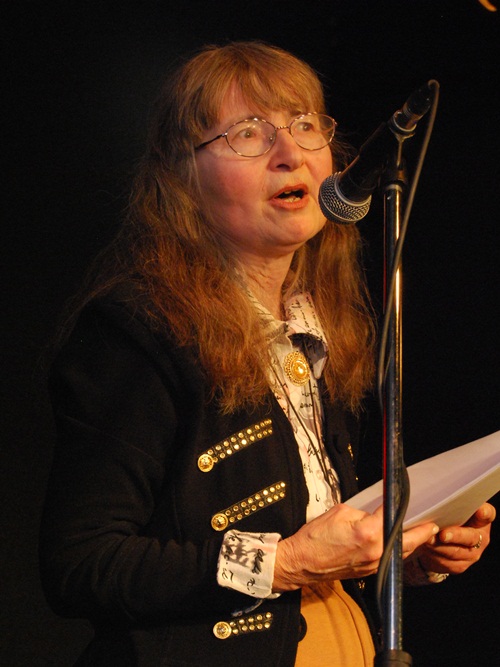
That is set to happen this evening as four of us crime writers from Crime Writers of Canada – Rosemary Aubert, Robert J. Hoshowsky, Nate Hendley and me Sharon A Crawford will be talking about how we either create crime or tell it like it is. For the first time with me involved, there are two true crime reporters – Robert and Nate. Both write different aspects of true crime and both got into doing so in different ways.

On the fiction side, both Rosemary and I write series novels – hers is the award-winning Ellis Portal series. What’s interesting about Rosemary’s books is the first five were published by a large trade publisher, and at the beginning of this year she went with a small independent publisher.

I write the Beyond mystery series and am published by a small trade publisher – no awards yet, but I’m working on it.

Here are the details about the four of us and our presentation this evening.
Nate Hendley

Nate Hendley is a Toronto-based freelance writer and author of several books, primarily in the true-crime genre. Decades of Injustice, a hard-hitting look at the wrongful conviction case of Steven Truscott, is his latest book from a Canadian publisher. His website can be found at www.natehendley.com


Robert J. Hoshowsky

Robert J. Hoshowsky is the author of two True Crime books, including the Arthur Ellis-shortlisted The Last to Die: Ronald Turpin, Arthur Lucas, and the End of Capital Punishment in Canada and Unsolved: True Canadian Cold Cases, which inspired Macleans magazine to publish an entire special issue on famous murder cases. His extensive research on the last men executed in Canada has sparked an interest in the Lucas case, which is currently being investigated to determine if Lucas’ death sentence can be posthumously overturned, for the first time in Canadian history.


A former Researcher-Reporter at Macleans magazine, he has also contributed to top-rated television programs, including the Canadian version of Who Wants to be a Millionaire. His investigative work has been published in over 100 magazines and newspapers worldwide.


Much of Robert’s recent work can be found in Serial Killer Quarterly, where he has profiled such infamous murderers as Jeffrey Dahmer, Britain’s John Christie, Leonard Lake and Charles Ng, and Sheila Labarre.


Rosemary Aubert

Rosemary Aubert is the author of eighteen published books, the most recent being Don’t Forget You Love Me, the sixth in the acclaimed Ellis Portal mystery series, set in Toronto and featuring a formerly homeless judge and reluctant solver of murders. Rosemary is a popular teacher, presenter and mentor.


Sharon A. Crawford


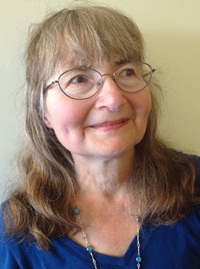
Sharon A. Crawford, a former journalist, is a freelance memoir and fiction writer, writing consultant and instructor, and editor. Sharon is the author of the Beyond mystery series, the short story collection Beyond the Tripping Point (Blue Denim Press, 2012), and her latest novel Beyond Blood (Blue Denim Press, Fall 2014). She teaches writing workshops for Toronto Library branches. She belongs to Crime Writers of Canada, Sisters in Crime, The Toronto Heliconian Club and runs the East End Writers’ Group. Her hobbies: reading, walking and gardening act as catalysts for her next novel.

An Evening of Crime at the Yorkville Library

Thursday, Oct 22, 2015

6:30 p.m. – 8:00 p.m.

Four Canadian crime writers read from their latest works: Rosemary Aubert, Sharon Crawford, Nate Hendley,and Robert J. Hoshowsky. Sharon Crawford will interview the panel and a question and answer period will follow.

No registration required.

Yorkville Library Branch (Program Room)
22 Yorkville Ave., Toronto, Ontario.

If you are in the area this evening, please drop in.

Meantime, I have to go over the questions I’m asking the panel and make sure I’m on the ball with my answers too.

Cheers.

Sharon A. Crawford

Click on the Beyond Blood cover at the top to find out where copies are available
 

Tags: , , , , , , , , , , , ,

When readers relate to authors’ characters

Sharon A. Crawford's latest in the Beyond series

Sharon A. Crawford’s latest in the Beyond series

Dana Bowman, the main character in my Beyond mystery series is making herself known.

Another author who read Beyond Blood compared Dana’s situation as the mother of a lost son to a non-fiction book dealing with a mother losing her son. Mind you, David, Dana’s son is lost in the sense that he is kidnapped. But both mothers suffer anguish and go through much emotional turmoil.

Others have picked out Dana’s offbeat sense of humour and being a likeable character.

All indications that readers are identifying with Dana.

Getting readers to identify with your novel’s characters – main character in particular, but also the other characters is one of the challenges for writers. But no matter what the fiction genre readers want more than just a good plot – they want to connect with your characters. Perhaps the daytime soap operas or the old night time TV soaps started this. However, even other TV series, police, etc. have a running thread for each character.

If readers can’t identify with your characters, you will lose them. They won’t enjoy your book as much or at all and may give up on it.

So what makes fiction characters compelling?

Liking the character isn’t absolutely necessary, but remember that most people are not all good or all bad. And even so-called good characters can come across as somewhat off. Maybe they are too good-two shoes. Maybe they are too superficial. The dreaded wooden characters.

So, in a nutshell, you have to make your characters compelling – by making them three dimensional – with dialogue, their inner thoughts, and their actions. You need to compel the reader to get under the character’s skin and if not emphasize with them, at least be with them.

Besides your novel’s characters getting a mention from readers, another good sign of compelling characters ix when readers read they want to find out what happens to the main character because they care. When they sense something terrible is going to happen to a character they keep reading, hoping both that it won’t happen and that it will. And when it does, they feel right with the character and read on to see if the character can come through the situation.

Of course, some of this is plot. But these days you really can’t have one without the other.

Besides my Beyond books, read fiction by Peter Robinson, Rosemary McCracken, Rosemary Aubert and Maureen Jennings to name a few.

And happy reading.

Cheers.

Sharon A. Crawford

Click on the Beyond Blood cover at the top to find out where copies are available;

And check my updated Gigs and Blog Tours for a presentation with other Crime Writers of Canada authors on October 22, 2015


Tags: , , , , , , , , , , , ,

Creating Eccentric Fiction Characters

Sharon A. Crawford's latest in the Beyond series

Sharon A. Crawford’s latest in the Beyond series

Can eccentric characters come across as too eccentric? How does this affect your story?

Eccentric means “tending to act in strange or unusual ways,” according to the Merriam-Webster online dictionary.

How strange is strange? How unusual is unusual?

Let’s take a step back. We writers don’t want wooden characters – characters who act normal and live boring lives. Often these characters are stereotypes – the police officer who drinks a lot of coffee and eats donuts, the prostitute with the heart of gold. You get the picture. Readers don’t like the stereotype, the norm. It bores them and they may stop reading the story.

So we create eccentric characters. Sometimes these eccentric characters can go off the walls and distract readers from the story. Readers may also dislike the characters. Think about some of the sit-coms currently on TV. The old Jerry Steinfield TV show had eccentric characters, but it worked. Some of today’s just don’t. Just check out the ones that don’t last more than a season or perhaps not even a season. Viewers can’t connect to the sit-com’s characters,

Think Agatha Christie for eccentric characters such as Hercule Poirot and Miss Marple. When you strip away their eccentricities you find each has a core ordinary connection to living. Hercule Poirot is a private detective and Miss Marple is a meddling old lady. These are common characters in everyday life.

In my novel Beyond Blood and in my short stories in Beyond the Tripping Point I have eccentric characters. I try to keep their eccentricity not too far out there, although I do wonder about the mother in “For the Love of Wills.” However, the characters in the four linked stories who also appear in Beyond Blood are what I call distinctive eccentric characters. Each is, to borrow the hackneyed phrase, “their own person,” from the stuttering police DetectiveSergeant Donald Fielding who occasionally suffers from migraines to my meddling old lady – Great Aunt Doris. She is old-school and anything that is modern she tends to turn her nose down at – the gay twin PI Bast and his fraternal twin sister Dana’s status as working mother of a small boy.

Yes, you could say that these characteristics are often part of old ladies. So, I take these and work them in with how Doris relates with the other main characters, Dialogue plays a big part here. So does action. Doris really loves Dana’s son David and he seems to get along with her. Doris, also is the one who takes care of Madge, after her daughter Debbie is murdered. But I have added another eccentricity to Doris. She always lands on Dana, David and Bast at the most unexpected and inconvenient times. In Beyond Blood, she knocks on their door at 3 a.m. while police are there investigating a break and enter.

Bottom line with me? Create all characters as individuals – no two are alike (even the twins are different, but they are also fraternal twins, so don’t even look alike). Stay away from the stereotype; just don’t go to the opposite of extremely eccentric. You may just come up with interesting eccentric characters who work with and in your plot.

And please your readers to the point where they look forward to reading more about them and their adventures in your next book.

Cheers,

Sharon A. Crawford

Click on the Beyond Blood cover at the top to find out where copies are available.


Tags: , , , , , , , , , , , ,

Incorporating the weather into your fiction

Sharon A. Crawford's latest in the Beyond series

Sharon A. Crawford’s latest in the Beyond series

I am intensely interested in the weather – where it comes from, who or what causes it, and how it plays out. So, it isn’t a big leap to figure out that I start chapter one in the Beyond mystery novel I am currently writing with the main character, Dana Bowman, dealing with weather. And that isn’t as simple as it sounds.

First, you need the weather appropriate to the time frame of your story. Although using a present-day setting, if the weather is severe and floods are a big part, you will probably be right on. However, it is always best to check with reliable weather sources online for weather on any day or in any time frame.

If you set your story anywhere in the past, you need to have the weather at least based on the weather situation then. Where you set your story will also factor in. For example, you probably wouldn’t have a tornado in California, but you might have very dry weather causing forest fires. On the flip side of the weather coin, you can use some weather conditions that occurred in the past as part of your story, part of the conflicts that occur in your plot. Think going out in a sailboat and getting caught in a storm. Of course, like all plots you have to build up the suspense and that includes impending storms. You need to connect the weather to your characters. Perhaps your main character is terrified of tornadoes or thunderstorms. Why? That would be part of your story and you can also blend that terror in with what the main character may have to do at the climax. Maybe your protagonist is in that sailboat with a friend who is actually the sailor. The protagonist may have to try to save the day if the sailor is injured, falls overboard, etc.

The weather can also play a creepy role in your novel – especially thrillers and horror. I am reminded of the 1960 movie Midnight Lace starring Doris Day (yes, I know, that dates me) where Rex Harrison as her husband appears to be stalking her as she walks through the London fog.

So sometimes the weather becomes like another character in your fiction. The weather possibilities are endless.

Even if you don’t have weather playing a major part, you don’t want your character going out in a snowstorm in shorts and a T-shirt. Or heading for the beach in a fur coat. Unless that is part of their eccentricity or they are on a modelling or music video assignment.

And don’t forget to give some reference to the weather in your story, but incorporate it into your story so it doesn’t read like an extended weather dissertation.

And what is my main character Dana Bowman facing weather-wise in the Beyond novel currently being written, which begins in late November 1999? She is walking in the rain.

But I have one extenuating circumstance here. My setting is a fictitious small city I call Thurston, Ontario. Thurston is located just north of Toronto where Aurora and Newmarket are. When I checked historical record data (three sources online), neither place had historical weather listings, so I went to the closest – Richmond Hill, Ontario and that’s what I’m using. With fictitious locations, you can be somewhat creative with the weather – within reason (see above about fur coats and shorts). Check out the real location in the general area of your made-up place and see what the weather is/was like there. Again, you don’t want snowstorms in California.

However, if you are writing fantasy or science fiction, the sky is the limit (pun intended).

Do you use weather as an important part of your fiction and how do you do so?

Comments please.

Cheers.

Sharon A. Crawford

Sharon A. Crawford is the author of the Beyond book series. More info at www.samcraw.com and www.bluedenimpress.com – my publisher – you can also purchase e-books – both Kindle and Kobo from Blue Denim Press. Click on the Beyond Blood Book cover at the top of this post.


Tags: , , , , , , , , , , , , , ,

Serendipity Book Marketing

Sharon A. Crawford's latest in the Beyond series

Sharon A. Crawford’s latest in the Beyond series

Last Saturday I was the guest speaker for an English Conversation drop-in seminar for new Canadian citizens at a local Toronto library branch (Brentwood). From what was discussed by email with the organizers, I was to talk a bit about writing memoirs using the senses. However, I could bring copies of my mystery books to sell.

So armed with memoir writing handouts and my books I arrived early.

And received a very pleasant surprise.

I already knew one of the organizers, Bill, who attended my memoir writing workshop at another library branch. So, from our phone conversations and emails I knew of this plan he had concocted and yes, I knew he was interested in buying my books as well as others – librarians and seminar participants.

What I didn’t know was all the enthusiasm I would receive about my books and being a writer. As I’ve mentioned before, we writers sometimes forget that this is what we do (just like some people are lawyers) so we take it as second nature.

We, or at least I, never forget we do want and need to sell book copies. But I try not to be in people’s faces about it.

The whole two hours was all about my books – characters and plot – and writing, but with a twist. The participants are newly-arrived in Canada and their English varies from good to just learning. Part of these seminars’ focus is on the idiosyncrasies of the English language. So when a slang phrase or cliché came up, Anna the librarian or Bill would ask the others if they knew what it meant so that started a lively discussion. I caught on to this and started to do the same as for some reason I began involuntarily using a lot of slang terms. And near the end I was allowed to sell my books – sold all of the Beyond the Tripping Point short story collection copies I had brought along and half of the Beyond Blood novel copies.

And Bill, Anna (and Lidia, the other librarian who also facilitated this session) want me back to do a guest spot in one of their evening sessions. Not sure if its fiction writing or memoir writing, but I will be ready for either or both and yes, I can sell books.

Lidia also had me sign the contract to teach a different memoir writing workshop for library patrons in the fall. And yes, I can sell books then, too.

The point here is – no matter how you organize promoting your books, you may miss something – often something pleasant and rewarding – not just book sales, but that magical connection with others who are interested in writing and your books.

Meantime I’m preparing for two gigs with other Crime Writers of Canada members coming up June 11 and June 12. See my website www.samcraw.com and go to Beyond Blood for a list. More on that in next week’s posting.

Cheers.


Sharon A. Crawford

Sharon A. Crawford is the author of the Beyond book series. More info at www.samcraw.com and www.bluedenimpress.com – my publisher – you can also purchase e-books – both Kindle and Kobo from Blue Denim Press. Click on the Beyond Blood Book cover at the top of this post.


Tags: , , , , , , , , , , , , , ,

Let your fiction characters evolve

Sharon A. Crawford's latest in the Beyond series

Sharon A. Crawford’s latest in the Beyond series

How relevant is your original concept of your fiction characters? You do an outline of their traits and how they act, talk, etc. Then as you write your novel something happens.

Your characters have the nerve to change. They don’t act according to your plan, your concept of them. And worse, the little devils want to take over your novel.

Excuse me. It is their novel too. Without them you don’t have a novel or at the most, you have a bare bones plot with some iffy and maybe characters.

If you remember, last week’s post dealt with guest characters wanting to take over https://sharonacrawfordauthor.com/2015/04/16/fiction-characters-who-want-to-take-over-the-story/ so let’s take that a step further. But first we have to step back. You and your friends and family did not suddenly stop changing and growing (and not just physically here) at age five, age 20 and so on. You evolve; you change; things happen.

Same with your fiction characters. As you write your novel, no matter what you put in your outline for characters and plot, something is going to change if for no other reason than the original idea, the original concept, just won’t work.

I’ll give you an example from my recently published mystery novel Beyond Blood. One of the biggies was changing the POV characters from one – private investigator Dana Bowman, PI – to also her fraternal twin and PI partner Bast Overture, Dana’s six-year old son, David, and the mysterious Him. That sure opened up the plot. It also meant getting inside four, not one, characters’ heads.

And dealing with their development, their actions and their demands. Sure it puts the writer on edge. Would this change work? Should I do this or should I do that?

I’ve found when you get to a point where you have to deviate from the original plan, it works best to write spontaneously and see what happens. Each character will invade your mind and make demands. You may not use all of what they want, but listen to them. And just write. You can make more changes later.

That’s what I do even though it means scrolling to and from different parts to fix something that doesn’t seem consistent or make sense. And I do it when my characters insist.

Remember, characters are real to you and to your readers. Just like you, your family and friends, characters evolve over time.

Let them.

And if you want to hear a bit about the point of view changes I made, I will be reading from Beyond Blood this evening when I join 15 other Crime Writers of Canada authors reading at the Arthur Ellis Short List Party. We each get three minutes to read – I can just squeeze in my two pages of Prologue – one from Him’s point of view and one from Dana’s.

After the readings all the CWC authors short-listed in the various Arthur Ellis Awards categories will be named – out loud. If you are in the Toronto or GTA area in Ontario, Canada, please join us from 7 p.m. to 9 p.m. at Indigo Book Store in the Manulife Centre at Bay Street and Bloor Street West. It promises to be fun.

Cheers.


Sharon A. Crawford

Sharon A. Crawford is the author of the Beyond book series. More info at www.samcraw.com and www.bluedenimpress.com including a link to a radio interview at http://bluedenimpress.com/authors/sharon-a-crawford/ Online TV interview from Liquid Lunch is at http://youtu.be/i2bBaePIWgY

Beyond Blood Book cover at the top of this post links to my Amazon author profile. If you buy a  copy there, please do a review on amazon.


Tags: , , , , , , , , , , , , , , , , , , , ,

Tales from the book promo trenches

Sharon reads from her Beyond book series

Sharon reads from her Beyond book series

I loved words. I love to sing them and speak them and even now, I must admit, I have fallen into the joy of writing them. – Ann Rice

If anyone thinks you can make money from your published books without a lot of work, get your head out of the sand. It IS a lot of work. It can be fun too but also harrowing. In the last week here’s what’s been going on with my Beyond series books.

Weekend of November 14 to 16 – Inspire Book Fair Toronto Metro Convention Centre

Friday, 6 p.m. My one-hour to sell book copies at the Sisters in Crime Toronto booth. The book fair was a dead zone although groups of school kids were in earlier running around the room. But at 6 p.m there were more exhibitors than people attending the book fair. Still I managed to sell one copy of Beyond Blood to a big mystery reader

Saturday, people buying tickets, going up on the escalator and wandering around in the convention room. Yay!

4.40 p.m. Read from and talked about Beyond Blood and Beyond the Tripping Point on a smaller stage. I used my loud outside voice and the editor at my publishers (Blue Denim Press) said he could hear me from their booth. Afterwards I returned to their booth, sold and signed one book.

Before that I wandered around talking to people – mostly those I knew, but some I hadn’t seen for years. Yes, some of them bought copies of my books at the Blue Denim Press booth, but it was also a chance to talk about writing and doing PR

Sunday, I returned to Inspire with my friend Kathy. We hung around my publisher’s booth for a bit and sat in the audience when another Blue Denim Press author read. Kathy bought a copy of Beyond Blood and one of the other author’s books.

All in all it was a good experience but could have been better for book buying, especially as it is Christmas shopping time and my publisher, at least, had the books on sale. I can’t believe everyone is just buying e-copies (My books are available in the usual e-pub and Kindle versions from the usual places as well as from my publisher. Click on the Beyond Blood book at the bottom for the link.) My publisher said Inspire was more of a networking experience and yes, they connected with a lot of potential organizations for book distribution and other book promo.

Wednesday, November 20, part of Crime Writers of Canada’s Murder and Mayhem reading series – at the Beaches library branch in Toronto. And we had a full house, a captivated audience who asked a lot of questions of the four of us reading and talking about our books. The whole time was creative magic and connections between authors and readers.

The downside? The bloody weather – Toronto’s first somewhat big snowstorm – more blowing around and of course the timing of the storm couldn’t be worse. It took me over an hour and a half to get to the library from my place – a trip that should take only 30 to 40 minutes maximum. The first bus arrived on time but it was a slow journey to the subway station. But I could have still arrived at the library on time. Except the other bus wasn’t showing up. Some of us waited over half an hour. I finally phoned the library and told the librarian about the situation and that if a bus came I would try to get there for 7 p.m. (6.30 p.m. was starting time). The first bus got too packed and I couldn’t get on. The second one came maybe 10 minutes later and didn’t take long to go its route and get me to my destination. Then came the 10-minute walk to the library. But I made it and after my co-host Nate introduced me, I told everyone “I got derailed by the weather.” (Only a railway brat like me would use that term).

Despite the good session, no books of mine sold. I think one author sold one book.

So, you see it is all uphill. Yes I do the social media bit. No, I won’t give up. I love meeting my readers and talking about my books, reading from them, and giving writing advice.

I’m also very stubborn and persistent.

Just ask those who know me.


Cheers.

Sharon A. Crawford

For those not in the Toronto, Canada area, you can click on my book covers below – they will lead you to my publisher Blue Denim Press’s website. Scroll down and you can see where Beyond Blood is currently available, including at www.bluedenimpress.com.

And check my website www.samcraw.com – click on Beyond Blood. I constantly update the gigs etc. on that page.


Cover of Sharon A. Crawford's mystery short story collection

Cover of Sharon A. Crawford’s mystery short story collection

Cover of Beyond Blood by Sharon A. Crawford, published by Blue Denim Press

Cover of Beyond Blood by Sharon A. Crawford, published by Blue Denim Press


Tags: , , , , , , , , , , , , , , , , , ,

Some thoughts on marketing your published book

Amazon.com link to Sharon A.'s short story collection

Amazon.com link to Sharon A.’s short story collection

Almost anyone can be an author; the business is to collect money and fame from this state of being.
– A.A. Milne

The book cover for my new mystery novel Beyond Blood is about ready for print. Shane the editor at my publisher’s (Blue Denim Press) and I have been to-ing and fro-ing by email to proofread the cover, mainly the back page info. I think we got the last comma squared away. Whew!

And the cover is awesome and reflects the book’s title and content. When Shane emails me the actual cover in a smaller size, I will post it on this blog.

Meantime I continue on the pre-book launch PR. I also have to consider the other mystery novelist (first novel for both of us) being published by Blue Denim Press – Klaus Jakelski, a medical doctor and author of the medical mystery Dead Wrong. Ironically, Klaus is one of my editing clients although except for providing Blue Denim Press’s contact info, I had nothing to do with his book getting accepted by them. But Klaus and I will be doing some of the PR together.

There are many, many ways an author can publicize his or her book. My publisher is doing some PR (Shane sent me a list, including what we authors can do). However, I have learned much from my PR efforts with my debut mystery short story collection Beyond the Tripping Point.

1. You need a marketing plan as I found out when trying to book a gig reading Beyond the Tripping Point (before it came out) at a bookstore in Waterloo, Ontario. The store manager wanted to see my marketing plan first.
2. You need to organize your marketing plan to suit you. I tried doing it by category (i.e. book launch, writing organizations, etc.) first in a Word Table and then a colleague set it up in Excel. Too confusing. For yet another possible marketing venture, I had to list my Marketing plan by the month. That one works best for me. Under each month I list what I will do by – you guessed it – category. The list meshes social media, email and in-person. And it is always in flux and open to additions – some of which my publisher emails me.

What else have I learned from the PR I did for BTTP?
1. A combination of social media, email and in-person appearances/readings,workshops and lots of book reviews is the way to go. Despite this digital age, author appearances reading should not be excluded. People still like to connect in person with authors.
2. E-mail PR can still work and can be segued into social media and result in book sales.
4. Videos of author reading (short) and interviews (shortish) are also draws if posted on You Tube and all your other social media.
5. Blogging, including blog tours, with connections to amazon.com, etc. and other social media works.
6. A book page on the now old-fashioned website. I have one for Beyond the Tripping Point and have started one for Beyond Blood at http://www.samcraw.com. You can list your author gigs, including blog tours and other relevant info. Just keep it short and use links where possible.


What new strategies I need to use with Beyond Blood:

Among others – book trailer, using my social media much more, getting more book reviews, visiting more bricks and mortar bookstores for readings (with or without other Crime Writers of Canada authors) and getting more TV interviews and maybe a radio one, and the DVD copies of the interviews to put up on You Tube, etc. (with my son, Martin, the computer expert’s help), and using a tagline for all of this (for Beyond Blood and Klaus’s Dead Wrong it is Blue Murder, a play on words for the publisher’s name. Shane from Blue Denim Press came up with that one.

It’s almost a full-time job, but as I posted a few weeks ago in https://sharonacrawfordauthor.com/2014/07/10/juggling-time-to-publicize-first-novel-and-write-second-novel/

I do other writing, teaching and editing. It boils down to being organized and picking my battles for all the other stuff in my life that goes wrong. Like the bank (i.e. one of their tellers) paying my property tax money into the city utility (water and waste) account by mistake, so I get a big fine for “non-payment” of property taxes. The bank manager is supposed to be fixing that and seemed very interested if I knew which teller was responsible, so I hope they nail her. She should be paying my fine.

And if any of my readers use other PR strategies for their published books (whether Indie or traditional publisher), please comment.

Meantime, back to the PR for Beyond Blood.

Cheers.

Sharon A. Crawford

You can read about my characters and their stories in my short story collection Beyond the Tripping Point (Blue Denim Press, 2012). Click on the book at the top and it takes you to Sharon A. Crawford’s profile – including book reviews – at http://www.amazon.com.
More info on Sharon A.’s upcoming gigs, workshops, guest blog posts, etc. at http://www.samcraw.com/Articles/BeyondtheTrippingPoint.html And keep checking http://samcraw.com/Articles/BeyondBlood.html for the latest news on the release of my first mystery novel Beyond Blood, also published by Blue Denim Press http://www.bluedenimpress.com More info on the Beyond Blood page as we get closer to the date. And remember that clicking on the book icon at the top gets you to my Amazon profile.


Tags: , , , , , , , , , , , , ,

Get motivated to write that novel or short story.

I

Amazon.com link to Sharon A.'s short story collection

Amazon.com link to Sharon A.’s short story collection

It is by sitting down to write every morning that one becomes a writer.
—Gerald Brenan


You want to start writing that novel but can’t seem to find the time. The kids need ferrying to their soccer games; you have to clean out the garage, and hey you are going on holidays in a couple of weeks and need to plan your itinerary. Or you are beyond hooked on social media.

Meantime that novel sits either deadlocked at Chapter 3 or the novel plot and characters are scurrying around you mind faster than mice in your house.

What do you do? Who do you call?

You need someone to help get you motivated to write. You can get another writer friend who can empathize with your predicament, join a writing critique group. Or hire a writing consultant.

I briefly mentioned in last week’s post that I coach clients in writing. But what exactly does that mean? What exactly do I do?

First I talk to the client (either in person or by Skype or regular phone) to see where they are at (or not at) with their novel, short story, or memoir. We talk about their goals and if that is nebulous we try to get the goals more concrete. I present suggestions for working with them – in person or via Skype or a combination of both.

So, what exactly can happen during the consult?

If the author hasn’t actually started writing, we discuss an outline for our time together based on their story outline. I may get them to write a synopsis of their novel just to nail it down. The next step depends on the client. With one client we brainstormed ideas for each chapter and she took notes. Then she went home, wrote the chapter, maybe with a revision, and emailed that chapter to me to look over before our next consult.

At this meeting, we first went through this chapter with me making suggestions, which we discussed and then she made notes to do so (if the client brings his or her laptop or iPad, he or she can make the changes right then). The rest of the session we brainstormed for her next chapter. And then the process was repeated as we did with her previous chapter.

Another client is well into her manuscript and just needs feedback on what she has written. We work either in person or with Skype. She emails me the chapter she is working on (often a few hours before our appointment) and I look it over. When she is “here” she looks at her copy on her laptop and I look at it on my computer. She gives me a brief synopsis of where this chapter will fit in her book (it is non-fiction), what it focuses on and what she hopes to accomplish with this chapter. I make suggestions and ask questions about the content. Often I will suggest moving something up for the beginning, rewording the beginning or the middle, clarifying different things, adding different things, etc. As we talk, she is making the changes or making note of changes to make if it will take some time to do so (for example, if she has to check her research or do more research). Once we are done with the chapter, if there is still time in our hour together, she might go into what she will be working on next in the book.

The fiction-writing client and I met once a week. The non-fiction-writing client and I meet twice a month. Sure, there is a fee, but the feedback I get from my clients is that it is worth it for them to get going at their writing.

These writing sessions establish regularity in writing and because the author also has to write outside the sessions, a few meetings may be all she needs before she embarks on writing that novel, that memoir, that short story collection, without someone on her case. I see where these sessions also help the writer gain some self-confidence that she can actually do this, and actually write something. The latter ties in with the writing critique part.

So, if you don’t want to hire someone to coach you in your writing, join a writing critique group – it will motivate you to write if you have to produce something for critique every couple of weeks.


Sharon A. Crawford


You can read about my characters and their stories in my short story collection Beyond the Tripping Point (Blue Denim Press, 2012). Click on the book at the top and it takes you to Sharon A. Crawford’s profile – including book reviews – at http://www.amazon.com.
More info on Sharon A.’s upcoming gigs, workshops, guest blog posts, etc. at http://www.samcraw.com/Articles/BeyondtheTrippingPoint.html And keep checking http://samcraw.com/Articles/BeyondBlood.html for the latest news on the release of my first mystery novel Beyond Blood, also published by Blue Denim Press http://www.bluedenimpress.com More info on the Beyond Blood page as we get closer to the date. And remember that clicking on the book icon at the top gets you to my Amazon profile.


Tags: , , , , , , , , , , , ,

Get your writing critiqued

Cover of Sharon A. Crawford's mystery short story collection

Cover of Sharon A. Crawford’s mystery short story collection

Every time I’d get a critique or some redirection, I’d always just take it very personally. Now I have no problem with it.

-Jessica Alba

Besides proofreading which I talked about in last week’s post, another tool for the writer is to get your writing critiqued by other writers. I have posted about this before but it is important enough to do an updated version.

Let me take you to yesterday evening when my East End Writers’ Group met at S. Walter Stewart Library in Toronto. We are basically a writing critique group and that is what writers come here for. Some new members joined us and we had some interesting writing excerpts from some very talented and intelligent writers.

Some of the issues that other writers picked up on and commented about:

For the beginning of a literary novel. Use more dialogue – the author knew this but needed some guidance on how to go about it.

For a non-fiction self-help book which was written in plain language. Some structural changes were suggested by other writers, such as use sub-headings, use more anecdotes and less instruction.
For a synopsis for an opera – yes we have a music composer who also writes short stories. We were all getting lost in all the characters. Suggestions were to make the synopsis shorter (as it would be going on the program) and list the characters and a bit about each separately.
So you can see how more pairs of eyes and ears can pick up what the writer misses. When we write we do so in solitude (we would hope no outside interruptions). We also have tunnel vision (subjective) with our work and sometimes “can’t see the forest for the trees.” Even when we know something isn’t working, we may try and try again, several times, and run out of options to fix it. Others can see what our mind may miss.

This is where a writing critique group comes in. I urge you to join one – online or in person – whichever you prefer. Just a few caveats. You shouldn’t have to pay for this – it is mutual writers helping writers. Maybe everybody can bring food or beverage for a snack. With East End Writers’ Group I ask everyone to bring a gluten-free snack or juice. I usually bring cheese, rice crackers, fruit and peppermint tea bags. Now if I just could get the kettle working at the library – despite being shown it just doesn’t work for me. It is not the straightforward plug in the electric kettle version.

Kettles no matter – what does matter is you pick a group that suits your needs. Find out if the group is open to all writing genres or just fiction or poetry, etc. Which do you prefer? Do you pre-submit your writing excerpt for critique or just bring it to the gathering? If online, how do you submit it – in a form online or as a Word attachment? What about copyright online? It should remain with you the author. If online, are you expected to critique other writers’ work? How many? Check the timeline for these and see if you can work within the group’s timeline. For groups meeting in person, look at when they meet and how often. Do you want to go every week (some do meet once a week and that can prove hectic and too much), once a month or? And do you prefer weekday daytime, weekday evenings or Saturday mornings or afternoons. Will you fit in with the group, i.e., are they giving constructive criticism? Are they negative? Are they nasty?

Give the group a test drive. Attend for a few sessions or sign up online for a few sessions and if you don’t like, bow out.
Where do you find these groups? For in-person, check your area library branches – their websites should have them all listed. Or check the library branch itself – often they have a flyer posted. Or ask a librarian. A librarian can often tell you what other branches are offering. Universities that offer writing courses often have writing groups as well. Check their bulletin boards. Also some writing organizations also offer writing critique groups, often online – these would be open to members. There is also Meet-up if you have that in your area, which has writing groups.

Or go to Mr. Google and just try “Writing Groups” (that one also gets you some links for info how groups operate and what to look for) or “Writing Groups (your location here)”. When I add “Toronto” to “Writing Groups” my East End Writers’ Group is listed as the top two and three. Guess that is good SEO.

You can read about my characters and their stories in my short story collection Beyond the Tripping Point (Blue Denim Press, 2012). Click on the book at the top and it takes you to Sharon A. Crawford’s profile – including book reviews – at http://www.amazon.com.

More info on Sharon A.’s upcoming gigs, workshops, guest blog posts, etc. at http://www.samcraw.com/Articles/BeyondtheTrippingPoint.html

Cheers.

Sharon A. Crawford


Tags: , , , , , , , ,