RSS

Category Archives: Beyond the Tripping Point

Making Your Short Stories Sparkle and Sell

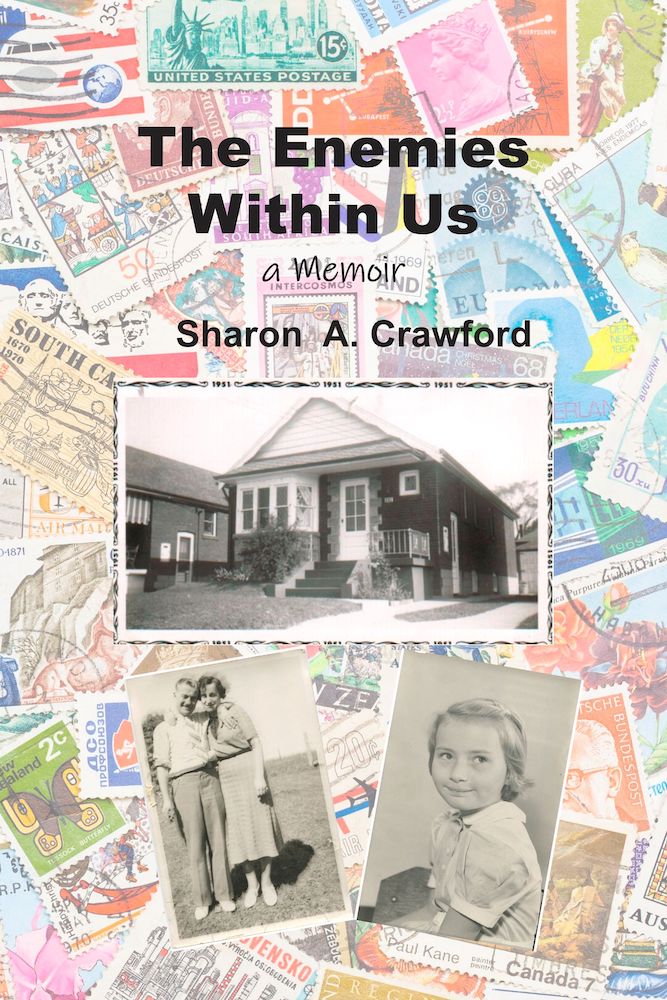
Cover of Sharon A. Crawford's mystery short story collection. Click on it for publisher's website

If you want to lift your short stories above the mediocre there are many things you can do. One of these is to be original in your story and in your characters. Readers like something different in their plot and eccentric characters can be a big draw whether you are writing commercial or literary fiction.

Three of us commercial fiction authors – Rosemary McCracken, Madeleine Harris-Callway and Sharon A. Crawford – who write both crime novels and short stories will be discussing why and how we do it. We will cover how we get story ideas and how much is from real life and how much from imagination. A couple of us have series characters in some of our short stories and in our novels, so we will discuss how we deal with time lines. Is it difficult going back and forth from writing novels and short stories and what the heck is the difference in how you write each?

Then there is marketing your short stories. Each of us has unusual ways we market our books (both the short stories and the novels).

And this panel will not be just the three of us talking. We are open to lots of  q and a.We want to get a real conversation going on short story writing. Here are the details about this upcoming panel being held by the East End Writers’ Group Wednesday, June 29, 2016.

Making Your Short Stories Sparkle and Sell

Do short stories come from real life, imagination, or both? How do you market short stories? For June’s East End Writers’ Group meeting join fiction authors Rosemary McCracken (shortlisted for the 2014 Derringer Award), Madeleine Harris-Callway (finalist for 2015 Arthur Ellis Award for Best First Novel), and Sharon A. Crawford (author of the “Beyond” mystery series) for a discussion on writing and marketing short stories.  Copies of authors’ books available and there will be  networking and food at 9 p.m.

Time and Date: 7 p.m. to 9.30 p.m., Wednesday, June 29, 2016

Location: S. Walter Stewart library branch, 170 Memorial Park Avenue, Toronto, Ontario, Canada

I am doing a guest blog post on Rosemary McCracken’s blog Moving Target about libraries and how they were and are important to me in my writing career, then seguing into this upcoming panel which is held at a library. There is a serendipity for me about this library branch. You’ll find this and more when my post is up on Monday, June 27 at Moving Target.

Meantime you can check out the panelists:

Rosemary McCracken http://www.rosemarymccracken.com/

Madeleine Harris-Callway http://mhcallway.com/

Sharon A. Crawford http://www.samcraw.com

Cheers.

Sharon A. Crawford

That’s my short story collection – Beyond the Tripping Point – book cover at the top of this post. If you click on the book cover, it will take you to my author profile on amazon.com


Tags: , , , , , , , , , , , , , , , ,

Electronic mania versus telling a good story

Sharon A. Crawford's latest in the Beyond series

Sharon A. Crawford’s latest in the Beyond series

We are bombarded with electronic devices in our daily lives and that includes TV shows. Sometimes the story gets lost in all the “bells and whistles.” But what about books? In particular novels set in present time? Should authors overwhelm the reader with smart phone usage, social media and the like?

A story in the May 2016  issue of The Walrus writes about this conundrum. Here writer Naben Ruthnum, discusses how some authors like best-selling author Joy Fielding skirt around it. While summarizing the story lines and acknowledging that the story is important, Ruthnum wonders how long this approach will be relevant in our digital/social media obsessed society?

Ruthnum writes “By ignoring the contemporary reality of instant communication, authors such as Fielding are preserving the nail-biting satisfactions of their art. But how much longer can these books provide escapism-seeking readers with relief given that their trick of withholding details is in direct conflict with our expectation that information always wants to be free?” (bolded part is mine).

That’s a big point with mystery novels – readers get temporary relief from a mad mad world and that includes overdoses of electronic media leading to overwhelm.

Yes, mystery novels do imitate reality. But the reality is what the story is about, the story’s setting and its characters. As in real life, not all people are digitally proficient; nor do they all immerse themselves in the whole digital/social media life-style. So, Fielding and other authors have to be true to that. And they are.

Personally, after all the over-abundance of bells and whistles on some TV shows set in present time (not futuristic and not fantasy), I prefer a somewhat toned-down digital presence in the novels I read (and write for that matter).

Many mystery novel authors handle this digital business very well. Marcia Muller’s PI Sharon McCone has a nephew who handles all this digital stuff so only what is necessary to the story is told. McCone gets to do what she does best – personal investigation while her nephew helps out on the digital end.

Mystery novel authors like Peter Robinson, acknowledge the digital aspect – his police officers have smart phones (they are called mobiles in England) but his main character Alan Banks doesn’t investigate by being glued to his smart phone or sitting in front of his computer (which some consider passe these days). He does what police should be doing – gets off his butt and interviews people, as well as following suspects in his car.

And yes, Robinson makes use of one current technology available to police in most cities world wide – CCTV- the police surveillance cameras on public city streets.

And I do the same in my Beyond books. Perhaps the short story collection Beyond the Tripping Point is the best example as stories in there take place in different time periods – 1965, 1980s, 1999 and present day. So for the first two – no technology-infested society. In 1999, where my fraternal twin PIs, Dana Bowman and Bast Overture are introduced, technology is relevant to the time – so I have cell phones (that have antenna and fold closed), Polaroid cameras for “instant” photos, and dial-up Internet connection, but with email functions. (Note: in Canada DSL didn’t get going until late 1999 – after the four “twins” stories in BTTP. I should know. My computer techie son’s computer business at that time was testing one of the DSL’s in 1999 and in late fall1999, my son hooked up my computer o one of the first DSL’s provided. Dana uses a computer for basics such as email and leaves all the computer technology to her brother. So in my third Beyond book (which I’m still rewriting), which is set in November and December 1999, I have computers – desktop and laptop – using DSL. There are also onlinr forums involved which Bast accesses – but it is all part of the plot and the twins’ investigation of a case. And birth record searches (which is part of the novel’s plot) were not online then (I checked with Service Ontario on this one), so Bast has to go into the Ontario Government dept. office to do an in-person search.

My BTTP stories set in present time do use electronic realities such as CCTV and smart phones. In fact one story, the main character is obsessed with using her device but that is part of the plot. The plot, the story is never buried in electronic devices.

Which is what Peter Robinson and many other mystery novelists do. Use the current technology (or technology for the time period of your novel) as it applies to  your story. Don’t make the technology the story unless that is your plot.

A happy medium often works best. Besides, we mystery novel readers need a rest from the over-indulgence of digital on TV in other areas of our lives. And that’s one reason I like reading from my Kobo (I do still read print books). Not a lot of flashing digital nonsense. And the print size is bigger – better for my fading eyesight (left eye)

Our eyes and brains need this respite, this escape from too much digital.

What do you think?

And on another note, I will be part of a panel (along with Ali Cunliffe and Susan Viets) about Self-publishing from both authors and editors perspectives. Hosted by the Editors Association of Canada, the panel/seminar will be held in Toronto Tuesday, April 26, from 7.30 p.m. More information on my Gigs and Blogs page here and also on Editors Association of Canada website.

Cheers.

Sharon

Again click on the Beyond Blood icon at the top to find out more about my Beyond books. At least we have this digital function today.


Tags: , , , , , , , , , , , , , , , , ,

Picture it to kick-start your story

Sharon A. Crawford's latest in the Beyond series

Sharon A. Crawford’s latest in the Beyond series

I teach a memoir writing workshop called Writing Your Memoir from Pictures. Participants look at old family photos, old newspaper stories, old ads to bring their minds back to their past. From there they start writing part of their memoir, perhaps even the beginning.

A variation of this could be done to get you going writing fiction or to help you create a scene in your story.

Let’s consider a photo of a family member or friend – whether in print or digital. Or even a photo posted online of someone you don’t know. Maybe you are having a hard time visualizing what your character looks like. Or maybe you have some idea but are having problems describing the character. Looking at a picture can trigger some ideas. I’m not saying you should make your character an exact copy, but images can get ideas swirling.

If your story is set in the not-too-distant past, maybe up to 150 years ago, old newspaper photographs, and ads especially can help you get ideas of how society lived at that time. Sure, newspaper stories back then, can tell you that. However, just looking at pictures and letting your mind absorb them, can help you create that scene in a town set in the 1950s or during one of the world wars or another time – whatever your story dictates.

Picture it and let your mind absorb. Then let your imagination loose.

You know what they say about a picture being worth a thousand words.

Cheers.

Sharon

If you click on the book cover at the top, it will take you to one place where my Beyond books area available


Tags: , , , , , , , , , ,

Beyond book character taking over my life?

Sharon A. Crawford channelling Dana Bowman from Beyond Blood

Dana Bowman, the main character in my Beyond mystery series is taking over my life – both professional and maybe some personal. Considering all the bad things that have been happening in my personal life lately (and no ramble on that here), maybe that’s a good thing.

It all started back at the book launch of Beyond Blood October 19, 2014. The editor at my publisher’s, Shane, suggested that the other mystery author, Klaus Jakelski, launching a mystery novel Dead Wrong and I do a brief skit. He also gave the criteria – we would be our main characters and the skit would be a mock-up of a scene in his novel. Klaus’ character would be waiting to meet a broadcaster and instead gets Dana Bowman, PI, but friend of his book’s broadcast character. Shane had to talk Klaus into doing this, but once Klaus agreed, he came up with a good short script.

The short skit went off okay, although I kept sneaking looks at the script, hidden in one of Dana’s props – her large sketchpad.

But it gave me courage to do future skits. This time as it was only me then, I did a 10-minute improv – no actual script, just a list of what I wanted to cover as Dana dissed her author (me). And lots of practice plus filling my mind with the skit in the hours before showtime. It went over well here at my East End Writer’s Group 15th anniversary presentation. One comment afterwards was it was great, like the character just jumping out of the book (this is a guy very critical of others’ writing). And another author who has acting experience said it was good, but she suggested not having the character do any actual reading from the book as it lowered the energy level.

Fair enough. I’ve done variations of the skit twice since then and seemed to actually fool one person in the audience. When I returned into the room, dressed back as Sharon, he commented “Oh, you’re back.” I know I wear a black wig, cap and sunglasses, but… you can check out Dana’s photo at the top and see what you think. The next skit was at a Syrian Refugee fundraiser in early December. I was overtired then and didn’t think Dana was up to her usual. But one person in the audience thought it was great.

Have I found a new calling in my old age? One that combines as book promo? I’m scheduled to do a 10-minute skit May 28 at the Toronto Heliconian club during Toronto’s big annual Doors Open event. And for the rest of the afternoon I’m there volunteering, I’ll be dressed up as Dana. A couple more Dana appearances are in the works, one with another person who has acting experience.

Methinks I need a bit of training in improv. Off to Bad Dog Theatre mini-workshop at least, next month.

Dana is also inhibiting my mind with novel plots, etc. But that’s another story. Check out the Gigs and Blurbs page connected with this blog and my website  There will be a new  better-designed website (same address) hopefully the end of this month/early April. My son, the computer whiz and I are working on it.

Cheers.

Sharon A. Crawford

Sharon A. Crawford's latest in the Beyond series

Sharon A. Crawford’s latest in the Beyond series. Click on book cover to see where book is available.


Tags: , , , , , , , , , , ,

Turning personal tragedy into fiction

Sharon A. Crawford's latest in the Beyond series

Sharon A. Crawford’s latest in the Beyond series

A wounded deer leaps the highest.
– Emily Dickinson

We all have personal tragedies in our life, whether it is losing a family member or close friend to disease, “natural” disaster, unnatural disaster such as war, accident or murder. Unfortunately these are now all part of living. We may also be carrying emotional baggage from our past. Sometimes these life tragedies can dig deep within our psyche. But, we writers have a bonus here to help us heal. We can write about it.

If memoir or personal essay is too personal, then  we can fictionalize the tragedy. Let me give you an example. As a child I was bullied by a teacher, a nun. So I’ve taken that experience, changed it to much worse and have a character in my most recent Beyond mystery loosely based on this nun. But I haven’t written fact. Instead I did the “what if:? scenario. What if one of my main characters was assaulted by a nun as a child and the nun surfaces in her adult life? How does she deal with it?

And the nun, what could be her story? Why is she the way she is. In my real life, I have no idea, so I fabricated a background of childhood torment and how does this affect the nun as an adult? The timeline for the story is different as my Beyond books are set in the late 1990s. And of course, the name of the nun is different. For one thing, in the late 1990s nuns weren’t using saint names, but their own names. So I made up a “real” name for this nun character

You can get the picture. Don’t write your story (unless it is memoir) but fabricate it into a fictional story that is part of your plot.

You may come up with something very creative and there may be a bonus – it might help you work through this piece of baggage you have been carrying around, often buried so deep you don’t realize it.

It’s worth a try.

On a recent personal note, I am dealing with a personal tragedy – a close friend died of lung cancer last month. She was only 51. Her memorial is Saturday afternoon. After that, I will need to follow my own advice.

Cheers.

Sharon A. Crawford

If you click on the book cover at the top it will take you to my publisher’s page about my books and my background.


Tags: , , , , , , , ,

What to do between books

Sharon A. Crawford's latest in the Beyond series

Sharon A. Crawford’s latest in the Beyond series

What does an author do in between books?

This week I finally emailed the manuscript for my latest Beyond mystery to my publisher. Met the deadline with a few days to spare.

Here’s what I’m doing now and plan to do. It might trigger some ideas for you.

What I don’t do is keep thinking about the outcome of the submission and let it get me in stall mode. Instead, I move on to other writing projects, editing clients’ work, writing workshops and promo of the two Beyond books published.

Other writing projects include developing a possible next Beyond novel – in my head, at this point. I also write personal essays and memoir so I have already returned to a personal essay cum memoir for more rewriting and searching for possible markets. There are other personal essays to be written or rewritten so I keep those in mind as I search for possible markets. Sometimes the markets trigger the essay.

I still edit manuscripts, so have  clients-in-waiting, so to speak, and have emailed one of them, will email another one, and the third one is on holiday right now but when he is back in April, I will email him.

I want to continue teaching writing workshops at branches of Toronto Public Libraries. That means contacting the librarians at some of the 100 branches (yes, Toronto has that many branches. We Torontonians like reading, like borrowing library books – print or e-copy – and attending events, such as writing workshops. These are free to library patrons but I get paid for teaching them). I also plan to develop more workshops I can teach.

Promoting Beyond Blood and Beyond the Tripping Point. I’ve already sneaked in or had already arranged for presentations in the upcoming months, which will start March 24. Have one for the end of May and one in the works for the end of June. Once this nasty winter weather is finished (hopefully before March 24), I want to schedule at least two promo presentations a month – some on my own, and some with Crime Writers of Canada and The Toronto Heliconian Club. I am a member of both and do have something scheduled with each. More on that in future posts.

And I’m doing something that borders on promo and workshops. The end of April, I’m part of a panel on editing and writing for self-publication at an Editors Canada meeting. Again, more on this one in a later post. Although, meantime, you can check the Gigs and Blogs Tours page here with this blog or on my website – go to Beyond Blood and Workshops pages.

You can develop your own writing, etc. plan to keep you from thinking about what the publisher will say about your manuscript. It also works when you have submitted shorter pieces or poems to magazines – print or online.

Come to think of it, why not write some poetry. That will get your creative juices flowing.

Cheers.

Sharon A. Crawford

If you click on the book cover at the top it will take you to my publisher’s page about my books and my background.


Tags: , , , , , , , , , ,

Using deadlines to write

Sharon A. Crawford's latest in the Beyond series

Sharon A. Crawford’s latest in the Beyond series

Writing deadlines are something journalists, editors, and authors with publishers have to deal with all the time. So does any writer who is writing a piece to enter in a writers’ contest.

But what if you are writing that novel, that short story and at this point have no publishing deadlines? You might think “hey, I have the freedom to take my time writing this story.”

You know how that can go if you are not disciplined. You might write when the  muse hits. You might write if you don’t have something else to do in a certain time. The underlying theme here is “I have all the time in the world to finish this novel, this short story.”

All the time in the world might expand to never finishing.

Why not set a deadline or if a novel, several deadlines, such as “I will finish so many pages, so many chapters by such and such a date.” If  you have an editorial deadline from a magazine editor or book publisher, or a contest, entry, wouldn’t you be working to the deadline? Wouldn’t that include setting up a writing time-line? Allow some flexibility for glitches such as what I’ve been encountering with my latest Beyond mystery book. Research replies. I finally had to go elsewhere for one (books and another police source) and in the case of the government agency with no email reply, I phoned.

Writing they say is1 per cent inspiration and 99 per cent perspiration. I have sometimes seen that equation as 10 per cent and 90 per cent. Either way you can get the picture.

Why not use deadlines for the perspiration part? I find doing that has an added benefit than just getting the writing done.

Often when you sit down at your computer in a specified time and write, the inspiration and creativity just kick in and off you go, oblivious to whatever else is going on around you. I’ve been unaware of night creeping in until I realize that it is only the computer screen and the desk lamp lighting everything up. (That’s excluding the creativity going on as I write.)

Speaking of deadlines. Please excuse me while I get back to rewriting my latest Beyond book. My publisher is waiting.

Cheers.

Sharon A. Crawford

If you click on the book cover at the top it will take you to my publisher’s page about my books and my background.


Tags: , , , , , , ,

More tales from the novel rewriting trenches

Sharon A. Crawford's latest in the Beyond series

Sharon A. Crawford’s latest in the Beyond series

Still working furiously to make changes in my current Beyond book to meet my publisher’s deadline. Making progress, despite distractions and glitches from others.

The research mentioned last week hit some more glitches. The social issue in the new novel (not telling what it is – no spoilers here) ran into the same roadblock with the Ontario government department as the police query with the local police services corporate communications department. No reply.

So, my journalist background came into play here. Journalists don’t give up on their research, despite roadblocks and twists and turns.

The two library books I had looked at in the Toronto Reference Library? Sure, I had made some notes but that wasn’t enough. So I bought the out-of-print one on Canadian Law (it fits the novel’s time period) secondhand from amazon.ca .Counting the day I put in the order online, it took three business days to arrive in my mailbox. The other Canadian Law book – a q and a type with questions for civilians I found out from an editing client that over 20 copies are circulating in Toronto library branches. I put a hold on it and if there are still some other copies not on hold, I should be able to renew my copy three times.

I phoned Service Ontario and after being shunted around three times got a very knowledgeable person in the specific department who answered my questions.

For that one nagging police procedure question that the two books couldn’t answer, I emailed a retired police colleague via Linked In. He replied immediately, answered part of my question and said he would contact one of his police connections to get more of an answer. I gave him my email address to avoid the Linked In quirks in email and he has replied again this week, apologizing for the delay and why (that is his business) and that he would be contacting his colleague that evening.

Meantime, I’m rewriting to get around anything that wasn’t true with the social issue and police procedure back in 1999. And also rewriting to deal with any plot threads left dangling. Some will get deleted as irrelevant.

Also there is the matter of my two main characters, fraternal twin private investigators Dana Bowman and Bast Overture trying to take over the plot. I have to listen to them because they can have good ideas.

And it is their story. Always listen to your characters.

As for the other distractions, I’m trying to rein them in. Personal calls that come during my writing time (which pretty much follows a business weekday give or take a few hours at either end), I will now let them go to voice mail. My dentist appointment will have to be moved to February 29 after my deadline. I have a big problem with medical people who don’t have some evening and weekend hours .I may ‘not be working outside my home, but what about those who do? Why should they have to take time off for dental and other medical appointments, Hey medical professionals. Get with the times. Yes, some professionals (like police, transit drivers, etc.) have work hours all over the map. But many people still work regular business hours (excluding email and social media). Medical clinics understand this and even my optometrist works one evening a week and some Saturdays. My eye specialist doesn’t. My dentist doesn’t. So, unless a medical emergency, I work their times around mine.

I have also worked in editing clients after the end of February and any new inquiries re work, they are being told I am booked up until … Two current clients have been scheduled in after the end of February – it is set up to work for both of us.

Now, back to the novel rewriting. Bast and Dana are waiting impatiently for me to get to it.

Cheers.

Sharon A.Crawford

If you click on the book cover at the top it will take you to my publisher’s page about my books and my background.


Tags: , , , , , , , ,

Writers’ group looks at Writer’s Block

Sharon A. Crawford's latest in the Beyond series

Sharon A. Crawford’s latest in the Beyond series

Who is more to be pitied, a writer bound and gagged by policemen or one living in perfect freedom who has nothing more to say?

– Kurt Vonnegut

You might not want to be arrested and charged by police but there are many options if you have a dose of writer’s block. Last evening, in a round circle discussion, members of my East End Writers’ Group came up with some novel ideas for well writer’s block when writing a novel – or writing anything.

Here are our words of wisdom, in no particular order:

Take a writing course, especially one taught by Brian Henry – you will get inspired and Brian gets you to actually write in his workshops, even during lunch.

Put the blocked novel, short story aside and write something different. Maybe your brain is bored with the same old story and needs something new, at least temporarily. But do come back to the original.

Have a roster of several writing projects on the go – to some extent; don’t over tax yourself – so you can move from one to the other when stuck.

Start reading. You would be surprised how reading another novel, short story, newspaper article written by someone else can inspire you to write. Don’t analyze the story’s style, just go with the flow of writing and let your subconscious absorb the writer’s style. You don’t want to copy it, but it will jar your inner creativity.

Freefall write – write anything that comes to mind and keep writing for at least 20 minutes. You can also use a word, a sentence from a book, a sound, something visual to get you going. Or if you are angry, worried, or fearful about something, write about that. Go where the fear takes you.

Do something completely different – preferably something physical – walk the dog or just go for a walk on your own, do some gardening (season permitting). Getting your body moving can help wake up your brain – often with a possible solution to your block.

One group member writes in different languages, so when blocked he switched languages. He also juggles several writing projects at a time.

And don’t forget to join a writing critique group. Even if you don’t always bring something to read for feedback, just listening to someone read their writing excerpt and listening to and taking part in the discussion, can be inspiring.

Let’s banish writer’s block where it belongs – buried in the snow.

Here are a couple of books to help you do just that with writer’s block.

The Artist’s Way – Julia Cameron

Unlock Writer’s Block – Paul Lima

Cheers.

Sharon

If you click on the book at the top, it will take you to my books,bio, etc on my publisher’s page. To check out the East End Writers’ Group go here.


Tags: , , , , , , ,

When your research and plot just don’t jibe

Beyond Blood_Final Ebook

Sharon A. Crawford’s latest in the Beyond series

You are writing what you think is a terrific story. You have done all your research – you think. Then, you find something crucial in your plot just would not happen in real life. You do have some leeway in fantasy and science fiction, but I’m referring to mysteries, romance, historical fiction and other commercial fiction, as well as literary. Let’s say you are writing historical fiction and a real-life character, well-known from the time you are writing in, is a part of your plot – maybe even crucial to the story.

But you goofed. Your story is set in the same time as this historical character lived, but you have just found out in re-checking your research, that no way could your famous historical character be in such and such a place when you have placed him there. At that time, he was living in France and your story takes place in England. You have set your story in the Victorian era, so you can’t just have your character take an airplane from France to England.

What can you do?

Delete this historical character from your story completely? Keep him in, but just as a reference to the times and something in your plot (music, government? Move some of your plot to take place in France? Change the historical time of your plot? Or?

Whatever you choose to do, it will require some re-writing. But you need to be accurate. True, for the purpose of your story, you have some leeway, but you can’t lie about history. If it were me, I would go for moving some of the plot to France, unless I decided this historical character didn’t need to play an active role in your plot.

I don’t write history – exactly. But my Beyond mysteries take place in the late 1990s, although the current one I’m writing just gets into the 21st century. So for police procedure and anything else – such as computers and cell phones, and medical (as there is some of that in the story) have to be what they were like back then. So I have to be careful with all that – including laws and even the names of courts. Gets tricky.

Currently I am fact-checking my research as it is incorporated into the novel. One of the characters suffers from a concussion. Fortunately there is a lot of information about concussions, both on the Internet (I’m referring to respected medical sites such as the Mayo Clinic) and books on the subject because of the current concern about sports-related injuries – many concussions.

The problem here is to make sure what the medical professionals do now was done in 1999. And also my character’s concussion is not from a sports injury.

Fortunately, the books on sports concussions go into details about past diagnoses and treatments. Studies and the like posted on the Internet often have references footnoted by number. (they all should have references), and I can cross-check the dates on those with the information in the study text.)

I also checked to see how the person’s head was “x-rayed” and found that CAT scans were around in 1999 – in fact they started being used widely in 1980. So my character had a CAT scan.

It never hurts to double-check your research. And remember, you may think you have done all your research before you write, but you probably haven’t. As you develop your story, “things” come up that you have to check on.

Now, I have to go back and research something in my novel’s climax for what one character does. What would she be charged with or would she be charged with anything? And in 1999, not 2016.

Back to my police consultant and to the Canadian Criminal Code in 1999. That might mean a copy of the CCC for a year or two before that, unless amendments were made and published in 1999.

But whatever the correct answer is, I should be able to change that part of my plot as needed.

Cheers.

Sharon A. Crawford


Tags: , , , , , ,