RSS

Tag Archives: Charactistics of good fiction plot

Recharging you novel’s rewrite

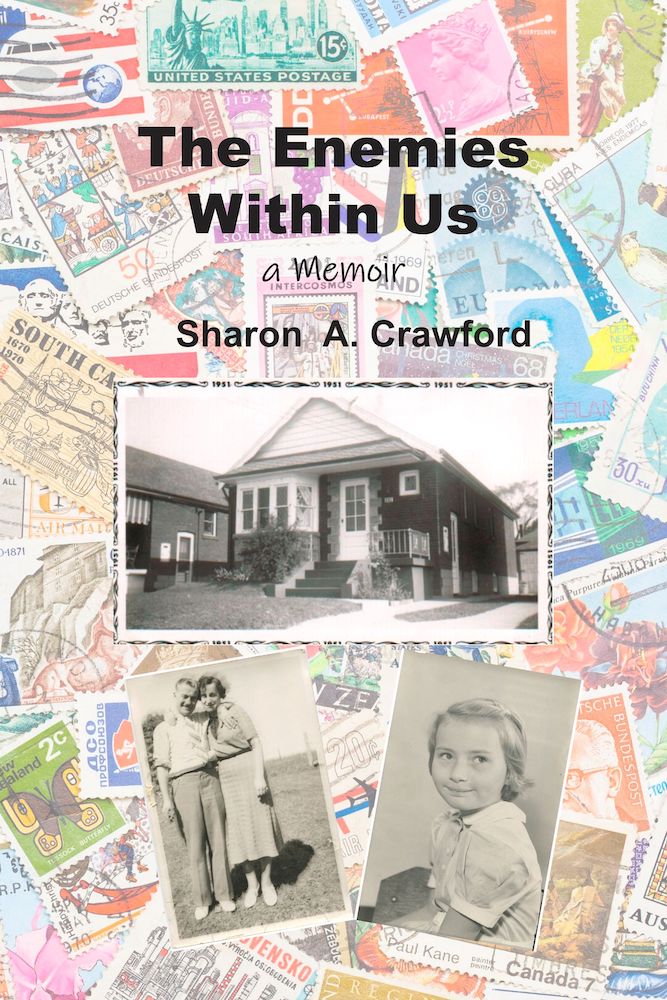
Sharon A. Crawford's latest in the Beyond series

Sharon A. Crawford’s latest in the Beyond series

This week I finally got back to rewriting the next novel in my Beyond mystery series. The plan had been to spend a good part of June, July and August doing this. But for a change I had a lot of client work. That I’m not complaining about. Neither am I complaining about spending time gardening. As well as writing, gardening is a passion of mine.

However, I am complaining about all the health issues I’ve had to deal with lately, some caused by others’ negligence. (See my post this week on my personal blog Only Child Writes.).

Still doing one client’s work – but no complaints. Client confidentially doesn’t allow me to discuss the client’s work, but sufficient to say it is interesting and challenging and when it arrives I switch over from the novel rewrite to the client work.

Getting back to the big novel rewrite is also a challenge. Having ideas percolating inside my head while I was doing other things and also some suggestions from the editor at Blue Denim Press (my publisher) have been big helps. So has one of my writer friends and colleagues – Rosemary McCracken – just publishing the third in her Pat Tierney mystery series.And having a wacky main character like PI Dana Bowman is good. At least I think so, although she does get inside my head a lot and likes to have her way in her stories. All inspiration to do more than put the seat of my pants to the chair.

How did I actually get back into the rewriting?

First, I reread the novel and comments I had made for changes and also noted what I had changed. Then I got in and made some changes in the beginning and continued on until I got stuck. But I had ideas for other parts, including the ending which needed a big change, so those are the places I focused on next. I feel better that I made changes in the ending even though I know that some of it will be changed as more changes in parts coming before will be made. That’s okay. Often just doing something that is a change is a good start.

Writing the ending before some of the rest, you may ask? I am following the advice given by another author Ken McGoogan who said when he gets tired of writing in chapter order, he will go the end. Mind you he writes narrative non-fiction. But I think it can be done with fiction as long as you realize it is not written in granite. Well, some writers think their prose, and even their punctuation, should be left exactly as they write it.

That is arrogance and maybe a little worry that the editor will mess up your prose so it isn’t really yours when it’s done. And yes, being an editor myself, and a former journalist who worked with several editors, it does happen. However, there is one thing we writers need to remember.

Writers work in isolation. Writers see their creations with tunnel vision. Another pair of eyes will find flaws and better ways to express something than the author.

So keep up the rewriting. Although you can get carried away with that. Another author colleague is still making changes in his novels after they are published. And yes he does have a trade publisher, so not being self-published he can’t exactly make changes in the print book for sale. But he can do so for his author readings.

Cheers.

Sharon A. Crawford

If you click on the Beyond Blood book icon a the top it will take you to my amazon author profile and books.


Tags: , , , , , , , , , , , , , ,

Using real life in your fiction – more info

Sharon A. Crawford's latest in the Beyond series

Sharon A. Crawford’s latest in the Beyond series

A writer friend recently told me that I was one of the strongest people she knows and then she referenced that I raised my son as a single parent.

Once I got over the shock (I seem to live my life in worry and fear lately but I am very vocal and get after people and organizations that mess up my life), I started thinking that this may have a lot to do with the family situation I created in my novel Beyond Blood.

My main character, PI Dana Bowman has a seven-year old son, David. She is also divorced, so a single mom.

In my life, I do have a son whom I raised as a single mom. But I did have help from my ex-husband. Dana gets no help from her ex, Ron, but she and David live with her fraternal twin brother, Bast Overture, also a PI.

My son was a young child in the 1980s while Beyond Blood is set in 1998. But subconsciously I guess some of raising my son rubbed off. But there are several differences besides the time frame. Dana is much more outspoken than I was back then and she ventures where another character Great Aunt Doris says she shouldn’t because she is a mother. Aunt Doris says Dana shouldn’t be working as a private investigator and chasing after bad people also because it’s not safe for David.

Unfortunately, it turns out Aunt Doris is right here because David is kidnapped. But that puts Dana in the double-bind of being the PI to find her son and being his mother. That creates a lot of character conflict which influences the plot. And that is pure imagination. My son was never kidnapped. The closest he came to “disappearing” was when he was four years old. I couldn’t find him anywhere in the house (and yes, I was home at the time) or outside – at first. Then I looked a little closer in the big backyard. Yup! There he was, crouched down in the grass and playing with his toys.

My point here is you can use some situations and even characters loosely in your novels and short stories. But you have to fictionalize it all. Just think “trigger point” and use your imagination from there.

Maybe living my life in fear (balanced by being very outspoken and yes, I admit, sometimes grumpy) has spawned something good. Because Dana’s family situation continued in the four linked short stories in Beyond the Tripping Point and in the current Beyond novel I am currently rewriting.

Cheers.

Sharon A. Crawford

And as usual, if you click on the book cover at the top it takes you to my amazon profile and my two Beyond books


Tags: , , , , , , , , , ,

Writing through complicated novel plots

Sharon A. Crawford's latest in the Beyond series

Sharon A. Crawford’s latest in the Beyond series

Sometimes novel plots can get away from you, especially if like me, you write mysteries or thrillers. Even doing an outline before starting to write won’t stop potential confusion for several reasons.

Characters, especially the main ones, have a habit of taking over the novel and that means directing the plot. Which can be a good thing, because it shows that your novel has life. But when, like me in my Beyond mystery series, you have more than one point of view  character, you not only have to deal with one rogue character, but sometimes two. Dana Bowman the main character in Beyond Blood is an outspoken willful PI with a mind of her own. Her fraternal twin brother, Bast Overture her partner in solving crime is a bit tamer. But he is a former crime reporter and the words “reporter” and “journalist’ send out flares of “digging up the dirt.”

So with two nosy-parkers on the loose (often working somewhat separately) and adding in some other characters such as police Detective-Sergeant Donald Fielding and Dana’s six or seven-year old son (age depending on which book), this author is often juggling a lot of plot development.

A disclaimer: I don’t do much of an outline beforehand. Sure, I have some idea of where I want the story to go, but I find if I do too much outline or summary I seem to automatically switch to write-the-novel mode and I’m off in that direction for then.

So, what do I do to try to keep the plot consistent and making some sense?

I do some flipping back and forth to check – maybe after the day’s writing session or perhaps just before I start writing the next time. Or as often happens a couple of niggling plot developments are in my mind and I need to sort them out. So I use the Word “Find” tool to go to these plot developments and from there do one or two things:

Make a note either in brackets in red in the paragraph or whole scene or with the Comment tool about what needs to be changed. I also keep separate files on some areas of plot development that come up and/or I want to put in. Not exactly an outline, but more of a description of what I’m trying to do…at that point. Until Dana and/or Bast step in.

When all else fails I just go in there and make the changes/corrections.

With two PIs I have to make sure they don’t overlap in what they do – unless they are actually doing some of their investigation together. When working alone, they have to keep each other informed of what they find or the reader could wonder “How did he know that?” And do it without long conversations between the two. Sometimes they leave each other phone messages or sometimes I use a couple of short narrative sentences, such as “Bast brought Dana up to speed.”

It gets even trickier in the current Beyond novel I’m rewriting when one of the twins suffers a concussion.

But, hey I like a challenge. It is one of the things that makes writing fiction interesting.

Cheers.

Sharon A. Crawford

Click on the Beyond Blood book at the top to go to my amazon author profile and books.

To see what I’m up to with the Beyond books and characters check out the Gigs and Blog Tours page of this blog here


Tags: , , , , , , , , ,

Writing from Real Life

Rosemary McCracken author of the Pat Tierney mystery novels

Rosemary McCracken author of the Pat Tierney mystery novels

Today, I have a guest blogger – Rosemary McCracken, a friend and writing colleague who has often been part of the same panel on crime writing as me. Rosemary’s third novel, Raven Lake, in her Pat Tierney mystery series is out now in June and… well I’ll let Rosemary tell you all about it and her writing. The e-book launch is on Facebook this Sunday from 4 p.m. to 7 p.m. Click here to reach the party site.and the in-person book launch is June 25, 2 p.m. to 4 p.m. at Sleuth of Baker Street bookstore in Toronto. Over to you,  now Rosemary…

Thank you, Sharon, for inviting me here today!

I thought I’d talk about a subject that’s dear to my heart—writing from real life. All writers “borrow” from the people they know and situations they’ve been in when they create their fiction. Some to a greater extent than others. Two students in my How to Develop Your Novel course at Toronto’s George Brown College are working on novels based on their own lives. It’s not as easy a job as it might seem.

Writers who turn real-life events into fiction face the same challenges that writers have with any novel. They need to create believable characters and riveting plots. But knowing the real-life counterparts and the outcome of their adventures can often curb a writer’s ability to let the characters get on with their fictional lives.

My advice to writers who base their stories on real people and events is not to incorporate every detail of the real story into the work of fiction. “Use your imagination,” I tell them, “and don’t feel you have to stick to the facts. You’re writing fiction.”

They will need to expand the scope of the real-life story. In fiction, plot is the order of events in a story that gradually builds tension. The plot needs to develop with all its requisite plot points—which may take characters far afield from the people they are based on. Writers shouldn’t be afraid to impose the cause-and-effect order of plot on the story they are telling. It will build conflict and tension, and make the story more unified and enjoyable for readers.

Of course, names will have to be changed to protect the privacy of people the writer knows. The writer should go a step further and change characters’ initials as well, so that Mark Manners doesn’t become Mike Madison. The character’s physical appearance, the details of his childhood and his job will also need to be altered.

With my background as a newspaper journalist, I enjoy developing fiction from real-life stories that have been in the news—situations or events that happened to other people. And, yes, a story that was in the news a few summers ago is part of my new Pat Tierney mystery novel, Raven Lake.

The news coverage described the plight of vacationers who had turned to rental websites to find vacation homes to rent for their holidays. They arrived at their vacation destinations in Ontario lake country only to find that they’d been duped by con artists. The cottages were actually full-time residences and not for rent at all. They lost their deposits, some lost their full payments, and they had nowhere to spend their holidays. My heart went out to these people who had driven for hours thinking that they were about to spend a relaxing week or two at a sylvan lake. I also felt sorry for the residents of the targeted homes who had would-be renters turning up on their doorsteps. Some of them were afraid that these strangers might take their frustrations out on them.

A perfect crime for a mystery set in cottage country. It helped that I didn’t know any of the real people involved so I was free to create my own characters and outcomes.

Rosemary McCracken

Pageflex Persona [document: PRS0000040_00070]

Bio:

Rosemary McCracken has worked on newspapers across Canada as a reporter, arts reviewer, editorial writer and editor. She is now a Toronto-based fiction writer and freelance journalist. Her first Pat Tierney mystery, Safe Harbor, was shortlisted for Britain’s Crime Writers’ Association’s Debut Dagger in 2010 and published by Imajin Books in 2012. It was followed by Black Water in 2013. “The Sweetheart Scamster,” a Pat Tierney mystery in the anthology Thirteen, was a finalist for a Derringer Award in 2014. Rosemary’s third Pat Tierney mystery, Raven Lake, has just been released. It is available at myBook.to/RavenLakeTierney.

Follow Rosemary on her blog, Moving Target at http://rosemarymccracken.wordpress.com, on Facebook at www.facebook.com/rosemarymccracken and on Twitter @RCMcCracken. Visit Rosemary’s website at http://www.rosemarymccracken.com/.

Links to Rosemary’s books and short stories

Safe Harbor: myBook.to/SafeHarborTierney

Black Water: myBook.to/BlackWaterTierney

Raven Lake: myBook.to/RavenLakeTierney

Thirteen: http://amzn.to/18oY8mF


Tags: , , , , , , , , ,

Point of View clarity important in writing fiction

Sharon A. Crawford's latest in the Beyond series

Sharon A. Crawford’s latest in the Beyond series

Currently I am reading a mystery novel where the characters’ points of view are all over the map  – in one chapter without a scene change, in one scene, Even in one paragraph the point of view switches from one police detective to the other. They are police partners, but this “jumping heads” (as it is known in the editing business) is not only ridiculous and annoying it is distracting from the story. And it is an interesting story.

Looks like the author’s editor was asleep at the computer. I blame the editor, not the author because as an editor I find that 85 per cent of my fiction clients mess up the point of view. And, yes, if the author mixes up points of view, then it is his or her editor’s job to fix it.

So, what is acceptable in fiction writing (unless you are going for experimental fiction, which this mystery novel is not)? Here we go with the standards:

In novels it is acceptable to have multiple points of view as long as it isn’t overdone. Do we really need to know what minor characters A and B think?

Up to five points of view are the limit in my opinion.

Keep the same point of view within a chapter or a scene. Next chapter or next scene you can change the point of view. For scenes this is usually indicated by extra line spacing and starting the first paragraph flush left or separating the scenes with an asterisk. Read Peter Robinson’s mystery novels. He usually has three points of view and does a superb job of it. He uses the change of scene change of character POV method with extra line spacing.

Other authors indicate change of character POV by putting the character’s name at the top of the change – this can be with a new chapter or new scene. I use this method in my latest Beyond book, the mystery novel Beyond Blood. The story is told from four different points of view – Dana Bowman, Bast Overture (the two fraternal twin PIs), David Bowman (Dana’s six-year-old son), and the mysterious “Him.” I put the character name and the date and time (a word on that in a sec) just before the character POV change. This change usually occurs with chapters but I do have it within chapters – change of scene change of character POV with the above-mentioned indication.

It is not necessary to always use time and date unless it is relevant to your novel. I’m not the only author who does this. I do it because Beyond Blood is a fast-paced mystery that occurs during eight frantic days in August 1998. Often when I switch point of view what is happening with that character is happening simultaneously with another POV character. And that is another reason to switch POVs.

Switching POVs is also a good way to heighten suspense – if you end one scene/chapter with one character left out on a limb and the reader does not know what will happen with him or her next. Instead they go on to another character – more waiting to find out/more suspense. And it also allows plot development that just might not be possible using one character’s POV>

Switching points of view in a novel also allows the author to get deeper into each main character – and gives the readers a more intense looksee at the characters.

My POV on POV anyway.

Cheers.

Sharon

Click on the Beyond Blood icon at the top to find out more about my Beyond books.


Tags: , , , , , , , , , ,

Electronic mania versus telling a good story

Sharon A. Crawford's latest in the Beyond series

Sharon A. Crawford’s latest in the Beyond series

We are bombarded with electronic devices in our daily lives and that includes TV shows. Sometimes the story gets lost in all the “bells and whistles.” But what about books? In particular novels set in present time? Should authors overwhelm the reader with smart phone usage, social media and the like?

A story in the May 2016  issue of The Walrus writes about this conundrum. Here writer Naben Ruthnum, discusses how some authors like best-selling author Joy Fielding skirt around it. While summarizing the story lines and acknowledging that the story is important, Ruthnum wonders how long this approach will be relevant in our digital/social media obsessed society?

Ruthnum writes “By ignoring the contemporary reality of instant communication, authors such as Fielding are preserving the nail-biting satisfactions of their art. But how much longer can these books provide escapism-seeking readers with relief given that their trick of withholding details is in direct conflict with our expectation that information always wants to be free?” (bolded part is mine).

That’s a big point with mystery novels – readers get temporary relief from a mad mad world and that includes overdoses of electronic media leading to overwhelm.

Yes, mystery novels do imitate reality. But the reality is what the story is about, the story’s setting and its characters. As in real life, not all people are digitally proficient; nor do they all immerse themselves in the whole digital/social media life-style. So, Fielding and other authors have to be true to that. And they are.

Personally, after all the over-abundance of bells and whistles on some TV shows set in present time (not futuristic and not fantasy), I prefer a somewhat toned-down digital presence in the novels I read (and write for that matter).

Many mystery novel authors handle this digital business very well. Marcia Muller’s PI Sharon McCone has a nephew who handles all this digital stuff so only what is necessary to the story is told. McCone gets to do what she does best – personal investigation while her nephew helps out on the digital end.

Mystery novel authors like Peter Robinson, acknowledge the digital aspect – his police officers have smart phones (they are called mobiles in England) but his main character Alan Banks doesn’t investigate by being glued to his smart phone or sitting in front of his computer (which some consider passe these days). He does what police should be doing – gets off his butt and interviews people, as well as following suspects in his car.

And yes, Robinson makes use of one current technology available to police in most cities world wide – CCTV- the police surveillance cameras on public city streets.

And I do the same in my Beyond books. Perhaps the short story collection Beyond the Tripping Point is the best example as stories in there take place in different time periods – 1965, 1980s, 1999 and present day. So for the first two – no technology-infested society. In 1999, where my fraternal twin PIs, Dana Bowman and Bast Overture are introduced, technology is relevant to the time – so I have cell phones (that have antenna and fold closed), Polaroid cameras for “instant” photos, and dial-up Internet connection, but with email functions. (Note: in Canada DSL didn’t get going until late 1999 – after the four “twins” stories in BTTP. I should know. My computer techie son’s computer business at that time was testing one of the DSL’s in 1999 and in late fall1999, my son hooked up my computer o one of the first DSL’s provided. Dana uses a computer for basics such as email and leaves all the computer technology to her brother. So in my third Beyond book (which I’m still rewriting), which is set in November and December 1999, I have computers – desktop and laptop – using DSL. There are also onlinr forums involved which Bast accesses – but it is all part of the plot and the twins’ investigation of a case. And birth record searches (which is part of the novel’s plot) were not online then (I checked with Service Ontario on this one), so Bast has to go into the Ontario Government dept. office to do an in-person search.

My BTTP stories set in present time do use electronic realities such as CCTV and smart phones. In fact one story, the main character is obsessed with using her device but that is part of the plot. The plot, the story is never buried in electronic devices.

Which is what Peter Robinson and many other mystery novelists do. Use the current technology (or technology for the time period of your novel) as it applies to  your story. Don’t make the technology the story unless that is your plot.

A happy medium often works best. Besides, we mystery novel readers need a rest from the over-indulgence of digital on TV in other areas of our lives. And that’s one reason I like reading from my Kobo (I do still read print books). Not a lot of flashing digital nonsense. And the print size is bigger – better for my fading eyesight (left eye)

Our eyes and brains need this respite, this escape from too much digital.

What do you think?

And on another note, I will be part of a panel (along with Ali Cunliffe and Susan Viets) about Self-publishing from both authors and editors perspectives. Hosted by the Editors Association of Canada, the panel/seminar will be held in Toronto Tuesday, April 26, from 7.30 p.m. More information on my Gigs and Blogs page here and also on Editors Association of Canada website.

Cheers.

Sharon

Again click on the Beyond Blood icon at the top to find out more about my Beyond books. At least we have this digital function today.


Tags: , , , , , , , , , , , , , , , , ,

Can fictional characters teach readers something?

Sharon A. Crawford's latest in the Beyond series

Sharon A. Crawford’s latest in the Beyond series

Readers read novels to be entertained. However, life isn’t all about entertainment. We want to learn more, to grow, to live a better life.

Can fiction help here? I think so. If you have credible fiction characters who live lives like readers. And it doesn’t matter what genre the novel is written in. For example, science fiction can present us with a future we might just not want, with the underlying story of just how it can play out. This requires believable characters who deal with these situations. Built into a good sci-fic story are elements of present time – such as law enforcement professionals and your every-day person like divorced parents, seniors, etc. Sometimes the professionals and the single mom are one and the same person. Although the characters have problems peculiar to a future  time period to deal with; like us now, they have common day-to-day problems as well. So the reader can identify with the story and the characters and get a satisfied read. A science fiction author who does this very well is Robert Sawyer. Read any of his books to see how he handles it. And many of his novels also have murder in them.

In the mystery genre, there is a series by J.D. Robb (Nora Roberts pseudonym) where the novels are set in the future. So the reader not only gets policing in the future,but also something many of us now balance – a career and a marriage.

In somewhat current time (in the late 1990s), my novel Beyond Blood, has characters that are representative of real-life characters. I have the fraternal twins (which may not be so common) Sebastian (Bast) Overture who is gay and Dana Bowman who is a divorced mother of a six-year old boy. Readers have told me that it is this relationship between mother and son that they relate to because they find it not only interesting but compelling. Of course, not all six-year olds are kidnapped (thank God), but here I have taken a universal relationship, that of a mother and son, and escalated it into the “what if?” area, where a mother is pushed to the edge to find her son before it is too late. And because Dana is human she may try to forge ahead as a professional PI and push her fear and other feelings back inside, we know that in real life this just doesn’t happen. She is conflicted, and yes she does lose it at times.

And that’s the key to writing fiction to teach a lesson. You need both realistic characters that readers can identify with and a plot that grabs readers.You need characters that are human, because we are human. This way you can show readers what your characters are like, what they are made of – but heightened to situations beyond what you would deal with in your life.

Remember, readers want to also be entertained.

You can read for yourself how Dana Bowman handles all her problems with her son’s kidnapping and all the complexities that occur, from an ex-husband who shows up as a suspect, to the stuttering Detective Sergeant Donald Fielding whom she is attracted to, to ….well, you may just have to read Beyond Blood to find out. Click on the book icon at the top for more info.

And I have a new website with a much different website design, thanks to Martin Crawford, computer software expert and Juni Bimm, graphic artist. The website text is purely my doing. So take a look here

Cheers.

Sharon A. Crawford


Tags: , , , , , , , , , , , , ,

Making your fiction characters sick

Sharon A. Crawford's latest in the Beyond series

Sharon A. Crawford’s latest in the Beyond series

I’ve talked before about giving your fiction characters tags such as jangling keys in their pocket or going silent when someone starts arguing with them. These tags show character traits and help the reader connect better with them. The first trait mentioned might occur when the character is impatient and the second opens a lot of things the author can show about the character. It might be as simple as the character hates arguing but he or she might be afraid to speak up when challenged. Both those bring up the question “Why?” in the reader’s mind. And give the author leeway to build his or her character.

Another trait that can be used is health issues – good or bad. Maybe you want your character to be an extreme fitness buff. Maybe he is passionate about playing golf. But the flip side of the coin can present even more interesting character tags – the character’s illness or an injury – the latter maybe occurring during the story. For example, the late Robert Parker in one of his Spencer novels had Spencer get shot in the chest and part of the novel dealt with his recovery and how it affected him both professionally and personally.

In my Beyond novel, Beyond Blood, I give Detective Sergeant Donald Fielding an affliction no one really wants – migraines. I know of where I write here because when I was in my early 30s (back in the grey ages, of course), I had migraines with almost the whole enchilada in symptoms. Didn’t have the aura but I did get sick to my stomach and of course the pain. And lots of treatments were tried and not all worked or were only temporary. Then there was the personal and professional repercussions. I had to postpone story interviews with subjects because I had a migraine, and one of the treatment options – blowing in a brown bag, supposedly to stop the pain (it didn’t work), was done around the kitchen table during a big party I held. My girlfriend who suggested that was coaching me and there were some onlookers around the table.

Which gave me lots of options for Fielding, I combined my personal experience with imagination for his migraine attack. Not a party, not a kitchen, but in the main character Dana Bowman’s bedroom. That’s all I’ll say about that scene except the cause of the migraine was the same as many of mine were – stress.

So you can use your personal health experience for one of your characters in your novel or short story. Just make sure it is worked into the plot and isn’t a tangent. And yes, Fielding’s migraine incident was part of the plot. Also, it could be a friend’s illness, but just make sure if the illness is yours or your friend’s that the character doesn’t turn into a copy of you or your friend. Use the illness as a character tag.

And next Thursday, March 24, I’ll be joining four other Crime Writers of Canada authors for a lively panel discussion and q and a about what and how we write. Here are the details:

Murder and Mayhem between the (book covers) at Gerrard/Ashdale library branch

March 24, 2016

Join five Crime Writers of Canada authors Sharon A. Crawford, Steve Shrott, Lisa de Nikolits (three mystery novelists) and Mark Eddy and Nate Hendley (both true crime authors) for a lively discussion about crime writing and their books. Sharon moderates this panel and the authors just might read a bit from their books. More information.

Location: Gerrard/Ashdale Toronto Public Library branch

1432 Gerrard St. E., Toronto

Time and Date: 6.30 p.m. to 8 p.m., Thursday, March 24, 2016

Maybe I’ll see some of you there.

Cheers.

Sharon

If you click on the book cover at the top, it will take you to one place where my Beyond books area available.


Tags: , , , , , , , , , , , , , , ,

Beyond Blood another book review on Goodreads

Hi all:

Sharon A. Crawford's latest in the Beyond series

Sharon A. Crawford’s latest in the Beyond series

Another review of Beyond Blood, this time by literary novelist Christopher Caniff, has been posted to my Goodreads account. Here’s the review and some links afterwards.


Sharon Crawford’s latest novel Beyond Blood is a story of murder, kidnapping, fraud, and abortion with a varied cast of characters led by an undercover security guard at Toronto’s Thurston Mini-Mall, Dana Bowman. To call this book a simple murder mystery would not initiate an expectation of this plot’s complexity. When Dana plans to start the Attic Investigative Agency in August of 1998 with her fraternal twin, Bast Overture (a former crime reporter), a series of events unfold which begin with a mall kidnapping, two others having occurred recently at other malls in Toronto, and the abduction of Dana’s son David at the agency’s opening ceremony. David’s babysitter Debbie Sangwell is found lifeless with a knife in her back. Dana leaves her job at the mall to work with police detectives Harker and Fielding and investigate the murder, as well as a seemingly unrelated string of burglaries, and in the process to find her son.

Frustrating and complicating her search are the Mini-Mall merchants Lois and Ray Chalmers, Dana’s ex-husband Ronald, her ex-lover Gordon Lambton, and her Great Aunt Doris. The loss of two of her friends and her aunt also cause difficulties as Dana continues to seek to elucidate the reason for all of the apparently unconnected events occurring around her. A television reporter, Charles Haas, is ever-present and confronts Dana and Bast about the burglaries and kidnappings. There are ransom demands made by the kidnappers as enquiries into a past hit-and-run become important.

As she progresses in her increasingly emotional exploration for answers to her son’s whereabouts, her past job becomes significant and illuminates information she would not have otherwise obtained. As Bast knew, “Dana was the one who wore her emotions on her sleeve. He was the twin who held it in.” This is shown throughout the novel and becomes central during confrontations both on land and, toward the end of the novel, on the water at Snow Lake Harbour.

The novel is told with the alternating first person viewpoint of Dana, and the third person stories of Bast, David, and the mysterious “him” produce a complex weaving of interrelationships that enriches the world these characters populate. While I do not normally read this genre, I would recommend this novel to both seasoned mystery readers and novices alike.


Thanks you Christopher. Here is the link to our Goodreads pages

Sharon A. Crawford

Christopher Caniff

Wishing all of you a Merry Christmas or whatever you celebrate and a good 2016 with lots of writing.

Cheers.

Sharon A. Crawford

The book cover at the top links to Beyond Blood and Beyond the Tripping and my author profile on amazon.com


Tags: , , , , , , , , ,

Transitioning the real into the reel (fiction)


Sharon A. Crawford's latest in the Beyond series

Sharon A. Crawford’s latest in the Beyond series

Sometimes we go through tremendous ordeals in our lives. Often it is because of a big change – a death in the family, relationship breakup, personal illness, or being the victim of a crime.

Writing about it is often a way to heal and tell our story to others. A journal, personal essay or even a non-fiction article encompassing the ordeal is more fact, more actual with a story (and viewpoint included).

But what if you want to fictionalize it? Do you present details and people as they happened? Do you change people’s names and some details? How can you go about it?

Authors do it several ways. You do have to be concerned with libel – especially if the fiction is more fact than fiction. An author colleague is very particular here because she ran into libel issues a couple of times in the past – no libel involved, but it can scare you and serve as a warning.

Other authors use the “based on…” line.

Some write what they want and use the “Any resemblance to living persons, etc.” disclaimer.

I am a bit liberal about my approach. For the most part I sometimes take something from my life as a basis for a story – but the characters aren’t me or whomever else appeared and the story definitely is different. For example, in my short story collection Beyond the Tripping Point, one story deals with two female friends who have problems with a car brake that won’t work as they drive up to the cottage. This happened to a friend and I about 30 years ago. All my friend had to contend with was the brakes failing. She used the parking brake and we were in and out of gas stations looking for a bay to get the problem fixed. That’s where truth ends. What happens in “No Breaks” is well, crime fiction.

But I do up the ante sometimes if someone has really messed up with my life. When I told this story at a recent Crime Writers of Canada reading, I could just feel the other author mentioned above cringe. (I was looking at the audience, not her, so didn’t actually see her face).

There is a way to do this. One of the characters in one of my short stories in Beyond the Tripping Point is loosely based on this real-life person – only the age is in the same decade and I saw her features, her way of dressing in my mind. But from the minimal description I gave of her, she could be any person in that age bracket fitting that description. I kept her in the same work industry but a different job. Yes, she was one of the suspects, but I won’t tell you if she was the guilty one.

A bit of background here – the person (yes a family member) objected to me writing and getting published family stories as memoir but she said I could fictionalize any of it. So, I did a variation of that.

In Beyond Blood, a couple of characters, Detective Sergean tDonald  Fielding and Great Aunt Doris Bowman are loosely on people I have known – but none of them messed up my life. The first one I liked and the second one was an interesting person. Dana Bowman, my main character, is she based on me? Not exactly. For one thing she is 25 years younger than me. True, we are both short in stature, but I made her shorter, something she is a bit peeved about. Let’s just say Dana tends to boldly go where I just might not do so.

So, it is not all cut and dry about going from real to reel. Just consider that even when your fiction has nothing to do with real life, at least any you have experienced, read about or seen, there is always somebody who will insist that a character in your story is based on them.

Usually they are wrong. Perhaps they have a latent wish to be immortalized in some way.

Cheers.

Sharon A. Crawford

Click on the Beyond Blood cover at the top to find out where copies are available


Tags: , , , , , , , , , , , , , ,