RSS

Category Archives: Characters and plot in fiction

Beyond Blood characters celebrate Christmas

Dana Bowman digging in her bag for Christmas presents?

Dana Bowman digging in her bag for Christmas presents?

Christmas is near and fraternal twins and private investigators Dana Bowman and Bast Overture, along with Dana’s seven-year old son David are gearing up for the big C – Christmas. But as we all know and have experienced, Christmas doesn’t usually go as planned.

Scene: Christmas Eve in the Bowman/Overture household.

Dana; Okay, David that’s enough peeking under the tree. Bedtime.

David: Aw, Mommy…

Dana: Come on, upstairs to bed so Santa can come down the chimney and surprise you with toys.

David: I want to surprise him and say “hello” and “thank you” when he arrives.

Bast comes into the living room: And help him eat the cookies too.
David: No, Uncle Bast. Well, maybe if he can’t eat them all. He is kind of fat you know.

David moves over to the mantle, gets down on his hands and knees and peers up the chimney.

Dana: David, what are you doing?

David: Checking to see if Santa can make it down the chimney or get stuck.

Dana: Really, David. That is part of the magic of Christmas.- Santa can always get in but you have to go to bed first or he won’t come.

David: But Mommy, I’m really worried he won’t be able to get down our chimney.

Dana, throws up her arms: David, he will get in.

Bast, goes over to David and crouches down to his level: Okay, David, looks like we’ll have to let you in on a little secret. If for some reason, and I’m just saying “if” Santa can’t make it down the chimney, we always leave the front door unlocked so he can come in that way.

Dana: Bast? Safety.

Bast: Shh.

David: Okay, Uncle Bast. Let’s unlock the door then?

Bast: Already done.

David: Can I just check? It might be stuck.

Bast looks at Dana and shrugs. Dana nods.

Bast: Okay, but then it’s up to bed with you. Promise.

David: I promise.

There is a knock on the door.

David jumps up: It’s Santa. He’s early.

All three rush to the door. Dana checks the small window.

Dana: Oh, no. And it is definitely not Santa. I guess we’ll have to let her in. Well, folks we have an extra Christmas guest, it seems.

Dana opens the door: Hello, Great Aunt Doris. I thought you would be spending Christmas with you nephew, Ron.

Doris: He seems to have plans, although he didn’t tell me what they are.

Bast: Well, I guess you better come in.

Doris: Hmm, still here, I see. I thought you would have moved out by now. This is the Bowman family home and should be Ron’s.

Dana: Now, Aunt Doris, you are quite welcome to spend Christmas with us but you have to be civil to us.

David: What’s civil?

Doris: Hello David, Merry Christmas. I guess we better do as your mother says and be nice to each other – that’s what civil means. After all it is Christmas.

Doris enters the house. Bast takes her coat and hat and puts them in the closet. Dana shrugs her shoulders and whispers: What else could I do.

David: Don’t lock the door. We leave it unlocked for Santa.

Doris: Young man, doesn’t Santa come down the chimney?

David: He’s fat and might get stuck.

Doris: Oh, I see. Good thinking, young man.

There is another knock at the door,

David: It’s Santa, this time.

David beats them all to the door and pulls it open. On the steps stands a young man in jeans, windbreaker and a toque. In his hand he holds a bunch of wrapped presents.

David: Daddy. You made it for Christmas.

Ron: Well, that is what you and I planned.

Dana groans. Bast sighs. Aunt Doris smiles and says, Merry Christmas. Now this family is all together for Christmas.

tree05

We will leave the Bowman/Overture family to celebrate Christmas, keeping in mind Dana and Ron are divorced. Ron has been an absent father. Aunt Doris doesn’t like Bast because he is gay. And Aunt Doris has a bad habit of not only landing on Dana’s doorstep uninvited, but she tends to stay and stay and stay.

If you want to read more about another of Aunt Doris’ never-ending visits amidst murder and other nasty deeds, you an read about it all in my latest Beyond mystery, the novel Beyond Blood. The link to info about that is on the book cover below.

And on behalf of Dana and the Beyond gang and me, too, I want to wish all of you a joyful and peaceful (as much as possible) holiday season however you spend it.

Just make sure Santa doesn’t get stuck in your chimney.

Cheers.

Sharon A. Crawford
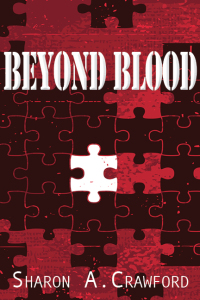
 

The latest Beyond book in the series

The latest Beyond book in the series


Tags: , , , , , , ,

Writing the right story beginning

Amazon.com link to Sharon A.'s short story collection

Amazon.com link to Sharon A.’s short story collection

If you have ever started to read a novel and became bored by the end of paragraph one, it might not be that the story is dull. There is a good chance that what you are reading isn’t really the story’s beginning.

One story beginning, particularly with novels, that has me yawning is the big character background story. Or the big travelogue of a city or a town. As my old journalist and creative writing instructor would say, “So what?”

You can start with character or setting or both together. The trick is to bring in something about your story. Something that will grab your reader. You need a good lead (or “lede” as it is sometimes spelled), as we old journalists call it.

I was a freelance journalist for 35 years and writing a good lead for my articles was very important. Otherwise it was impossible to write the rest of the story. The lead lets the reader know something about what the story is going to cover and teases them in to read all the details.

So when I write fiction or edit other authors’ fiction, I always pay attention to the lead. Sometimes the lead is hidden a few pages later or even a few chapters later. One author’s novel’s actual lead was a chapter near the middle. She needed to pull out that chapter and a few after it and bring them to the front. And then do some rewriting.

Rewriting, of course, is always necessary when writing fiction and ho-hum leads can be fixed then.

Off the top of my head here is an example of a bad story beginning.It is made up and not from any client’s fiction or any of mine.

Ellen was born in 1960 in the town of Crystal, the third in a family of four siblings. Her mother was an Osborne before her marriage to James Clark. She was a shy child who didn’t say much in school but she always got good grades. Her mother was also quiet and her father spoke in a loud boisterous voice. Ellen’s two older siblings, Daniel and Robert, teased her. Her younger sibling, Gail got on better with her brothers.

And on and on ad nauseum.

Do we really care about Ellen and her family?

Let’s see what we can do with that beginning – if we want to get some family background in and make it relevant to the story. If we want to make the reader care about Ellen and her family and read on. Something like this:.

Ellen Clark had always been shy and withdrawn. Until now. If her older brothers, Danny and Robbie, could see her now, they would be sorry they spent her childhood teasing her. They would be proud of her for what she just did for them, for her, and for the rest of the family. Especially Gail. Poor Gail. Best friends with Danny and Robbie had not helped Gail.

Ellen smiled as she looked down at her feet and what lay there.

Or something like that. Hey, I write mystery fiction. Anyway, let’s compare the two story beginnings. We still have Ellen, her shyness, her two brothers and the fact that they teased her and her sister Gail hanging out with the two brothers. We don’t mention Ellen’s birthday year or the town,  or her parents names or their main traits. That can come later. We have woven in a few things to tease the reader in. What did Ellen do just now? How did she go from being shy and withdraw to taking some kind of action. And what about Gail or the parents? What is lying at Ellen’s feet? Or should that be “who”?

This is the type of lead to draw in the reader. Even if you are not writing a mystery, a story needs some suspense, which could  very well be about the relationships in that Clark family. Or it could be something else – whatever your imagination conjures up.

I’ll end with the beginning of one of the short stories in my mystery collection Beyond the Tripping Point as it does have some family background woven into it. And I’ve used another technique to start the story and then pushed into the family background.

“The police can’t find her, Ms. Bowman,” Robin Morgrave says.

Rosemary Morgrave has gone missing and I’m putting on a brave smile for her twin brother. Robin sat on the other side of the desk in The Attic Agency’s third floor office. Only my twin brother, Bast, nodding, stops me from losing it. Ever since David, my seven-year-old son, was abducted last August, I’ve been living in Panicville.Sure, we got him back, but how much of him returned? He follows  Bast around like an investigator-in-training. His brown eyes stare right through my soul.I wish he’d just say how he feels. But since his return, David hasn’t opened his mouth except ti swallow liquids and food. He doesn’t even cry. (Excerpted from Beyond the Tripping Point, copyright Sharon A. Crawford, published  by Blue Denim Press, 2012).

You can pick it apart and try to guess what will happen in the story. Or you can read it. If you click on the BTTP icon at the top of this post, it takes you to my Amazon profile as well as to information about Beyond the Tripping Point and the novel (with the same three characters) Beyond Blood.

Cheers.

Sharon A. Crawford


Tags: , , , , , , , , , , ,

Working birthdays into your novels

The latest Beyond book in the series

The latest Beyond book in the series
Probably because today is my birthday it got me thinking about how to work in birthdays for your main fiction characters. Doing something different in the plot instead of just the character having a birthday party. Or in the case of the fraternal twin PIs Dana  Bowman and Bast Overture in the current Beyond mystery (which I’m still rewriting) who turn 40 in the book. I am avoiding the cliche throw a 40 surprise birthday party. I have also added in that their birthday is December 31 so we have New Year’s Eve as well. Double celebration here, but not just party- party – there are plot twists and revelations and I’ve put all this birthday/New Year’s Eve stuff at the end of the novel. And it is not only December 31, but December 31, 1999 so going into the new (then) 21st. century.  Bast is a computer geek so some of us will remember the big Y2K scare at that time. Yes, that’s involved but I’m not saying how.

What I am saying is there are ways to incorporate typical life happenings and events into your novel but be unique in your plot about it. Another example from this Beyond book is the pushing 40 syndrome, although in 2016 it might be “pushing 60” not 40. Remember my book set in late 1999. Yes, the twins have some anxiety about reaching the big 40, but it’s more than that as both have life intervening events that play a part in their angst. Especially Dana.

And I’m not saying what. Just a few tips to sum up how to incorporate normal life events into your fiction.

For specific holidays, have something different about them and I don ‘t meant just the location. Christmas is a big one. I jump from mid December to New Year’s Eve with just a sentence referencing Christmas in that chapter. While I love Christmas movies – olnd new – I think Christmas plots have been overdone, at least in film. “Different” is the key word here.

For characters birthdays, again, make it different and that can be done by tying it into the plot. Your character pushing 40, 50 or whatever, can help them decide to make a big change in their life – but what is the change? Depending on the genre, they might want to let their inner desires come to the surface and act on them. Use your imagination for what that can be.They might be so fed up with their life situation (which will be in your plot) they decide to disappear for good. Instead of telling your story from the other, main characters about after the character disappears, why not go with the disappearing character and what he or she is dealing with. Is it as he or she expected? Or different?

“Different” again is the key word here. You don’t want to write the same old, same old. So brainstorm. Let your mind wander. This often works best when you are doing something else. You know when you are trying to think of something (with me it is people’s names, a sure sign of getting old(er), don’t think about it and it will come to you.

Having said that, just the act of sitting at your computer and creating and getting in that well, creative – out-of-your-normal- world zone can also bring about some interesting and different plot ideas. Is your character directing this? Maybe. Sometimes I think Dana Bowman is in my head. She certainly thinks she is.

Happy and creative writing.

Cheers.

Sharon

And the  usual, click on the Beyond Blood graphic at the top to go to my author profile and books and where to purchase. Christmas is only 25 days away.

And I don’t have most of my Christmas decorations up. Too busy writing and editing.


Tags: , , , , , , , , , , , ,

Writing a new short story finally

The latest Beyond book in the series
The latest Beyond book in the series

I am finally writing a new mystery short story. And I am amazed that I actually found time. Despite my good intentions to try to tame time, except for perhaps a couple of areas, it has not been working. Most of the blame is what I refer to as “outside crap.” Included in that is even more and new computer problems. I won’t go into the sad saga here now, except for the one that is connected to this author blog.

WordPress in its “infinite wisdom” has a Set Featured Image feature. Technically (pun intended) it should work for only the actual blog post you are writing for the image withing the actual post and is not the image (my headshot) that appears at the side outside all blog posts. That one stays. But if it the image is in a blog post and you set it as an “Update” you now have two photos the same side by side on your live post. If you delete one from the one post when you are in Edit Post for update mode, it deletes all the same image on all the posts that have it. Those with another image in the post seem to keep that image.

What were the WordPress designers thinking?

For the ongoing computer crap problems, you will have to check my personal blog, for future postings on it. Meantime, my son the computer techie will be helping me remotely to resolve some of these computer issues later today.

As for the time management plan – the actual writing is getting in there, although not as much time each day as planned and hoped for. I have cut back my email time to 20 minutes a day (using a timer), except for family. All email replies and even new ones with promised information are being prioritized according to content date. So, something happening the end of the month doesn’t get priority over something happening today. I use a timer. So I can write. We writers are driven to write.

Someday I’ll write a noir satire mystery on computer problems and time management, but not in this new story. The story does take something from the news (no, not Trump’s election to the US presidency) but something else that has already been satirized on satire websites. So, I’m not doing satire here. I’m taking the news item and going on a “what if such and such happened? What if the character was like such-and-such?.

And so the story goes. But I’m not writing a fiction based on fact, something writers have to clarify when they are writing; Just because I’m writing fiction doesn’t mean I don’t need to do research. Besides the news stories, I have to research the laws connected to their content, medical issues connected to content, police procedure and most important develop my characters. I have two – a new one and the Toronto Police Service Homicide detective Larry Hutchison from “Missing in Action,” one of my short stories in Beyond the Tripping Point (Blue Denim Press, 2012),  Both stories take place in the same time period – NOW. I have wanted to put Detective Hutchinson in more stories, so this is my first go at that. .

I am also trying something new for me. Telling the short story from two different viewpoints – the new character and Hutchinson to develop the cat and mouse suspense.

It is interesting. I have to follow the fiction rules – one character’s point of view per scene with extra line space and/or asterisks in between scenes.

In some future posts I’ll go some more into the ins and outs using two characters points of view in short stories.

For now, it’s back to writing the actual short story…I hope. There better not be any more computer problems.

Cheers.

Sharon A. Crawford

And for this post, the Beyond Blood icon a the top does take you to Beyond Blood at Amazon.


Tags: , , , , , , , , , ,

Using fictional characters’ inner thoughts for character development

The latest Beyond book in the series

The latest Beyond book in the series

We’ve all read fiction where the characters come across as superficial. I’m not referring to their traits (and superficiality may well be one of them). Instead, I’m referring to characters that don’t evoke a strong reaction from the reader, characters that  don’t connect in some way to the reader, characters that leave the reader thinking “Who cares?”. Chances are fiction with characters that the reader can’t seem to get into means that the writer doesn’t really know their characters. The writer didn’t get inside each haracter s’ head.

Getting inside your protagonist’s or antagonist’s head is key to understanding them and bringing them to life to your readers. Here’s a short excerpt from my novel Beyond Blood to illustrate this.

Chapter Twelve:

David:

He had woken up to cold and darkness. Beechnut. Where was Beechnut? He was lying on his back and tried to sit up but his arms were stuck in front of him and his feet were stuck together. Shadows seemed to come at him.

“Mom … mee,” David said. “Mom … mee. Where are you? Mom … mee, I’m scared.”

No answer. Where was he? Where were Mommy and Uncle Bast? Where was Debbie? They’d been reading Alice in Wonderland. Then he had gotten hungry and run downstairs to the kitchen with Debbie after him. It was a game they always played. When he’d heard a noise in the basement he’d run down there and seen one of Mommy’s friends playing the game, so he’d chased after … and then … he couldn’t remember. His head hurt and he felt a little sick. He tried to move his hands again, but couldn’t. They were still stuck together.

Where was he? His toes hurt. His teeth hurt and he was so cold.

“Mom … mee. Mom … mee.” Now he was yelling.

A door burst open and something thudded in.

Oh no, a monster. Coming after him.

“Mom … mee. Mom … mee. I’m scared.”

He heard a click and a bright light blinded his eyes.

“Pipe down,” a voice shouted at him from above, or was it beside him?

“Who are you? I want my mommy. I want Beechnut.”

Instead he felt something heavy and sticky cover his mouth. The bright light clicked off and footsteps receded to the doorway, and then he heard a door slam.

In darkness and alone, David began to cry, his sobs muffled by the tape over his mouth.(From Beyond Blood, copyright Sharon A. Crawford, Blue Denim Press,2014).

It is probably obvious that David has been kidnapped and that he is a small child (he is six). Here the reader finds out how David feels about this from first discovering he is not at home and his Mommy is not around. The reader can feel for David, can feel his fear and despair.

Of course not all characters get kidnapped. Some fall in love; some are con artists, etc. The writer needs to convey all this to the reader and getting inside the character’s head is one way to do this.

There are other ways to develop characters. I will be teaching a workshop on Developing Characters and Dialogue in Fiction next Tuesday, Oct. 11 at the S. Walter Stewart library branch in Toronto, Canada. If you are in the area and want to attend, it is free. The library prefers you to register first (call 416-396-3975) , but you can just show up at 6.30 p.m. Workshop runs to 8 p.m. Here are the details about it.

Developing Characters and Dialogue in Fiction

Tuesday, October 11, 2016

Learn how to show, not tell, to develop credible characters and make their dialogue sing. Uses excerpts from Beyond the Tripping Point and Beyond Blood by Sharon A. Crawford to illustrate. Writing exercises and some writing critique.

Facebook Event

Location:
S. Walter Stewart Library Branch (auditorium)
170 Memorial Park Ave.
(Coxwell Ave. and Mortimer Ave. area)
Toronto, Ontario

Time:
6.30 p.m. to 8 p.m.

And if you are interested in reading more about developing characters but can’t make the workshop (for obvious reasons such as you live in another part of the world), you can click on the Beyond Blood icon at the top and that will take you to my publisher’s website where you can see my profile and where my books are available online and elsewhere. I didn’t do the usual link to Amazon because they have the incorrect price for my mystery short story collection Beyond the Tripping Point. It is not $94.36. I have contacted Amazon about this error so hopefully it will be corrected shortly.

It would be nice to get that much from a book, but who will buy it at that price? Somebody with big fingers on little keys maybe entered the amount?

Cheers.

Sharon


Tags: , , , , , , , , , ,

Rewriting Novels Using Both Sides of the Brain

Sharon A. Crawford's latest in the Beyond series

Sharon A. Crawford’s latest in the Beyond series

Rewriting a novel can be daunting, especially with the many, many rewrites that are necessary. I find there is no right way to do it, but with all the rewrites with my third Beyond book, I discovered by accident a way to be both creative and practical.

Use both sides of your brain – the right side for creativity and the left side for the logical and practical. Let me explain.

Without giving away the plot, let’s just say, like most of my story lines, it is complicated. That means the characters, like real people are complicated.

So I brainstorm outside of writing time for what I could change. When I sit down at the computer, I re-read all the novel and make a few notes. Then I tackle it from the beginning, dealing with it in parts. As I write more ideas come into my brain. But each idea leads to something that will have to be added or changed later on in the novel. So how do I keep track. Sure, I can make a few notes in another file, but mainly I use the Word comment for this with some suggestions.Then I can go back and update later. However, often the creative spirit married to the logical spirit moves me to do so right away. So I follow the thread to the next part that needs changing and do so.

I’ll give you one example which won’t give the story away. My Beyond novels, as well as four stories in Beyond the Tripping Point, feature fraternal twin private investigators, Dana Bowman and Bast Overture. While they partner in their business, they do split up the investigation a lot of the time. One of the things with this is the twins have to keep each other updated with what they find. So that has to go in somehow somewhere or else later on I will be writing from say Bast’s point of view as if he already knows what Dana found out – but nowhere does it say this.The reader can’t assume Dana told him. But I don’t always want a long dialogue between the two unless it can move the plot forward and/or develop the characters.

So, I sometimes use the phrase “Bast brought Dana up to speed about….” or “Dana brought Bast up to speed about…” Sometimes I don’t even do that but just have Bast in his next investigative action think “Dana had told him that… ” and very briefly mention it. I  do the same with Dana and do so when what one twin told the other is relevant to the other twin’s current detecting.

But with all this to-ing and fro-ing something else different has come up – what would happen if one twin didn’t tell the other twin what he or she found out?

Yes, it can be a somewhat constant shifting to different parts of the brain and I find that one feeds the other. And often you are rewriting on the creative side during most of that day’s writing time.

Now if I can just follow through with my rewrite of Beyond….  Nope, not even giving away the title.

Meantime, you can check out Beyond Blood and Beyond the Tripping Point. Link to all that can be found in the usual spot – the book cover at the top.

And later this month I will be back on the PR road for the Beyond books, so next week will be updating both the Gigs and Blog Tours part of this blog (a fiction writing workshop I’m teaching in October is already listed) and also the book page of my website. And yes, Dana will be doing another comedy skit gig in late October – this time with a really big twist. Stay tuned.

Cheers.

Sharon. A. Crawford


Tags: , , , , , , , , , ,

Recharging you novel’s rewrite

Sharon A. Crawford's latest in the Beyond series

Sharon A. Crawford’s latest in the Beyond series

This week I finally got back to rewriting the next novel in my Beyond mystery series. The plan had been to spend a good part of June, July and August doing this. But for a change I had a lot of client work. That I’m not complaining about. Neither am I complaining about spending time gardening. As well as writing, gardening is a passion of mine.

However, I am complaining about all the health issues I’ve had to deal with lately, some caused by others’ negligence. (See my post this week on my personal blog Only Child Writes.).

Still doing one client’s work – but no complaints. Client confidentially doesn’t allow me to discuss the client’s work, but sufficient to say it is interesting and challenging and when it arrives I switch over from the novel rewrite to the client work.

Getting back to the big novel rewrite is also a challenge. Having ideas percolating inside my head while I was doing other things and also some suggestions from the editor at Blue Denim Press (my publisher) have been big helps. So has one of my writer friends and colleagues – Rosemary McCracken – just publishing the third in her Pat Tierney mystery series.And having a wacky main character like PI Dana Bowman is good. At least I think so, although she does get inside my head a lot and likes to have her way in her stories. All inspiration to do more than put the seat of my pants to the chair.

How did I actually get back into the rewriting?

First, I reread the novel and comments I had made for changes and also noted what I had changed. Then I got in and made some changes in the beginning and continued on until I got stuck. But I had ideas for other parts, including the ending which needed a big change, so those are the places I focused on next. I feel better that I made changes in the ending even though I know that some of it will be changed as more changes in parts coming before will be made. That’s okay. Often just doing something that is a change is a good start.

Writing the ending before some of the rest, you may ask? I am following the advice given by another author Ken McGoogan who said when he gets tired of writing in chapter order, he will go the end. Mind you he writes narrative non-fiction. But I think it can be done with fiction as long as you realize it is not written in granite. Well, some writers think their prose, and even their punctuation, should be left exactly as they write it.

That is arrogance and maybe a little worry that the editor will mess up your prose so it isn’t really yours when it’s done. And yes, being an editor myself, and a former journalist who worked with several editors, it does happen. However, there is one thing we writers need to remember.

Writers work in isolation. Writers see their creations with tunnel vision. Another pair of eyes will find flaws and better ways to express something than the author.

So keep up the rewriting. Although you can get carried away with that. Another author colleague is still making changes in his novels after they are published. And yes he does have a trade publisher, so not being self-published he can’t exactly make changes in the print book for sale. But he can do so for his author readings.

Cheers.

Sharon A. Crawford

If you click on the Beyond Blood book icon a the top it will take you to my amazon author profile and books.


Tags: , , , , , , , , , , , , , ,

Using real life in your fiction – more info

Sharon A. Crawford's latest in the Beyond series

Sharon A. Crawford’s latest in the Beyond series

A writer friend recently told me that I was one of the strongest people she knows and then she referenced that I raised my son as a single parent.

Once I got over the shock (I seem to live my life in worry and fear lately but I am very vocal and get after people and organizations that mess up my life), I started thinking that this may have a lot to do with the family situation I created in my novel Beyond Blood.

My main character, PI Dana Bowman has a seven-year old son, David. She is also divorced, so a single mom.

In my life, I do have a son whom I raised as a single mom. But I did have help from my ex-husband. Dana gets no help from her ex, Ron, but she and David live with her fraternal twin brother, Bast Overture, also a PI.

My son was a young child in the 1980s while Beyond Blood is set in 1998. But subconsciously I guess some of raising my son rubbed off. But there are several differences besides the time frame. Dana is much more outspoken than I was back then and she ventures where another character Great Aunt Doris says she shouldn’t because she is a mother. Aunt Doris says Dana shouldn’t be working as a private investigator and chasing after bad people also because it’s not safe for David.

Unfortunately, it turns out Aunt Doris is right here because David is kidnapped. But that puts Dana in the double-bind of being the PI to find her son and being his mother. That creates a lot of character conflict which influences the plot. And that is pure imagination. My son was never kidnapped. The closest he came to “disappearing” was when he was four years old. I couldn’t find him anywhere in the house (and yes, I was home at the time) or outside – at first. Then I looked a little closer in the big backyard. Yup! There he was, crouched down in the grass and playing with his toys.

My point here is you can use some situations and even characters loosely in your novels and short stories. But you have to fictionalize it all. Just think “trigger point” and use your imagination from there.

Maybe living my life in fear (balanced by being very outspoken and yes, I admit, sometimes grumpy) has spawned something good. Because Dana’s family situation continued in the four linked short stories in Beyond the Tripping Point and in the current Beyond novel I am currently rewriting.

Cheers.

Sharon A. Crawford

And as usual, if you click on the book cover at the top it takes you to my amazon profile and my two Beyond books


Tags: , , , , , , , , , ,

Making Your Short Stories Sparkle and Sell

Cover of Sharon A. Crawford's mystery short story collection. Click on it for publisher's website

If you want to lift your short stories above the mediocre there are many things you can do. One of these is to be original in your story and in your characters. Readers like something different in their plot and eccentric characters can be a big draw whether you are writing commercial or literary fiction.

Three of us commercial fiction authors – Rosemary McCracken, Madeleine Harris-Callway and Sharon A. Crawford – who write both crime novels and short stories will be discussing why and how we do it. We will cover how we get story ideas and how much is from real life and how much from imagination. A couple of us have series characters in some of our short stories and in our novels, so we will discuss how we deal with time lines. Is it difficult going back and forth from writing novels and short stories and what the heck is the difference in how you write each?

Then there is marketing your short stories. Each of us has unusual ways we market our books (both the short stories and the novels).

And this panel will not be just the three of us talking. We are open to lots of  q and a.We want to get a real conversation going on short story writing. Here are the details about this upcoming panel being held by the East End Writers’ Group Wednesday, June 29, 2016.

Making Your Short Stories Sparkle and Sell

Do short stories come from real life, imagination, or both? How do you market short stories? For June’s East End Writers’ Group meeting join fiction authors Rosemary McCracken (shortlisted for the 2014 Derringer Award), Madeleine Harris-Callway (finalist for 2015 Arthur Ellis Award for Best First Novel), and Sharon A. Crawford (author of the “Beyond” mystery series) for a discussion on writing and marketing short stories.  Copies of authors’ books available and there will be  networking and food at 9 p.m.

Time and Date: 7 p.m. to 9.30 p.m., Wednesday, June 29, 2016

Location: S. Walter Stewart library branch, 170 Memorial Park Avenue, Toronto, Ontario, Canada

I am doing a guest blog post on Rosemary McCracken’s blog Moving Target about libraries and how they were and are important to me in my writing career, then seguing into this upcoming panel which is held at a library. There is a serendipity for me about this library branch. You’ll find this and more when my post is up on Monday, June 27 at Moving Target.

Meantime you can check out the panelists:

Rosemary McCracken http://www.rosemarymccracken.com/

Madeleine Harris-Callway http://mhcallway.com/

Sharon A. Crawford http://www.samcraw.com

Cheers.

Sharon A. Crawford

That’s my short story collection – Beyond the Tripping Point – book cover at the top of this post. If you click on the book cover, it will take you to my author profile on amazon.com


Tags: , , , , , , , , , , , , , , , ,

Writing through complicated novel plots

Sharon A. Crawford's latest in the Beyond series

Sharon A. Crawford’s latest in the Beyond series

Sometimes novel plots can get away from you, especially if like me, you write mysteries or thrillers. Even doing an outline before starting to write won’t stop potential confusion for several reasons.

Characters, especially the main ones, have a habit of taking over the novel and that means directing the plot. Which can be a good thing, because it shows that your novel has life. But when, like me in my Beyond mystery series, you have more than one point of view  character, you not only have to deal with one rogue character, but sometimes two. Dana Bowman the main character in Beyond Blood is an outspoken willful PI with a mind of her own. Her fraternal twin brother, Bast Overture her partner in solving crime is a bit tamer. But he is a former crime reporter and the words “reporter” and “journalist’ send out flares of “digging up the dirt.”

So with two nosy-parkers on the loose (often working somewhat separately) and adding in some other characters such as police Detective-Sergeant Donald Fielding and Dana’s six or seven-year old son (age depending on which book), this author is often juggling a lot of plot development.

A disclaimer: I don’t do much of an outline beforehand. Sure, I have some idea of where I want the story to go, but I find if I do too much outline or summary I seem to automatically switch to write-the-novel mode and I’m off in that direction for then.

So, what do I do to try to keep the plot consistent and making some sense?

I do some flipping back and forth to check – maybe after the day’s writing session or perhaps just before I start writing the next time. Or as often happens a couple of niggling plot developments are in my mind and I need to sort them out. So I use the Word “Find” tool to go to these plot developments and from there do one or two things:

Make a note either in brackets in red in the paragraph or whole scene or with the Comment tool about what needs to be changed. I also keep separate files on some areas of plot development that come up and/or I want to put in. Not exactly an outline, but more of a description of what I’m trying to do…at that point. Until Dana and/or Bast step in.

When all else fails I just go in there and make the changes/corrections.

With two PIs I have to make sure they don’t overlap in what they do – unless they are actually doing some of their investigation together. When working alone, they have to keep each other informed of what they find or the reader could wonder “How did he know that?” And do it without long conversations between the two. Sometimes they leave each other phone messages or sometimes I use a couple of short narrative sentences, such as “Bast brought Dana up to speed.”

It gets even trickier in the current Beyond novel I’m rewriting when one of the twins suffers a concussion.

But, hey I like a challenge. It is one of the things that makes writing fiction interesting.

Cheers.

Sharon A. Crawford

Click on the Beyond Blood book at the top to go to my amazon author profile and books.

To see what I’m up to with the Beyond books and characters check out the Gigs and Blog Tours page of this blog here


Tags: , , , , , , , , ,